The Golden Age of Murder by Martin Edwards

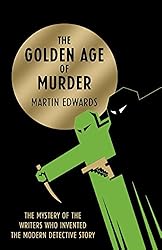
Although I read a lot of crime fiction my knowledge of the authors and their books written during the ‘Golden Age’ so far has been limited to Agatha Christie, Dorothy L Sayers, Margery Allingham, and Michael Innes so when I saw that Martin Edwards had written The Golden Age of Murder: The Mystery of the Writers Who Invented the Modern Detective Story I thought it would be the ideal book to find out more. And I was absolutely right and the works of a whole host of authors has been opened up to me.
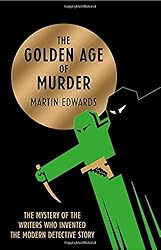
This is the story of the writers who formed the Detection Club between the two World Wars. Edwards sets the authors and their works in context – that period when Britain was recovering from the horrors of the First World War, living through an age of austerity as unemployment grew, the cost of living soared leading to the General Strike whilst the rich partied and saw the beginnings of the end of the British Empire. But the writers and the works although well grounded in their own time and culture have a lasting appeal and influence on current story telling and film and television.

The Club grew out of the dinners Anthony Berkeley and his wife Peggy hosted at their home in the late 1920s, attended by people including Agatha Christie, Dorothy L Sayers, Douglas and Margaret Cole, Ronald Knox, Henry Wade, H C Bailey and John Rhode. Eventually the Club was formed, with Rules and a Constitution and a Committee. The members benefited in various ways, meeting fellow detective novelists, discussing ideas, supporting each other and even working together on collaborative writing projects – such as The Floating Admiral, in which a dozen writers each wrote one chapter. The main aim of the Club was to encourage and maintain a high standard of work in writing detective novels.

I was fascinated by the number of real crimes that influenced the writers, both current at the time and crimes from the past. Their interest as they discussed these cases, such as Dr Crippen’s poisoning of his wife, in turn inspired them not only to write but also to play the detective themselves. Indeed, Edwards shows that the image of the Golden Age as ‘cosy’ murder mysteries is false:

Their novels are often sneered at as ‘cosy’, and the claim that their characters were made from cardboard has become a lazy critical cliché. The very idea that detective fiction between the wars represented a ‘Golden Age’ seems like a misty-eyed nostalgia of an aged romantic hankering after a past that never existed.

The best detective novels of the Thirties

were exhilarating, innovative and unforgettable. They explored miscarriages of justice, forensic pathology and serial killings long before these topics became fashionable (and before the term’serial killer’ was invented). …

The climax of one of Berkeley’s novels was so shocking that when Alfred Hitchcock came to film it, even the legendary master of suspense, the man who would direct Psycho, lost his nerve. He substituted a final scene that was a feeble cop-out in comparison to Berkeley’s dark and horrific vision. (page 9)

There is no way I can do justice to this book in a short post; it is simply a tour de force, comprehensive, crammed full of fascinating information about the period and the authors.

Martin Edwards’ love of Golden Age fiction shines throughout the book, (skilfully writing about books without giving away any spoilers) and has spurred me on to read more books from this period.

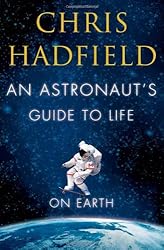
Book Beginnings: An Astronaut’s Guide to Life on Earth

Book Beginnings ButtonEvery Friday Book Beginnings on Friday is hosted by Gillion at Rose City Reader where you can share the first sentence (or so) of the book you are reading, along with your initial thoughts about the sentence, impressions of the book, or anything else the opener inspires.

This morning I have started to read An Astronaut’s Guide to Life on Earth by Chris Hadfield.

It begins with an Introduction: Mission Impossible

The windows of a spaceship casually frame miracles. Every 92 seconds, another sunrise: a layer cake that starts with orange, then a thick wedge of blue, then the richest, darkest icing decorated with stars.

Moving on to the first chapter:The Trip Takes a Lifetime

One morning a strange thought  occurs to me shortly after waking: the socks I am about to put on are the ones I’ll wear to leave Earth. That prospect feels real yet surreal, the way a particularly vivid dream does. The feeling intensifies at breakfast, when reporters jostle each other to get a good photo, as though I’m a condemned man and this is my last meal.

I first heard of this book when Chris Hadfield appeared on Sunday Brunch and then Jackie of Farm Lane Books Blog wrote about his book, which reminded me I wanted to read it.

What an amazing  experience to be looking down on Earth, seeing its entirety and beauty from a totally different perspective!

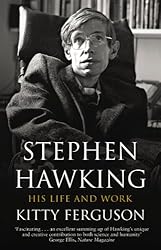
Stephen Hawking: His Life and Work by Kitty Ferguson

Blurb:

Stephen Hawking is one of the most remarkable figures of our time, a Cambridge genius who has earned international celebrity as a brilliant theoretical physicist and become an inspiration and revelation to those who have witnessed his courageous triumph over disability. This is Hawking’s life story by Kitty Ferguson, who has had special help from Hawking himself and his close associates and who has a gift for translating the language of theoretical physics for non-scientists.

Twenty years ago, Kitty Ferguson’s Stephen Hawking: Quest for a Theory of Everything became a Sunday Times bestseller and took the world by storm. She now returns to the subject to transform that short book into a hugely expanded, carefully researched, up-to-the-minute biography.

Recently I watched The Theory of Everything, with Eddie Redmayne playing the part of Stephen Hawking. I think it’s a brilliant film and it made me want to know more about Stephen Hawking. Stephen Hawking: His Life and Work by Kitty Ferguson, subtitled The Story and Science of One of the Most Extraordinary, Celebrated and Courageous Figures of Our Time, has certainly expanded my knowledge, even if some of the science is beyond me.

At first I read the scientific explanations carefully and felt I understood them until about half way into the book, when I struggled and ended up skim reading passages. I could cope on an elementary level with quantum mechanics, the uncertainty principle is not new to me, nor the theory of black holes, and singularity. I learnt about the ‘event horizon’, which is the ‘radius-of-no-return where velocity becomes greater than the speed of light’, and about Hawking Radiation, the radiation produced by a black hole. But when I got up to ‘brane’ theory and p-branes, I was lost – it’s too mathematical for my pea-brain! But I still think I learned a lot. It helps that there is not only an index, but also a glossary that explains many of the scientific terms (not p-branes, unfortunately).

The book moves between biography and Hawking’s work, painting a picture of a warm, likeable, humorous, and courageous man with an exuberance for life. There’s a lot about his health, his career, his trips abroad and his relationships with colleagues. But not much about his marriages or divorces; I expect that was Hawking’s preference. I hadn’t known that he liked Marilyn Monroe, having a life-size picture of her on the door of his office, or that he has co-written children’s books with his daughter Lucy. They look very good!

Details from Fantastic Fiction:
1. George’s Secret Key to the Universe (2007)
2. George’s Cosmic Treasure Hunt (2009)
3. George and the Big Bang (2011)
4. George and the Unbreakable Code (2014)
5. George and the Blue Planets (2016)


I was fascinated, as I was when watching the film, with how he lives with Amyotrophic Lateral Sclerosis (ALS) a form of motor neurone disease and the remarkable fact that he has lived so long with this condition and yet can say, ‘ Although I cannot move, and I have to speak through a computer, in my mind I am free.‘ (page 434)

Kitty Ferguson writes:

Hawking’s life and his science continue to be full of paradoxes. Things are often not what they seem. Pieces that fit together refuse to do so. Beginnings may be endings; cruel circumstances can lead to happiness, although fame and success may not; two brilliant and highly successful scientific theories taken together yield nonsense; empty space isn’t empty; black holes aren’t black; the effort to unite everything in a simple explanation reveals, instead a fragmented picture; and a man whose appearance inspires shock and pity takes us joyfully to where the boundaries of time and space ought to be – and are not. (page 17)

  • Paperback: 528 pages
  • Publisher: Bantam (5 July 2012)
  • Language: English
  • ISBN-10: 0857500740
  • ISBN-13: 978-0857500748
  • Source: library book

I have an e-book of Jane Hawking’s book, Travelling to Infinity; My Life with Stephen, which I’ll be reading sometime soon.

First Chapter ˆ¼ First Paragraph Intros

First chapterEvery Tuesday Diane at Bibliophile by the Sea hosts First Chapter ˆ¼ First Paragraph Tuesday Intros, where you can share the first paragraph, or a few, of a book you are reading or thinking about reading soon.

I’m currently reading The Golden Age of Murder by Martin Edwards, described on the back cover as

‘the extraordinary story of British detective fiction between the two World Wars, and the fascinating people who wrote it. A gripping real-life detective story, this book investigates how Agatha Christie and her colleagues in the mysterious Detection Club transformed crime fiction. Their work cast new light on unsolved murders, whilst hiding clues to their authors’ darkest secrets, and their complex and sometimes bizarre private lives.

First Chapter:

Chapter I, The Ritual in the Dark

On a summer evening in 1937, a group of men and women gathered in the darkness to perform a macabre ceremony. They had invited a special guest to witness their ceremony. She was visiting London from New Zealand and a thrill of excitement ran through her as the appointed time drew near. She loved drama, and at home she worked in the theatre. Now she felt as tense as when the curtain was about to rise. To be a guest at this dinner was a special honour. What would happen next she could not imagine.

Many congratulations to Martin Edwards who is to be the next President of  the Detection Club when Simon Brett, the current President retires in November. I really cannot think of a better choice than Martin, a well-deserved honour indeed!

H is for Hawk by Helen Macdonald

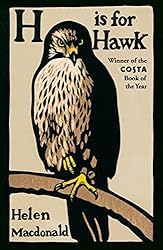
I really wanted to love H is for Hawk by Helen Macdonald, which  won the 2014 Samuel Johnson Prize for Non-Fiction, as well as the 2014 Costa Book of the Year but I found it difficult to read and draining, despite some richly descriptive narrative.  It’s really three  books in one – one about herself, her childhood and her intense grief at the sudden death of her father, one about training a goshawk and another about T H White and his book, The Goshawk in which he describes his own struggle to train a hawk.

When her father died she bought Mabel, a ten week old goshawk and became obsessed with training her. It is the training that made this book so difficult for me to read. I am not comfortable with keeping wild creatures in captivity and in my naivete I hadn’t realised just what training a hawk entailed. Even though Helen Macdonald tells her friend’s husband that it had not been a battle training Mabel because ‘she’s a freakishly calm hawk‘, it came across to me that it had been a battle of wills, as she kept Mabel indoors in a darkened room, in a hood, on a perch or restrained on a leash for much of the time. It was a physical battle too that evoked rage, violence and frustration.

I found it difficult too because it is so personal as she exposed just how bereft she was, how she suffered the loss of her father and became depressed almost to the state of madness:

It was about this time that a kind of madness drifted in. Looking back, I think I was never truly mad. More mad north-north-west. I could tell a hawk from a handsaw always but sometimes it was striking to me how similar they were. I knew I wasn’t mad mad because I’d seen people in the grip of psychosis before, and that was madness as obvious as the taste of blood in the mouth. The kind of madness I had was different. It was quiet, and very, very dangerous. It was a madness designed to keep me sane. My mind struggled to build across the gap, make a new and inhabitable world. (location 219)

This a book unlike any other that I’ve read, about wildness, grief and mourning, and obsession, which made it heavy reading for me.

  • Format: Kindle Edition
  • File Size: 1875 KB
  • Print Length: 322 pages
  • Page Numbers Source ISBN: 0802123414
  • Publisher: Vintage Digital (31 July 2014)
  • Source: I bought it

Books Read in May 2015

I’m pleased that I’ve read 8 books in May as my reading and blogging was interrupted by gardening. The grass is now growing at a rate of knots and the weeds, especially the ground elder, are rampant, threatening to take over the borders. So I’ve spent a lot of time this month mowing, weeding and strimming.

But I’ve also read these books and written about all of them, except H is for Hawk – post to follow some time soon (I hope). Three of the books are non fiction, one is a book from Lovereading for review and six are library books – no TBR books (books acquired before 1 January 2015) this month! I must get back to reading from those books I’ve had for years very soon!

These are the books I read:

Bks May 2015

Gray Mountain by John Grisham (Library book) – this book is just as much a campaign against injustice and the misuse of power, about the good little guys against the big bad guys as his earlier books are. In this case it’s the big coal companies that come under the microscope, companies that are  ruining the environment by strip-mining in the Appalachian mountains. I liked the view of the small town community, the mountain scenery, the legal cases large and small and the tension created by the danger of opposing the big coal companies.

The Lost Garden by Katharine Swartz (Review book) – an emotionally intense novel of love, loss and grief, set in both the past and the present day, in a small village on the Cumbrian coast, a gentle story, well told and an enjoyable read. In 1919 Eleanor, the daughter of the vicar of Goswell, is struggling to adjust to the loss of her brother, Walter who died just before the Armistice was declared and in the present day half-sisters Marin and Rebecca are coming to terms with the death of their father and his wife.

Gently North West by Alan Hunter (Library book) – set in the fictitious village of Strathtudlem in Scotland in 1967 where Gently is on holiday with his friend, Barbara Merryn and his sister, Bridget and her husband. Gently gets involved in the investigations into the murder of Donnie Dunglass,  found, stabbed in the back, face down on the heather. I thought it was an enjoyable book although I thought the murder mystery was rather far-fetched.

Nothing To Be Frightened Of by Julian Barnes (Library book, Non Fiction) – a collection of thoughts centred around Barnes’s fear of death and so inevitably he considers the question of religion and especially God. Interwoven with his thoughts about his agnosticism and death are anecdotes about his family and himself, thoughts on literature (particularly French literature) and it’s relationship to life. I found it all fascinating.

Dry Bones That Dream by Peter Robinson (Library book) – Banks investigates the murder of Keith Rothwell, an accountant, a  mild-mannered, dull sort of person it seems. But is that all there is to Rothwell? Banks unearths the secrets the characters have kept hidden from their family and friends. There’s also money-laundering and international and political shenanigans involved. Maybe not the best Banks book I’ve read.

H is for Hawk by Helen Macdonald (KindleNon Fiction) – no post yet. In some ways a difficult book to read – about training a goshawk and the author’s struggle with grief, mourning the death of her father.

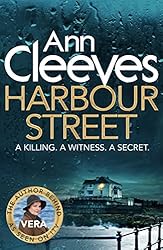
Harbour Street by Ann Cleeves (Library book) This is the fifth Vera book and I loved it. It’s so good I read it twice because I watched the TV version after I finished reading the book – and it confused me as it’s different from the book! So I went back and re-read it. It is so much better than the TV adaptation, which I think suffered from being condensed into just one hour and a half length programme.

Poirot and Me by David Suchet (Library book, Non Fiction) – this consists largely of Suchet’s summaries of the stories and how he went about analysing Poirot’s character and how he played the part. This is a fascinating account of both the Poirot series and of David Suchet’s career.

I have no difficulty this month with naming my favourite book of the month. All the time I was reading it I was thoroughly absorbed and intrigued by Harbour Street by Ann Cleeves.