WWW Wednesday: 25 July 2018

IMG_1384-0

WWW Wednesday is run by Taking on a World of Words.

The Three Ws are:

What are you currently reading?
What did you recently finish reading?
What do you think you’ll read next?

I’m currently reading: The Woman in Cabin 10  by Ruth Ware, one of my 10 Books of Summer, and I’ve nearly finished it.

The Woman in Cabin 10

Travel journalist Lo Blacklock  is on a luxury press launch on a boutique cruise ship when she is woken in the night by screams from cabin 10, her next door cabin. She believes a murder has taken place even though the records show that the cabin was unoccupied. This is a locked house type mystery that begins quite slowly and builds to a climax. But it is testing my scepticism somewhat.

As I’ve nearly finished The Woman in Cabin 10 I’ve just started reading The Story Keeper by Anna Mazzola, which will be published on 26th July 2018. I’m only in Chapter 2 but I am totally captivated so far.

The Story Keeper


Synopsis

Audrey Hart is on the Isle of Skye to collect the folk and fairy tales of the people and communities around her. It is 1857 and the Highland Clearances have left devastation and poverty, and a community riven by fear. The crofters are suspicious and hostile to a stranger, claiming they no longer know their fireside stories.

Then Audrey discovers the body of a young girl washed up on the beach and the crofters reveal that it is only a matter of weeks since another girl disappeared. They believe the girls are the victims of the restless dead: spirits who take the form of birds.

Initially, Audrey is sure the girls are being abducted, but as events accumulate she begins to wonder if something else is at work. Something which may be linked to the death of her own mother, many years before.

And I’m also reading Wedlock: How Georgian Britain’s Worst Husband Met His Match by Wendy Moore, non fiction about Mary Eleanor Bowes who was the richest heiress in 18th century Britain. She fell under the spell of a handsome Irish soldier, Andrew Robinson Stoney. When Mary heard her gallant hero was mortally wounded in a duel fought to defend her honour, she felt she could hardly refuse his dying wish to marry her. Fascinating reading that if it was fiction you’d say you couldn’t believe it

Wedlock: How Georgian Britain's Worst Husband Met His Match

I’ve recently finished:  No Further Questions by Gillian McAllister. I thought  her first book Everything But the Truth was brilliant and this one has lived up to my expectations – another brilliant book. I’ll write more in a later post.

Synopsis:

The police say she’s guilty.

She insists she’s innocent.

She’s your sister.

You loved her.

You trusted her.

But they say she killed your child.

Who do you believe?

My next book could be: Absent in the Spring by Agatha Christie, writing as Mary Westmacott.

Absent In The Spring

A striking novel of truth and soul-searching.

Returning from a visit to her daughter in Iraq, Joan Scudamore finds herself unexpectedly alone and stranded in an isolated rest house by flooding of the railway tracks.
Looking back over the years, Joan painfully re-examines her attitudes, relationships and actions and becomes increasingly uneasy about the person who is revealed to her…

Famous for her ingenious crime books and plays, Agatha Christie also wrote about crimes of the heart, six bittersweet and very personal novels, as compelling and memorable as the best of her work.

Have you read any of these books?  Do any of them tempt you? 
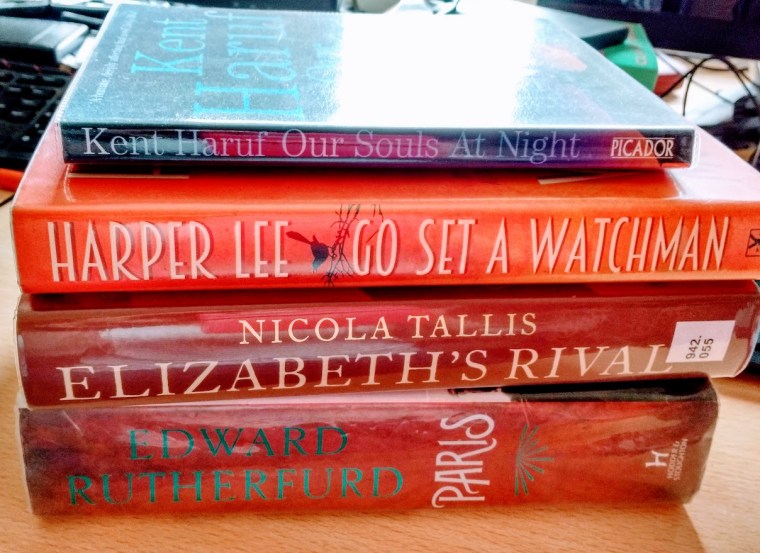
Library Books

Over the last few months I’ve reserved books at the library, but of course they all arrived at once instead of at regular intervals. This leaves me hoping I can renew them as there is no way I could read them all in the next three weeks!

Reserved bks June2018

From top to bottom they are:

  • Our Souls At Night by Kent Haruf. Annabel  reviewed it recently on her blog Annabookbel, saying she absolutely adored it and that it was the best thing she’s read so far this year. I liked the look of it – it’s a novel about the pursuit of happiness and a story about growing old with grace. With such a recommendation I think I’ll start with this one.
  • Go Set a Watchman by Harper Lee. I reserved this ages ago. It’s set two decades after Harper Lee’s Pulitzer Prize-winning masterpiece, To Kill a Mockingbird, which I loved. I’ve read reviews that it’s disappointing, so I thought I’d see for myself what it’s like. Jean Finch, ‘Scout’, returns home to visit her father Atticus, in Maycomb, Alabama.
  • Elizabeth’s Rivals: the Tumultuous Tale of Lettice Knollys, Countess of Leicester by Nicola Tallis. I saw this on Amazon and fancied having a look at it, then saw it was available from the library. This is the first biography of Lettice Knollys, one of the most prominent women of the Elizabethan era. A cousin to Elizabeth I – and very likely also Henry VIII’s illegitimate granddaughter – Lettice Knollys had a life of dizzying highs and pitiful lows.
  • Paris by Edward Rutherfurd, a huge doorstop of a novel of over 700 pages, telling a tale of four families across the centuries set in Paris, the City of Lights. Helen at She Reads Novels wrote about Edward Rutherfurd’s books in one of her Historical Musings posts and I thought I’d like to try them. Paris was listed in the library catalogue and so I reserved it.

The beauty of borrowing library books is that you can then take your time deciding whether you really do want to read them – and if no one else reserves them you can renew the ones you haven’t finished in the loan period – my library lets you renew them 5 times!

Catching Up

It’s that time of year – the grass is growing at a rate of knots, the weeds are shooting up all over the place, the garden is crying out for attention and my time for writing is disappearing.

So here are two quick reviews of books I’ve read this month:

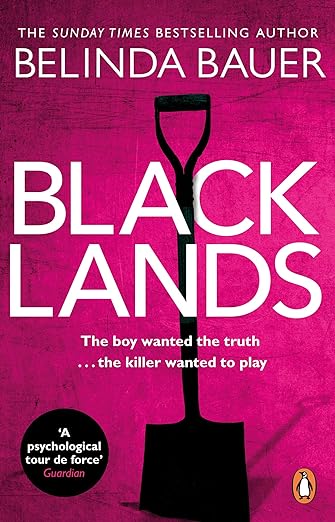
Blacklands by Belinda Bauer – her debut novel. I loved this book, so different from other crime fiction books I’ve read. It’s told mainly from Stephen Lamb’s perspective. Stephen is twelve years old. Nineteen years earlier Billy, Stephen’s uncle then aged eleven had disappeared. It was assumed that he had fallen victim to the notorious serial killer Arnold Avery, but his body had never been found. Stephen is determined to find where Arnold had buried his body and writes to him in prison.

What follows is an absolutely gripping battle of wits between Stephen and Arnold as they exchange letters. This is a dark and chilling story that took me inside the minds of both Stephen and Arnold, making this a disturbing experience and also a very moving and heartbreaking story. Since reading this book I’ve also read Snap, which although I enjoyed it I don’t think it is as good as Blacklands. I shall certainly be reading more of her books!

A Life in Questions

A Life in Questions by Jeremy Paxman (one of my TBRS). This is an interesting and entertaining autobiography, which is mainly about his career with little about his personal life, written in a very readable style. His sardonic wit and sense of humour come across, often aimed at himself. He tells of his childhood and his career first with the BBC in Northern Ireland and then in various war zones and trouble spots before becoming a presenter on Newsnight, where his interviews with politicians both infuriated and delighted me, and quizmaster on University Challenge. He has also done documentary programmes including an enlightening one on the EU, on art, and on history and has written several books on a variety of subjects. The only one I’ve read is The English: A Portrait of a People.

As I would expect from such a forthright person Paxman’s book is full of his opinions, but I couldn’t help wondering how much of  his grumpiness is a facade and what the real man behind it is really like. Maybe his reflections on his love for fly fishing and for nature, give us a glimpse of the real person. I liked these passages very much. Extending to 6 pages he describes how fishing is

essentially about trying to inserting yourself into an environment where you don’t belong, without being noticed. If you blunder about you won’t catch anything – on a sunny day you will be able to see the trout darting off in all directions when they sense your footfall on the bank, their flicking tails a snub to your clumsiness. Be quiet. And then, when you’re stalking a fish, things happen around you. A grass snake swims sinuously across the river. A water vole plops into a stream. Wagtails and oystercatchers dance at the water’s edge. Swallows and martins swoop low over the water, snatching flies. A kingfisher flashes that spectacular iridescent blue above the river; it is gone in an instant.

… To become absorbed in the natural world frees your mind: fish cannot survive in our element, and only imagination will allow us to live in theirs. …

In essence it is a solitary occupation. But the best fishing days are those spent with friends, meeting for a picnic lunch on the riverbank, united in the awareness that we are doing something which defies rational explanation. (extracts from pages 254-255)


Although I don’t fish I think I’d like to read his book on fishing: Fish, Fishing and the Meaning of Life.

Library Loot

It’s been a while since I wrote a post about my library books. I’m lucky as the mobile library van visits here once a fortnight, stopping nearly outside our house. So, I regularly borrow books both from the van and from the branch library. These are my recent library loans.

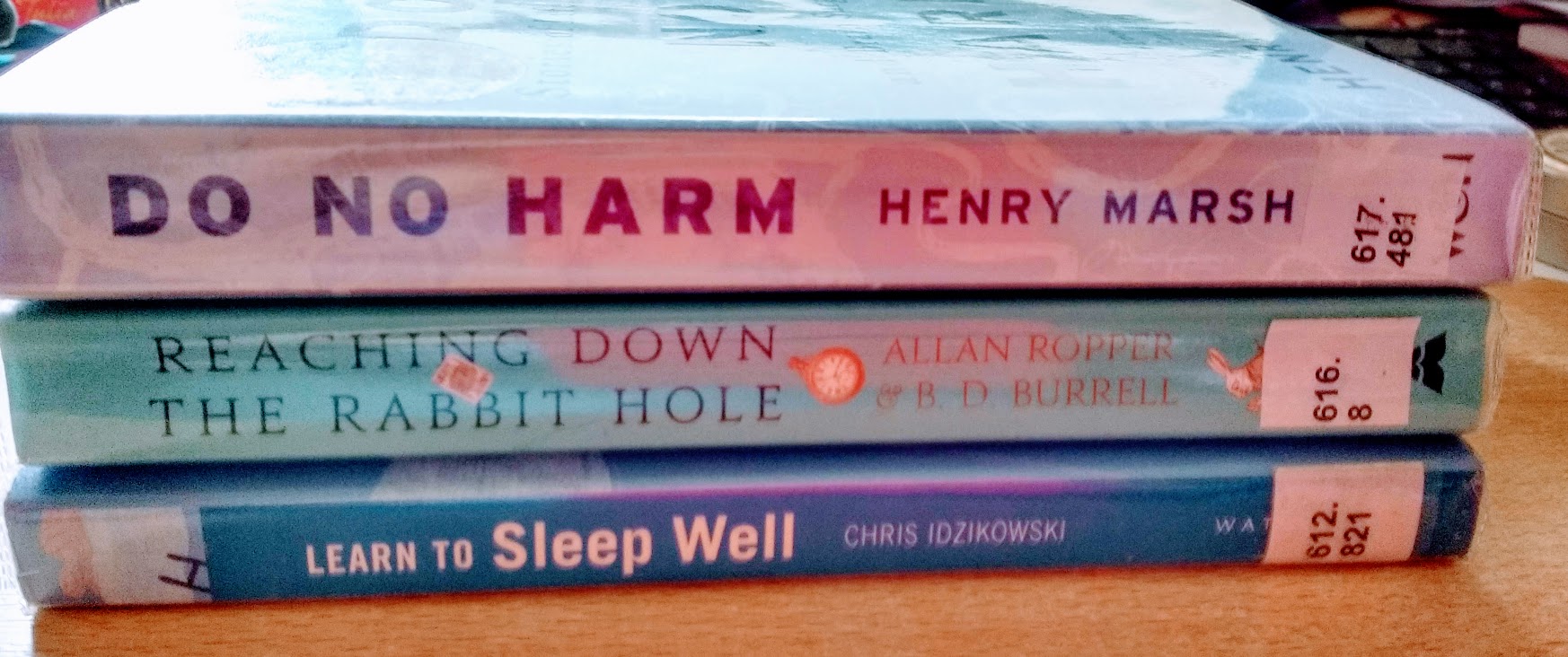
First three non fiction books:

Non Fic Lib Bks May 2018

  • Do No Harm by Henry Marsh one of the UK’s foremost neurosurgeons. I first read about this book on BookerTalk’s blog. She wrote: In Do No Harm he offers insight into the joy and despair of a career dedicated to one of the most complex systems in the body. This is a candid account of how it feels to drill into someone’s skull, navigate through a myriad of nerves that control memory, reason, speech and imagination and suck out abnormal growths. I thought it looks interesting, so I reserved the book to read it for myself.
  • And then I saw Reaching Down the Rabbit Hole by Allan H Ropper and B D Burrell sitting on the shelves. I admit that I was drawn to this book by its title on the spine, not realising until I took it off the shelf that this is also a book by a neurosurgeon, Dr Ropper, an American professor at Harvard Medical School. This is a glimpse into the ways our brains can go wrong, how a damaged brain can radically alter our lives.
  • Learn to Sleep Well by Chris Idzikowski. After reading Why We Sleep by Matthew Walker I thought it would be a good idea to read a book about getting better sleep as I don’t get the average of eight hours of sleep Professor Walker recommends. It’s sub-titled ‘get to sleep and stay asleep overcome sleep problems revitalize body and mind.’

And now the fiction:

Fic Lib Bks May 2018

  • A Perfectly Good Man by Patrick Gale. It is set in Cornwall, about a parish priest Barnaby Johnson. Earlier this year I read Gale’s Notes from an Exhibition and found although this book is not a sequel it has some of the same characters and I want to know more about them.
  • Deadline by Barbara Nadel. I haven’t read any of her other books – this is an Inspector Ikmen Mystery set in Istanbul. I liked the blurb on the back cover – Ikmen is invited to a murder mystery evening at Istanbul’s famous Pera Palas Hotel where he finds himself embroiled in a deadly game of life imitating art. Halfway through the evening, one of the actors is found dead in the room where Agatha Christie used to stay when she was in Istanbul.
  • Sisters by Patricia MacDonald, another new-to-me author, (one of the reasons I like to borrow books is to check out new-to-me authors). This is described on the back cover as a ‘fast-paced novel of psychological suspense‘. Alex Woods is shocked to find out after her parents’ death that she has a sister that her mother had kept a secret from her. She decides to search for her.
  • How Green Was My Valley by Richard Llewellyn. I’d reserved this one, a book I’ve been thinking of reading for a while. It’s a story of life in a mining community in rural South Wales as Huw Morgan is preparing to leave the valley where he had grown up. He tells of life before the First World War.
  • Rubbernecker by Belinda Bauer – see my Friday post for details of the novel and the opening sentences.  I’ve already started reading it. It’s about  Patrick Fort, a medical student with Asperger’s Syndrome, studying anatomy and trying to identify the cause of death of a body he is dissecting. I borrowed this book as I loved her first book, Blacklands.


Why We Sleep by Matthew Walker

Penguin Books|4 January 2018|368 p|e-book |Review copy|4*

I have read several books and watched TV programmes on sleeping, but Why We Sleep: the New Science of Sleep and Dreams is one of the most in depth and thorough books on the subject that I’ve come across. It is fascinating and disturbing in equal measures.

It emphasises how important sleep is to our health. Eight hours sleep each night will improve your immune system, help prevent infection, regulate your appetite, lower blood pressure, maintain your heart in fine condition, improve your ability to learn, memorise and make logical decisions.

But be warned if you don’t get eight hours sleep you run the risk of doubling your risk of cancer, of increasing your risk of developing Alzheimer’s disease, diabetes, cardiovascular disease, strokes, and heart attacks, and insufficient sleep contributes to all major psychiatric conditions, including depression, anxiety and suicidal tendencies. It is a terrifying scenario as every major disease in the developed world has very strong causal links to deficient sleep.

Matthew Walker is professor of neuroscience and psychology at the University of California, Berkeley, where he is director of the Center for Human Sleep Science. He goes into great detail examining every aspect of the subject looking at what sleep is, how we sleep, as well as why we should sleep and the external factors that cause poor sleep. There are sections on sleep deprivation, sleeping pills, insomnia and other sleep disorders and on dreams – creativity and dream control. He also considers the sleep requirements of babies, children, teenagers and the elderly.

There are a number of things I highlighted as I read the book, including:

  • sleep is the foundation of good health
  • every major system, tissue and organ of your body suffers if your sleep is short
  • the shorter your sleep, the shorter your life
  • the less you sleep you’re more likely to put on weight
  • sleeping six hours or less increases your risk of developing cancer by 40%
  • routinely sleeping less than six or seven hours a night demolishes your immune system, more than doubling your risk of cancer

He cites the World Health Organization’s and the National Sleep Foundation’s stipulation of an average of eight hours of sleep for adults. So, what can you do to improve your sleep if you don’t get eight hours? I really want to know. Walker refers to behavioural methods for improving sleep, such as cognitive behavioural therapy intended to break bad sleep habits, obvious methods such as reducing caffeine and alcohol intake, removing LED devices from the bedroom and having a cool bedroom. Other things to establish – having a regular bedtime, only going to bed when sleepy, avoid sleeping in the early/mid evenings and daytime napping etc, etc – nothing I haven’t come across before.

Why We Sleep is full of fascinating facts, but at times it is repetitive with lots of detail about sleep experiments that made me worried about the effects on those people who undertook them. Matthew Walker is most certainly on a mission to educate people about the importance of sleep, even if there is nothing new he has to offer about how to improve sleep times.

My Week in Books: 2 May 2018

This Week in Books is a weekly round-up hosted by Lypsyy Lost & Found, about what I’ve been reading Now, Then & Next.

IMG_1384-0

A similar meme,  WWW Wednesday is run by Taking on a World of Words.

The Three Ws are:

What are you currently reading?
What did you recently finish reading?
What do you think you’ll read next?

Currently reading: Blacklands by Belinda Bauer, one of the books I got last week from Barter Books.

Steven Lamb is 12 when he writes his first letter . . .
to a serial killer

Every day after school, whilst his classmates swap football stickers, twelve-year-old Steven digs holes on Exmoor, hoping to find a body. His uncle disappeared aged eleven and is assumed to have fallen victim to the notorious serial killer Arnold Avery – but his body has never been found.

Steven’s Nan does not believe her son is dead. She still waits for him to come home, standing bitter guard at the front window while her family fragments around her. Steven is determined to heal the widening cracks between them before it’s too late – even if that means presenting his grandmother with the bones of her murdered son.

So Steven takes the next logical step, carefully crafting a letter to Arnold Avery in prison. And there begins a dangerous cat-and-mouse game between a desperate child and a bored psychopath . . .

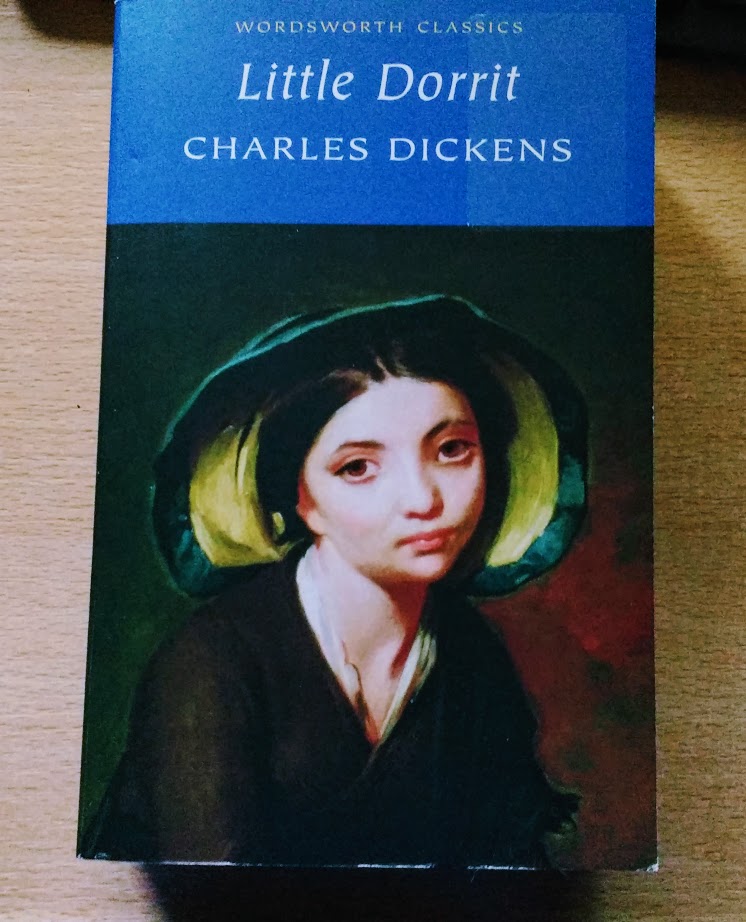
I didn’t finish Little Dorrit, my Classics Club spin book by 30th April, the Club’s deadline, but I’m carrying on reading it. I shan’t include it in later My Week posts until I’ve read a lot more of it.
Little Dorrit
Yesterday I finished Why We Sleep by Matthew Walker, one of my NetGalley books that have been stopping me from reading my TBRs.

This book extols the benefits of getting a full eight hours sleep each night and warns of the dire consequences if you don’t. I shall write more about it in a later post.

What do you think you’ll read next: I do enjoy deciding what to read next but the thing is that I often change my mind. At the moment I’m leaning towards reading The Summer before the War by Helen Simonson. But it could be something else when the time come to decide.

The Summer Before the War
My copy has this cover

It is late summer in East Sussex, 1914. Amidst the season’s splendour, fiercely independent Beatrice Nash arrives in the coastal town of Rye to fill a teaching position at the local grammar school. There she is taken under the wing of formidable matriarch Agatha Kent, who, along with her charming nephews, tries her best to welcome Beatrice to a place that remains stubbornly resistant to the idea of female teachers. But just as Beatrice comes alive to the beauty of the Sussex landscape, and the colourful characters that populate Rye, the perfect summer is about to end. For the unimaginable is coming – and soon the limits of progress, and the old ways, will be tested as this small town goes to war.

Have you read any of these books?  Do any of them tempt you?