Why We Sleep by Matthew Walker

Penguin Books|4 January 2018|368 p|e-book |Review copy|4*

I have read several books and watched TV programmes on sleeping, but Why We Sleep: the New Science of Sleep and Dreams is one of the most in depth and thorough books on the subject that I’ve come across. It is fascinating and disturbing in equal measures.

It emphasises how important sleep is to our health. Eight hours sleep each night will improve your immune system, help prevent infection, regulate your appetite, lower blood pressure, maintain your heart in fine condition, improve your ability to learn, memorise and make logical decisions.

But be warned if you don’t get eight hours sleep you run the risk of doubling your risk of cancer, of increasing your risk of developing Alzheimer’s disease, diabetes, cardiovascular disease, strokes, and heart attacks, and insufficient sleep contributes to all major psychiatric conditions, including depression, anxiety and suicidal tendencies. It is a terrifying scenario as every major disease in the developed world has very strong causal links to deficient sleep.

Matthew Walker is professor of neuroscience and psychology at the University of California, Berkeley, where he is director of the Center for Human Sleep Science. He goes into great detail examining every aspect of the subject looking at what sleep is, how we sleep, as well as why we should sleep and the external factors that cause poor sleep. There are sections on sleep deprivation, sleeping pills, insomnia and other sleep disorders and on dreams – creativity and dream control. He also considers the sleep requirements of babies, children, teenagers and the elderly.

There are a number of things I highlighted as I read the book, including:

  • sleep is the foundation of good health
  • every major system, tissue and organ of your body suffers if your sleep is short
  • the shorter your sleep, the shorter your life
  • the less you sleep you’re more likely to put on weight
  • sleeping six hours or less increases your risk of developing cancer by 40%
  • routinely sleeping less than six or seven hours a night demolishes your immune system, more than doubling your risk of cancer

He cites the World Health Organization’s and the National Sleep Foundation’s stipulation of an average of eight hours of sleep for adults. So, what can you do to improve your sleep if you don’t get eight hours? I really want to know. Walker refers to behavioural methods for improving sleep, such as cognitive behavioural therapy intended to break bad sleep habits, obvious methods such as reducing caffeine and alcohol intake, removing LED devices from the bedroom and having a cool bedroom. Other things to establish – having a regular bedtime, only going to bed when sleepy, avoid sleeping in the early/mid evenings and daytime napping etc, etc – nothing I haven’t come across before.

Why We Sleep is full of fascinating facts, but at times it is repetitive with lots of detail about sleep experiments that made me worried about the effects on those people who undertook them. Matthew Walker is most certainly on a mission to educate people about the importance of sleep, even if there is nothing new he has to offer about how to improve sleep times.

My Week in Books: 2 May 2018

This Week in Books is a weekly round-up hosted by Lypsyy Lost & Found, about what I’ve been reading Now, Then & Next.

IMG_1384-0

A similar meme,  WWW Wednesday is run by Taking on a World of Words.

The Three Ws are:

What are you currently reading?
What did you recently finish reading?
What do you think you’ll read next?

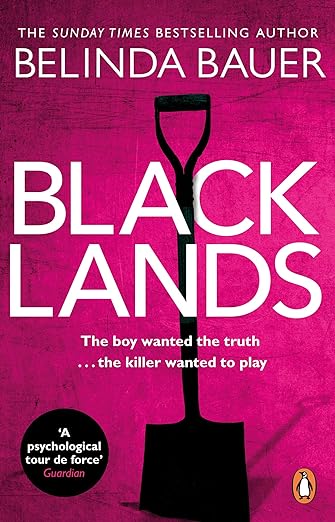
Currently reading: Blacklands by Belinda Bauer, one of the books I got last week from Barter Books.

Steven Lamb is 12 when he writes his first letter . . .
to a serial killer

Every day after school, whilst his classmates swap football stickers, twelve-year-old Steven digs holes on Exmoor, hoping to find a body. His uncle disappeared aged eleven and is assumed to have fallen victim to the notorious serial killer Arnold Avery – but his body has never been found.

Steven’s Nan does not believe her son is dead. She still waits for him to come home, standing bitter guard at the front window while her family fragments around her. Steven is determined to heal the widening cracks between them before it’s too late – even if that means presenting his grandmother with the bones of her murdered son.

So Steven takes the next logical step, carefully crafting a letter to Arnold Avery in prison. And there begins a dangerous cat-and-mouse game between a desperate child and a bored psychopath . . .

I didn’t finish Little Dorrit, my Classics Club spin book by 30th April, the Club’s deadline, but I’m carrying on reading it. I shan’t include it in later My Week posts until I’ve read a lot more of it.
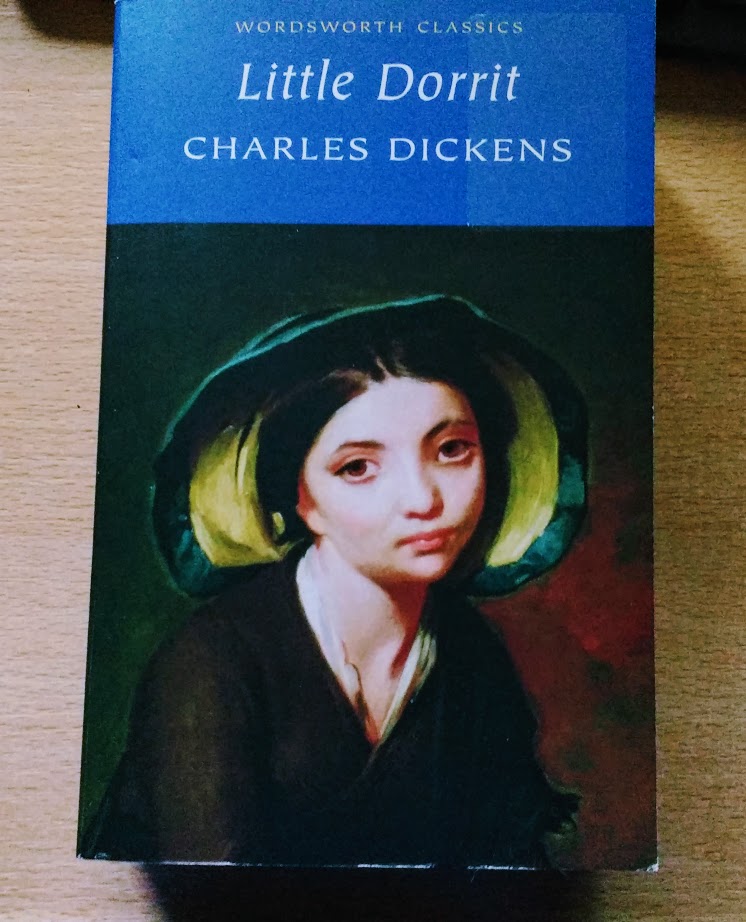
Little Dorrit
Yesterday I finished Why We Sleep by Matthew Walker, one of my NetGalley books that have been stopping me from reading my TBRs.

This book extols the benefits of getting a full eight hours sleep each night and warns of the dire consequences if you don’t. I shall write more about it in a later post.

What do you think you’ll read next: I do enjoy deciding what to read next but the thing is that I often change my mind. At the moment I’m leaning towards reading The Summer before the War by Helen Simonson. But it could be something else when the time come to decide.

The Summer Before the War
My copy has this cover

It is late summer in East Sussex, 1914. Amidst the season’s splendour, fiercely independent Beatrice Nash arrives in the coastal town of Rye to fill a teaching position at the local grammar school. There she is taken under the wing of formidable matriarch Agatha Kent, who, along with her charming nephews, tries her best to welcome Beatrice to a place that remains stubbornly resistant to the idea of female teachers. But just as Beatrice comes alive to the beauty of the Sussex landscape, and the colourful characters that populate Rye, the perfect summer is about to end. For the unimaginable is coming – and soon the limits of progress, and the old ways, will be tested as this small town goes to war.

Have you read any of these books?  Do any of them tempt you? 

My Week in Books: 25 April 2018

This Week in Books is a weekly round-up hosted by Lypsyy Lost & Found, about what I’ve been reading Now, Then & Next.

IMG_1384-0

A similar meme,  WWW Wednesday is run by Taking on a World of Words.

The Three Ws are:

What are you currently reading?
What did you recently finish reading?
What do you think you’ll read next?

Currently reading: I haven’t made any more progress with Little Dorrit, my Classics Club spin book and there is no way that I’ll finish it by 30th April, the Club’s deadline. But I shall carry on reading it and will finish it later on.

Little Dorrit

I am reading the book I said I might read next in last week’s Wednesday post – Time is a Killer by Michel Bussi, which was published on 5 April 2018 and am enjoying it so far.

Description:

‘One of France’s most ingenious crime writers’ SUNDAY TIMES

‘Bussi breaks every rule in the book’ JOAN SMITH

It is summer 1989 and fifteen-year-old Clotilde is on holiday with her parents in Corsica. On a twisty mountain road, their car comes off at a curve and plunges into a ravine. Only Clotilde survives.

Twenty-seven years later, she returns to Corsica with her husband and their sulky teenage daughter. Clotilde wants the trip to do two things – to help exorcise her past, and to build a bridge between her and her daughter. But in the very place where she spent that summer all those years ago, she receives a letter. From her mother. As if she were still alive.

As fragments of memory come back, Clotilde begins to question the past. And yet it all seems impossible – she saw the corpses of her mother, her father, her brother. She has lived with their ghosts. But then who sent this letter – and why?


Yesterday I finished  Major Pettigrew’s Last Stand by Helen Simonson, the book I wrote about in last Friday’s post. For now I’ll just say that on the whole I enjoyed it and I’ll try to sort out my thoughts and maybe post a review later in the week.

What do you think you’ll read next:

It’ll probably be Why We Sleep by Matthew Walker, one of my NetGalley books that I’ve been meaning to get round to before now.


Description:

Sleep is one of the most important aspects of our life, health and longevity and yet it is increasingly neglected in twenty-first-century society, with devastating consequences: every major disease in the developed world – Alzheimer’s, cancer, obesity, diabetes – has very strong causal links to deficient sleep. Until very recently, science had no answer to the question of why we sleep, or what good it served, or why its absence is so damaging to our health. Compared to the other basic drives in life – eating, drinking, and reproducing – the purpose of sleep remained elusive.

Now, in this book, the first of its kind written by a scientific expert, Professor Matthew Walker explores twenty years of cutting-edge research to solve the mystery of why sleep matters. Looking at creatures from across the animal kingdom as well as major human studies, Why We Sleep delves in to everything from what really happens during REM sleep to how caffeine and alcohol affect sleep and why our sleep patterns change across a lifetime, transforming our appreciation of the extraordinary phenomenon that safeguards our existence.

Or will it be something else? I’m not sure.

Have you read any of these books?  Do any of them tempt you? 

Painting as a Pastime by Winston S. Churchill

Painting is complete as a distraction. I know of nothing which, without exhausting the body, more entirely absorbs the mind.’

IMG_20180314_071428165.jpg

Unicorn|1 July 2013|Hardcover|96 pages|a gift|5*

I was delighted on Sunday when my son gave me Painting as a Pastime by Winston Churchill as a Mother’s Day present. I read it straight away and loved it. The cover shows Churchill’s painting of his home, Chartwell. Churchill was forty when he first started to paint at ‘a most trying time‘ in his life and art became his passion and an ‘astonishing and enriching experience‘.

It was in 1915, when he had left the Admiralty and although he was still a member of the Cabinet and of the War Council he knew everything but could do nothing. He had great anxiety and no means of relieving it, left with many hours ‘of utterly unwanted leisure in which to contemplate the frightful unfolding of the War‘. So, he began painting.

I was amused to find out that he took the same hesitant steps that I took – using a very small brush, mixed a little paint and then ‘made a mark about as big as a bean’ on his canvas.’ A friend arrived and told him to stop hesitating and showed him how to use a big brush and splash on the paint, which he did with ‘Berserk fury‘.

But Churchill begins, not by  writing about painting, but about the need for a change to rest and strengthen the mind:

… the tired parts of the mind can be rested and strengthened, not merely by rest, but by using other parts. … It is no use saying to the tired ‘mental muscles’ – if one may coin such an expression – ‘I will give you a good rest,’ ‘I will go for a long walk’, or ‘I will lie down and think of nothing.’ The mind keeps busy just the same.

What is needed are hobbies. And then he goes on to write about reading, and about handling books:

Peer into them. Let them fall open where they will. Read on from the first sentence that arrests the eye. Then turn to another. Make a voyage of discovery, taking soundings of uncharted seas. Set them back on their shelves with your own hands. Arrange them on your own plan, so that if you do not know what is in them, you at least know where they are.

But he considers that reading doesn’t provide enough change to rest the mind and that what is needed is something that needs both the eye and the hand – a handicraft. In his case painting fulfils that role. He talks about the fun of painting, the colours and the pleasure he found in not only in painting a picture, but also the pleasure he discovered in a heightened sense of observation, finding objects in  the landscape, he had never noticed before:

So many colours on the hillside, each different in shadow and in sunlight; such brilliant reflections in the pool, each a key lower than what they repeat; such lovely lights gilding or silvering surface or outline, all tinted exquisitely with pale colour, rose, orange, green or violet.

I agree that painting does relax the mind, but I love reading and can be thoroughly absorbed in a book so that I am unaware of the passing of time, just as I also know how quickly time passes  when painting (or in my case in trying to paint). As Churchill wrote:

Whatever the worries of the hour or the threats of the future, once the picture has begun to flow along, there is no room for them in the mental screen. They pass out into shadow and darkness. All one’s mental light, such as it is, becomes concentrated on the task. Time stands respectfully aside, and it is only after many hesitations that luncheon knocks gruffly at the door.

Reading this book was pure pleasure and has encouraged me to pick up my paints again.

One final extract:

Just to paint is great fun. The colours are lovely to look at and delicious to squeeze out. Matching them, however crudely, with what you see is fascinating and absolutely absorbing. Try it if you have not done so — before you die.

Painting as a Pastime was originally published in 1932, one of the twenty three essays in Thoughts and Adventures (whose American title is Amid These Storms).

Bookworm: A Memoir of Childhood Reading by Lucy Mangan

Square Peg, Random House UK|1 March 2018|336 p|Review copy|4*

Bookworm: A Memoir of Childhood Reading by Lucy Mangan will appeal to all bookworms, but it’s more than an account of what Lucy read, it’s also a history of children’s books, details of their authors and a memoir of Lucy’s childhood. I loved it – it’s full of the joy and love of books, the intensity of reading and the ‘instant and complete absorption in a book‘. She writes with verve and humour, in a chatty style that makes it so readable. Reading her book is like being in conversation with a friend.

As I am older than Lucy, inevitably she mentions books I didn’t read as I was growing up (but have read some of them in later life) , especially in the later sections of her book, books she read as a teenager, but I was quite surprised and pleased to find that our reading in early childhood was so similar, and just like her, books have made me the person I am – why else would I be writing a blog called ‘BooksPlease‘.

As long as I can remember I have loved books and I can’t remember a time when I couldn’t read. So I was delighted to find that she too loved Teddy Robinson by Joan L Robinson.  This is the first book I remember borrowing from the library. I loved it so much I was dreadfully upset that I had to return it. Teddy Robinson was owned by a little girl named Deborah and I am so envious that Lucy Mangan has actually met Deborah, who showed her the original drawings for the books her mother wrote.

And then there are some of my most loved books when I was young such as Milly-Molly-Mandy, Alice’s Adventures in Wonderland, the Katy books, Little Women, Good Wives and Jo’s Boys, The Borrowers, the Narnia books, Ballet Shoes, and The Secret Garden. I re-read them many times over.

There’s a whole section on Enid BlytonThe Blyton Interregnum. I was very interested to see her view of this writer whose books I too adored. Blyton wrote around 760 books during her fifty-year writing career! Despite the criticism of her books as mediocre material, formulaic books with fantastical plots Lucy considers, correctly I think, that they are books that provided comfort reading during and in the aftermath of the Second World War. Not only that, they are satisfying stories that lay down a base for future reading, providing books that are fun to read and opening up the ‘pleasure-filled world of reading’. Then there are the questions about prejudice, sexism, class snobbery and racism, in Blyton’s books, which Lucy (and I) missed completely whilst reading as children.

She writes about re-reading the books as an adult as a ‘discombobulating experience‘ – stories that once wholly enraptured you no longer have that same magic, and about her disappointment in returning to Enid Blyton’s books and finding them unreadable. It’s the main reason I don’t go back to the books I loved as a child – I really don’t want to lose the magic they held for me then.

There is so much in this book I could write about, it’s packed with the magic of books and reading it has given me hours of nostalgic pleasure – but the best thing I think is to leave you to read this lovely book for yourself.

Many thanks to Random House UK for a review copy via NetGalley.

My Week in Books: 28 February 2018

This Week in Books is a weekly round-up hosted by Lypsyy Lost & Found, about what I’ve been reading Now, Then & Next.

IMG_1384-0

A similar meme,  WWW Wednesday is run by Taking on a World of Words.

Now:

51IBFwYPBfLMunich by Robert Harris, set in 1938, beginning in September as Hitler is determined to start a war and Chamberlain is desperate to preserve the peace. I’ve read about half the book and am finding it fascinating.

Blurb

As Chamberlain’s plane judders over the Channel and the Führer’s train steams relentlessly south from Berlin, two young men travel with secrets of their own. 

Hugh Legat is one of Chamberlain’s private secretaries; Paul Hartmann a German diplomat and member of the anti-Hitler resistance. Great friends at Oxford before Hitler came to power, they haven’t seen one another since they were last in Munich six years earlier. Now, as the future of Europe hangs in the balance, their paths are destined to cross again. 

When the stakes are this high, who are you willing to betray? Your friends, your family, your country or your conscience?

Bookworm: A Memoir of Childhood Reading by Lucy Mangan, due to be published tomorrow, 1 March 2018. This is a delightful book taking me back to the books of my childhood as Lucy Mangan describes the books she loved. I’ve nearly finished it, so I’ll post my review soon.

Blurb

The Cat in the Hat? Barbar? The Very Hungry Caterpillar? Whoever it was for you, it’s very hard to forget the vivid intensity of your first encounter with a book.

As a bespectacled young bookworm, Lucy Mangan devoured books: from early picture books, to Swallows and Amazons, Enid Blyton to Little Women, and from trashy teen romances to her first proper ‘grown-up’ novels. In Bookworm, she revisits this early enthusiasm; celebrating the enduring classics, and disinterring some forgotten treasures.

This is a love letter to the joys of childhood reading, full of enthusiasm and wit, telling the colourful story of our best-loved children’s books, the extraordinary people who created them, and the thousand subtle ways they shape our lives. It also comes packed with brilliant recommendations to inspire the next generation of bookworms and set them on their way.

This impassioned book will bring the unforgettable characters of our collective childhoods back to life – prompting endless re-readings, rediscoveries, and, inevitably, fierce debate. It will also act as an invaluable guide to anyone looking to build a children’s library and wondering where to start, or where to go next.

Then:

The last book I finished is Dry Bones in the Valley by Tom Bouman. This book has won several awards: Los Angeles Times Book Prize for Mystery/Thriller (2014), Edgar Award for Best First Novel (2015), Strand Critics Award Nominee for Best First Novel (2014). I really enjoyed it. My review will be up soon.

Blurb

When an elderly recluse discovers a corpse on his land, Officer Henry Farrell follows the investigation to strange places in the countryside, and into the depths of his own frayed soul.

In Wild Thyme, Pennsylvania, secrets and feuds go back generations. The lone policeman in a small township on the sparse northern border, Henry Farrell expected to spend his mornings hunting and fishing, his evenings playing old-time music. Instead, he has watched the dual encroachment of fracking companies and drug dealers bring money and troubles to the area. As a second body turns up, Henry’s search for the killer opens old wounds and dredges up ancient crimes which some people desperately want to keep hidden.

With vivid characters and flawless pacing, Tom Bouman immerses readers in this changing landscape. In these derelict woods, full of whitetail deer and history, the hunt is on…

Next:

The Western Wind by Samantha Harvey, also due to be published tomorrow, 1 March 2018.

Blurb (Amazon):

15th century Oakham, in Somerset; a tiny village cut off by a big river with no bridge. When a man is swept away by the river in the early hours of Shrove Saturday, an explanation has to be found: accident, suicide or murder? The village priest, John Reve, is privy to many secrets in his role as confessor. But will he be able to unravel what happened to the victim, Thomas Newman, the wealthiest, most capable and industrious man in the village? And what will happen if he can’t?

Moving back in time towards the moment of Thomas Newman’s death, the story is related by Reve – an extraordinary creation, a patient shepherd to his wayward flock, and a man with secrets of his own to keep. Through his eyes, and his indelible voice, Harvey creates a medieval world entirely tangible in its immediacy.

Have you read any of these books?  Do any of them tempt you?