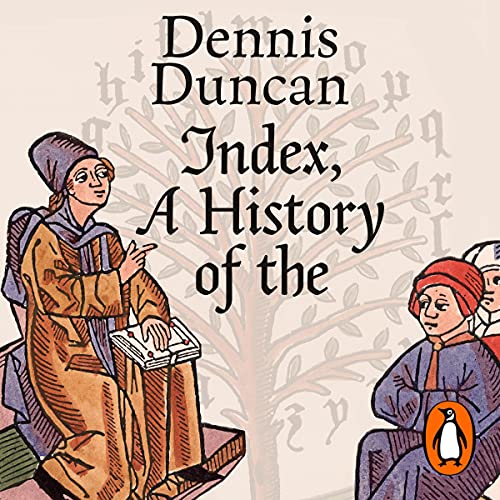
Index, A History of the by Dennis Duncan

Penguin| 19 August 2021| 339 pages| Review copy| 4*

Synopsis:

Most of us give little thought to the back of the book – it’s just where you go to look things up. But here, hiding in plain sight, is an unlikely realm of ambition and obsession, sparring and politicking, pleasure and play. Here we might find Butchers, to be avoided, or Cows that sh-te Fire, or even catch Calvin in his chamberwithaNonne. This is the secret world of the index: an unsung but extraordinary everyday tool, with an illustrious but little-known past. Here, for the first time, its story is told.

Charting its curious path from the monasteries and universities of thirteenth-century Europe to Silicon Valley in the twenty-first, Dennis Duncan reveals how the index has saved heretics from the stake, kept politicians from high office and made us all into the readers we are today. We follow it through German print shops and Enlightenment coffee houses, novelists’ living rooms and university laboratories, encountering emperors and popes, philosophers and prime ministers, poets, librarians and – of course – indexers along the way. Revealing its vast role in our evolving literary and intellectual culture, Duncan shows that, for all our anxieties about the Age of Search, we are all index-rakers at heart, and we have been for eight hundred years.

My thoughts:

This book is not just about the history of the index, but also about the history of reading and the evolution of the book from the scrolls, manuscripts and the codex before the the invention of printing – how they were produced and used. I was interested in reading it as I’m an ex-librarian and cataloguer, later an assistant in a county record office where a large part of my job involved indexing. If you think like me that an index is an indispensable part of a non fiction book then you’ll enjoy this book, which is both informative and entertaining. And I often wish fiction books were indexed too – one of the advantages of an e-book is that you can search the text, even better if it has the X-Ray feature.

It explains the difference between the index and the table of contents, goes into the evolution of page numbers and the problems of alphabetisation. This is not a dry, factual account it is written with humour and insights into the past, using examples from historical texts, and from indexes complied as satirical attacks on their authors. I never knew indexes had been used as weapons! Nor did I know that some works of fiction had been indexed in the past – full details in Chapter 6 ‘Indexing Fictions: Naming was Always a Difficult Art’, quoting from Lewis Carroll’s works. Carroll was fascinated with indexes, leaning particularly towards the whimsical, using his logician’s wit.

Neither is it stuck in the far distant past, Duncan brings it up to date in the digital age and the ubiquity of the search engine with the rise of anxiety that this is changing our brains, shortening our attention spans and eroding our capacity for memory. But this, Duncan explains is nothing new as the history of the index shows that there have always been fears that nobody will read properly any more when they could just use an index to replace the ways of close reading. The ways we read have changed over the generations.

The Index, a History of the is simply fascinating.

About the Author

Dennis Duncan is a writer, translator and lecturer in English at University College London. He has published numerous academic books, including Book Parts and The Oulipo and Modern Thought, as well as translations of Michel Foucault, Boris Vian, and Alfred Jarry. His writing has appeared in the Guardian, the Times Literary Supplement, and the London Review of Books, and recent articles have considered Mallarmé and jugs, James Joyce and pornography, and the history of Times New Roman. 

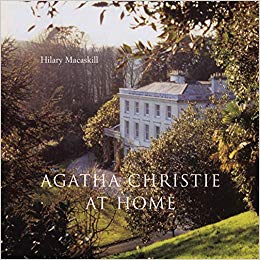
Throwback Thursday: Agatha Christie at Home

Today I’m looking back at my post on Agatha Christie at Home by Hilary Macaskill, which I first posted on 19 August 2013.

Here’s the first paragraph:

One of the things that struck me when I was reading Agatha Christie’s An Autobiography was her love of houses. It stemmed from her childhood dolls’ house. She enjoyed buying all the things to put in it – not just furniture, but all the household implements such as brushes and dustpans, and food, cutlery and glasses. She also liked playing at moving house, using a cardboard box as a furniture van.

Click here to read my full review

The next Throwback Thursday post is scheduled for September 30.

Books Read in August 2021

August was a busy month for me and it didn’t leave much time for reading or writing reviews! But I did read 5 books, and as both Framley Parsonage (684 pages) and Dead Tomorrow (663 pages) are very long books, it took me over half of August to read just those two!

  1. Framley Parsonage by Anthony Trollope 4* – see my review
  2. The Queen’s Spy by Clare Marchant 4*
  3. The Madness of Crowds by Douglas Murray 3*
  4. Dead Tomorrow by Peter James 3*
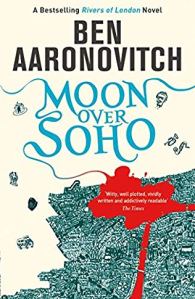
  5. Moon Over Soho by Ben Aaronovitch 4*

The only book I reviewed was Framley Parsonage. So, before I begin September’s books here are just a few brief thoughts on the other 4 books.

The Queen’s Spy by Clare Marchant – historical fiction with a dual timeline set in 1584 and 2021. I read this quickly drawn along by the plot and keen to know the links between the two main characters, Mathilde in the present day and Tom in the 16th century. I was more interested in Tom’s story. He is deaf and dumb, but he can lip read. He is an apothecary and also a spy, working for Sir Francis Walsingham, Elizabeth I’s spymaster, during the period leading up to the Babbington Plot. Mathilde has inherited a medieval mansion, Lutton Hall, and she is surprised to find that she has family there she had never heard of before. The two timelines interlink as Mathilde discovers the secrets hidden at Lutton Hall.

The Madness of Crowds: Gender, Race and Identity by Douglas Murray. Crowd behaviour fascinates me, so I hoped this book would cast some light on the subject – it certainly did. There are sections on sexuality, gender, technology and race, including a chapter on transgender, which I found the most enlightening. The synopsis describes how Murray “reveals the astonishing new culture wars playing out in our workplaces, universities, schools and homes in the names of social justice, identity politics and ‘intersectionality’.” Some of it I found shocking and infuriating.

Dead Tomorrow by Peter James – the 5th book in his Detective Superintendent Roy Grace series. Grace and his team investigate the deaths of three teenagers found by a dredger at the bottom of the English Channel, which leads them to a gang of human traffickers operating from Eastern Europe. Parallel with their investigation a desperate mother is fighting for her daughter’s life. One of the things I like about the Roy Grace series is the continuing story of Grace’s personal life. But what I find irritating is the way Peter James describes what all his characters are wearing and the details of all the little details of their surroundings. And this book in particular is far too long and drawn out.

Moon Over Soho by Ben Aaronovitch, the second Rivers of London novel. I loved the first book, Rivers of London. These are fast-paced police procedurals of a very different kind – urban fantasy, set in the real world of London, a mix of reality and the supernatural. You could probably read them as standalones, but I really think it’s best to read them in order to get the full background to what is going on and what has already happened to the main characters.

DC Peter Grant is assigned to work with Detective Chief Inspector Thomas Nightingale (who is the last wizard in England) as part of a special and secret branch of the Met, dealing with all things magical and supernatural. Moon Over Soho begins with the murder of Cyrus Wilkinson, a part-time jazz saxophonist, who had apparently dropped dead of a heart attack just after finishing a gig in a Soho jazz club. Peter can hear music coming from his corpse. What follows is a complicated story full of twists and turns, humour, and some gruesome and unusual murders.

My Friday Post: The Radium Girls by Kate Moore

On Fridays I often join in with two book memes:

Book Beginnings on Fridays hosted by Rose City Reader, where bloggers share the first sentence or more of a current read, as well as initial thoughts about the sentence(s), impressions of the book, or anything else that the opening inspires. 

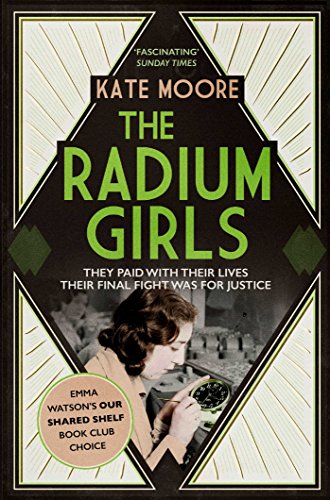
This week I’m featuring The Radium Girls: They paid with their lives. Their final fight was for justice by Kate Moore, one of my TBRs. It’s the true story about dial-painters, girls and women who painted the numbers on clocks, watches and other instruments using radium-infused luminous paint in the 1920s and 1930s. The girls shone brightly in the dark, covered head to toe in dust from the paint. 

The scientist had forgotten all about the radium. It was tucked discreetly within the folds of his waistcoat pocket, enclosed in a slim glass tube in such a small quantity that he could not feel its weight.

Also on a Friday The Friday 56 is hosted by Freda’s Voice, where you grab a book and turn to page 56 (or 56% of an eBook), find one or more interesting sentences (no spoilers), and post them.

56%:

‘Every week there seemed to be some emergency order that required an extra pair of hands. Then Catherine would slip her brush between her lips, dip it in the powder and paint; the girls all still did it that way at Radium Dial, for their instructions were never changed.

Ice Bound by Jerri Nielsen with Maryanne Vollers

Ebury Press | 2001 | 379 p | Own copy | 5*

I read Ice Bound: One Woman’s Incredible Battle for Survival over two months, taking my time. Dr Jerri Nielsen was a forty-six year old doctor working in Ohio when in 1998 she made the decision to take a year’s sabbatical at the Amundsen-Scott South Pole Research Station in Antarctica, the most remote and perilous place on earth. She had just been through an acrimonious divorce and could no longer see her children.

The first part of the book describes life at the South Pole in detail, the layers of clothing needed in the extreme cold, the adjustments to living at 11,000 feet above sea level, and the difficulties of living at the pole with power failures, fires, frostbite, boredom, memory loss, nausea, and getting lost in the darkness and total whiteout. But she also describes the friendships she made and how she felt about celebrating her forty-seventh birthday at the South Pole:

It was the best birthday I had had since childhood. I was forty-seven and surrounded by friends, in a community that needed me, in a place that I loved, discovering more every day about what truly mattered in life. (page 138)

It’s about half way into the book that she describes when in the dark Antarctic winter of 1999 she discovered a lump in her breast. Whilst the Pole was cut off from the rest of the world in total darkness she treated herself, taking biopsies and having chemotherapy, until she was rescued by the Air National Guard in October 1999. She said this about her experience:

I can say that after living at the South Pole nothing can possibly terrify me, even looking at my own death. That is one of the many things this place does to you. Nothing after that really matters. (page 190)

The descriptions of the polar landscape are just beautiful:

I was fascinated by the concept of twilight and its three discrete stages. Yet all I truly understood was that the world outside the Dome seemed beautiful and alien every day. Now the sky was deep purple with bands of orange on the horizon. I was outside watching the sky one day when I saw my first aura. It looked like a shimmering green curtain, rolling in a solar wind, with pink searchlights shooting into the atmosphere like heaven’s own movie premier. The rest was silence and space. (page 147)

This is a true story of survival under extreme circumstances, of courage and endurance. Even without cancer I cannot imagine coping with life at the South Pole. I was diagnosed with breast cancer in 2011 and had a lumpectomy and radiotherapy so I have experienced some of what she went through, but it was nothing compared to what Jerri Nielssen had to go through. To take my own biopsies and administer my own chemotherapy like she did would be beyond me. It is hard for me to read even now years later and I found it immensely moving.

The book alternates between narrative and personal letters and emails and in her acknowledgments Jerri Nielssen thanks Maryanne Vollers for her help in telling her story. It held me spellbound from beginning to end.

I wanted to know what happened next to her. The book has an Epilogue that describes how she was treated – mastectomy, more chemotherapy and radiation. The cancer then went into remission, but in 2005 it returned in her bones and liver, later spreading to her brain and she died in June 2009. A brave and truly inspirational woman.

New Additions at BooksPlease

I’ve been lucky with some of the 99p e-books on offer on Amazon recently and bought three books, well five actually as one is a trilogy.

First a nonfiction book, Winds of Change: Britain in the Early Sixties by historian, Peter Hennessy. The centre of the book is 1963 – the year of the Profumo Crisis, the Great Train Robbery, the satire boom, de Gaulle’s veto of Britain’s first application to join the EEC, the fall of Macmillan and the unexpected succession to the premiership of Alec Douglas-Home. Then, in 1964, the battle of what Hennessy calls the tweedy aristocrat and the tweedy meritocrat – Harold Wilson, who would end 13 years of Conservative rule and usher in a new era. It’s the final book in Hennessy’s Post War trilogy.

Then three novels – all historical fiction: The Regeneration Trilogy: Regeneration; The Eye in the Door; The Ghost Road by Pat Barker, three novels set during the First World War. I already had the third book, but hadn’t read it because I wanted to read the trilogy in order. It tells the story of three men, shell-shocked soldiers, who were sent back to the front. It’s based on the experiences of poets, Siegfried Sassoon and Wifred Owen who met at Craiglockhart Hospital near Edinburgh.

The Miniaturist by Jessie Burton – A few years ago I borrowed this book from the library but had to return it unread. Later on I watched the TV series and thought I’d like to read the book. So, when it was on offer for 99p I bought it. It’s set in Amsterdam in 1686. Nella Oortman marries a rich merchant, but life in her new home is unfulfilled. Even her cabinet house brings a mystery to the secretive world she has entered as the lifelike miniatures somehow start eerily foreshadowing her fate.

This last book is my choice this month from Amazon First Reads free books:

Tears of Amber by Sofía Segovia – a novel set during the Second World War in East Prussia between 1938 and 1947. In her author’s note Sofia Segovia says her novel was inspired by the story of Ilse and Arno Schipper, who established a factory in Monterrey, Mexico, her home town. It is a mix of fact and fiction. Publication date 1 May 2021. I have started reading and it’s looking good so far.