Novellas in November is hosted by Cathy and Rebecca. This week the theme is short nonfiction and these are some I’ve read in previous years.
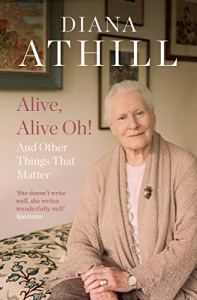
Alive, Alive Oh and Other Things That Matter by Diana Athill (21 December 1917 – 23 January 2019). She was a British literary editor, novelist and memoirist who worked with some of the greatest writers of the 20th century at the London-based publishing company Andre Deutsch Ltd. This book contains her memories, thoughts and reflections on her life as she approached her 100th year, covering events from her childhood in the 1920s and 1930s, her post-war life, visits to Florence, and in the Club Mediterranee in Corfu in the 1950s, and the friends and lovers she has known upto 2009 when she moved into a home. The chapters follow on chronologically but are unconnected except for the fact that they demonstrate her love of life. And it is this love of life that is evident in her writing that makes it such a remarkable book. I loved it.
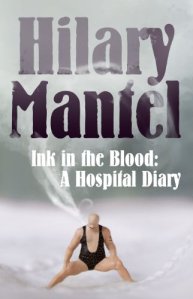
Ink in the Blood: A Hospital Diary by Hilary Mantel, another short memoir. I read this in 2011 after Hilary Mantel’s talk at the Borders Book Festival at Melrose had been cancelled in the previous summer. She had to cancel that because she wasn’t well – I didn’t know just how ill she was. Ink in the Blood reveals all – how she had surgery to remove an intestinal obstruction that ended up in a marathon operation, followed by intense pain, nightmares and hallucinations. Illness she found knocks down our defences, revealing things we should never see, needing moment by moment concentration on breathing, on not being sick and being dependent on others for your well-being. Writing was Hilary Mantel’s lifeline – it was the ink, as she wrote in her diary, that reassured her she was alive.
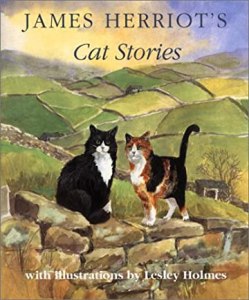
James Herriot’s Cat Stories is a collection of ten stories clearly demonstrating his love of cats. In the introduction James writes that cats were one of the main reasons he chose a career as a vet. They have always played a large part in his life and and when he retired they were still there ‘lightening’ his days. This is a short book of 158 pages with illustrations by by Lesley Holmes.
I’ve recently read Breathtaking by Rachel Clarke and I’ll post a review later.
Week 2: (November 8-12) – Book Pairing with Katie at Doing Dewey: This week, pair up a nonfiction book with a fiction title. It can be a “If you loved this book, read this!” or just two titles that you think would go well together. Maybe it’s a historical novel and you’d like to get the real history by reading a nonfiction version of the story.
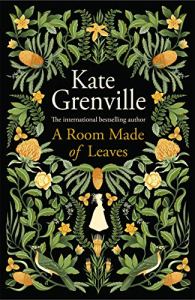
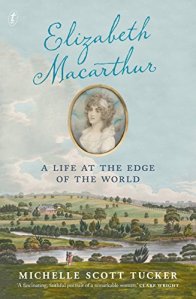
Earlier this year I read the novel A Room Made of Leaves by Kate Grenville and I’m pairing it with Elizabeth Macarthur: A Life at the Edge by Michelle Scott Tucker, which I haven’t read yet.
Kate Grenville is one of my favourite authors, so I was very keen to read A Room Made of Leaves. It’s historical fiction telling the story of the Macarthurs, Elizabeth and John Macarthur, who settled in Australia at the end of the eighteenth century. It’s based on the real lives of the Macarthurs using letters, journals and official documents of the early years of the New South Wales colony. Her writing suits me – historical fiction, with good descriptive writing setting the scenes vividly in their locations. I find her books difficult to put down and they stay in my mind long after I’ve finished reading. This one is no exception.
Whenever I read historical fiction I always want to know how much is fact and how much is fiction, how accurate it is. And so this novel intrigued me because Kate Grenville’s book begins with an editor’s note about ‘the ‘incredible discovery of Elizabeth Macarthur’s secret memoirs’ in a tin box containing old papers, revealing the real person behind the few letters she wrote home to her family and friends and a lot of ‘dull correspondence with her adult children’. Was this true, I wondered. So I turned to the back of the book to read Grenville’s Author’s Note and in that she clarifies that this is not history and, although the extracts from Elizabeth’s letters are from the letters of the real Elizabeth Macarthur, she has ‘taken some liberties in order to shape this work of fiction’. The old documents were Grenville’s ‘inspiration and guide’. In other words you have to bear in mind the epigraph, an actual quotation from one of Elizabeth’s letters: Believe not too quickly, a reminder that this is fiction.
It made me want to know more about the Macarthurs, and what was indeed their history, so I was delighted to find out that Kate Grenville references Michelle Scott Tucker’s biography: Elizabeth Macarthur: A Life at the Edge of the World as the standard biography in her Acknowledgements and I was even more delighted to see that it’s available as a ebook. So it is now in my Kindle and I’m keen to read it as soon as possible. I want to see what Michelle Scott Tucker has made of the same historical sources – history, after all, is an interpretation of the facts from the records, trying to explain what happened and why, dependent on available evidence. Fiction is more flexible and can fill in the gaps where the documentary evidence is lacking.
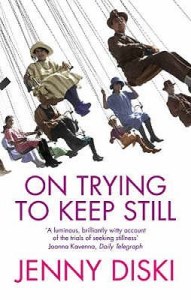
Today I’m looking back at my post on On Trying to Keep Still by Jenny Diski which I first reviewed on June 8, 2007.
Here are the first two paragraphs::
This book captivated me. I have read some good books this year, but this one outshines the rest. When I wasn’t reading it I was thinking and talking about it. It’s about experiencing an experience, becoming aware of experiencing the experience and so losing the experience.
I have had the experience of experiencing Jenny Diski’s travels during a year when she visited New Zealand, spent three months in a cottage in Somerset and went to sample the life of the Sami people of Swedish Lapland. No need to go those places myself now. Really, I could be tempted by a trip to New Zealand, but that is only a pipe dream. Now, a cottage in Somerset – that is a real possibility.
I won’t be able to finish reading any more books this month, but it’s been a bumper month of reading, with a total of 8 books. Five of them are nonfiction (including one audiobook) which is probably the first time I’ve read more nonfiction than fiction during one month. But I’ve only written posts about 2 of them! I’ve definitely spent more time reading than writing this month.
These are books I’ve reviewed with links to my posts:
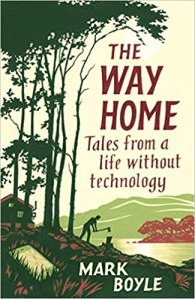
The Way Home: Tales from a life without technology by Mark Boyle 4* – This is not a ‘how to’ book, nor is it a guide to living without technology. It’s an account of what it was like for him, living in a wooden cabin he built on a smallholding in Ireland. He has no running water, no car, no electricity or any of the things it powers: the internet, phone, washing machine, radio or light bulb. He writes about the loneliness he experienced, the lack of contact with his parents and friends, and the damage to his relationships. The book follows the seasons of the year and is a collection of tales about his experiences and his observations about attempting to live a technology-free life.
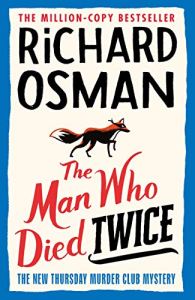
The Man Who Died Twice by Richard Osman 1* – light, easy to read crime fiction, this is a follow up to The Thursday Murder Club. Many people have written glowing reviews of this book, but Richard Osmond’s style of humour differs from mine, so I didn’t find it very funny. I don’t like being so negative about a book but I think the characters are rather stereotypical and the plot is over complicated and unconvincing. In addition it’s written in the present tense which usually irritates me – and it did.
And here are a few notes about 2 of the remaining 6 books with links to Amazon:
The Library of the Dead by T L Huchu 4* – I loved this fantasy novel, set in a future or alternative Edinburgh, with a wealth of dark secrets in its underground. Teenager Ropa, has dropped out of school to become a ghost talker and when a child goes missing in Edinburgh’s darkest streets, Ropa investigates his disappearance. It’s a dark story, but with flashes of humour to lighten the darkness, and is a mix of Zimbabwean and Scottish magic and culture. If you enjoy Ben Aaronvitch’s Rivers of London novels, you’d enjoy this book.
I Love the Bones of You by Christopher Eccleston 5* an audiobook read by actor, Christopher Eccleston, who has played many roles. He is probably my favourite Doctor Who and I especially loved his portrayal of Maurice Scott in the BBC drama The A Word. Maurice is an eccentric and lovable man who has an autistic grandson. I Love the Bones of you is not the usual celebrity autobiography that is just all about him and his work. This is a really vivid portrait of his relationship with his family and particularly with his father who had dementia at the end of his life. He talks about his lack of confidence in his acting ability together with his experiences with anorexia, depression and breakdowns and talks honestly about his struggles with mental health..
~~~
Part Two of Books Read in October 2021 will follow shortly.
I am way behind with writing about the books I’ve been reading. It seems to be getting worse this year. It all began last year during the first lockdown when my ability to concentrate just disappeared and it’s not fully come back yet. Now I have five books that I’ve read but not reviewed.
This is review of just one of them. When I sat down to write this post I’d intended to write short reviews of at least two or three of the books, but once I began I found that was impossible – I had too much to say about them. From being a post with short notes on what I’ve read recently this post as morphed into one of the longest posts about just one book that I’ve written – and I still don’t think I’ve captured the essence of it.
The Way Home:Tales from a Life Without Technology by Mark Boyle, a former business graduate, who lived entirely without money for three years. He has written columns for the Guardian and has irregularly contributed to international press, radio and television. He lives on a smallholding in Co. Galway, Ireland. This book follows the events of his first year of living without technology, interspersed with an account of a visit to Great Blaskett off the coast of County Kerry, to the south of Boyle’s new home. The Islanders were eventually evacuated to the mainland in the early 1950s.
The first thought I had about this book is that the concept of living without technology is alien to me. There is no way I could live like that and I wondered how he came to that decision and how he managed it with no running water, no car, no electricity or any of the things it powers: the internet, phone, washing machine, radio or light bulb. He built his home with his bare hands, learning to make fire, collecting water from the stream, foraging and fishing.
He had to clarify just what constitutes technology and what doesn’t. It wasn’t that easy to decide when you consider that even the pencil can be described as technology. He questioned where to draw the line such as the Stone Age, the Iron Age, or the eighteenth century? The more he thought about it the less important it seemed. He wanted to explore what it means to be human,
… to discover what it might feel like to become part of one’s landscape using only tools and technologies (if I must call them that) which, like the Old Order Amish people of North America, do not make me beholden to institutions and forces that have no regard for the principles and values on which I wish to live my life. (page 14)
The book follows the seasons of the year and rather than being the story of his life without technology is a collection of
observations, practicalities, conversations over farmyard gates, adventures and reflections, which I hope will provide an insight into the life of someone attempting to pare the extravagance of modernity back to the raw ingredients of life. (page 15)
It’s not a ‘how to’ book, nor is it a guide to living without technology. It’s an account of what it was like for him. He writes about the loneliness he experienced, the lack of contact with his parents and friends, and the damage to his relationships, particularly to his girlfriend, Kirsty, who initially shared his technology-free life. Without the internet and a phone it is difficult to keep in touch with people. There are letters and these became important to him, otherwise the way to communicate face to face was by walking. Formerly a vegan he found it difficult to adapt to killing in order to eat, for example killing a deer, skinning and butchering it. His thoughts on life and death had to undergo a dramatic change.
Life without technology is inevitably slower and more arduous. Living where there is no tap for instant water, and no switches to turn on a light is not simple either. One of the things he found difficult to adapt to was the way of writing. Previously he had used computers to write everything. Hand writing, however, involves a whole new way of thinking. He could no longer use the typed word, or online research, and without the use of spell-check, copy and paste or delete it is much harder to restructure a page and you have to start again. Eventually his thinking slowed down, so that he thought twice in order to write once. As I’m older than Boyle, I remember the process in reverse and my delight at being able to organise my writing using copy and paste with much more ease and speed than before, when I did literally ‘cut’ and ‘paste’, or rather staple, when writing.
There is so much more in this book that I haven’t covered in this post. I think it’s a remarkable and fascinating book, and it gave me much to think about. It’s ironic really, considering its subject, that I bought the e-book version, read it on my Kindle and wrote and posted this review on my laptop. It is also ironic that in order to publish the book, having written every word of it by hand, Mark Boyle had to get it typed up – which he did himself, reluctantly and with big reservations. It was not easy for him. He describes the effects of doing it as follows:
I felt less purposeful, like I no longer knew what my life was about, or what I stood for. By evening I felt entirely disconnected from the landscape around me, like I was no longer a part of it, but in some strange virtual universe instead. The natural light hurt my eyes as I re-emerged outside.
In some ways it was good and important for me to temporarily re-enter that world of things, so as to dispel any romantic memories I had about life being much better and easier with machines. The experience of it was such that, having made the compromise, I’m not sure I would make it again. (page 324)
Publisher : Oneworld Publications (4 April 2019)
It’s been a long time since I last looked at the forgotten e-books on my Kindle, so it’s time to dip into it again. I have a bad habit of downloading books and then forgetting all about them – it’s as though they’ve gone into a black hole.
Today I’m looking at books with titles beginning with the letters J, K and L, with a little ‘taster’ from each. The summaries are from Goodreads.
Jeremy Hutchinson’s Case Histories by Thomas Grant – I bought this in February 2020 after watching the BBC series,The Trial of Christine Keeler, the story of the Profumo affair in 1962 as seen from her perspective. Hutchinson was Keeler’s defence barrister.
Summary: Born in 1915 into the fringes of the Bloomsbury Group, Jeremy Hutchinson went on to become the greatest criminal barrister of the 1960s, ’70s and ’80s. The cases of that period changed society for ever and Hutchinson’s role in them was second to none. In Case Histories, Jeremy Hutchinson’s most remarkable trials are examined, each one providing a fascinating look into Britain’s post-war social, political and cultural history.
A cartoon by Cummings appeared in the Daily Express on 10 July 1963 headed ‘The adventures of James Macbond’. It showed the beleaguered figure of Harold Mavmillan fleeing from three assailants. Kim Philby and his fellow spy John Vassall are both dressed as shady hoodlums, one wielding a knife, the other a pistol both aimed at Macmillan. Christine Keeler is the third, incarnated on the page as a sort of vampiric harpy, her long-nailed hand outstretched trying to clutch the Prime Minister’s coat tails.
That year was a kind of horror show for Macmillan, and he was not to see out 1963 as Prime Minister. His resignation was accepted by the Queen in October.(page 95)
The Keeper of Lost Things by Ruth Hogan – I bought this in May 2017 and can’t remember how I first came across it.
Summary: Anthony Peardew is the keeper of lost things. Forty years ago, he carelessly lost a keepsake from his beloved fiancée, Therese. That very same day, she died unexpectedly. Brokenhearted, Anthony sought consolation in rescuing lost objects—the things others have dropped, misplaced, or accidentally left behind—and writing stories about them.
He took a sip from his drink and lovingly kissed the cold glass of the photograph before replacing it on the table next to his chair. She was not a classic beauty; a young woman with wavy hair and large dark eyes that shone, even in an old black and white photograph. But she was wonderfully striking, with a preserve that still reached out from all those years ago and captivated him. She had been dead for forty years, but she was still his life, and her death had given him his purpose. It had made Andrew Peardew the Keeper of Lost Things. (page 4)
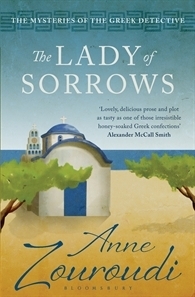
The Lady of Sorrows by Anne Zouroudi – I bought this in April 2013! It is the fourth in Anne Zouroudi’s Mysteries of the Greek Detective series featuring Hermes Diaktoros. Hermes is a detective with a difference. Just who he is and who he works for is never explained. I have read three of the books in the series. Each one features one of the Seven Deadly Sins.
Summary: A painter is found dead at sea off the coast of a remote Greek island. For our enigmatic detective Hermes Diaktoros, the plot can only thicken: the painter’s work, an icon of the Virgin long famed for its miraculous powers, has just been uncovered as a fake. But has the painter died of natural causes or by a wrathful hand? What secret is a dishonest gypsy keeping? And what haunts the ancient catacombs beneath the bishop’s house?
‘Allow me to introduce myself. I am Hermes Diaktoros, of Athens. Diaktoros being, as you may know, an ancient word for messenger. My father has a strange idea of humour. He’s something of a scholar of the classical world.’
Politely, the priest took the fat man’s hand, which was, in spite of the day’s heat was quite cool to touch.
‘Father Linos Egiotis,’ said the priest.
‘A pleasure,’ said the fat man. ‘Now, I know you must be anxious to close up for siesta, and I won’t keep you.’ He turned back to the icon. ‘She’s very lovely, isn’t she?’ he said. ‘I have been wanting to make her acquaintance for many years. Quite by chance we were passing within a few miles, and had time enough before my next engagement to make the detour. She has quite a reputation, I believe, for performing magic tricks. Magic tricks are a paerticular interest of mine.’
‘Magic tricks?’ queried the priest, with annoyance. ‘The Lady occasionally sees fit to grant miracles. They are acts of divine grace, not magic tricks.’ (page 31)
So, three very different books from the depths of my Kindle. I’m not sure which one to read first. If you’ve read any of these books please let me know what you think. Or if you haven’t read them do they tempt you?