WWW Wednesday: 4 September 2024

WWW Wednesday is run by Taking on a World of Words.

The Three Ws are:

What are you currently reading?
What did you recently finish reading?
What do you think you’ll read next?
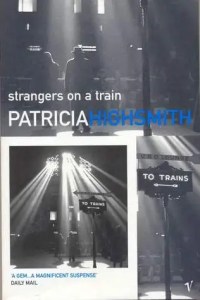
Currently I’m reading Strangers on a Train by Patricia Highsmith. This is the only book left I didn’t finish reading for my 20 Books of Summer Challenge 2024. It has been on my TBR list for a few years, so I am determined to read it soon. The reason I haven’t read it before now is that I have a paperback copy and I’ve got too used to reading on my Kindle with the ability to enlarge the text.

I have high hope that this psychological thriller will be good – maybe too high as so many people have enthused over this book. Can it live up to all the hype? Guy Haines and Charles Anthony Bruno meet on a train. Bruno manipulates Guy into swapping murders with him. “Some people are better off dead,” Bruno remarks, “like your wife and my father, for instance.” It begins slowly though and so far, I’m doubtful it will.
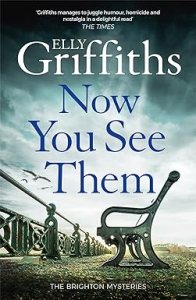
I’m also reading Now You See Them by Elly Griffiths, the 5th Brighton Mystery novel, also called the DI Edgar Stephens and Max Mephisto series. It’s about three young women who have gone missing in Brighton. Edgar is now a Superintendent and his wife, Emma, formerly a police officer, is now a private detective. Edgar’s friend, magician Max Mephisto, is reinventing himself as a movie star and trying not to envy his daughter Ruby’s television fame. It seems a bit pedestrian so far, maybe too formulaic.
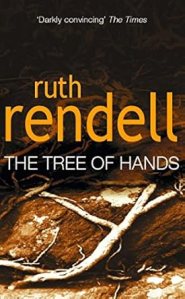
The last book I read was The Tree of Hands by Ruth Rendell, which I think is one of her best books I’ve read. It’s also a psychological thriller and compelling that I just didn’t want to stop reading until I finished it.

Description on Amazon

When Benet was about fourteen, she and her mother had been alone in a train carriage – and Mopsa had tried to stab her with a carving knife.

It has been some time since Benet had seen her psychologically disturbed mother. So when Mopsa arrives at the airport looking drab and colourless in a dowdy grey suit, Benet tries not to hate her.

But when the tragic death of a child begins a chain of deception, kidnap and murder in which three women are pushed to psychological extremes, family ties are strained to the absolute limit…

What will I read next? At the moment I have no idea. Once I’ve finished a challenge that involves reading from a planned list I have this great sense of freedom, that I can just decide on a whim what to read next.
WWW Wednesday: 31 July 2024

WWW Wednesday is run by Taking on a World of Words.

The Three Ws are:

What are you currently reading?
What did you recently finish reading?
What do you think you’ll read next?

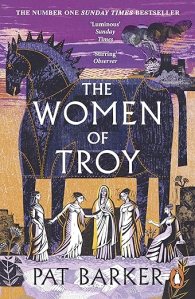
Currently I’m reading The Women of Troy by Pat Barker. this is the second book on The Women of Troy trilogy, a retelling of the classic Greek myth. I’ve recently read the first book, The Silence of the Girls (my review will follow shortly) which I loved. So far this second book looks as though it will be just as good. Troy has fallen but high winds are keeping the Greeks from sailing home.

Description from Goodreads:

Troy has fallen and the victorious Greeks are eager to return home with the spoils of an endless war—including the women of Troy themselves. They await a fair wind for the Aegean.

It does not come, because the gods are offended. The body of King Priam lies unburied and desecrated, and so the victors remain in suspension, camped in the shadows of the city they destroyed as the coalition that held them together begins to unravel. Old feuds resurface and new suspicions and rivalries begin to fester.

Largely unnoticed by her captors, the one time Trojan queen Briseis, formerly Achilles’s slave, now belonging to his companion Alcimus, quietly takes in these developments. She forges alliances when she can, with Priam’s aged wife the defiant Hecuba and with the disgraced soothsayer Calchas, all the while shrewdly seeking her path to revenge.

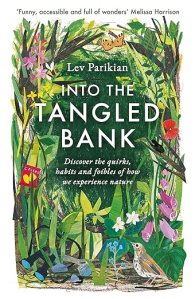
I’m also reading Into the Tangled Bank by Lev Parikian, non fiction about nature. It’s easy reading, Parikian writes with humour, in a chatty style, but also richly descriptive. I’m loving it, it is compulsive reading. He is a storyteller, so there are lots of anecdotes and stories, plus his thoughts on nature and how we view it. Amongst many other topics he ponders about the ethics of zoos – something that puzzles me too – and wonders if the definition of a nature lover is becoming that of one who loves nature programmes. There’s a lot packed into this book.

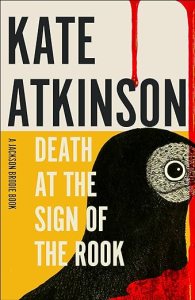
The last book I read was Death at the Sign of the Rook by Kate Atkinson, a review copy. My review will follow after the book is published on 22 August 2024. I have very mixed feelings about this book from loving parts of it to frustration at other parts.

Synopsis from Amazon:

The stage is set. The players are ready. By night’s end, a murderer will be revealed. 
Ex-detective Jackson Brodie is staving off a bad case of midlife malaise when he is called to a sleepy Yorkshire town, and the seemingly tedious matter of a stolen painting. But one theft leads to another, including the disappearance of a valuable Turner from Burton Makepeace, home to Lady Milton and her family. Once a magnificent country house, Burton Makepeace has now partially been converted into a hotel, hosting Murder Mystery weekends.

As paying guests, a vicar, an ex-army officer, impecunious aristocrats, and old friends converge, we are treated a fiendishly clever mystery; one that pays homage to the masters of the genre—from Agatha Christie to Dorothy Sayers.

What will I read next? At the moment I have no idea.

Spell the Month in Books May 2024: Nature

Spell the Month in Books is a linkup hosted by Jana on Reviews From the Stacks on the first Saturday of each month. The goal is to spell the current month with the first letter of book titles, excluding articles such as ‘the’ and ‘a’ as needed. That’s all there is to it! Some months there are optional theme challenges, such as “books with an orange cover” or books of a particular genre, but for the most part, any book you want to use is fair game!

This month’s theme is Nature. This is a vast topic and looking through my books, both read and those I’ve yet to read, I have lots to choose from, but I only found a few that fit this theme in titles that begin with letters to spell the word MAY. I have read two of these books and the other one is one of my TBRS.

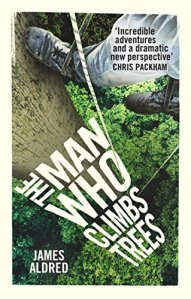
M is for The Man Who Climbed Trees by James Aldred 5*

If you have ever wondered how wildlife/nature documentaries are filmed this book has the answers.

James Aldred, a professional tree climber, wildlife cameraman, and adventurer, explains how he discovered that trees are places of refuge as well as providing unique vantage points to view the world. Trees enthral him, right from the time he first climbed into the canopy of an oak tree in the New Forest. Climbing trees gives him peace within himself and with the world around him. Since he first began climbing trees he has travelled the world climbing many of the world’s tallest trees, filming for the BBC and National Geographic magazine.

The Man Who Climbs Trees is a wonderful book, full of James Aldred’s adventures and his views on life and spirituality. I loved it. His travels brought him into contact with dozens of different religions and philosophies all containing ‘profound elements of truth’ that he respects very much, concluding that ‘spirituality is where you find it’ and he finds it ‘most easily when up in the trees’.

A is for All Among the Barley by Melissa Harrison, a TBR.

I bought this book because I enjoyed Melissa Harrison’s novella, Rain: Four Walks in English Weather, which is about four rain showers, in four seasons, across Wicken Fen, Shropshire, the Darent Valley and Dartmoor. I like the way she writes about the natural world and All Among the Barley looks as though it will bring to life a world governed by the old rural traditions, in an evocation of place and a lost way of life. It’s a novel set in the autumn of 1933 on a farm describing rural traditions as harvest time approaches.

Y is for The Year Without Summer by Guinevere Glasfurd 5*

The volcanic eruption of Mount Tambora on Sumbawa Island in Indonesia in 1815 had a profound and far reaching impact on the world. It led to sudden cooling across the northern hemisphere, crop failures, famine and social unrest in the following year, which became known as The Year Without Summer and in North America as Eighteen hundred and froze to death. But it wasn’t until the mid twentieth century that volcanic eruptions were shown to affect climate change.

Guinevere Glasfurd’s novel illustrates how the impact of the extreme weather conditions affected the lives of six people. They never meet, or know each other, but their stories are intertwined throughout the book in short chapters, giving what I think is a unique look at the events of 1816. I enjoyed all the stories.

The next link up will be on June 1, 2024 when the optional theme will be History.

Top Ten Tuesday: Covers/Titles with Things Found in Nature

Top Ten Tuesday is a weekly meme created by The Broke and the Bookish and now hosted by Jana at That Artsy Reader Girl. For the rules see her blog.

The topic this week is Covers/Titles with Things Found in Nature (covers/titles with things like trees, flowers, animals, forests, bodies of water, etc. on/in them).

This week I’ve read all ten books I’ve chosen so the links all take you to my reviews.

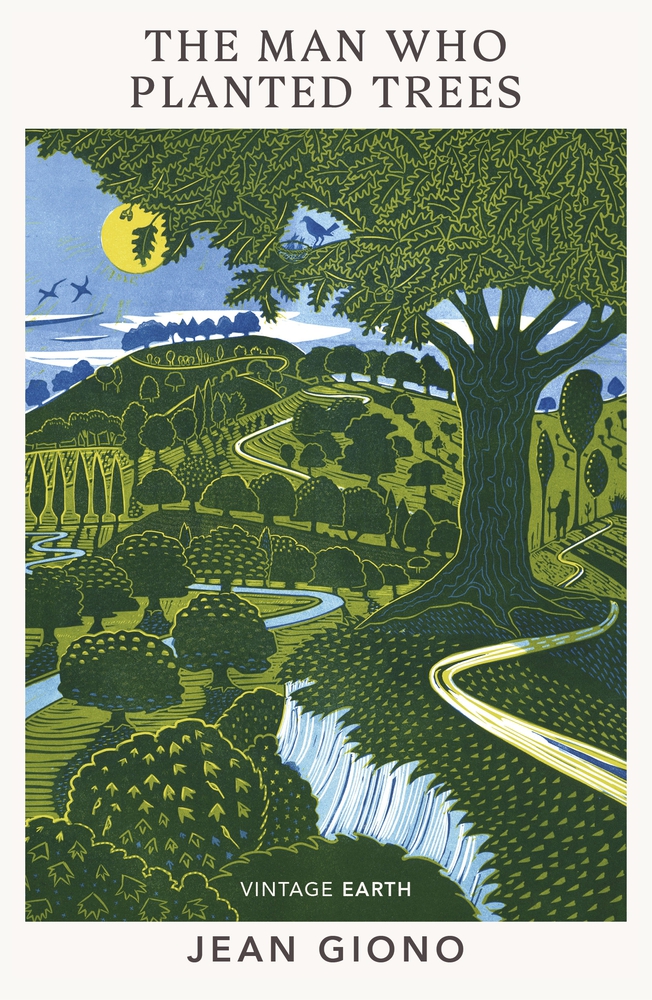
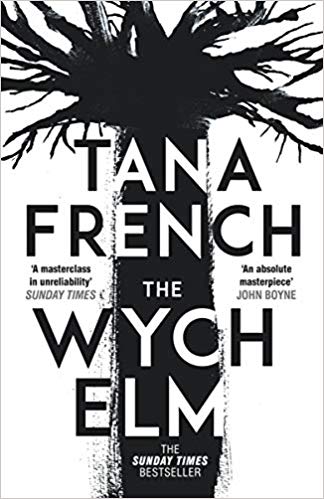
The first five books all have trees in the titles and on the covers:

The Man Who Climbs Trees by James Aldred, nonfiction. If you have ever wondered how wildlife/nature documentaries are filmed this book has the answers. James Aldred, a professional tree climber, wildlife cameraman, and adventurer, explains how he discovered that trees are places of refuge as well as providing unique vantage points to view the world.

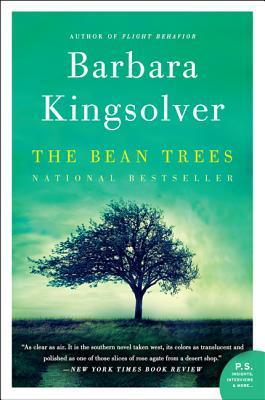
The Bean Trees by Barbara Kingsolver, a novel. There are several themes running throughout this book – both political and social including family relationships, particularly mother/child, sexual and physical abuse of small children, the integration of cultures, as well as the always current issue of refugees and illegal immigrants.

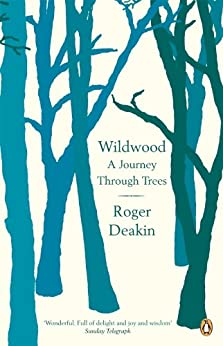
Wildwood: a Journey Through Trees by Roger Deakin about his journeys through a wide variety of trees and woods in various parts of the world. It’s a memoir, a travelogue and also it’s about the interdependence of human beings and trees.

The Man Who Planted Trees by Jean Giono, a short book about a shepherd who transformed the land by planting trees. Not just a few trees, thousands of them over the years. Where once the earth was dry and barren the trees brought water back into the dry stream beds, seeds germinated, meadows blossomed and new villages appeared. 

The Wych Elm by Tana French – psychological thriller, as dark family secrets gradually came to light. It isn’t a page-turner and yet it is full of mystery and suspense about a family in crisis. Soon after Toby returns to his family home a human skull is found in the hollow trunk of a wych elm, the biggest tree in the garden.

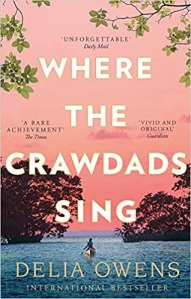
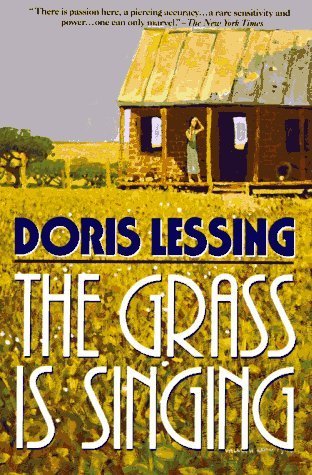
The last five books are a mixture of fiction and nonfiction on different Nature topics:

Where the Crawdads Sing by Delia Owen, fiction, set mainly in the marshlands in North Carolina where Kya Clark, the so-called Marsh Girl lives She has survived for years alone in the marsh that she calls home, finding friends in the gulls and lessons in the sand. It is also a murder mystery.

The Grass is Singing by Doris Lessing – a novel set in Southern Rhodesia (now Zimbabwe) in the 1940s, this is a novel about failure and depression, disaster, racism, racial tension and prejudice, colonialism at its worst. It’s beautifully written, but so tragic.

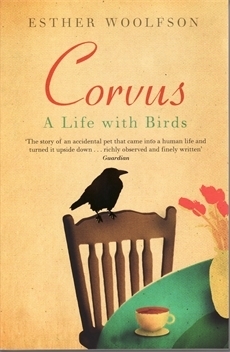
Corvus: A Life With Birds by Esther Woolfson, nonfiction, mainly about the rook, Chicken. Esther Woolfson also writes in detail about natural history, the desirability or otherwise of keeping birds, and a plethora of facts about birds, their physiology, mechanics of flight, bird song and so on.

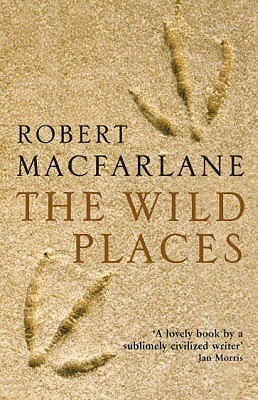
The Wild Places by Robert Macfarlane, a travelogue that will intrigue readers of natural history and adventure in which he explores our changing ideas of the wild. From the cliffs of Cape Wrath, to the holloways of Dorset, the storm-beaches of Norfolk, the saltmarshes and estuaries of Essex, and the moors of Rannoch and the Pennines, his journeys become the conductors of people and cultures, past and present, who have had intense relationships with these places.

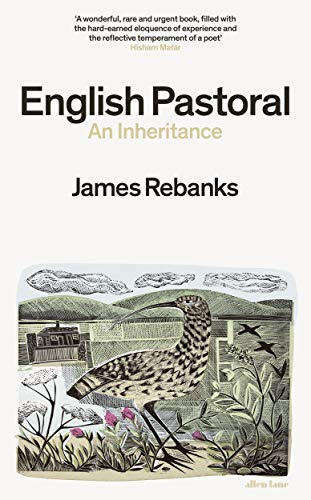
English Pastoral by James Rebanks. This is an absolutely marvellous book. I enjoyed his account of his childhood and his nostalgia at looking back at how his grandfather farmed the land. And I was enlightened about current farming practices and the effects they have on the land, depleting the soil of nutrients. Rebanks also explains what can be done to put things right, how we can achieve a balance of farmed and wild landscapes, by limiting use of some of the technological tools we’ve used over the last 50 years so that methods based on mixed farming and rotation can be re-established. By encouraging more diverse farm habitats, rotational grazing and other practices that mimic natural processes we can transform rural Britain.

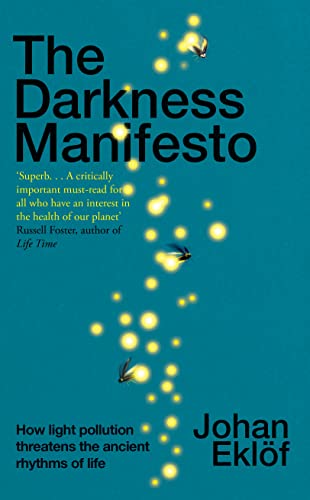
The Darkness Manifesto by Johan Eklöf, translated by Elizabeth DeNoma

Virgin| 3 Novmber 2022| 205 pages| Review Copy| 3.5*

How much light is too much light? The Darkness Manifesto urges us to cherish natural darkness for the sake of the environment, our own wellbeing, and all life on earth.

The world’s flora and fauna have evolved to operate in the natural cycle of day and night. But constant illumination has made light pollution a major issue. From space, our planet glows brightly, 24/7. By extending our day, we have forced out the inhabitants of the night and disrupted the circadian rhythms necessary to sustain all living things. Our cities’ streetlamps and neon signs are altering entire ecosystems.

Johan Eklöf encourages us to appreciate natural darkness and its unique benefits. He also writes passionately about the domino effect of damage we inflict by keeping the lights on: insects failing to reproduce; birds blinded and bewildered; bats starving as they wait in vain for insects that only come out in the dark. And humans can find that our hormones, weight and mental well-being are all impacted.

Johan Eklöf, PhD, is a Swedish bat scientist and writer, most known for his work on microbat vision and more recently, light pollution. He lives in the west of Sweden, where he works as a conservationist and copywriter. The Darkness Manifesto is his first book to be translated into English.

~~~

Until I read The Darkness Manifesto: How Light Pollution Threatens the Ancient Rhythms of Life all I knew about light pollution was its effect on the night sky, how artificial light impairs our view of the sky, the stars and the planets. But I hadn’t realised just how much it adversely affects our environment, wildlife and our own health. This book is full of fascinating facts about the impact that darkness and the night have on all living creatures, including ourselves.

Artificial lighting today makes up a tenth of our total energy usage but most of it is of little benefit to us, spilling out into the sky. Animals cannot distinguish between artificial light and natural daylight which means their circadian rhythms are disrupted, sending body clocks awry, disrupting our sleep.

There is, of course, the need for safety and security, and Eklöf cites several examples of places around the world that have projects that promote darkness, and have established light pollution laws, such as France where there are regulations to limit how much light, and what kind of light, can be emitted into the atmosphere. The light needs to be adapted to suit the needs of both animals and humans.

Eklöf ends his book with his Darkness Manifesto, urging us to become aware of the darkness, to protect and preserve it individually by turning off lights when not in a room, and letting your garden rest in darkness at night; to discover nocturnal life; to observe the different phases of twilight and how the sun gives way to the moon and stars; and to learn more about the darkness and its importance for the survival of animals and plants. He also asks us to inform local authorities about the dangers of light pollution. To my mind the current energy crisis is another reason to reduce our use of lighting and electricity.

My thanks to the publishers for a review copy via NetGalley.

Book Beginnings & The Friday 56: Rain by Melissa Harrison

Every Friday Book Beginnings on Friday is hosted by Gillion at Rose City Reader where you can share the first sentence (or so) of the book you are reading. You can also share from a book you want to highlight just because it caught your fancy.

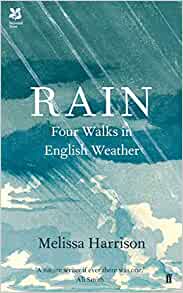
I’ve just started reading Rain: Four Walks in English Weather by Melissa Harrison, a ‘meditation on the English landscape in wet weather.’ She describes four walks in the rain over four seasons, across Wicken Fen, Shropshire, the Darent Valley and Dartmoor.

The Book begins with an Introduction:

What does rain mean to you? Do you see it as a dreadful inconvenience, a strange national obsession, or an agricultural necessity? We love to grumble about it, yet we invent dozens of terms to describe it and swap them gleefully; it trickles through our literature from Geoffrey Chaucer to Alice Oswald, and there are websites and apps that mimic its sound, soothing us while we work or sleep. Rain is what makes the English countryside so green and pleasant; it’s also what swells rivers, floods farms and villages and drives people out of their homes.

Also every Friday there is The Friday 56, hosted by Freda at Freda’s Voice, where you grab a book and turn to page 56 (or 56% of an eBook), find one or more interesting sentences (no spoilers), and post them.

Page 56 is in the chapter about her walk in the Darent Valley, in Kent, in August:

Behind the cumulonimbus currently discharging itself over the Darent Valley, more are forming; the afternoon will see thunder and lightning over much of the south-east of England, including London, less than twenty miles away.

Synopsis from Amazon UK:

Whenever rain falls, our countryside changes. Fields, farms, hills and hedgerows appear altered, the wildlife behaves differently, and over time the terrain itself is transformed.

In Rain, Melissa Harrison explores our relationship with the weather as she follows the course of four rain showers, in four seasons, across Wicken Fen, Shropshire, the Darent Valley and Dartmoor.

Blending these expeditions with reading, research, memory and imagination, she reveals how rain is not just an essential element of the world around us, but a key part of our own identity too.

I think I’m going to enjoy this book.

About the Author:

Melissa Harrison is a novelist, children’s author, journalist and nature writer. She contributes a monthly Nature Notebook column to The Times, and also writes regularly for the FT Weekend, the Guardian and the New Statesman. Her most recent novel, All Among the Barley, was the UK winner of the European Union Prize for Literature. It was a Waterstones Paperback of the Year and a Book of the Year in the Observer, the New Statesman and the Irish Times. At Hawthorn Time was shortlisted for the Costa Novel Award and longlisted for the Women’s Prize for Fiction, while Rain: Four Walks in English Weather was longlisted for the Wainwright Prize.