Six Degrees from No. 1 Ladies Detective Agency to White Nights

I love doing Six Degrees of Separation, a monthly link-up hosted by Kate at Books Are My Favourite and Best. Each month a book is chosen as a starting point and linked to six other books to form a chain. A book doesn’t need to be connected to all the other books on the list, only to the one next to it in the chain.

This month the chain begins with Alexander McCall Smith’s No.1 Ladies Detective Agency, a book I haven’t read although I have watched the TV version.

The No. 1 Ladies' Detective Agency  (No. 1 Ladies' Detective Agency #1)

Precious Ramotswe is a kind, warm-hearted and large African lady. She is also the only female private detective in Botswana. Her agency – the No.1 Ladies’ Detective Agency – is the best in the country. With help of her secretary, Mma Makutsi, and her best friend, Mr JLB Matekoni, she solves a number of difficult problems. A missing husband, a missing finger and a missing child – she will solve these mysteries in her own special way.

Although I haven’t read No.1 Ladies Detective Agency I have read a few of Alexander McCall Smith’s books including The Careful Use of Compliments, an Isabel Dalhousie Novel, one of the Sunday Philosophy Club series, set in Edinburgh.

The Careful Use of Compliments (Isabel Dalhousie, #4)

Isabel has just had a baby, Charlie, and is in a relationship with his father, Jamie (14 years her junior) who is her niece’s, ex-boyfriend. There is a mystery about a painting, whether or not it is a forgery, but for me it’s the philosophical questions that are always uppermost in Isabel’s mind and conversations, her way of ‘interring’ in matters which she considers ‘helping’, and her kindhearted nature that was more interesting.

The next link in my chain is to an another book set in Edinburgh. The Inspector’s Daughter by Alanna Knight, the first in the Rose McQuinn Mystery series, set in Edinburgh in 1895, when the Forth Railway Bridge had just been opened.

The Inspector's Daughter

Rose, recently returned from America’s Wild West, steps into the shoes of her father, DI Faro. She lives in an isolated house at the foot of Arthur’s Seat and is helped by a wild deerhound who appears just when she needs him.

Arthur’s Seat, the extinct volcano within Holyrood Park, east of Edinburgh Castle is also mentioned in Ian Rankin’s The Falls, the 12th Inspector Rebus book.

The Falls (Inspector Rebus, #12)

Rebus investigates the disappearance of ‘Flip’ a university student. One lead is a carved wooden doll found in a tiny coffin. Rebus concentrates on the tiny coffin and finds a whole series of them had turned up over the years dating back to 1836 when 17 were found on Arthur’s Seat.

The Strange Case of Dr. Jekyll and Mr. Hyde and Other Tales of Terror

In The Falls Rankin also refers to Burke and Hare, the 19th century resurrectionists and this leads me on to the next link in my chain – to The Body Snatcher, which is one of the Tales of Terror by Robert Louis Stevenson, published in the same volume as The Strange Case of Dr. Jekyll and Mr Hyde. This is a traditional Christmas ghost story, beginning with four men gathered in an inn on a dark winter’s night telling tales of grisly deeds as they sit round the fireside. One of the stories is based on the activities of body snatchers, Burke and Hare in Edinburgh in the 1820s.

The next book, also by Robert Louis Stevenson is in contrast to his tale of terror  – it’s A Child’s Garden of Verses, poems I loved as a child.

This is one of my favourite poems – it brings to mind the power  and fury of the wind:

Windy Nights

Whenever the moon and stars are set,
Whenever the wind is high,
All night long in the dark and wet,
A man goes riding by.
Late in the night when the fires are out,
Why does he gallop and gallop about?

Whenever the trees are crying aloud,
And ships are tossed at sea,
By, on the highway, low and loud,
By at the gallop goes he;
By at the gallop he goes, and then
By he comes back at the gallop again.

The last link in my chain is to a book with Nights in its title – White Nights by Ann Cleeves, the second in her Shetland Quartet, featuring DI Jimmy Perez. The ‘white nights’ are the summer nights when the sun never really goes down.

White Nights (Shetland Island, #2)

It’s set mainly in Biddista, a fictional village where artist Bella Sinclair throws an elaborate party to launch an exhibition of her work at The Herring House, a gallery on the beach. The party ends in farce when one the guests, a mysterious Englishman, bursts into tears and claims not to know who he is or where he’s come from. The following day the Englishman is found hanging from a rafter, and Jimmy Perez is convinced that the man has been murdered.

From books about different detective series my chain moved through a tale of terror, then to a children’s book of poetry and back to another murder mystery –  from Botswana to Edinburgh and the Shetland Isles.

Next month (February 3, 2018),  the chain begins with the book that won the Man Booker Prize in 2017 – Lincoln in the Bardo by George Saunders.
Six Degrees from It to The Vanishing Box

I love doing Six Degrees of Separation, a monthly link-up hosted by Kate at Books Are My Favourite and Best. Each month a book is chosen as a starting point and linked to six other books to form a chain. A book doesn’t need to be connected to all the other books on the list, only to the one next to it in the chain.

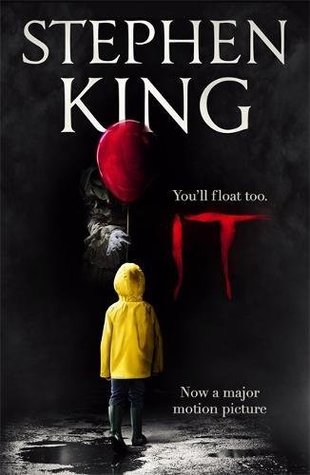
This month the chain begins with It by Stephen King – in the storm drains, in the sewers, IT lurks, taking on the shape of every nightmare, each one’s deepest dread. Sometimes IT appears as an evil clown named Pennywise and sometimes IT reaches up, seizing, tearing, killing…

It

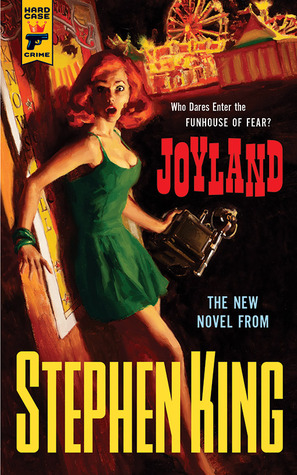
I haven’t read It but I have read  a few of Stephen King’s books including Joyland, which is a ghost story, a love story, a story of loss and heartbreak, set in a funfair. It’s also a murder mystery and utterly compelling to read. (my review)

13596166

The next link in my chain is to an another ghost story – Dark Matter by Michelle Paver, a chilling book, very chilling, both in the setting in the High Arctic and in atmosphere.

Dark Matter

It’s a ghost story in the form of a diary – that of Jack Miller who in 1937 was part of an expedition to the High Arctic to study its biology, geology and ice dynamics and to carry out a meteorological survey. As the darkness descends, Jack is left alone at the camp and his nightmare really begins. And it is very scary! (my review)

I’m moving away from dark and scary stories to another book with ‘matter in its title – to Alive, Alive Oh! And Other Things That Matter by Diana Athill.

Alive, Alive Oh!: and Other Things that Matter

It’s only a short book but it covers a wide range of Diana Athill’s memories, many images of beautiful places, and the friends and lovers she has known. The chapters follow on chronologically but are unconnected except for the fact that they demonstrate her love of life. It was heart breaking to read her remarkably candid account of  the miscarriage she had when she was in her early 40s and she nearly died. (my review)

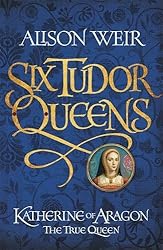
Katherine of Aragon also suffered from miscarriages during her marriage to Henry VIII. Antonia Fraser’s Six Tudor Queens: Katherine of Aragon, the True Queen is fictional biography at its most straight forward, written in an uncomplicated style.

It’s a long and comprehensive study, told from Katherine’s point of view it follows her life from the time she arrived in England at the age of sixteen to marry Prince Arthur, the elder of Henry VII’s two sons, to her death in 1536. (my review)

Another Katherine living in the Tudor period is Lady Katherine Grey, who was one of the heirs to the throne and a rival to the Tudor Queens, Mary and Elizabeth I. Leanda de Lisle tells her story and that of her sisters in The Sisters Who Would Be Queen: The tragedy of Mary, Katherine and Lady Jane Grey. 

The Sisters Who Would Be Queen


Lady Jane Grey  is remembered in British history as the monarch with the shortest reign… just nine days. In 1553 after the death of her cousin, the protestant King Edward VI she was proclaimed Queen in place of his Catholic half sister, Mary Tudor. Mary overthrew Jane 13 days later, and she was tried for treason, found guilty and was executed. (this is one of my TBR books)

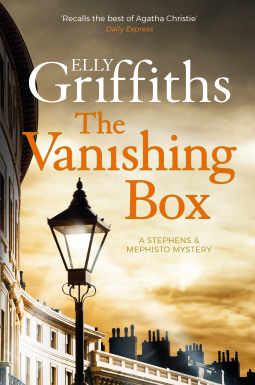
Lady Jane Grey features in The Vanishing Box by Elly Griffiths, the fourth book in the DI Stephens and Max Mephisto series.

Lily Burtenshaw was murdered. She was found in her room tied to a chair, leaning forward and pointing to an empty crate with ‘King Edward Potatoes’ written on the side. She had been posed to look like Lady Jane Grey in the painting by Delaroche, of her execution at the moment she was being helped to lay her head upon the block. (my review)

My chain began with a book  about a scary clown, moved to a scary funfair to yet another scary book set in the Arctic. It then travelled to a different matter – that of miscarriages, then to the sister of a short-lived queen and finally to a murder mystery in which the victim was posed as Lady Jane Grey.  From America to England in both the past and the present, from fiction to historical biography and then to a murder mystery – from horror to murder in six steps!

Next month January 6, 2018), the chain will begin with an international bestseller (that I haven’t read) – Alexander McCall Smith’s No.1 Ladies Detective Agency.

Six Degrees from Less than Zero to The Book of Dust

I love doing Six Degrees of Separation, a monthly link-up hosted by Kate at Books Are My Favourite and Best. Each month a book is chosen as a starting point and linked to six other books to form a chain. A book doesn’t need to be connected to all the other books on the list, only to the one next to it in the chain.

This month the chain begins with a controversial bestseller by a member of the eighties ‘literary Brat Pack’ – Bret Easton Ellis’s Less Than Zero.

Lessthan01st1.png

I haven’t read this book and can’t say that it appeals to me at all. Filled with relentless drinking in seamy bars and glamorous nightclubs, wild, drug-fuelled parties, and dispassionate sexual encounters, Less Than Zero – narrated by Clay, an eighteen-year-old student returning home to Los Angeles for Christmas – is a fierce coming-of-age story, justifiably celebrated for its unflinching depiction of hedonistic youth, its brutal portrayal of the inexorable consequences of such moral depravity, and its author’s refusal to condone or chastise such behaviour. (Amazon UK)

Towards Zero

So, the first link in my chain is to an another book with the word ‘zero‘ in the title – Towards Zero by Agatha Christie.

It’s one of my favourite of Agatha Christie’s books, first published in 1944, with an intricately plotted murder mystery featuring Superintendent Battle. The hypothesis is that murder is not the beginning of a detective story, but the end. It is the culmination of causes and events bringing together certain people, converging towards a certain place and time – towards the Zero Hour. The idea presupposes that there is an inevitability – that once events have been set in motion then the outcome is determined. Agatha Christie dedicated this book to Robert Graves, author of I Claudius, who was her neighbour in Devon during the Second World War and the two had become friends.

I, Claudius & Claudius the God by Robert…

I read I, Claudius and Claudius the God  by Robert Graves many years ago after watching the TV adaptation with Derek Jacobi playing the role of Claudius. Set in the first century A.D. in Rome, this is the life story of the Roman Emperor Claudius. A lame man and a stammerer, he was despised and dismissed as an idiot. He recorded the antics of the imperial household as its members vied for power; a story of murders, greed and folly. He had a disastrous love affair with the depraved Messalina but his reign as Emperor was surprisingly successful.

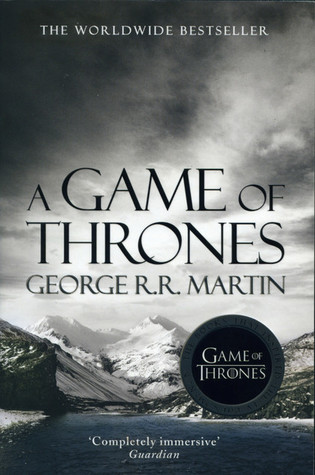
22740513My next link is to another book I read after first watching the TV adaptation – it’s A Game of Thrones by G R R Martin, fantasy fiction. I loved both the book and the TV series. It’s complex and multifaceted, and it’s full of stories and legends, set in a grim and violent world full of tragedy, betrayals and battles; a tale of good versus evil in which family, duty, and honour are in conflict, the multiple viewpoints giving a rounded view of the conflicts the characters face. It’s a love story too.
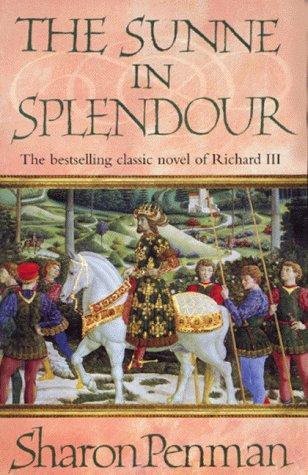
The Sunne In Splendour

Just before I read The Game of Thrones I’d read The Sunne in Splendour by Sharon Penman, historical fiction about the Wars of the Roses and had noticed the similarities between that and A Game of Thrones, the battles between the Houses of York and Lancaster paralleled by those between the Houses of Stark and Lancaster for example. This is one of the best historical novels that I’ve read. It is full of detail, bringing Richard III’s world to life. It’s a long book, nearly 900 pages and it took me a while to read it, but never once did I think it was too long, or needed editing. I loved it.

Another very long book is The Pillars of the Earth by Ken Follett. It has 1,076 pages and is historical fiction set in 12th century England during the time of the civil war between Stephen and Matilda/Maud (she’s known by both names – in this book she’s called Maud, but at school we were taught her name was Matilda). It’s also the story of the building of a cathedral.  It is really a medieval soap opera – in essence a family saga. Parts of the novel came to life more than others and it is rather long-winded and repetitive, terrible things happen, the characters overcome them and recover only to be knocked down again by more terrible events.

La Belle Sauvage (The Book of Dust, #1)Earth‘ made me think of ‘dust to dust’ which in turn made me think of Philip Pullman’s La Belle Sauvage, volume one of The Book of Dust. This is his latest book – I haven’t read it yet – set ten years before His Dark Materials, telling the story of Lyra Belacqua’s early life. Eleven-year-old Malcolm Polstead and his daemon, Asta, live with his parents at the Trout Inn near Oxford. Across the River Thames is the Godstow Priory where the nuns live. A baby by the name of Lyra Belacqua.
The next two books in the series, Pullman has said, will take place after the events of His Dark Materials – he describes this trilogy as neither a prequel nor a sequel but as an ‘equel’.

My chain began with a book I haven’t read and don’t want to read and ended, so far from where it began, with another book I haven’t read, but a book I’m looking forward to reading. It has travelled through time and space, taking in ancient Rome, medieval England and the fantasy worlds of G R R Martin and Philip Pullman.

Next month (December 2, 2017) the chain begins with Stephen King’s It – where that will end I have no idea yet.

Six Degrees of Separation: from Like Water for Chocolate to The Spy Who Came In From The Cold

Six Degrees of Separation is a monthly link-up hosted by Kate at Books Are My Favourite and Best. Each month a book is chosen as a starting point and linked to six other books to form a chain. A book doesn’t need to be connected to all the other books on the list, only to the one next to it in the chain.

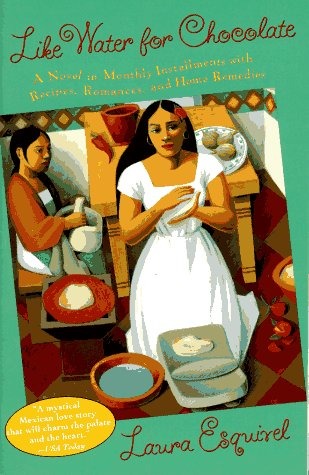
This month the chain begins begin with a book that Kate says people may not have discovered, were it not for the hugely popular movie version – Laura Esquivel’s Like Water for Chocolate. I hadn’t discovered it at all until now! But I see that it’s a ‘bestseller’, a book about passion and the magic of food (including recipes), a tale of family life in  Mexico.

Like Water for Chocolate

The first link in my chain is a book also set partly in Mexico:

The Lacuna

The Lacuna by Barbara Kingsolver is the story of Harrison Shepherd, the son of a Mexican mother and an American father and it’s told through his diaries and letters together with genuine newspaper articles, although whether they reported truth or lies is questionable. As you can see from the cover swimming plays a part in this book. As a boy, Harrison, loved swimming and diving into a cave, which was only available at certain tides, a cave that was there one day and gone the next – a lacuna.

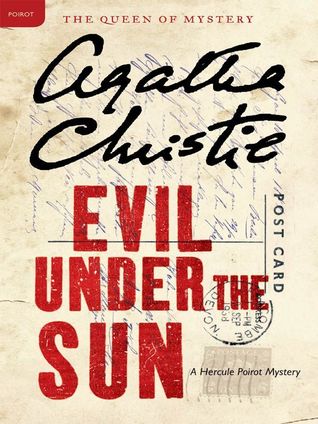
Swimming also features in Evil Under the Sun by Agatha Christie.

Evil Under the Sun (Hercule Poirot, #23)

Poirot is on holiday in Devon staying in a seaside hotel. It’s August, the sun is hot, people are enjoying themselves, swimming and sunbathing until Arlena is found dead – she’d been strangled.

The next book in my chain is also crime fiction  – Blue Heaven by C J Box.

Blue Heaven

This is a story set in North Idaho about two children, Annie and William who decide to go fishing without telling their mother, Monica, and witness a murder in the woods. One of the killers sees them and they run for their lives. It’s fast-paced and full of tension right to the end.

I chose Half of a Yellow Sun by Chimamanda Ngozi Adichie as the next link, a book that also has a colour in its title.

Half of a Yellow Sun

It’s based on the Nigeria-Biafra War of 1967 – 70. Focusing on the struggle between the north and the south, the Igbo, Yoruba and Hausa people, it brings home the horrors brought about by war, the ethnic, religious and racial divisions and the suffering that results.  It is also a novel about love and relationships, a beautiful and emotional book without being sentimental and factual without being boring.

Another book about war, but this one is non-fiction about a spy operation during World War Two – Operation Mincemeat by Ben Macintyre.

Operation Mincemeat: The True Spy Story That Changed the Course of World War II

It’s about the Allies’ deception plan in 1943, code-named Operation Mincemeat, which underpinned the invasion of Sicily. It was framed around a man who never was. I thought it was so far-fetched to be almost like reading a fictional spy story. I marvelled at the ingenuity of the minds of the plans’ originators and the daring it took to carry it out.

Operation Mincemeat led me to think about a fictional spy in The Spy Who Came in from the Cold by John Le Carré.

The Spy Who Came In from the Cold

This is set in the Cold War period in the 1960s and tells the story of Alex Leamas’s final assignment. It’s a dark, tense book and quite short, but very complicated; a story  full of secrecy, manipulation, of human frailty and its duplicitous nature.

What a journey! My chain moves through time and place – from Mexico to Devon, North Idaho, Nigeria, Sicily and Berlin. It encompasses fiction and non-fiction and takes in several wars. All, except for the book that starts the chain, are books I’ve read and enjoyed. Six Degrees of Separation is always fascinating to compile and I’m always surprised at where it goes and where it ends up. Who would have thought that a book about family life in Mexico would end up linked to a spy novel about the Cold War?

Six Degrees of Separation: Wild Swans to A Dark-Adapted Eye

Six Degrees of Separation is a monthly link-up hosted by Kate at Books Are My Favourite and Best. Each month a book is chosen as a starting point and linked to six other books to form a chain. A book doesn’t need to be connected to all the other books on the list, only to the one next to it in the chain.

This month the chain begins with Wild Swans: Three Daughters of China by Jung Chang,

Wild Swans: Three Daughters of China

a family memoir – the story of three generations of woman in Jung Chang’s family – her grandmother, mother and herself, telling of their lives in China up to and during the years of the violent Cultural Revolution. Her family suffered atrociously, her father and grandmother both dying painful deaths and both her mother and father were imprisoned and tortured.

Falling Leaves Return To Their RootsThe first book in my chain is also about a Chinese daughter. It’s Falling Leaves: The True Story of an Unwanted Chinese Daughter  by Adeline Yen Mah. She grew up during the Communist Revolution, was blamed for her mother’s death, ignored by her millionaire father and unwanted by her Eurasian step mother. A moving story set during extraordinary political events in China and Hong Kong.

The Buttonmaker's Daughter by [Allingham, Merryn]

My next book is about a fictional daughter: The Buttonmaker’s Daughter by Merryn Allingham, historical fiction set in Sussex in the summer of 1914 just before the start of the First World War. It covers just a few months, but those few months contain so much tension and heartbreak as the feud in the Summers family comes to a climax over the question of who Elizabeth Summer should marry and war on the continent becomes inevitable.

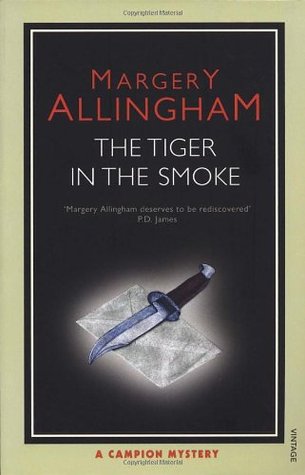
The Tiger in the Smoke (Albert Campion Mystery #14)

This leads on to a book by another author named Allingham. It’s The Tiger in the Smoke by Margery Allingham in which Jack Havoc is on the loose in post-war London, resulting in murder, mystery and mayhem. Meg’s marriage to self-made millionaire Geoffrey Levett should have been happy, until she began receiving photos of her late husband Martin, presumed dead in WWII. She calls on old friend Albert Campion to get to the bottom of things. For Campion, the case was cut and dry – until a brutal triple murder. I was immediately struck by the imagery – the fog pervades everything.

Our Mutual Friend

And the next book is also set in foggy London – Our Mutual Friend by Charles Dickens,

… the fog was heavy and dark. Animate London, with smarting eyes and irritated lungs, was blinking,  wheezing, and choking: inanimate London was a sooty spectre … (page 242)

This book has multiple plots, centred on John Harmon who returns to England as his father’s heir. It begins as a boatman, Gaffer Hexham and his daughter, Lizzie, find a corpse in the Thames.

A Dark and Twisted Tide (Lacey Flint #4)

A body found in the Thames provides the next link in my chain to a modern crime fiction novel, A Dark and Twisted Tide by Sharon Bolton.  This is such a terrifying novel, particularly if like me, you have a fear of drowning. Police Constable Lacey Flint thinks she’s safe. Living on the river, she’s never been happier. Until she finds a body floating on the surface, as she wild-swims in the Thames.

This leads to the last book in my chain, another book with the word ‘dark‘ in the title:

A Dark-Adapted Eye

A Dark-Adapted Eye by Barbara Vine. This is psychological crime fiction, you know right from the beginning who the murderer is, but not why or how the murder was committed.

The narrator Faith has spent her life avoiding thinking, talking or reading about the events that led up to her aunt’s hanging for murder. She only develops a “dark-adapted eye” very slowly when asked by a crime writer for her memories.

For once I have read all the books in my chain and they are all books I thoroughly enjoyed, a variety of genres – autobiography, historical fiction, classics and crime fiction. It begins in China and travels to Sussex to London through time from the nineteenth century to the present day.

When I begin a chain I never know where it will end. What about you, where does yours go and where does it end?

Next month (October 7, 2017), the chain begins with a book that I haven’t read (or heard about) – Laura Esquivel’s Like Water for Chocolate.

Six Degrees of Separation: Pride and Prejudice to Digging to America

Six Degrees of Separation is a monthly link-up hosted by Kate at Books Are My Favourite and Best. Each month, a book is chosen as a starting point and linked to six other books to form a chain. A book doesn’t need to be connected to all the other books on the list, only to the one next to it in the chain.

This month’s chain begins with the universally loved classic, Pride and  Prejudice, by Jane Austen.

Pride and Prejudice

This is a long time favourite of mine, a book I first read when I was about 12 after seeing a BBC adaption. It’s full of wit and humour and timeless characters – foolish people, flirts, bores, snobs, self-centred and dishonest people as well as ‘good’ people like Jane Bennet, who is determined to see good in everyone. Since then I’ve read all of Jane Austen’s books, apart from her Juvenilia books.

17th July was the 200th anniversary of her death and my first book in the chain is a book published to mark that anniversary. It’s a book I’m currently reading: Jane Austen at Home: a Biography by Lucy Worsley.  it focuses on her family and the places she lived during her short life. It really is a fascinating book for Jane Austen fans.

Jane Austen at Home

This leads nicely onto the second book in my chain – another biography of a favourite author, seen through the places she lived. It’s Agatha Christie at Home by Hilary Macaskill, an overview of Agatha Christie’s life followed by descriptions of the houses and countryside she loved ‘“ from Ashfield in Torquay her first home, where she was born and brought up, to Greenway, a Georgian mansion above the River Dart, now owned by the National Trust.  A beautiful book, with many photographs.

Agatha Christie at Home

Next a book also by a Hilary, Ink in the Blood: a Hospital Diary by Hilary Mantel, a short memoir which she wrote during the summer after she won the Man Booker Prize for Wolf Hall, when she was very ill. She had a marathon operation, followed by intense pain, nightmares and hallucinations. Illness she found knocks down our defences, revealing things we should never see, needing moment by moment concentration on breathing, on not being sick and being dependent on others for your well-being.

Ink In The Blood: A Hospital Diary

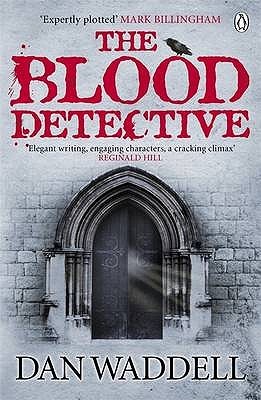
Blood provides the next link – The Blood Detective by Dan Waddell, crime fiction that absolutely grabbed me apart from the ending. It’s the sort of story that if I was watching it on TV I’d have to peep at through my fingers or even cover my eyes completely until the grisly bits were over. There are bits of graphic violence earlier in the book, which I could just about cope with, but the grisly stuff at the end was a step too far for me. It’s not just crime fiction though as DCI Grant Foster enlists the help of genealogist Nigel Barnes to track down the killer helping to solve the murders using family history.

The Blood Detective (Nigel Barnes #1)

Also crime fiction – and also a bit grisly is The Legacy by Yrsa Sigurdardottir, the first in the Children’s House thriller series. I loved it and once I started reading I just didn’t want to put it down, even though there are some particularly dark and nasty murder scenes, which would normally guarantee that I’d stop reading. It’s dark, mysterious and very cleverly plotted, full of tension and nerve-wracking suspense about three children, two brothers and their little sister who were adopted.

And so to the last book in my chain, Digging to America by Anne Tyler, also about adopted children. It  captivated me right from the start, with the description of two contrasting families waiting at Baltimore Airport for the arrival of two Korean babies they have adopted. The story develops as the two girls, Jo-Hin and Susan (originally Sooki) are integrated into their families ‘“ one American, the Donaldsons, outgoing and confident and the other the Yazdans, American/Iranian, reserved and restrained.

Digging to AmericaI never know when I begin a chain where it will lead. This one has gone from 18th century England to 20th century America, via Iceland, and passing through biographies, a memoir, and crime fiction. ‘Family’ is a theme in all the books in one way or another and adopted children feature in three of them – in Jane Austen’s own family one of her brothers was ‘adopted’ by a wealthy relation and another went to live with another family because of his epilepsy.

Quite surprising, really. I wonder where other chains will go?