The 1937 Club, hosted by Stuck in a Book and Kaggsy’s Bookish Ramblings, starts tomorrow and I thought I’d list the books I’ve read that were published that year and also see if I’ve got any more left in my TBRs to read.
These are the books I’ve read:
The links will take you to my reviews :
Bats in the Belfry by E C R Lorac – full of descriptive writing painting vivid pictures of the streets of London in the 1930s and in particular the spooky, Gothic tower in which a corpse is discovered, ‘headless and handless‘. For a while the identity of the murdered man is in doubt – is it that of Bruce Attleton who had unaccountably disappeared or that of the mysterious stranger, Debrette who it seems had been blackmailing Bruce? Chief Inspector Macdonald of New Scotland Yard is called in to investigate.
The Hobbitby J R R Tolkien – an adventure story of a quest set in a fantasy world, so beautifully written that it seems completely believable. Bilbo Baggins, a hobbit, is recruited through Gandalf, the wizard, to accompany a party of thirteen dwarves, led by Thorin, on their quest to recover the dwarves’ treasure stolen by Smaug the dragon and regain possession of the Lonely Mountain. Along the way Bilbo grows in confidence and becomes a hero, meeting elves, outwitting trolls, fighting goblins, and above all gaining possession of the ring from Gollum.
Death on the Nile by Agatha Christie – this shows Agatha Christie’s interest in Egypt and archaeology and also reflects much of the flavour and social nuances of the pre-war period. In it she sets a puzzle to solve – who shot Linnet Doyle, the wealthy American heiress? It is essentially a ‘locked room mystery’, as the characters are passengers on the river-steamer SS Karnak, cruising on the Nile. Amongst them is the famous Hercule Poirot, a short man dressed in a white silk suit, a panama hat and carrying a highly ornamental fly whisk with a sham amber handle ‘a funny little man.’
Dumb Witnessby Agatha Christie – The ‘dumb witness’of the title is Bob, Miss Emily Arundell’s wire-haired terrier in what is described as ‘the incident of the dog’s ball.’ Everyone blamed Emily’s accident on a rubber ball left on the stairs by her frisky terrier. But the more she thought about her fall, the more convinced she became that one of her relatives was trying to kill her. On April 17th she wrote her suspicions in a letter to Hercule Poirot. Mysteriously he didn’t receive the letter until June 28th … by which time Emily was already dead!
The Cheltenham Square Murder by John Bude – this is another complicated murder mystery. The tranquillity of Cheltenham Square is shattered when the occupant of no. 6 was murdered by an arrow to the head, shot through an open window. The puzzle is first of all to work out how the murder was carried out and secondly who out of the several suspects, including six keen members of an Archery Club, was the murderer. I enjoyed trying to work it out, but although I had an idea about the guilty person I couldn’t see how the murders had been achieved until the method was revealed.
Of Mice and Men by John Steinbeck – I really liked this short book about commitment, loneliness, hope and loss, the story of two drifters, George and his simple-minded friend Lennie looking for work and dreaming of having some land of their own. Their hopes are doomed as Lennie – struggling against extreme cruelty, misunderstanding and feelings of jealousy – becomes a victim of his own strength.
The Turn of the Screw by Henry James – This story is dark and melodramatic, about good and evil and with hints of sexual relations, reflecting the Victorian society of the time. But is it a ghost story or a psychological study? Either way there are creepy, disturbing things going on. It’s a story within a story, told as a ghost story to a group of people as they sit gathered round a fire in an old house. It tells of two children and their governess. She has been employed by their uncle who wants nothing to do with them. Their previous governess had died under mysterious circumstances (was it in childbirth?). The older child, Miles, was away at school and soon after the new governess arrives Miles returns home, expelled from school for some terrible unexplained offence. It’s all terribly ambiguous.
I have just two more books published in 1937 in my TBRs, so I’m hoping I’ll read at least one of them for the 1937 Club, probably Hamlet, Revenge: a Story in Four Parts by Michael Innes, which is described on the back cover:
The murder was planned, deliberately and at obvious risk, to take place in the middle of a private performance of Hamlet.
Behind the scenes there were thirty-one suspects. In the select and distinguished audience twenty-seven. ‘Suspicions,’ said Appleby, ‘crowd thick and fast upon us.’ (From the back cover)
or I might read The Road to Wigan Pier by George Orwell:
… a searing account of working-class life in the bleak industrial heartlands of Yorkshire and Lancashire in the 1930s, The Road to Wigan Pier is a brilliant and bitter polemic that has lost none of its political impact over time
Orwell’s graphically unforgettable descriptions of social injustice, cramped slum housing, dangerous mining conditions, squalor, hunger and growing unemployment are written with unblinking honesty, fury and great humanity. It crystallized the ideas that would be found in his later works and novels, and remains a powerful portrait of poverty, injustice and class divisions in Britain. Includes illustrations, explanatory footnotes, and an introduction by Richard Hoggart (Amazon UK)
Spell the Month in Books is a linkup hosted by Jana on Reviews From the Stackson the first Saturday of each month. The goal is to spell the current month with the first letter of book titles, excluding articles such as ‘the’ and ‘a’ as needed. That’s all there is to it! Some months there are optional theme challenges, such as “books with an orange cover” or books of a particular genre, but for the most part, any book you want to use is fair game!
This month’s theme is Poisson d’Avril – The French version of April Fool’s Day involves fish, so let’s look for books related to fish, bodies of water, or comedy. But, I looked and didn’t come up with any ideas to fit the theme.
So, this month the books I’ve chosen are all books I’ve read.
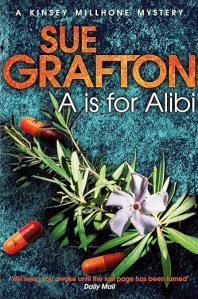
Sue Grafton is the author of the alphabet- titled series of books featuring Kinsey Millhone, a private investigator. The books are set in and around the fictional town of Santa Teresa, California, based on Santa Barbara.
Kinsey is a likeable, strong character. In this first book she comes across as a loner. She’s 32, twice divorced with no children or pets, or indeed any ties, although she does have plenty of friends and contacts who help out with her investigations and she goes jogging – a lot. There are some cameos of characters, who I suspect feature in the later books. There is her landlord Henry Pitts, a former baker aged 81 who makes a living devising crossword puzzles. Kinsey is ‘halfway in love’ with Henry.
It’s a fast-paced book, easy to read and with no gory details, which I have to skim read in other books (the equivalent of watching the TV behind my fingers). I liked it but haven’t read any of the other books in the series.
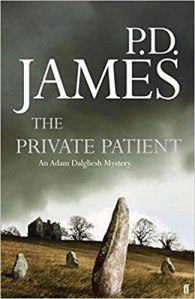
When the notorious investigative journalist Rhoda Gradwyn books into Mr Chandler-Powell’s private clinic in Dorset for the removal of a disfiguring and long-standing scar, she has every prospect of a successful operation by a distinguished surgeon, a week’s peaceful convalescence in one of Dorset’s most beautiful manor houses, and the beginning of a new life. She was never to leave Cheverell Manor alive. Commander Adam Dalgleish and his team are called to the Manor to investigate her death.
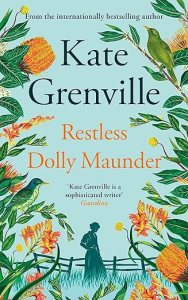
This is the fictionalised life story of Kate Grenville’s maternal grandmother, Sarah Catherine Maunder, known as Dolly. She was the sixth child of Thomas and Sarah Maunder, born in Currabubula, New South Wales, Australia in 1881. She was not only restless but also clever and determined – she knew what she wanted and she did her best to achieve it.
Restless Dolly Maunder casts light not just on Dolly’s life but also on life in Australia for most of the 20th century. The book has a relentless pace as it tells her life story as she propels herself from place to place and from business to business, enjoying success whilst it lasted and enduring all else, not stopping to pause breath in her restless pursuit of what came next.
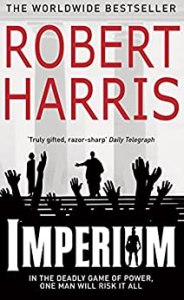
I is for Imperium by Robert Harris, historical fiction set in Ancient Rome. 4*
Beginning in 79 BC, this book set in the Republican era is a fictional biography of Marcus Tullius Cicero by Tiro, his slave secretary. Tiro was a real person who did write a biography of Cicero, which has since been lost in the collapse of the Roman Empire. Tiro is credited with the invention of shorthand. Harris has based Imperium on, among other sources, Cicero’s letters, which Tiro had recorded, successfully interweaving Cicero’s own words with his own imagination. It is basically a political history, a story filled with intrigue, scheming and treachery in the search for political power as Cicero, a senator, works his way to power as one of Rome’s two consuls.
This is a long and detailed book, written with such intricate plotting and numerous characters that it bewildered me at times. It’s historical fiction set in New Zealand in the 1860s, during its gold rush and it has everything – gold fever, murder, mystery and a ghost story too.
I loved the pictures it builds up of the setting in New Zealand, the frontier town and its residents from the prospectors to the prostitutes, and the obsessive nature of gold mining. And I did become fully absorbed in the story during the week it took me to read.
The next link up will be on May 4, 2024 when the optional theme will be Nature.
Spell the Month in Books is a linkup hosted by Jana on Reviews From the Stacks on the first Saturday of each month. The goal is to spell the current month with the first letter of book titles, excluding articles such as ‘the’ and ‘a’ as needed. That’s all there is to it! Some months there are optional theme challenges, such as “books with an orange cover” or books of a particular genre, but for the most part, any book you want to use is fair game!
This month’s theme is National Caffeine Month – Books with a beverage on the cover or in the title.
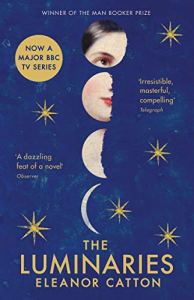
In an unnamed city, where to be interesting is dangerous, an eighteen-year-old woman has attracted the unwanted and unavoidable attention of a powerful and frightening older man, ‘Milkman’. In this community, where suggestions quickly become fact, where gossip and hearsay can lead to terrible consequences, what can she do to stop a rumour once it has started? Milkman is persistent, the word is spreading, and she is no longer in control . . .
I read this book back in 2008 and wrote very briefly about it, see this post. The description below is from Goodreads.
Cakes and Ale is both a wickedly satirical novel about contemporary literary poseurs and a skilfully crafted study of freedom. As he traces the fortunes of Edward Driffield and his extraordinary wife Rosie, one of the most delightful heroines of twentieth-century literature, Maugham’s sardonic wit and lyrical warmth expertly combine in this accomplished and unforgettable novel.
This is one of my oldest TBRs, a book I bought in 2008. I’ve started reading it several times, only to put it back on the shelf unread. If you have read it I’d love to know what you think about it.
Synopsis:
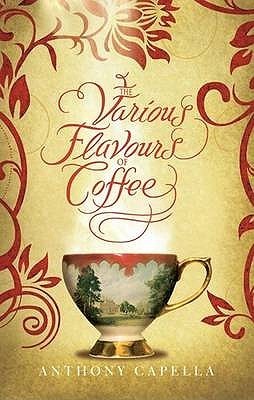
London,1895. Robert Wallis, would-be poet, bohemian and impoverished dandy, accepts a commission from coffee merchant Samuel Pinker to categorise the different tastes of coffee – and encounters Pinker’s free-thinking daughters, Philomenia, Ada and Emily. As romance blossoms with Emily, Robert realises that the Muse and marriage may not be incompatible after all.
Sent to Abyssinia to make his fortune in the coffee trade, he becomes obsessed with a negro slave girl, Fikre. He decides to use the money he has saved to buy her from her owner – a decision that will change not only his own life, but the lives of the three Pinker sisters . . .
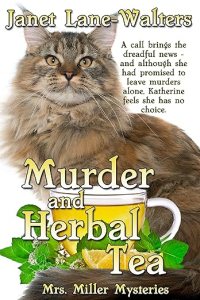
Katherine’s wedding day has arrived and she and Lars make their vows. When she notices one of her best friends hasn’t arrived, she begins to worry. Her friend owns a shop where tea and accompaniments are sold. Her friend’s partner is a micromanager. Katherine’s friend has wanted to dissolve the partnership. A call to the New England town brings the dreadful news of a murder. Kate’s protectiveness factor takes hold and she leaves a note for Lars and heads to rescue her friend. Though she has promised to leave murders alone, she feels she has no choice. Lars follows to help her solve another murder.
The next link up will be on April 6, 2024 when the theme will be Poisson d’Avril – The French version of April Fool’s Day involves fish, so look for books related to fish, bodies of water, or comedy.
Spell the Month in Books is a linkup hosted by Jana on Reviews From the Stacks on the first Saturday of each month. The goal is to spell the current month with the first letter of book titles, excluding articles such as ‘the’ and ‘a’ as needed. That’s all there is to it! Some months there are optional theme challenges, such as “books with an orange cover” or books of a particular genre, but for the most part, any book you want to use is fair game!
This month’s theme is Comfort Reads, which Jana describes as returning to reading some of her favourite books rather than exclusively reading something new. I don’t often re-read books, so the books listed below are some of the books I’ve enjoyed and written about in previous years and would happily re-read.
Just like the other books by Lisa Jewell that I’ve read The Family Upstairs is totally absorbing and I thoroughly enjoyed it. It’s full of suspense and drama and is very dark indeed.
It’s a complex novel told alternately from three of the characters’ perspectives, Henry, Lucy and Libby, spanning over 25 years, telling the story of two families, who together combined make one completely dysfunctional family, living in 16 Cheyne Walk, London. The house is dark, mysterious and steeped in a malevolent atmosphere, with panelled walls, locked rooms, a secret staircase and a full-size cannon in the front garden. And within its walls the family lived in fear, locked away from the outside world, dominated by a megalomaniac.
This is the story of an inheritance: one that affects us all. It tells of how rural landscapes around the world were brought close to collapse, and the age-old rhythms of work, weather, community and wild things were lost. And yet this elegy from the northern fells is also a song of hope: of how, guided by the past, one farmer began to salvage a tiny corner of England that was now his, doing his best to restore the life that had vanished and to leave a legacy for the future
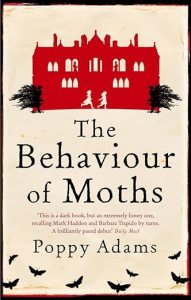
This is the story of two sisters, Ginny and Vivi. Vivi, the younger sister left the family mansion 47 years earlier and returns unexpectedly one weekend. Ginny, a reclusive moth expert has rarely left the house in all that time. What happens when they meet again is shocking to both of them. It’s a story full of mystery and suspense as it is revealed that the two have very different memories of their childhood and the events of the past.
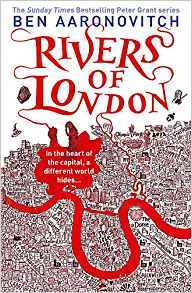
This is a magical reading experience, and a fast-paced police procedural of a very different kind. It’s fantastical in the literal meaning of the word; an urban fantasy set in the real world of London. It’s a mix of reality and the supernatural. It’s complex, the characters are great, the London setting is wonderfully detailed, and the writing is humorous and very entertaining. I loved it!
This was first published in 1958 a time before the Space Age. It’s not set in outer space, but firmly on Earth – but Earth in the 22nd century, a world run by machines, androids, who have taken over the burdens of work and responsibility, a world where the humans are required to spend their lives in leisure pursuits, but are subject to ‘Analysis’ (brain-washing) if the androids think they are maladjusted. It’s low on technology and high on philosophy.
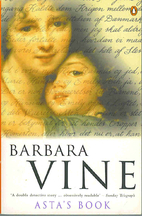
It’s a book that demanded all my attention and I just didn’t want to put it down. There’s a murder, a missing child, a question of identity and overarching it all are the stories of two families – the Westerbys and the Ropers and all the people connected to them. So many characters, so many red herrings, so many incidents that at first did not appear to be of any or of much importance that turned out to have great relevance.
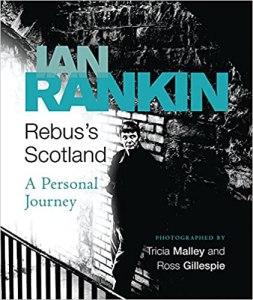
If you like the Rebus books, like me, then you’ll also like this book. It is fascinating to read, with insights into Ian Rankin’s own life and that of the character he has invented, along with his thoughts on Scotland and the Scottish character. It’s partly autobiographical, blending his own life with Rebus’s biography. It also describes many of the real life locations of the books, in particular Edinburgh, Rebus’s own territory. I particularly enjoyed Ian Rankin’s views on writing – how writers mine their own experiences, reshaping their memories to create fiction and the similarities between novelists and detectives:
A twelve-year-old boy, the son of teachers, finds magic, mystery, romance, and sadness at beautiful Lake Baikal in Siberia. Deep in Siberia lies the second largest and deepest lake on earth, Lake Baikal. When a small boy arrives on its banks, he is amazed by the beauty of the lake and surrounding mountains. As this astonishment yields to inquisitiveness, he begins to explore the fairytale of the area.
The next link up will be on March 3, 2024 when the theme will be National Caffeine Month – Books with a beverage on the cover or in the title.
Spell the Month in Books is a linkup hosted by Jana on Reviews From the Stacks on the first Saturday of each month. The goal is to spell the current month with the first letter of book titles, excluding articles such as ‘the’ and ‘a’ as needed. That’s all there is to it! Some months there are optional theme challenges, such as “books with an orange cover” or books of a particular genre, but for the most part, any book you want to use is fair game!
The theme this month is New (interpret as you wish: new releases, recent acquisitions, “new” in the title, etc.) But I just couldn’t come up with any titles on this theme. So, I decided to use a selection of books on my LibraryThing TBRs list.
The links go to the descriptions on Amazon or Goodreads.
May 1199. Abbess Helewise has been summoned by Queen Eleanor to discuss the building of a chapel at Hawkenlye Abbey. Meanwhile, Sir Josse dAcquin is on the trail of a group of mysterious knights rumoured to be devil worshippers. As Helewise heads for home, Josse follows his quarry to Chartres, where he meets the last person he expects: Joanna. And she has grave problems of her own . . .
On the night of 22 December 1980, a plane crashes on the Franco-Swiss border and is engulfed in flames. 168 out of 169 passengers are killed instantly. The miraculous sole survivor is a three-month-old baby girl. Two families, one rich, the other poor, step forward to claim her, sparking an investigation that will last for almost two decades. Is she Lyse-Rose or Emilie?
Eighteen years later, having failed to discover the truth, private detective Credule Grand-Duc plans to take his own life, but not before placing an account of his investigation in the girl’s hands. But, as he sits at his desk about to pull the trigger, he uncovers a secret that changes everything – then is killed before he can breathe a word of it to anyone…
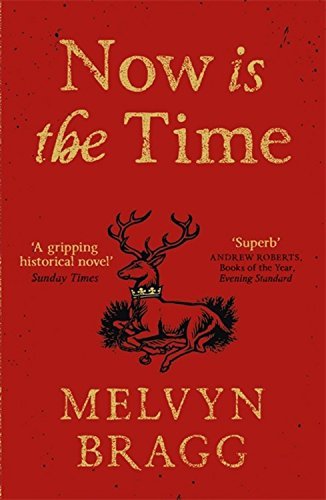
In this gripping novel, Melvyn Bragg brings an extraordinary episode in English history to fresh, urgent life.
At the end of May 1381, the fourteen-year-old King of England had reason to be fearful: the plague had returned, the royal coffers were empty and a draconian poll tax was being widely evaded. Yet Richard, bolstered by his powerful, admired mother, felt secure in his God-given right to reign.
Within two weeks, the unthinkable happened: a vast force of common people invaded London, led by a former soldier, Walter Tyler, and the radical preacher John Ball, demanding freedom, equality and the complete uprooting of the Church and state. They believed they were rescuing the King from his corrupt ministers, and that England had to be saved. And for three intense, violent days, it looked as if they would sweep all before them.
Now is the Time depicts the events of the Peasants’ Revolt on both a grand and intimate scale, vividly portraying its central figures and telling an archetypal tale of an epic struggle between the powerful and the apparently powerless.
The third book in Dorothy L Sayers’ classic Lord Peter Wimsey series,
No sign of foul play,’ says Dr Carr after the post-mortem on Agatha Dawson. The case is closed. But Lord Peter Wimsey is not satisfied… With no clues to work on, he begins his own investigation.
What is going on in the mysterious Mrs Forrest’s Mayfair flat?
This is the 18th Dalziel and Pascoe mystery in which Ellie, Pascoe’s wife is in danger at a decaying seacoast mansion.
Someone attempts to abduct Ellie Pascoe, and her friend, Daphne Alderman, is assaulted by a man keeping watch on the Pascoe house. Dalziel, Pascoe and Wield feel certain there must be a link here with one of Pascoe’s cases, either current or past. Only DC Shirley Novello wonders whether perhaps these events might have more to do with Ellie than her husband.
While the men concentrate on their individual theories, Ellie, her daughter Rosie, Daphne, and Novello (their official minder) head for the coast to the supposed safety of the Alderman’s holiday home, Cleets Cottage. But their flight proves somewhat futile as Ellie’s would-be abductor continues to send her letters of possibly threatening intent, composed in a strange Elizabethan English.
Given the importance of what they do, and the controversies that often surround them, and the violent people they sometimes confront, it is remarkable that in the history of the USA only four active federal judges have been murdered.
Judge Raymond Fawcett just became number five.
His body was found in the small basement of a lakeside cabin he had built himself and frequently used on weekends. When he did not show up for a trial on Monday morning, his law clerks panicked, called the FBI, and in due course the agents found the crime scene. There was no forced entry, no struggle, just two dead bodies – Judge Fawcett and his young secretary.
I did not know Judge Fawcett, but I know who killed him, and why.
The sun brightens in the east, reddening the blue-grey haze that marks the distant ocean. The vultures roosting on the hydro poles fan out their wings to dry them. the air smells faintly of burning. The waterless flood – a manmade plague – has ended the world.
But two young women have survived: Ren, a young dancer trapped where she worked, in an upmarket sex club (the cleanest dirty girls in town); and Toby, who watches and waits from her rooftop garden.
Is anyone else out there?
The next link up will be on February 3, 2024 when the theme will be Comfort Reads -escape from reality.
Happy New Year to you all! I’m wishing you all health and happiness for 2024 and lots of good books to read.
With thanks to Annabookbel for the reminder about this annual meme…Using only books you have read this year answer these prompts. Try not to repeat a book title. (Links in the titles will take you to my reviews where they exist)











 BooksPlease