Spell the Month in Books is a linkup hosted by Jana on Reviews From the Stackson the first Saturday of each month. The goal is to spell the current month with the first letter of book titles, excluding articles such as ‘the’ and ‘a’ as needed. That’s all there is to it! Some months there are optional theme challenges, such as “books with an orange cover” or books of a particular genre, but for the most part, any book you want to use is fair game!
This month’s Spell the Month in Books theme is Books that you found or currently see at the library. For this theme I’ve used books I’ve previously borrowed from the library for the letters J, U, and E and a book I’ve seen on the library’s website for the letter N.
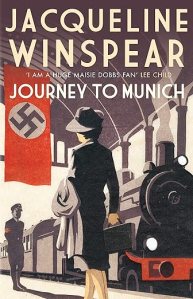
Journey to Munich by Jacqueline Winspear – Travelling into the heart of Nazi Germany, Maisie encounters unexpected dangers – and finds herself questioning whether it’s time to return to the work she loved. But the Secret Service may have other ideas!
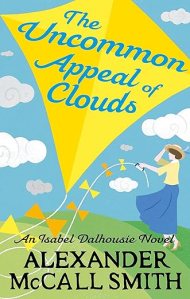
Uncommon Appeal of Clouds by Alexander McCall Smith – an Isabel Dalhousie book – An unexpected appeal for help from a collector who has been the victim of an art theft threatens to take Isabel Dalhousie far outside her comfort zone.
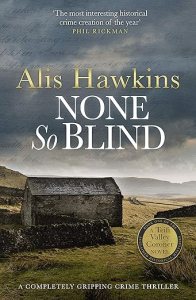
None So Blind by Alis Hawkins – West Wales, 1850. When an old tree root is dug up, the remains of a young woman are found. Harry Probert-Lloyd, a young barrister forced home from London by encroaching blindness, has been dreading this discovery. He knows exactly whose bones they are. Working with his clerk, John Davies, Harry is determined to expose the guilty. But the investigation turns up more questions than answers and raises long-buried secrets. The search for the truth will prove costly.
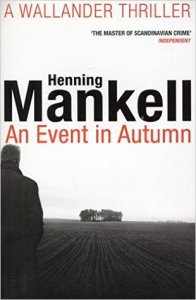
An Event in Autumn by Henning Mankell a Wallender thriller – Kurt Wallander’s life looks like it has taken a turn for the better when his offer on a new house is accepted, only for him to uncover something unexpected in the garden – the skeleton of a middle-aged woman. As police officers comb the property, Wallander attempts to get his new life back on course by finding the woman’s killer with the aid of his.
The next link up will be on July 5, 2025 when the optional theme will be: Set in a fantasy world or fictional place.
Spell the Month in Books is a linkup hosted by Jana on Reviews From the Stackson the first Saturday of each month. The goal is to spell the current month with the first letter of book titles, excluding articles such as ‘the’ and ‘a’ as needed. That’s all there is to it! Some months there are optional theme challenges, such as “books with an orange cover” or books of a particular genre, but for the most part, any book you want to use is fair game!
This month’s there isn’t a theme. I’ve read the first two of these three books and the third is one of my TBRs.
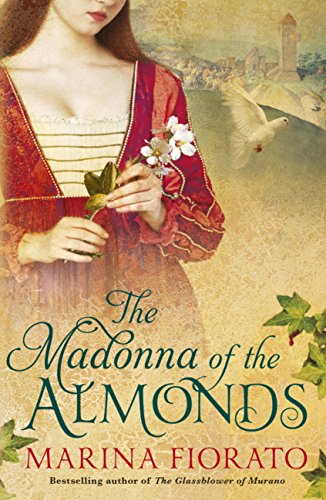
M is for The Madonna of the Almonds by Marina Fiorato, which I read soon after it was first published in 2009. It is a love story above all, but there is so much more as well. It’s set in Italy in the 16th century, about a young widow, Simonetta di Saronno, struggling to save her home, who meets the artist Bernadino, a protege of Leonardo da Vinci.
Bernardino Luini, favoured apprentice of Leonardo da Vinci, is commissioned to paint a religious fresco in the hills of Lombardy. His eye is caught by the beautiful Simonetta di Saronno, a young noblewoman who has lost her husband to battle, and whose fortune is gone. Captivated by her beauty and sadness, Bernardino paints Simonetta’s likeness, immortalizing her as the Madonna in his miraculous frescoes in Saronno’s church. As the sittings progress, they fall in love, and Simonetta reciprocates Luini’s genius, with the help of a Jew, known as Manodorata (because of the golden hand replacing his own hand that had been chopped off by the Spanish Inquisition) by creating a drink for her lover a delicious liqueur, Amaretto, from the almond trees, the only crop growing on her estate.
I love the story-telling aspects of this book, its rich descriptions of art and the detailed history of the period. I love Italy, history, art history and almonds, especially Amaretto, so this book just could not fail to delight me.
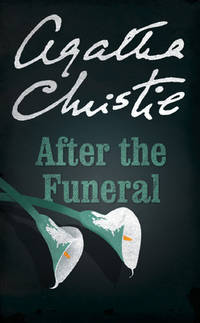
A is for After the Funeral by Agatha Christie, one of her Hercule Poirot murder mysteries. I read this in 2012 and loved it.
When Cora is savagely murdered, the extraordinary remark she made the previous day at her brother’s funeral takes on a chilling significance. At the reading of Richard’s will, Cora was clearly heard to say, “It’s been hushed up very nicely, hasn’t it…But he was murdered, wasn’t he?” In desperation, the family solicitor turns to Hercule Poirot to unravel what happened next …
I read it quickly and consequently had little idea who had killed Cora. I did spend some time looking at the family tree at the beginning of the book, working out the family relationships and who was present at Richard Abernethie’s funeral and their reaction to Cora’s question. It seemed to me that any of the family could have done it – Agatha Christie goes through the actions and thoughts of each character and there’s cause for suspicion for each one.
Apart from trying to solve the mystery I was interested in the glimpses into life in post-war Britain, where jobs are scarce, servants even more scarce and there are complaints about the economic situation, with high taxation and the prospect of properties such as the Abernethie house being turned into a hotel, or institute, or even worse being pulled down and the whole estate built over.
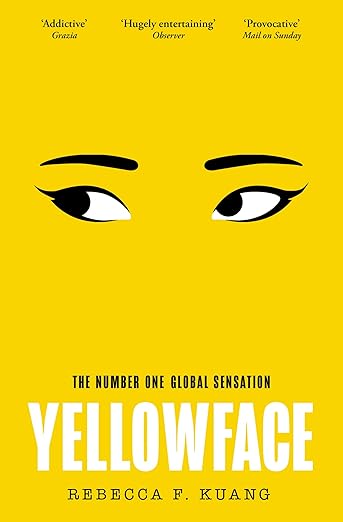
Y is for Yellowface by Rebecca F Yuang, one of my TBRs, which I bought because I’d read positive reviews from other bloggers.
THIS IS ONE HELL OF A STORY.
IT’S JUST NOT HERS TO TELL.
When failed writer June Hayward witnesses her rival Athena Liu die in a freak accident, she sees her opportunity… and takes it.
So what if it means stealing Athena’s final manuscript?
So what if it means ‘borrowing’ her identity?
And so what if the first lie is only the beginning…
Finally, June has the fame she always deserved. But someone is about to expose her…
What happens next is entirely everyone else’s fault.
Next month June 7: reflects the beginning of the library’s Summer Reading program: books that you found or currently see at the library.
The Summer Reading Challenge, delivered in partnership with public libraries across the UK, is back for 2025! Launching in June in Scotland and July in England and Wales, the Challenge invites children to embark on an exciting reading journey, either through their local library or online. This year’s theme, Story Garden, encourages young readers to explore nature and the great outdoors through reading.
Spell the Month in Books is a linkup hosted by Jana on Reviews From the Stacks on the first Saturday of each month. The goal is to spell the current month with the first letter of book titles, excluding articles such as ‘the’ and ‘a’ as needed. That’s all there is to it! Some months there are optional theme challenges, such as “books with an orange cover” or books of a particular genre, but for the most part, any book you want to use is fair game!
This option this month is Animal on the Cover or in the Title, which I found much easier to do than some of the previous options. These are all books I’ve read, apart from Inchworm.
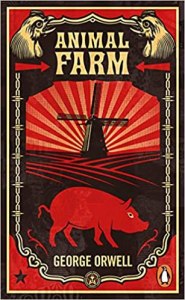
A is for Animal Farm by George Orwell is an allegorical novella, of the Russian Revolution and the rise of the Soviet Union. It tells the story of a farm where the animals rebel against the farmer, Mr Jones, and throw him off the land. They hope to create a society where they are all equal, free and happy. Ultimately, the farm ends up in a state that is as bad, if not worse than it was before, under the dictatorship of a pig named Napoleon. It begins as the old boar Major tells the animals about his dream of overthrowing the human race when the produce of their labour would then be their own and he incites them to rebel. In the story that follows the Major is based on Marx, Farmer Jones on the Tsar, the pigs Napoleon and Snowball are based on Stalin and Trotsky respectively. Their revolution began by declaring that all animals are equal and ended with the added phrase but some animals are more equal than others.
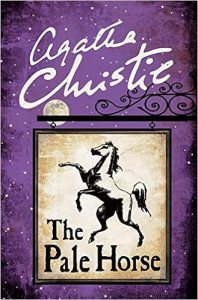
P is for The Pale Horse by Agatha Christie. Neither Hercule Poirot, nor Miss Marple feature in this novel and Mrs Ariadne Oliver has only a small part. Detective Inspector Lejeune is in charge of the investigation into the murder of Father Gorman who was killed one night on his way home. A list of names is found on Father Gorman’s body, seemingly unconnected in any way. The title, a reference from the Book of Revelation to a pale horse ridden by Death suggested to me from the beginning that what they had in common was death.
The Pale Horse is an old house which was formerly an inn in the village and is now the home of three weird women, thought by the locals to be witches. The Pale Horse is also the name of a sinister organisation that arranges murders based on black magic. It’s a fascinating book conveying a feeling of real menace.
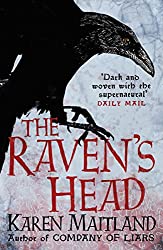
R is for The Raven’s Head by Karen Maitland. Set in 1224 in France and England this is a dark book. I found parts of it very uncomfortable and disturbing to read and yet also very compelling. Life in the medieval world was cruel and brutal and The Raven’s Head describes that world in minute detail, evoking the superstitious fear of the period.
The story is told from the three main characters point of view – Vincent, Wilky, a young boy taken from his family to live in a monastery in Norfolk where unspeakable terrors await him and the other young boys, and Gisa also living in Norfolk, working in her uncle’s apothecary’s shop. Their lives are connected through Lord Sylvain who is trying to find a way to bring the dead back to life and the abbot, trying to find the elixir of life – both experimenting with alchemy.
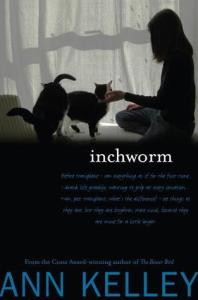
I is for Inchworm by Ann Kelly. Gussie is a twelve year old girl from St. Ives in Cornwall. She is passionate about learning, wildlife, poetry, literature, and she wants to be a photographer when she grows up. But her dreams were put on hold as she struggled with a serious heart condition. Now she has got what she needed: a heart and lung transplant. But it isn’t working out quite the way she thought. Firstly she has to leave her beloved Cornwall to live in London and in the months following her operation she is unable to do very much except read and adopt a stray kitten, but she could do that when she was sick. She craves adventure and experience beyond her four walls, until, that is, she hits upon a plan – she is going to get her divorced parents to fall in love again. It’s not going to be easy, her mum is still dating her doctor boyfriend and despises Gussie’s father, who happens to be living with his new girlfriend – the Snow Queen. But Gussie is a determined girl and there is only one thing that could stop her now.
L is for Lion by Conn Iggluden. This is the first book in Conn Iggulden’s Golden Age series set in Amcient Greece in the 5th century BCE. I thoroughly enjoyed it which surprised me as generally speaking I’m not keen on reading battle scenes and the book starts and ends with battles. But I had no problem with following the action of the battles between the Greeks and the Persians, and was able to visualise what was going on without any difficulty. The characters’ names took me a little while to get clear in my mind but I soon got used to them. The two main characters are both young men, Cimon the older of the two has more authority than Pericles, the younger man. Lion is the story of their early careers.
The next link up will be on May 3, 2025 when the theme will be: Freebie
Spell the Month in Books is a linkup hosted by Jana on Reviews From the Stacks on the first Saturday of each month. The goal is to spell the current month with the first letter of book titles, excluding articles such as ‘the’ and ‘a’ as needed. That’s all there is to it! Some months there are optional theme challenges, such as “books with an orange cover” or books of a particular genre, but for the most part, any book you want to use is fair game!
This option this month is Science Fiction. I don’t read much science fiction these days, but I used to read a lot. I’ve chosen some books I read long before I began writing about books, some I’ve read more recently and some books that I own but haven’t read yet. The descriptions in italics are taken either from Amazon UK or from Goodreads.
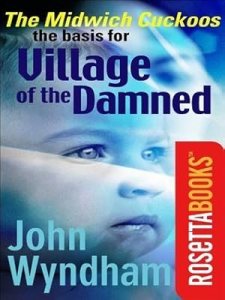
The story is set in an ordinary village, with a village green and a white-railed pond, a church and vicarage, an inn, smithy, post office, village shop and sixty cottages and small houses, a village hall, and two large houses, Kyle Manor and The Grange. A very ordinary village where not much goes on, which makes what happens there even more extraordinary. It’s eerie and very chilling, a story of alien invasion and the apparent helplessness of humanity to put up any resistance.
The Midwich Cuckoos is the classic tale of aliens in our midst, exploring how we respond when confronted by those who are innately superior to us in every conceivable way.
In the sleepy English village of Midwich, a mysterious silver object appears and all the inhabitants fall unconscious. A day later the object is gone and everyone awakens unharmed – except that all the women in the village are discovered to be pregnant.
The resultant children of Midwich do not belong to their parents: all are blonde, all are golden eyed. They grow up too fast and their minds exhibit frightening abilities that give them control over others and brings them into conflict with the villagers just as a chilling realisation dawns on the world outside . . .
A is for Artemis by Andy Weir – a TBR, a book I bought after watching, The Martian, the film of his first book.
WELCOME TO ARTEMIS. The first city on the moon. Population 2,000. Mostly tourists. Some criminals.
Jazz Bashara is one of the criminals. She lives in a poor area of Artemis and subsidises her work as a porter with smuggling contraband onto the moon. But it’s not enough.
So when she’s offered the chance to make a lot of money she jumps at it. But though planning a crime in 1/6th gravity may be more fun, it’s also a lot more dangerous.
When you live on the moon, of course you have a dark side…
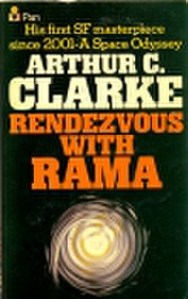
R is for Rendezvous with Rama. This is a book that we bought many years ago. I’m not sure whether I’ve read it or not. It was first published in 1973, so I’m guessing we bought it in the 1970s, the period when we were reading lots of science fiction.
The multi-award-winning SF masterpiece from one of the greatest SF writers of all time
Rama is a vast alien spacecraft that enters the Solar System. A perfect cylinder some fifty kilometres long, spinning rapidly, racing through space, Rama is a technological marvel, a mysterious and deeply enigmatic alien artefact.
It is Mankind’s first visitor from the stars and must be investigated …
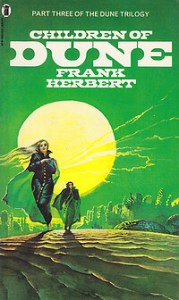
C is for Children of Dune by Frank Herbert, the third Dune novel. I read all the Dune books many years ago.
The Children of Dune are twin siblings Leto and Ghanima Atreides, whose father, the Emperor Paul Muad’Dib, disappeared in the desert wastelands of Arrakis nine years ago. Like their father, the twins possess supernormal abilities–making them valuable to their manipulative aunt Alia, who rules the Empire in the name of House Atreides.
Facing treason and rebellion on two fronts, Alia’s rule is not absolute. The displaced House Corrino is plotting to regain the throne while the fanatical Fremen are being provoked into open revolt by the enigmatic figure known only as The Preacher. Alia believes that by obtaining the secrets of the twins’ prophetic visions, she can maintain control over her dynasty.
But Leto and Ghanima have their own plans for their visions–and their destinies….
H is for The Handmaid’s Tale by Margaret Atwood – another book I read long before I began reviewing books.
Discover the dystopian novel that started a phenomenon.
Offred is a Handmaid in The Republic of Gilead. She is placed in the household of The Commander, Fred Waterford – her assigned name, Offred, means ‘of Fred’. She has only one function: to breed. If Offred refuses to enter into sexual servitude to repopulate a devastated world, she will be hanged. Yet even a repressive state cannot eradicate hope and desire. As she recalls her pre-revolution life in flashbacks, Offred must navigate through the terrifying landscape of torture and persecution in the present day, and between two men upon which her future hangs.
The next link up will be on April 5, 2025 when the theme will be: Animal on the Cover or in the Title.
Spell the Month in Books is a linkup hosted by Jana on Reviews From the Stacks on the first Saturday of each month. The goal is to spell the current month with the first letter of book titles, excluding articles such as ‘the’ and ‘a’ as needed. That’s all there is to it! Some months there are optional theme challenges, such as “books with an orange cover” or books of a particular genre, but for the most part, any book you want to use is fair game!
This month I’m not taking the option, which is Valentine’s Day/something sweet on the cover, but instead I’m featuring books from my blog, some from the early days of the blog.
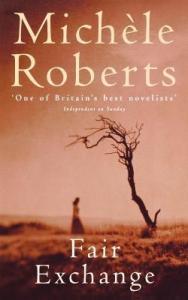
F is for Fair Exchange by Michele Roberts – historical fiction set in England and France in the late 1700s/early 1800s during the French Revolutionary period. While drawing hints and facts from the lives and secret affairs of two of the most famous and passionate figures of the late 18th century – Mary Wollstonecraft and William Wordworth – the intriguing mystery surrounding these two women, is Michèle Roberts own fascinating creation. It’s about William Saygood a fictional friend of Wordsworth’s. Mary Wollstonecraft appears in the novel but Roberts has ‘plundered various aspects of her life’ for the character, Jemima Boote. There is a fair bit in this book about women’s rights and their place in society, and about the question of nurture versus nature in bringing up children.
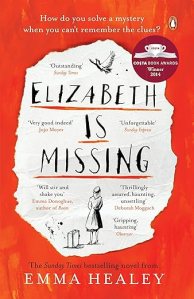
E is for Elizabeth is Missing by Emma Healey – Maud has dementia – but she knows her friend Elizabeth is missing. I enjoyed the TV adaption with Glenda Jackson as Maud much more than the book. Emma Healey’s depiction of dementia is convincing showing the confusion and bewilderment that Maud must have felt. It’s heart-rending. As Maud continues her search for Elizabeth, she also recalls the search for her sister, Sukey, who disappeared in 1946. And no matter who tells her to stop going on about it, to leave it alone, to shut up, Maud will get to the bottom of it. Because somewhere in Maud’s damaged mind lies the answer to an unsolved seventy-year-old mystery. One everyone has forgotten about.
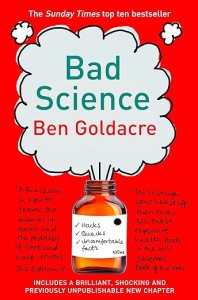
B is for Bad Science by Ben Goldacre – a splendid rant against the lack of education and knowledge about health with the inevitable result that we are unable to understand and judge for ourselves the effectiveness of the various treatments on offer. He describes how placebos work, just what homeopathy is, the misunderstandings about food and nutrition, and above all how to decide what works and what is quackery, scaremongering or downright dangerous. I found this easy to understand, apart from the statistics, which cause my eyes to glaze over at the mere sight of a graph, tables or columns of figures. Fortunately there’s not a lot of that in this book.
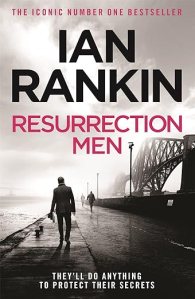
R is for Resurrection Men by Ian Rankin, an Inspector Rebus book. Resurrection Men isn’t about body-snatchers (as I wondered it might be), but about the cops who need re-training, including Rebus. They’re at Tullialian, the Scottish Police College and they are a tough bunch indeed, ‘the lowest of the low‘ as one of them, DI Gray tells a witness he is interrogating. To help them become team players – fat chance of that I thought – they’ve been given on old, unsolved case to work on. But Rebus was involved in the case at the time and begins to get paranoid about why is on the course. It’s a tough, gritty story and as with other Rebus books, there’s more than one investigation on the go, several, in fact, needing concentration to keep tabs on each one. I thought it was excellent.
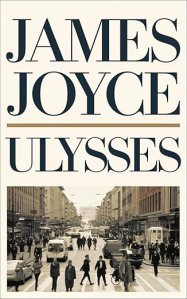
U is for Ulyssesby James Joyce – I have started this book and given up several times. I’d love to say I’ve finished it, but I haven’t. It deals with the events of one day in Dublin, 16th June 1904, now known as “Bloomsday”. The principal characters are Stephen Dedalus, Leopold Bloom and his wife Molly. Loosely modelled on the wanderings of Homer’s Ulysses as he travelled homewards to Ithaca, Joyce’s novel follows the interwoven paths of Stephen, estranged from his father and Leopold, grieving for his dead infant son. Written over a seven-year period, from 1914 to 1921, Ulysses has survived bowderlization, legal action and bitter controversy.
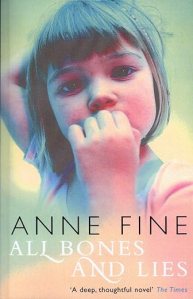
A is for All Bones and Lies by Anne Fine. I had high hopes I would like this book and that it would be a funny book – Anne Fine has won Awards for her children’s books and the film, Mrs Doubtfire, starring Robin Williams, is based on her book Madame Doubtfire. Although I didn’t enjoy the story, I did find it an indictment of how old age is looked upon by some people – an angry, unsettling and cruel look at our society.
Colin, works for the council and visits his aged mother, Norah. Norah is a grumbler, completely self-absorbed and constantly belittling Colin who can never please her. At times I found it confusing, just what was real and what was in his imagination and how the book hung together. Of course, everything goes wrong as events spiral out of Colin’s control.
R is for The Return of the Native by Thomas Hardy, one of my favourite authors and I thoroughly enjoyed this book. It’s a dramatic and tragic love story. It has a large cast of characters, with lovers who change their affections throughout the novel and it’s full of intrigue with striking moonlit scenes, disputes, heated quarrels and misunderstandings, along with rustic characters and traditional celebrations, for example Guy Fawkes night, May Day and a Mummers’ play at Christmas. It’s not a book to read quickly and it transported me back to a time that ceased to exist before I was born, where time moved more slowly, ruled by the seasons and the weather, and with a clearly defined social hierarchy. And yet, I was surprised to find that youngsters were scribbling graffiti on ‘every gatepost and barn’s doors’, writing ‘some bad word or other’ so that a woman can hardly pass for shame some time.’
Y is for You Talkin’ To Me?: Rhetoric from Aristotle to Obama by Sam Leith a TBR. Sam Leith traces the art of argument from ancient Greece down to its many modern mutations. He introduces verbal villains from Hitler to Donald Trump – and the three musketeers: ethos, pathos and logos. He explains how rhetoric works in speeches from Cicero to Richard Nixon, and pays tribute to the rhetorical brilliance of AC/DC’s “Back In Black”. Before you know it, you’ll be confident in chiasmus and proud of your panegyrics – because rhetoric is useful, relevant and absolutely nothing to be afraid of.
The next link up will be on March 1, 2025 when the theme be Science Fiction
Spell the Month in Books is a linkup hosted by Jana on Reviews From the Stacks on the first Saturday of each month. The goal is to spell the current month with the first letter of book titles, excluding articles such as ‘the’ and ‘a’ as needed. That’s all there is to it! Some months there are optional theme challenges, such as “books with an orange cover” or books of a particular genre, but for the most part, any book you want to use is fair game!
The theme this month is New, interpreted as you wish: new releases, recent acquisitions, “new” in the title, etc, new-to-you books, new additions to your TBR list, recently published books, or something else that you connect with the word ‘New’.
These books are all recent additions to my TBR List or my Books I Want to Read List. The links go to the descriptions on Amazon.
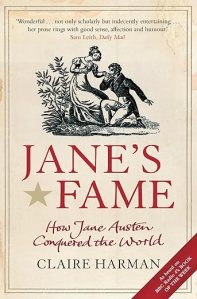
Award-winning biographer Claire Harman traces the growth of Jane Austen’s fame, the changing status of her work and what it has stood for – or has been made to stand for in English culture – in a wide-ranging study aimed at the general reader.
This is a story of personal struggle, family intrigue, accident, advocacy and sometimes surprising neglect as well as a history of changing public tastes and critical practices. Starting with Austen’s own experience as a beginning author (and addressing her difficulties getting published and her determination to succeed), Harman unfolds the history of how her estate was handled by her brother, sister, nieces and nephews, and goes on to explore the eruption of public interest in Austen in the last two decades of the nineteenth century, the making of her into a classic English author in the twentieth century, the critical wars that erupted as a result and, lastly, her powerful influence on contemporary phenomena such as chick-lit, romantic comedy, the heritage industry and film.
Part biography and part cultural history, this book does not just tell a fascinating story – it is essential reading for anyone interested in Austen’s life, works and remarkably potent fame.
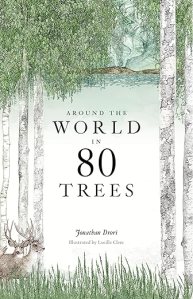
Bestselling author and environmentalist Jonathan Drori follows in the footsteps of Phileas Fogg as he tells the stories of 80 magnificent trees from all over the globe.
In Around the World in 80 Trees, Jonathan Drori uses plant science to illuminate how trees play a role in every part of human life, from the romantic to the regrettable. From the trees of Britain (this is a top search term), to India’s sacred banyan tree, they offer us sanctuary and inspiration – not to mention the raw materials for everything from aspirin to maple syrup. 25 February 2024
New Wild Garden combines new approaches to a more naturalistic design with the practical side of growing wildflowers and shows how to incorporate wildflowers, real meadows and a looser meadow-style planting into gardens and wild spaces.
With serious concern into the decline of pollinators and habitats, meadows are currently the focus of enormous creativity. Gardeners, wildlife lovers, professional designers and seed manufacturers are all pushing the envelope of what can be grown, the pictorial effects that can be achieved, and the benefits that this provides for gardeners and wildlife.
This book includes 15 step-by-step projects and an essential plant list, as well as offering inspiration to gardeners and an overview of the most influential movement in garden design over recent decades.
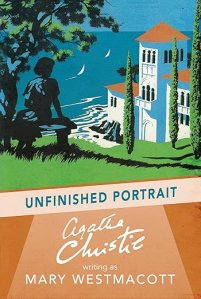
Bereft of the three people she has held most dear – her mother, her husband and her daughter – Celia is on the verge of suicide. Then one night on an exotic island she meets Larraby, a successful portrait painter, and through a long night of talk reveals how she is afraid to commit herself to a second chance of happiness with another person, yet is not brave enough to face life alone. Can Larraby help Celia come to terms with the past or will they part, her outcome still uncertain?
Famous for her ingenious crime books and plays, Agatha Christie also wrote about crimes of the heart, six bittersweet and very personal novels, as compelling and memorable as the best of her work.
Every life is both ordinary and extraordinary but Logan Mountstuart’s contains more than its fair share of both. As a writer who finds inspiration with Hemingway and Virginia Woolf, a spy recruited by Ian Fleming and betrayed in the war and an art-dealer in ’60s New York, Logan mixes with the movers and shakers of his times. But as a son, friend, lover and husband, he makes the same mistakes we all do in our search for happiness.
Here, then, is the story of a life lived to the full – and a journey deep into a very human heart.
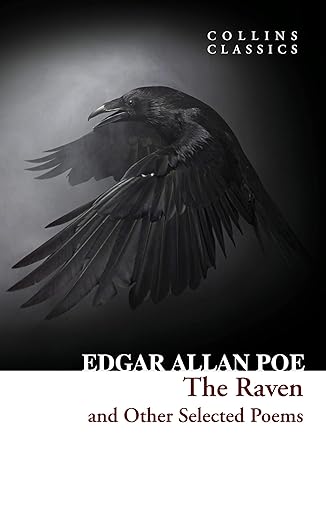
This selection of Edgar Allan Poe’s poetical works includes some of his best-known pieces, including the triumphant, gleeful ‘The Bells’, the tragic ode ‘Annabel Lee’ and his famous gothic tour de force, ‘The Raven’. Some present powerful, nightmarish images of the macabre and bizarre, while others have at their heart a profound sense of love, beauty and loss. All are linguistic masterpieces that demonstrate Poe’s gift for marrying rhythm, form and meaning.
An American writer of primarily prose and literary criticism, Edgar Allen Poe never ceased writing poetry throughout his turbulent life, and is today regarded as a central figure of American literary romanticism. He died in 1849.
Not only is it a fascinating insight into the life and customs of traveller people in the 1920s and 1930s, it is also a thought-provoking account of human strength and weakness, courage and cowardice, understanding and prejudice by a sensitive and entertaining writer.
The next link up will be on February 1, 2025 when the theme be Valentine’s Day/something sweet on the cover.