Spell the Month in Books June 2024

Spell the Month in Books is a linkup hosted by Jana on Reviews From the Stacks on the first Saturday of each month. The goal is to spell the current month with the first letter of book titles, excluding articles such as ‘the’ and ‘a’ as needed. That’s all there is to it! Some months there are optional theme challenges, such as “books with an orange cover” or books of a particular genre, but for the most part, any book you want to use is fair game!

This month’s theme is History. I don’t think that the books you choose have to be books that you’ve read, but where possible I like to do that, or at least choose books that I want to read and and this month I’ve managed to find enough nonfiction books about different aspects of history that I have read with titles beginning with each of the letters to spell JUNE.

J is for Jane Austen at Home by Lucy Worsley

I think it was a foregone conclusion that I would really enjoy historian Lucy Worsley’s Jane Austen at Home. I have loved Jane Austen’s books for many years, going back to when I was about 12 and read Pride and Prejudice for the first time. I’d previously read Carol Shields’s biography Jane Austen and Claire Tomalin’s Jane Austen: a Life so there was really very little I learned reading Jane Austen at Home that surprised me or that I hadn’t known before.

I suppose what was new to me was the emphasis on what home life was like during the period of Jane’s life and seeing photos of the houses and places that she had lived or stayed in as a visitor. And I think I gained a better understanding of the social history of Georgian England and of Jane’s wider family connections and what her family and friends thought of her both as a person and as an author.

Jane Austen at Home is both very readable and very detailed, which is not an easy thing to achieve. There is an extensive section at the end of the book, listing sources, a bibliography, notes on the text and an index. There are two sections of colour plates.

U is for Under the Tuscan Sun by Frances Mayes
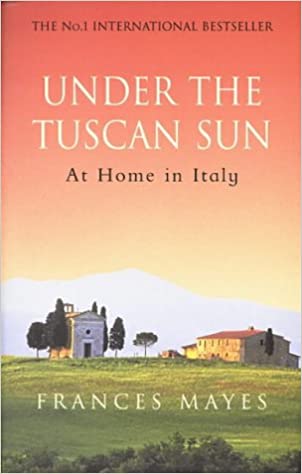
In this book the author describes how she bought and renovated an abandoned villa. It’s full of the pleasures of living in Tuscany – the sun, the food, the wine and the local people. It makes me want to do the same! It’s nothing like the film they made of it – the book is much better. Bella Tuscany is the follow up book with more details about the restoration of the villa and its garden, plus recipes.

I read this book before I began blogging, so no review. And I no longer have my copy, which just shows the dangers of recycling books as I’d love to re-read it!

N is for Nagasaki: Life After Nuclear War by Susan Southard

The facts are horrendous – on August 9th 1945, two days after the atomic bombing of Hiroshima, a five-ton plutonium bomb was dropped on the small coastal town of Nagasaki. The effects were cataclysmic.

This must be one of the most devastatingly sad and depressing books I’ve read and yet also one of the most uplifting, detailing the dropping of the bomb, which killed 74,000 people and injured another 75,000. As the subtitle indicates this book is not just about the events of 9 August 1945 but it follows the lives of five of the survivors from then to the present day. And it is their accounts which make this such an emotive and uplifting book, as it shows their bravery, how they survived, and how they were eventually able to tell others about their experiences. Along with all the facts about the after effects of the bombing, the destruction, and radiation, it exposes the true horror of atomic warfare, making it an impressive and most compelling account of pain, fear, bravery and compassion.

E is for Elizabeth Macarthur: A Life at the Edge of the World by Michelle Scott Tucker
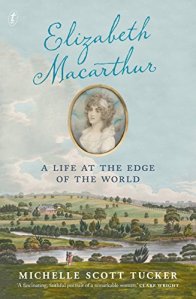
This is an excellent biography because it is thorough, well researched and it provides an insight into the early years of Australia’s colonial history. It is an extremely readable biography of a fascinating woman. Elizabeth was born on 14 August 1766 in Devon, England and she married John Macarthur in October 1788. In June 1789 they sailed with their first child, Edward, initially on the Neptune, and then on the convict ship Scarborough to New South Wales where John joined his regiment, the New South Wales Corps, in the recently established colony of New South Wales.

For sixty years, Elizabeth ran the family farm in Parramatta, west of Sydney town – on her own during her husband’s long absences abroad, four years during her husband’s first absence, and nine years during the second, when she was responsible for the care of their valuable merino flocks, as well as the Camden Park estate and the direction of its convict labourers.

The book is packed with detail about the landscape, the indigenous population, the disputes between various sections of the colony, about farming and the establishment of the wool industry, not forgetting the details of the Macarthur family members, illnesses, and the position of the women within the community.

The next link up will be on July 6, 2024 when the optional theme will be Stars/Sky
Spell the Month in Books May 2024: Nature

Spell the Month in Books is a linkup hosted by Jana on Reviews From the Stacks on the first Saturday of each month. The goal is to spell the current month with the first letter of book titles, excluding articles such as ‘the’ and ‘a’ as needed. That’s all there is to it! Some months there are optional theme challenges, such as “books with an orange cover” or books of a particular genre, but for the most part, any book you want to use is fair game!

This month’s theme is Nature. This is a vast topic and looking through my books, both read and those I’ve yet to read, I have lots to choose from, but I only found a few that fit this theme in titles that begin with letters to spell the word MAY. I have read two of these books and the other one is one of my TBRS.

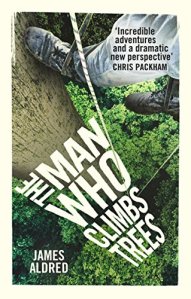
M is for The Man Who Climbed Trees by James Aldred 5*

If you have ever wondered how wildlife/nature documentaries are filmed this book has the answers.

James Aldred, a professional tree climber, wildlife cameraman, and adventurer, explains how he discovered that trees are places of refuge as well as providing unique vantage points to view the world. Trees enthral him, right from the time he first climbed into the canopy of an oak tree in the New Forest. Climbing trees gives him peace within himself and with the world around him. Since he first began climbing trees he has travelled the world climbing many of the world’s tallest trees, filming for the BBC and National Geographic magazine.

The Man Who Climbs Trees is a wonderful book, full of James Aldred’s adventures and his views on life and spirituality. I loved it. His travels brought him into contact with dozens of different religions and philosophies all containing ‘profound elements of truth’ that he respects very much, concluding that ‘spirituality is where you find it’ and he finds it ‘most easily when up in the trees’.

A is for All Among the Barley by Melissa Harrison, a TBR.

I bought this book because I enjoyed Melissa Harrison’s novella, Rain: Four Walks in English Weather, which is about four rain showers, in four seasons, across Wicken Fen, Shropshire, the Darent Valley and Dartmoor. I like the way she writes about the natural world and All Among the Barley looks as though it will bring to life a world governed by the old rural traditions, in an evocation of place and a lost way of life. It’s a novel set in the autumn of 1933 on a farm describing rural traditions as harvest time approaches.

Y is for The Year Without Summer by Guinevere Glasfurd 5*

The volcanic eruption of Mount Tambora on Sumbawa Island in Indonesia in 1815 had a profound and far reaching impact on the world. It led to sudden cooling across the northern hemisphere, crop failures, famine and social unrest in the following year, which became known as The Year Without Summer and in North America as Eighteen hundred and froze to death. But it wasn’t until the mid twentieth century that volcanic eruptions were shown to affect climate change.

Guinevere Glasfurd’s novel illustrates how the impact of the extreme weather conditions affected the lives of six people. They never meet, or know each other, but their stories are intertwined throughout the book in short chapters, giving what I think is a unique look at the events of 1816. I enjoyed all the stories.

The next link up will be on June 1, 2024 when the optional theme will be History.

The Road to Wigan Pier by George Orwell

Synopsis:

In the 1930s, commissioned by a left-wing book club, Orwell went to the industrial areas of northern England to investigate and record the real situation of the working class. Orwell did more than just investigate; he went down to the deepest part of the mine, lived in dilapidated and filthy workers’ houses, and used the tip of his pen to vividly reveal every aspect of the coal miners’ lives. Reading today, 80 years later, Still shockingly true. The despair and poverty conveyed by this picture have a terrifying power that transcends time and national boundaries. At the same time, the Road to Wigan Pier is also Orwell’s road to socialism as he examines his own inner self. Born in the British middle class, he recalled how he gradually began to doubt and then hate the strict class barriers that divided British society at that time. Because in his mind, socialism ultimately means only one concept: “justice and freedom.” (Goodreads)

The Road to Wigan Pier, written in 1936 and published in 1937, is a book of two halves. Orwell’s graphically unforgettable descriptions of social injustice, cramped slum housing, dangerous mining conditions, squalor, hunger and growing unemployment remains a powerful portrait of poverty, injustice and class divisions in Britain. I loved Part One, Part Two less so. I was much more interested in the social and economic conditions than in Orwell’s political views on socialism and fascism.

I knew very little about the 1930s, so I was fascinated and appalled by Orwell’s descriptions in Part One of the working conditions in the coal mines in three towns in the industrial north of England in 1936. His experience of working in a coal mine convinced him that could never have been a coal miner:

I am not a manual labourer and please God I shall never be one, but there are some kinds of manual work that i could do if I had to. At a pinch I could be a tolerable road-sweeper or an inefficient gardener or even a tenth-rate farm hand. But by no conceivable amount of effort or training could I become a coal-miner; the work would kill me in a few weeks.

Yet as bad as the conditions in the mines were in 1936, Orwell stated that it was not long since conditions had been even worse, and he went on to describe how women used to have to work underground, crawling on all fours with a harness round their waists and a chain that passed between their legs dragging tubs of coal even when they were pregnant.

The slag heaps were just ‘dumped on the earth like the emptying of a giant’s dust-bin’ on the outskirts of the mining towns and often they were on fire. At night they could be seen as ‘rivulets of fire winding this way and that, and also the slow-moving blue flames of sulphur’.

Orwell states that

… the majority of these houses are old, fifty or sixty years old at least, and great numbers of them are by any ordinary standard not fit for human habitation. They go on being tenanted simply because there are no others to be had. And that is the central fact about housing in the industrial areas: not that the houses are poky and ugly, and insanitary and comfortless, or that they are distributed in incredibly filthy slums round belching foundries and stinking canals and slag heaps that deluge them with sulphurous smoke – though all this is perfectly true – but simply that there are not enough houses to go round.

Given that the living and working conditions were so appalling it was no surprise to read Orwell’s descriptions of the miners’ health – the most distinctive thing about them were the blue scars on their noses. The coal dust entered every cut and then their skin grew over it and formed the blue stain like tattooing. Only the largest pits had pithead baths, so the miners could only wash when they got home, where it was impossible to wash all over but they could only wash in a bowl of water – and that was only the top half of their bodies. This was because none of the miners’ houses had hot water and at the time they were built no one had imagined that the miners wanted baths!

Before he’d looked into the real situation of the working class, Orwell had thought that the miners were comparatively well paid having heard that a miner was paid ten or eleven shillings a shift, concluding that every one was earning round about £2 a week or £150 a year. However the actual average earnings were only £115 11s 6d. He included a list of weekly stoppages that were given to him as typical in one Lancashire district and also a comprehensive account of their expenses, all of which reduced their earnings considerably.

He then went on to describe the rate of accidents and of those miners killed and injured – if a miner’s working life was forty years the chances were nearly seven to one against his escaping injury and not much more that twenty to one of his being killed outright, giving horrifying accounts of being buried by rock falls when a roof came down. The most understandable cause of accidents was gas explosions, but there were also ‘pot-holes’, circular holes that shot out lumps of stone big enough to kill a man and large stretches of roof were left unpropped because of the increased speed at which the coal was extracted. No other trade was this dangerous.

I struggled to keep my attention focused whilst reading Part Two. He wrote about class divisions, class prejudice and the struggle towards a liberation from the constrictions of class. He pondered whether he had been born into the lower-upper middle class or the upper middle class, or whether it was better to define the class division in terms of money – that is, a layer of society lying between £2000 ad £300 a year. In any case he thought it was not entirely explicable in terms of money as there was also a sort of shadowy caste-system involved. But a lot of Part Two just went over my head.

I was curious about the title, because there is no ‘road to Wigan Pier’ in Orwell’s book and also because I’d grown up knowing that ‘Wigan Pier’ was not a pleasure pier at the seaside – Wigan is not near the sea. It’s inland and part of Greater Manchester!

In a broadcast radio interview of 1943 Orwell elaborated on the name Wigan Pier:

Wigan is in the middle of the mining areas. The landscape is mostly slag-heaps – Wigan has always been picked on as a symbol of the ugliness of the industrial areas. At one time, on one of the muddy little canals that run round the town, there used to be a tumble-down wooden jetty; and by way of a joke some nicknamed this Wigan Pier. The joke caught on locally, and then the music-hall comedians got hold of it, and they are the ones who have succeeded in keeping Wigan Pier alive as a byword.” (Wikipedia)

For more information about the current ‘Wigan Pier’ area see this article about a proposal to redevelop the disused 18th century industrial buildings that is being led by Step Places, The Old Courts, Wigan Council and the Canal and River Trust with the aim of creating a new cultural destination.

I read this book as part of The 1936 Club hosted by Karen at Kaggsy’s Bookish Ramblings and Simon from Stuck in a Book blogs, but was too late to enter my post with the other bloggers’ links during the club event.

The 1937 Club

The 1937 Club, hosted by Stuck in a Book and Kaggsy’s Bookish Ramblings, starts tomorrow and I thought I’d list the books I’ve read that were published that year and also see if I’ve got any more left in my TBRs to read.

These are the books I’ve read:

The links will take you to my reviews :

Bats in the Belfry by E C R Lorac – full of descriptive writing painting vivid pictures of the streets of London in the 1930s and in particular the spooky, Gothic tower in which a corpse is discovered, ‘headless and handless‘. For a while the identity of the murdered man is in doubt – is it that of Bruce Attleton who had unaccountably disappeared or that of the mysterious stranger, Debrette who it seems had been blackmailing Bruce? Chief Inspector Macdonald of New Scotland Yard is called in to investigate.

The Hobbit by J R R Tolkien – an adventure story of a quest set in a fantasy world, so beautifully written that it seems completely believable. Bilbo Baggins, a hobbit, is recruited through Gandalf, the wizard, to accompany a party of thirteen dwarves, led by Thorin, on their quest to recover the dwarves’ treasure stolen by Smaug the dragon and regain possession of the Lonely Mountain. Along the way Bilbo grows in confidence and becomes a hero, meeting elves, outwitting trolls, fighting goblins, and above all gaining possession of the ring from Gollum.

Death on the Nile by Agatha Christie – this shows Agatha Christie’s interest in Egypt and archaeology and also reflects much of the flavour and social nuances of the pre-war period. In it she sets a puzzle to solve –  who shot Linnet Doyle, the wealthy American heiress? It is essentially a ‘locked room mystery’, as the characters are passengers on the river-steamer SS Karnak, cruising on the Nile. Amongst them is the famous Hercule Poirot, a short man dressed in a white silk suit, a panama hat and carrying a highly ornamental fly whisk with a sham amber handle ‘a funny little man.’

Dumb Witness by Agatha Christie – The ‘dumb witness’of the title is Bob, Miss Emily Arundell’s wire-haired terrier in what is described as ‘the incident of the dog’s ball.’ Everyone blamed Emily’s accident on a rubber ball left on the stairs by her frisky terrier. But the more she thought about her fall, the more convinced she became that one of her relatives was trying to kill her. On April 17th she wrote her suspicions in a letter to Hercule Poirot. Mysteriously he didn’t receive the letter until June 28th … by which time Emily was already dead!

The Cheltenham Square Murder by John Bude – this is another complicated murder mystery. The tranquillity of Cheltenham Square is shattered when the occupant of no. 6 was murdered by an arrow to the head, shot through an open window. The puzzle is first of all to work out how the murder was carried out and secondly who out of the several suspects, including six keen members of an Archery Club, was the murderer. I enjoyed trying to work it out, but although I had an idea about the guilty person I couldn’t see how the murders had been achieved until the method was revealed.

Of Mice and Men by John Steinbeck – I really liked this short book about commitment, loneliness, hope and loss, the story of two drifters, George and his simple-minded friend Lennie looking for work and dreaming of having some land of their own. Their hopes are doomed as Lennie – struggling against extreme cruelty, misunderstanding and feelings of jealousy – becomes a victim of his own strength.

The Turn of the Screw by Henry James –  This story is dark and melodramatic, about good and evil and with hints of sexual relations, reflecting the Victorian society of the time. But is it a ghost story or a psychological study? Either way there are creepy, disturbing things going on. It’s a story within a story, told as a ghost story to a group of people as they sit gathered round a fire in an old house. It tells of two children and their governess. She has been employed by their uncle who wants nothing to do with them. Their previous governess had died under mysterious circumstances (was it in childbirth?).  The older child, Miles, was away at school and soon after the new governess arrives Miles returns home, expelled from school for some terrible unexplained offence. It’s all terribly ambiguous.

I have just two more books published in 1937 in my TBRs, so I’m hoping I’ll read at least one of them for the 1937 Club, probably Hamlet, Revenge: a Story in Four Parts by Michael Innes, which is described on the back cover:

The murder was planned, deliberately and at obvious risk, to take place in the middle of a private performance of Hamlet.

Behind the scenes there were thirty-one suspects. In the select and distinguished audience twenty-seven. ‘Suspicions,’ said Appleby, ‘crowd thick and fast upon us.’ (From the back cover)

or I might read The Road to Wigan Pier by George Orwell:

… a searing account of working-class life in the bleak industrial heartlands of Yorkshire and Lancashire in the 1930s, The Road to Wigan Pier is a brilliant and bitter polemic that has lost none of its political impact over time

Orwell’s graphically unforgettable descriptions of social injustice, cramped slum housing, dangerous mining conditions, squalor, hunger and growing unemployment are written with unblinking honesty, fury and great humanity. It crystallized the ideas that would be found in his later works and novels, and remains a powerful portrait of poverty, injustice and class divisions in Britain. Includes illustrations, explanatory footnotes, and an introduction by Richard Hoggart (Amazon UK)

Spell the Month in Books – April 2024

Spell the Month in Books is a linkup hosted by Jana on Reviews From the Stacks on the first Saturday of each month. The goal is to spell the current month with the first letter of book titles, excluding articles such as ‘the’ and ‘a’ as needed. That’s all there is to it! Some months there are optional theme challenges, such as “books with an orange cover” or books of a particular genre, but for the most part, any book you want to use is fair game!

This month’s theme is Poisson d’Avril – The French version of April Fool’s Day involves fish, so let’s look for books related to fish, bodies of water, or comedy. But, I looked and didn’t come up with any ideas to fit the theme.

So, this month the books I’ve chosen are all books I’ve read.

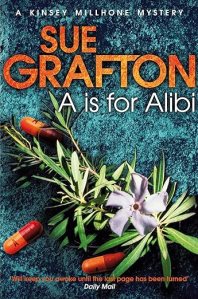
A is for Alibi by Sue Grafton 4*


Sue Grafton is the author of the alphabet- titled series of books featuring Kinsey Millhone, a private investigator. The books are set in and around the fictional town of Santa Teresa, California, based on Santa Barbara.

 Kinsey is a likeable, strong character. In this first book she comes across as a loner. She’s 32, twice divorced with no children or pets, or indeed any ties, although she does have plenty of friends and contacts who help out with her investigations and she goes jogging – a lot. There are  some cameos of characters, who I suspect feature in the later books. There is her landlord Henry Pitts, a former baker aged 81 who makes a living devising crossword puzzles. Kinsey is ‘halfway in love’ with Henry.

It’s a fast-paced book, easy to read and with no gory details, which I have to skim read in other books (the equivalent of watching the TV  behind my fingers). I liked it but haven’t read any of the other books in the series.

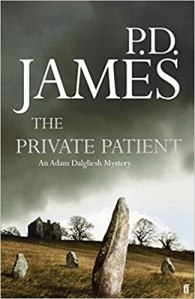
P is for The Private Patient by P D James 4*

When the notorious investigative journalist Rhoda Gradwyn books into Mr Chandler-Powell’s private clinic in Dorset for the removal of a disfiguring and long-standing scar, she has every prospect of a successful operation by a distinguished surgeon, a week’s peaceful convalescence in one of Dorset’s most beautiful manor houses, and the beginning of a new life. She was never to leave Cheverell Manor alive. Commander Adam Dalgleish and his team are called to the Manor to investigate her death. 

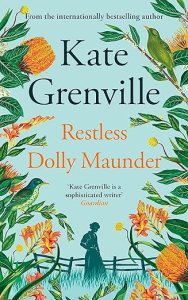
R is for Restless Dolly Maunder by Kate Grenville 4*

This is the fictionalised life story of Kate Grenville’s maternal grandmother, Sarah Catherine Maunder, known as Dolly. She was the sixth child of Thomas and Sarah Maunder, born in Currabubula, New South Wales, Australia in 1881. She was not only restless but also clever and determined – she knew what she wanted and she did her best to achieve it.

Restless Dolly Maunder casts light not just on Dolly’s life but also on life in Australia for most of the 20th century. The book has a relentless pace as it tells her life story as she propels herself from place to place and from business to business, enjoying success whilst it lasted and enduring all else, not stopping to pause breath in her restless pursuit of what came next.

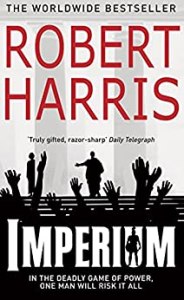
I is for Imperium by Robert Harris, historical fiction set in Ancient Rome. 4*

Beginning in 79 BC, this book set in the Republican era is a fictional biography of Marcus Tullius Cicero by Tiro, his slave secretary. Tiro was a real person who did write a biography of Cicero, which has since been lost in the collapse of the Roman Empire. Tiro is credited with the invention of shorthand. Harris has based Imperium on, among other sources, Cicero’s letters, which Tiro had recorded, successfully interweaving Cicero’s own words with his own imagination.  It is basically a political history, a story filled with intrigue, scheming and treachery in the search for political power as Cicero, a senator, works his way to power as one of Rome’s two consuls.

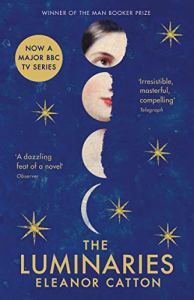
L is for The Luminaries by Eleanor Catton 4*

This is a long and detailed book, written with such intricate plotting and numerous characters that it bewildered me at times. It’s historical fiction set in New Zealand in the 1860s, during its gold rush and it has everything – gold fever, murder, mystery and a ghost story too.

I loved the pictures it builds up of the setting in New Zealand, the frontier town and its residents from the prospectors to the prostitutes, and the obsessive nature of gold mining. And I did become fully absorbed in the story during the week it took me to read.

The next link up will be on May 4, 2024 when the optional theme will be Nature.

Spell the Month in Books – March 2024

Spell the Month in Books is a linkup hosted by Jana on Reviews From the Stacks on the first Saturday of each month. The goal is to spell the current month with the first letter of book titles, excluding articles such as ‘the’ and ‘a’ as needed. That’s all there is to it! Some months there are optional theme challenges, such as “books with an orange cover” or books of a particular genre, but for the most part, any book you want to use is fair game!

This month’s theme is National Caffeine Month – Books with a beverage on the cover or in the title.

M is for Milkman by Anna Burns

Synopsis:

In an unnamed city, where to be interesting is dangerous, an eighteen-year-old woman has attracted the unwanted and unavoidable attention of a powerful and frightening older man, ‘Milkman’. In this community, where suggestions quickly become fact, where gossip and hearsay can lead to terrible consequences, what can she do to stop a rumour once it has started? Milkman is persistent, the word is spreading, and she is no longer in control . . .

A is for Cakes and Ale by W Somerset Maugham

I read this book back in 2008 and wrote very briefly about it, see this post. The description below is from Goodreads.

Cakes and Ale is both a wickedly satirical novel about contemporary literary poseurs and a skilfully crafted study of freedom. As he traces the fortunes of Edward Driffield and his extraordinary wife Rosie, one of the most delightful heroines of twentieth-century literature, Maugham’s sardonic wit and lyrical warmth expertly combine in this accomplished and unforgettable novel.

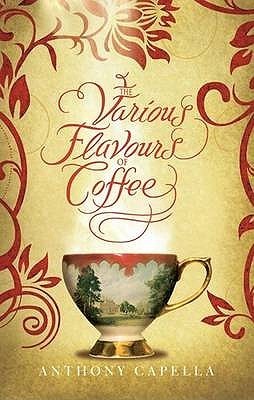
C is for The Various Flavours of Coffee by Anthony Capella

This is one of my oldest TBRs, a book I bought in 2008. I’ve started reading it several times, only to put it back on the shelf unread. If you have read it I’d love to know what you think about it.

Synopsis:

London,1895. Robert Wallis, would-be poet, bohemian and impoverished dandy, accepts a commission from coffee merchant Samuel Pinker to categorise the different tastes of coffee – and encounters Pinker’s free-thinking daughters, Philomenia, Ada and Emily. As romance blossoms with Emily, Robert realises that the Muse and marriage may not be incompatible after all.

Sent to Abyssinia to make his fortune in the coffee trade, he becomes obsessed with a negro slave girl, Fikre. He decides to use the money he has saved to buy her from her owner – a decision that will change not only his own life, but the lives of the three Pinker sisters . . .

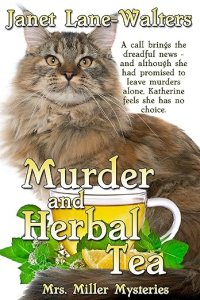
H is for Murder and Herbal Tea by Janet Lane Walters

It’s book 5 in the Mrs Miller Mysteries series.

Synopsis:

Katherine’s wedding day has arrived and she and Lars make their vows. When she notices one of her best friends hasn’t arrived, she begins to worry. Her friend owns a shop where tea and accompaniments are sold. Her friend’s partner is a micromanager. Katherine’s friend has wanted to dissolve the partnership. A call to the New England town brings the dreadful news of a murder. Kate’s protectiveness factor takes hold and she leaves a note for Lars and heads to rescue her friend. Though she has promised to leave murders alone, she feels she has no choice. Lars follows to help her solve another murder.

The next link up will be on April 6, 2024 when the theme will be Poisson d’Avril – The French version of April Fool’s Day involves fish, so look for books related to fish, bodies of water, or comedy.