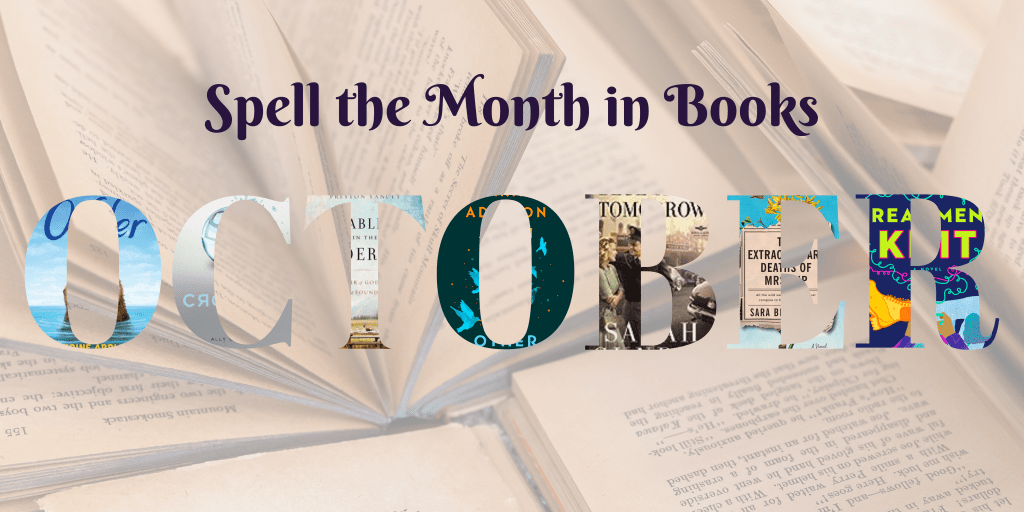
Spell the Month in Books is a linkup hosted by Jana on Reviews From the Stacks on the first Saturday of each month. The goal is to spell the current month with the first letter of book titles, excluding articles such as ‘the’ and ‘a’ as needed. That’s all there is to it! Some months there are optional theme challenges, such as “books with an orange cover” or books of a particular genre, but for the most part, any book you want to use is fair game!
This month’s theme is Nostalgia! I’ve chosen books that I enjoyed and that bring back happy memories of the times I first read them, most of them pre-blog.
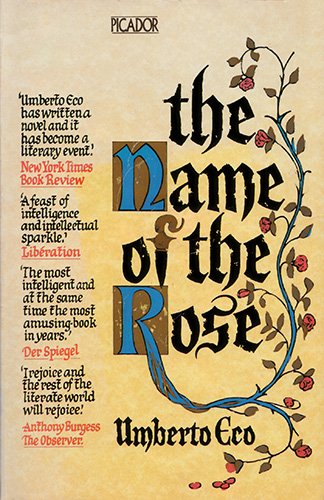
N is for The Name of the Rose by Umberto Eco – It reminds me of the time when I worked in the Buckinghamshire County Archives Department many years ago and it was recommended to me by one of the archivists. Historical fiction set in 14th century Italy about Franciscans in a wealthy Italian abbey are suspected of heresy, and Brother William of Baskerville arrives to investigate.
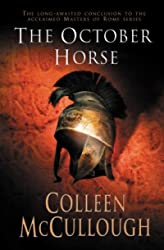
O is for The October Horse by Colleen McCullough – I loved her series of books, The Masters of Rome. This one is the final book in the series set in the last days of the Roman Republic in 48 BC when Julius Caesar was in the prime of his life and at the height of his powers.
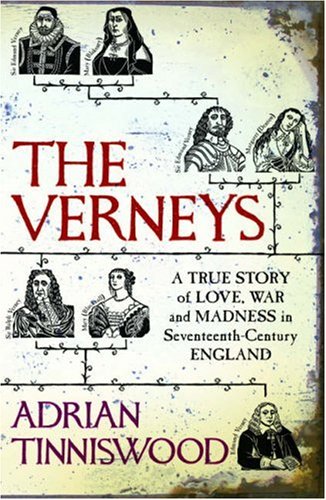
V is for The Verneys by Adrian Tinniswood – another book from the time I was working in the County Archives Department. The Verneys are a local family, who lived at Claydon House not far from where I used to live. The sub-title is A true story of love, war and madness in seventeenth century England, which sums up the book.
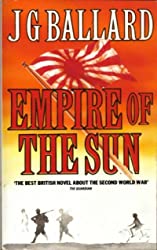
E is for Empire of the Sun by J G Ballard – because it was one of the books I read and loved for my Open University degree, a semi-autobiographical novel, set during the Second World War, the novel draws on Ballard’s childhood experience in the Japanese-controlled Lunghua civilian internment camp in China.
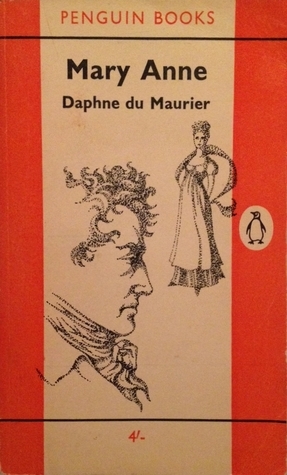
M is for Mary Anne by Daphne du Maurier, historical fiction set during the Napoleonic Wars and based on du Maurier’s own great-great-grandmother. I still have the paperback copy I read when I was a teenager and avidly read Du Maurier’s books.
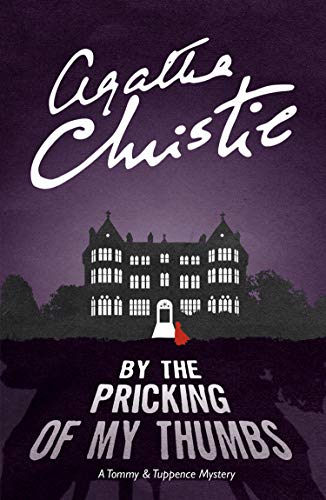
B is for By the Pricking of My Thumbs by Agatha Christie, the first Tommy and Tuppence story I read. Outwardly they are an ordinary couple, but appearances are deceptive, they are private detectives. In this book they investigate events in a gothic nursing home where Tommy’s elderly Aunt Ada had died.
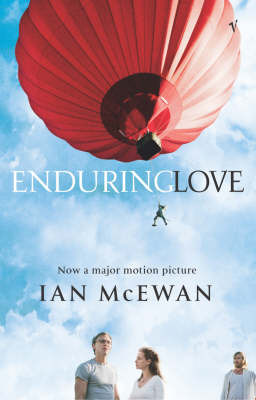
E is for Enduring Love by Ian McEwan I read this many years ago. One windy spring day in the Chilterns Joe Rose’s calm, organised life and his love for his wife is shattered by a ballooning accident.
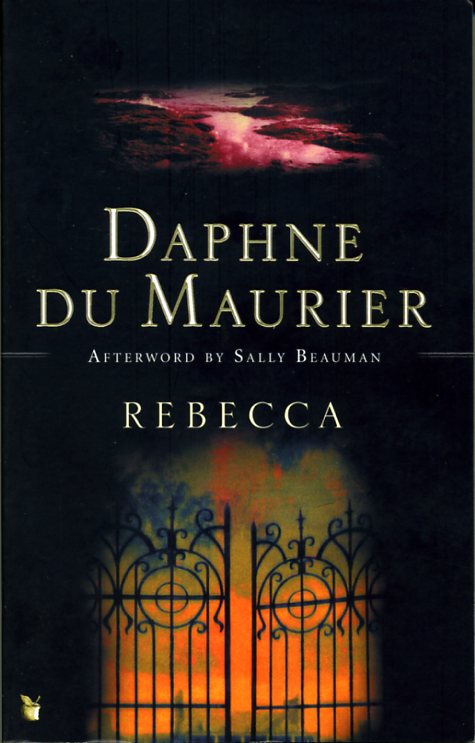
R is for Rebecca by Daphne du Maurier There is something special about reading a book when you know the characters and what happens to them and yet at the same time you want it to turn out differently – to prevent the disaster happening, and to help them understand where they’re going wrong. I first read it as a young teenager and was instantly captivated by the story. It asks just who was Rebecca, what was she really like and what lead to her death.
The next link up will be on December 6, 2026 when the theme will be: Giftable – Books you would give or would like to receive as a gift.
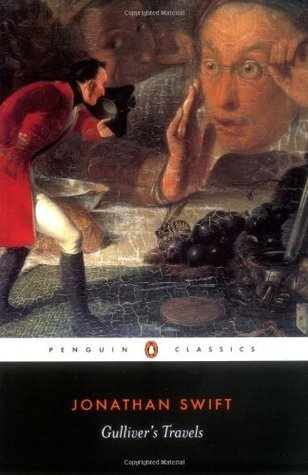
A wickedly clever satire uses comic inversions to offer telling insights into the nature of man and society. Nominated as one of America’s best-loved novels by PBS’s The Great American Read.
Gulliver’s Travels describes the four voyages of Lemuel Gulliver, a ship’s surgeon. In Lilliput he discovers a world in miniature; towering over the people and their city, he is able to view their society from the viewpoint of a god. However, in Brobdingnag, a land of giants, tiny Gulliver himself comes under observation, exhibited as a curiosity at markets and fairs. In Laputa, a flying island, he encounters a society of speculators and projectors who have lost all grip on everyday reality; while they plan and calculate, their country lies in ruins. Gulliver’s final voyage takes him to the land of the Houyhnhnms, gentle horses whom he quickly comes to admire – in contrast to the Yahoos, filthy bestial creatures who bear a disturbing resemblance to humans.
I think Gulliver’s Travels is such a strange book, definitely not a children’s book as I had thought. There are very many editions of this book. The edition I read is the e-book edition based on the text of Swift’s 1726 original, with the 1899 illustrations of Arthur Rackham. It’s a satire on human nature and the imaginary travellers’ tale literary subgenre about Lemuel Gulliver, a ship’s surgeon who travels to four strange and distant lands.
This is one of those books that I’ve known of since childhood and have known bits of the story, but have never read. I did see a TV cartoon version several years ago and I’ve been meaning to read it for years. It’s a book, which operates on several levels, as the Introduction in one of my copies (an Odhams Press Limited publication) states:
An embittered, middle-aged man sat down to write a book that would scourge the vices and follies of mankind. That book, with its sting mellowed during the passage of two hundred years, has become – of all things – a children’s classic. ‘Gulliver’s Travels’ was the splenetic outburst of a passionate mind, whose genius gave immortality to so transient a thing as satire; but that immortality had a permanent basis – a child-like delight in marvels, a freshness of invention, a limpid style and a selective perception that created images of giants, dwarfs and fabled races with a vivid pulsating life of their own.
I don’t think I’d have liked it very much if I’d read it as a child as there are many passages that would have bored me stiff and which even now I found tedious and heavy going in parts. It satirises the political situation during Swift’s lifetime, and is full of political and social allusions, a lot of which, interesting as it is, passed over my head.
But it is a fantastical fantasy set in such different places, the ones I found most interesting are Lilliput inhabited by tiny people Brobdignag, the land of giants, and the country of the Houyhnhms, where a race of talking horses, rule the Yahoos, strange, filthy humanoid animals that Gulliver viewed with contempt and disgust. Gulliver became a part of one of the horse’s households and grew to admire and wanted to emulate the Houyhnhms’ way of life, which left him horrified with humanity. Less interesting is his visit to Laputa, a flying island and it’s rebellious cities.
It was not really what I expected, and whilst I think a lot of it is absurd and amusing, it’s certainly not a book I can say that I enjoyed, I think it was worth reading and I’m glad I finally got round to reading it.
Spell the Month in Books is a linkup hosted by Jana on Reviews From the Stacks on the first Saturday of each month. The goal is to spell the current month with the first letter of book titles, excluding articles such as ‘the’ and ‘a’ as needed. That’s all there is to it! Some months there are optional theme challenges, such as “books with an orange cover” or books of a particular genre, but for the most part, any book you want to use is fair game!
This month’s theme is Trick or Treat: books that you feel strongly about, whether positively or negatively.
I don’t like tricks so my books are all books I’ve enjoyed – real treats!
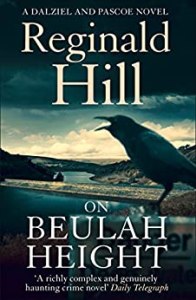
Reginald Hill’s 17th Dalziel and Pascoe novel, set in a Yorkshire village, Dendale. Three little girls had gone missing from the village one summer. Their bodies were never found, and the best suspect, a strange lad named Benny Lightfoot, was held for a time, then released. Fifteen years later another little girl, Lorraine, aged seven went out for a walk one morning with her dog before her parents got up and didn’t return home, reviving memories of the missing children from fifteen years earlier. It was a case that has haunted Dalziel.
This book is tightly plotted with many twists that made me change my mind so many times I gave up trying to work out who the murderer was and just read for the pleasure of reading. Hill’s descriptive writing is rich and full of imagery. The main characters are fully rounded people and the supporting cast are believable personalities, often described with wry humour.
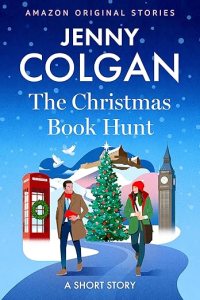
Mirren is looking for a copy of A Child’s Garden of Verses by Robert Louis Stevenson, a particular one that had belonged to her Great Aunt Violet. It was a special edition, with hand-drawn plates by Aubrey Beardsley and now Great Aunt Violet, who is in hospital seriously ill would love to see the book for Christmas. I loved that book as a child, so this is what made the story irresistible for me. She went to the book town Hay-on-Wye, bookshops in Edinburgh and a secondhand bookshop in Northumberland that sounds very like Barter Books in Alnwick, my favourite bookshop. She bumps into mysterious, charming Theo, who, unbeknownst to her, is searching for the same book for reasons of his own…
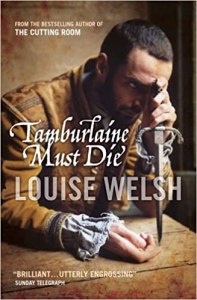
It was a real treat to read Tamburlaine Must Die, a short book of only 140 pages, that I read in a day. Weaving together fact and fiction and set in 1593 this is a tense, dramatic story of the last days of Christopher Marlowe, playwright, poet and spy. Accused of heresy and atheism, his death is a mystery, although conjecture and rumours abound. It has an immediacy, that drew me into the late Elizabethan world.
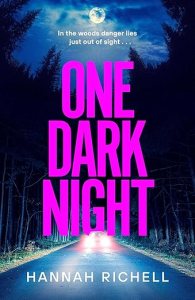
I loved the spooky, tense atmosphere and as soon as I started reading it knew I was going to enjoy this book. The settings are vividly described, the characters come across as real people, and the plot is amazing, multi- layered, with plenty of suspects for the murder and numerous twists and turns to throw me off the scent. For quite a while you don’t even know the name of the victim, who was found in the woods, called ‘Sally in the Wood’. It’s a police procedural centred on Ellie, a pupil at the private school, where her mother Rachel works as the school counsellor and her father, Ben, a detective sergeant who is on the investigation team
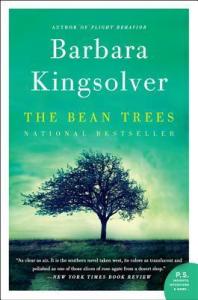
I loved this book. Barbara Kingsolver writes in such a way that I can easily visualise the scenes, beginning with the opening paragraph in which she describes a tractor tire blowing up, flinging a man up in the air and throwing him over the top of a Standard Oil sign. Taylor (originally called Marietta/Missy) grew up in rural Kentucky. She left home when she had saved enough to buy a car, an old VW. She changed her name to Taylor after the first place where she ran out of petrol, which just happened to be Taylorville. She drove on until the car broke down in the middle of nowhere, on land owned by the Cherokee tribe. And it was there at a garage that an Indian woman abandoned a baby girl in Taylor’s car – she called the baby, Turtle.
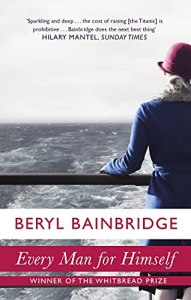
This the story of Morgan’s voyage on the Titanic, divided into four days as he tells it. It’s mainly about the young rich people as they drink and party their way across the Atlantic. Morgan is part of the crowd but he is not rich, and although he has connections, he’s a young American who has to earn his living. Day four is the day the Titanic sank. I could easily imagine what it was like to be a passenger, people rushing about the boat, trying to get on the lifeboats and being separated from friends and family. And the final scenes bring home the reality that it really was a case of every man for himself with the callous attitude towards the steerage passengers, the lack of lifeboats and the disregard of the ice warnings. And so the boat described as unsinkable, sank.
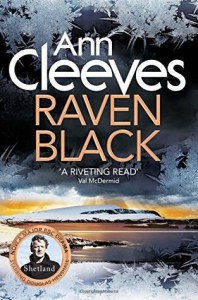
R is for Raven Black by Ann Cleeves, the first in her Shetland series, crime novels set in the Shetland Islands, to the north of mainland Scotland. This is a murder mystery investigated by Inspector Jimmy Perez.
It begins on New Year’s Eve as Magnus Tait is seeing the new year in on his own, until two teenage girls knock on his door to wish him a Happy New Year. A few days later one of the girls is found dead in the snow not far from Magnus’s house, strangled with her own scarf.
The book has a strong sense of location and a terrific atmosphere – the landscape, the sea, the weather, the circling ravens and the spectacle of Up Helly Aa (the Fire Festival), all anchor the story and bring the book to life.
Upcoming Themes
November 1: Nostalgia
December 6: Giftable – Books you would give or would like to receive as a gift
January 3, 2026: New Books – Ones you have received recently or are looking forward to reading or seeing published this year
Spell the Month in Books is a linkup hosted by Jana on Reviews From the Stacks on the first Saturday of each month. The goal is to spell the current month with the first letter of book titles, excluding articles such as ‘the’ and ‘a’ as needed. That’s all there is to it! Some months there are optional theme challenges, such as “books with an orange cover” or books of a particular genre, but for the most part, any book you want to use is fair game!
The optional theme this month, which is Something to Savour. I’m including books that have been on my TBR a long time, some of them are also long books, some very long books. Some of them I’ve had, and still haven’t read, for very many years. I began cataloguing my books in 2007 on LibraryThing, so the books listed for 2007 are books I’d already acquired before then.
These are books that I’d almost forgotten about, some double shelved and so hidden behind others. Some I think I haven’t read as there are so long. The links in the titles of each book go to Amazon UK.
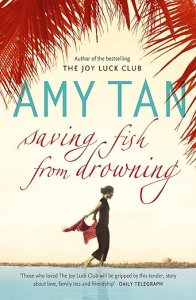
On an ill-fated art expedition of the Southern Shan State in Burma, eleven Americans leave their Floating Island Resort for a Christmas morning tour – and disappear. Through the twists of fate, curses and just plain human error, they find themselves deep in the Burma jungle, where they encounter a tribe awaiting the return of the leader and the mythical book of wisdom that will protect them from the ravages and destruction of the Myanmar military regime.
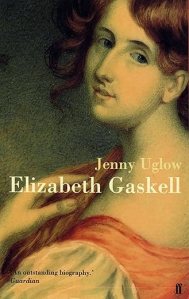
High-spirited, witty and passionate, Elizabeth Gaskell wrote some of the most enduring novels of the Victorian age, including Mary Barton, North and South and Wives and Daughters. This biography traces Elizabeth’s youth in rural Knutsford, her married years in the tension-ridden city of Manchester and her wide network of friends in London, Europe and America. Standing as a figure caught up in the religious and political radicalism of nineteenth century Britain, the book looks at how Elizabeth observed, from her Manchester home, the brutal but transforming impact of industry, enjoying a social and family life, but distracted by her need to write down the truth of what she saw.
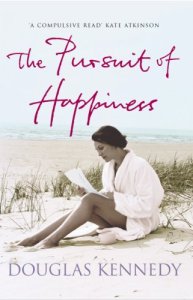
New York, 1945 – Sara Smythe, a young, beautiful and intelligent woman, ready to make her own way in the big city attends her brothers Thanksgiving Eve party. As the party gets into full swing, in walks Jack Malone, a US Army journalist back from a defeated Germany and a man unlike any Sara has ever met before – one who is destined to change Sara’s future forever.
But finding love isn’t the same as finding happiness – as Sara and Jack soon find out. In post-war America chance meetings aren’t always as they seem, and people’s choices can often have profound repercussions. Sara and Jack find they are subject to forces beyond their control and that their destinies are formed by more than just circumstance. In this world of intrigue and emotional conflict, Sara must fight to survive -against Jack, as much as for him.
In this mesmerising tale of longing and betrayal, The Pursuit of Happiness is a great tragic love story; a tale of divided loyalties, decisive moral choices, and the random workings of destiny.
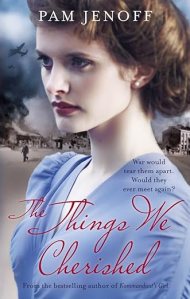
Roger Dykmans, a university student, is living with his brother Hans, an international emissary who’s secretly working against the Nazis. As time goes by, Roger finds himself increasingly drawn to Magda, Hans’ Jewish wife, and soon they are involved in a passionate love affair. But their secret world is turned upside down when Magda and her young daughter, Anna, are arrested by the Nazis. The Gestapo make a deal with Roger: if he hands over information about Hans’ operations, they’ll set Magda and Anna free. Suddenly, Roger is faced with an impossible decision – should he betray his brother to save the woman they both love?
Spanning decades and continents, The Things We Cherished explores the strength of true love under the worst of circumstances.
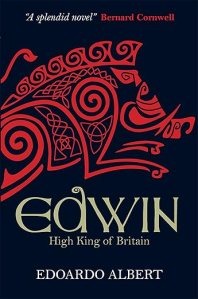
In 604 AD, Edwin, the deposed king of Northumbria, seeks refuge at the court of King Raedwald of East Anglia. But Raedwald is urged to kill his guest by Aethelfrith, Edwin’s usurper. As Edwin walks by the shore, alone and at bay, he is confronted by a mysterious figure–the missionary Paulinus– who prophesies that he will become High King of Britain. It is a turning point.
Through battles and astute political alliances Edwin rises to great power, in the process marrying the Kentish princess Aethelburh. As part of the marriage contract the princess is allowed to retain her Christian faith. But, in these times, to be a king is not a recipe for a long life.
This turbulent and tormented period in British history sees the conversion of the Anglo-Saxon settlers who have forced their way on to British shores over previous centuries, arriving first to pillage, then to farm and trade–and to come to terms with the faith of the Celtic tribes they have driven out.
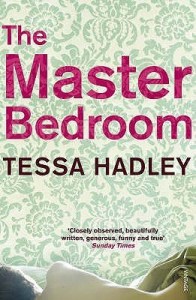
M is for The Master Bedroom by Tessa Hadley – 352 pages, a TBR since 2008.
Kate Flynn has always been a clever girl, brought up to believe in herself as something special. Now Kate is forty-three and has given up her university career in London to come home and look after her mother at Firenze, their big house by a lake in Cardiff. When Kate meets David Roberts, a friend from the old days, she begins to obsess about him: she knows it’s because she’s bored and hasn’t got anything else to do, but she can’t stop.
Adapting to a new way of life, the connections Kate forges in her new home are to have painful consequences, as the past begins to cast its long shadow over the present…
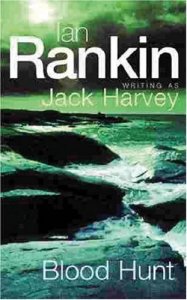
B is for Blood Hunt by Ian Rankin, writing as Jack Harvey – 432 pages, a TBR since 2010
It begins with a phone call. Gordon Reeve’s brother has been found dead in his car in San Diego. The car was locked from the inside, a gun was in his hand. In the US to identify the body Gordon realises that his brother has been murdered. What’s more, it’s soon obvious that his own life is in danger.
Once back in Scotland he finds out his home has been bugged by professionals. But Reeve is a professional too. Ex-SAS, he was half of a two-man unit with someone he came to fear, then to hate. It looks like his nemesis is back…
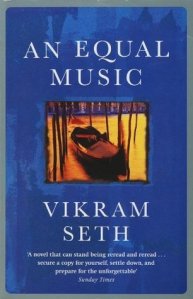
E is for An Equal Music by Vikram Seth – 496 pages, a TBR since 2013.
A chance sighting on a bus; a letter which should never have been read; a pianist with a secret that touches the heart of her music . . . AN EQUAL MUSIC is a book about love, about the love of a woman lost and found and lost again; it is a book about music and how the love of music can run like a passionate fugue through a life. It is the story of Michael, of Julia, and of the love that binds them.
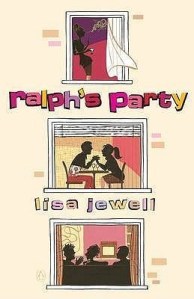
R is for Ralph’s Party by Lisa Jewell – 368 pages, a TBR before 2007.
Meet the residents of 31 Alamanac Road . . .
Ralph and Smith are flatmates and best mates. Nothing can come between them – until the gorgeous Jemima moves in. They’re both falling for her, but which one of them does Jem want?
Upstairs, Karl and Siobhan are happily unmarried and have been for fifteen years – until Cheri, in the flat above, fixes her sights on Karl. Why should a little problem like his girlfriend get in her way?
Sooner or later it’s all going to come to a head – and what better place for tears and laughter, break ups and make ups than Ralph’s party?
Spell the Month in Books is a pretty straightforward meme. On the first Saturday of each month Jana at Reviews from the Stacks opens up a thread welcoming participants to leave a comment with a link to their post, but you can join at any point during the month. Find book titles that start with each letter in the month’s name, make a list, share your list, and that’s it!
This month’s theme is favourite authors!
These are just some of my favourite books from some of my favourite authors. I’ve given a very brief description of each book. For more information click on the book titles to go to my posts about them.
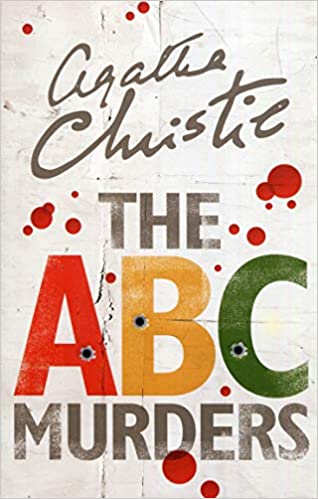
A is for The ABC Murders by Agatha Christie, a Poirot murder mystery. A series of murders advertised in advance by letters to Poirot, and signed by an anonymous ‘ABC’.
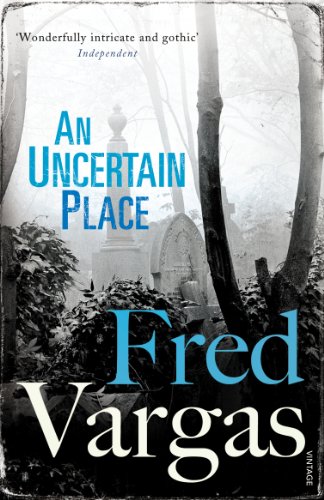
U is for An Uncertain Place by Fred Vargas, the sixth in Fred Vargas’ Commissaire Adamsberg series in which he investigates a macabre murder.
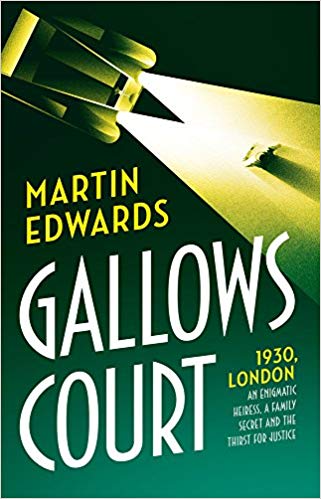
G is for Gallows Court by Martin Edward, the first Rachel Savernake Golden Age Mystery novel, set in 1920s London. This is an intricately plotted murder mystery, dark and atmospheric, with plenty of suspense and intrigue.
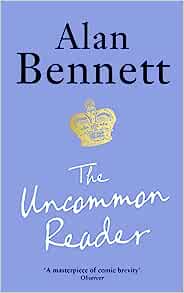
U is for The Uncommon Reader by Alan Bennett, the story of Her Majesty, not named, who visited a travelling library and the books she borrowed. It’s amusing and thought provoking as well.
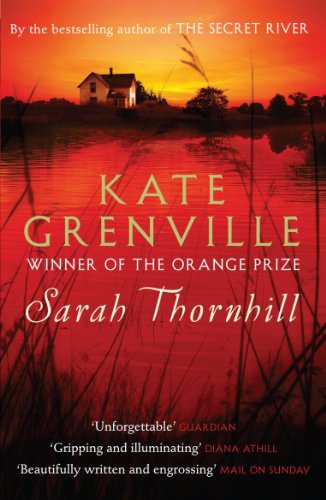
S is for Sarah Thornhill by Kate Grenville, set in 19th century Australia, where the convicts, transported or ‘sent out‘ are now called ‘old colonists‘. It’s the sequel to The Secret River and it does reveals a significant part of that book, so be aware of that if you haven’t read The Secret River.
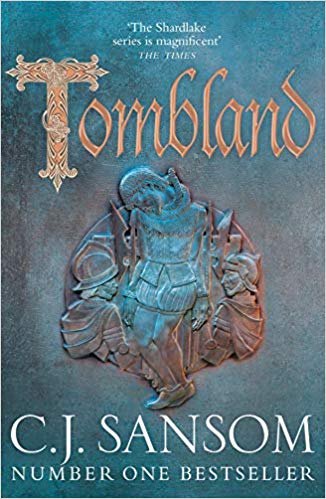
T is for Tombland by C J Sansom, a Shardlake novel, beginning in 1549, Edward VI is king, a minor and England is ruled by the Duke of Somerset as Lord Protector. Rebellion is spreading in protest against the landowners’ enclosures of the common land.
Areyou participating in this meme? If you are, let me know, and I will visit your post. Enjoy your reading!
Spell the Month in Books is a linkup hosted by Jana on Reviews From the Stackson the first Saturday of each month. The goal is to spell the current month with the first letter of book titles, excluding articles such as ‘the’ and ‘a’ as needed. That’s all there is to it! Some months there are optional theme challenges, such as “books with an orange cover” or books of a particular genre, but for the most part, any book you want to use is fair game!
The optional theme this month is “set in a fantasy world or fictional place”. I thought this would be difficult but I managed to find books I’ve read for all the letters in JULY for this theme except for Y!
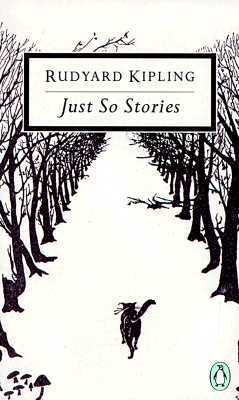
This book contains Rudyard Kipling’s 1902 collection of short stories, Just So Stories. They are stories he told his daughter, Effie (Josephine) as bedtime stories – fantastic accounts of how various features of animals came to be. Kipling explained: ‘in the evening there were stories meant to put Effie to sleep, and you were not allowed to alter those by one single little word. They had to be told just so; or Effie would wake up and put back the missing sentence.’
My favourite is The Cat That Walked by Himselfabout when the tame animals were all wild. The wildest of all was the Cat and this is Kipling’s explanation of how the cat came to use humans for its own comfort but remained independent, walking in the Wet Wild Woods, ‘waving his tail and walking by his wild lone.’ Kipling’s illustrations in this book are perfect.
It also includes: ‘How the Whale got His Throat’, ‘How the Camel Got His Hump’, ‘How the Rhinoceros Got His Skin’, ‘How the Leopard Got His Spots’, ‘The Elephant’s Child’, ‘The Sing-Song of Old Man Kangaroo’, ‘The Beginning of the Armadillos’, ‘How the First Letter was Written’, and more.
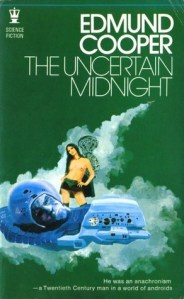
The author wrote that he had written this book before the Space Age, before the development of lasers, before it was possible to give a man a new heart.
I like it because of that; it’s low on technology and high on philosophy. It’s not set in outer space, but firmly on Earth – but Earth in the 22nd century, a world run by machines, androids, who have taken over the burdens of work and responsibility, a world where the humans are required to spend their lives in leisure pursuits, but are subject to ‘Analysis’ (brain-washing) if the androids think they are maladjusted .
John Markham emerges in 2113 after spending 146 years in suspended animation, frozen deep under ground after an atomic holocaust had devastated his world. In 2113 not all humans were happy to leave everything to the androids. Known as Runners these humans believed in ‘human dignity, freedom of action and the right to work’. Markham struggles to adapt and this raises the question of whether the androids could be said to be alive – leading to discussions about the definition of life, the difference between determinism and free will, and eventually leading to war between the androids and the Runners.
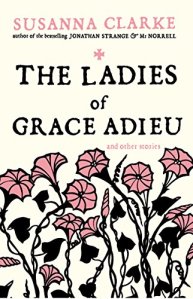
As a child I read all the fairytale books I could find and The Ladies collection takes me back to the magical world of those stories. They are full of deep dark woods, paths leading to houses that seemingly move locations, ladies who are never what they appear to be, princesses, owls, and above all fairies, including the Raven King.
The stories are all captivating and strange and set up echoes in my mind of such fairytales, as Rumpelstiltskin (in On Lickerish Hill). My favourite stories are The Ladies of Grace Adieu, Mrs Mabb, and The Duke of Wellington Misplaces His Horse. The Ladies explains why Jonathan Strange prevented his clergyman brother-in-law from an engagement with Cassandra Parbringer as Strange discovers that his magic is no match for Cassandra and her two friends, the three bewitching ladies of Grace Adieu.
The story I enjoyed the most was The Duke of Wellington Misplaces His Horse. I have not read any of Neil Gaiman’s books, but I think I really should. The story of the Duke’s horse is set in Wall, a village in the world created by Neil Gaiman and Charles Vess, where there is an actual wall dividing our world and the world of Faerie, guarded by burly villagers with cudgels. The proud Duke, the Nation’s Hero, passes unchallenged by the intimidated villagers into Faerie, in pursuit of his horse. His fate is then seemingly set in stitches in a magnificent piece of embroidery in exquisite pictures. The Duke’s fate depends on whether he can alter the future shown in the embroidery. The ending has a satisfying twist.
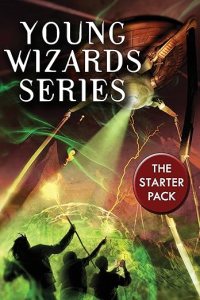
Nita is just looking for an escape from her bullies when she stumbles upon an odd book in thelibrary: “So You Want to Be a Wizard.” Nita at first thinks it s a joke. But once she reads the mysterious book, an alternate universe of Manhattan reveals itself to Nita and her friend Kit. The pair embark on a terrifying adventure where real life and magic intertwine and they find themselves entrenched in a battle between good and evil.
Join Nita and Kit on their magical adventures in the Young Wizards starter pack dive deep into the ocean of Deep Wizardry where whales are wizards and ancient rituals are performed by sharks and dolphins. From the sea to the sky, join the dynamic duo on their third and most frightening challenge yet: Nita s little sister, Dairine. Not only is she too smart for a ten-year-old, but she just became a wizard with almost limitless power. Kit and Nita end up chasing her across the galaxy before she gets into trouble so deep no one can rescue her.
For fans of magic with a thirst for adventure, dive right in with the Young Wizards starter pack, which contains three books: “So You Want to Be a Wizard, Deep Wizardry, “and “High Wizardry. “”
The next link up will be on August 2, 2025 when the optional theme will be Written by your favorite author(s)