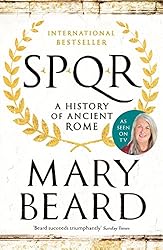
SPQR: A History of Ancient Rome by Mary Beard

Mary Beard is a Professor of Classics at Newnham College, Cambridge and is the Classics editor of the TLS. She is a fellow of the British Academy and a member of the American Academy of Arts and Sciences. And she writes a blog – A Don’s Life, which appears in The Times. I’ve enjoyed watching her TV programmes and so it doesn’t surprise me at all  that SPQR is just as entertaining and informative as the programmes – and very readable, even for someone, like me, who only has a smattering of knowledge about Roman history.

I took my time reading SPQR; some of it covered familiar ground and some was new to me. It’s a fascinating account of how Rome grew and sustained its position for so long, covering the period from the fourth century BCE when Rome was expanding from a small village, up to the moment in 212 CE when the emperor Caracalla made every free inhabitant of the Roman Empire a full Roman citizen.

The title, SPQR, is taken from the Roman catchphrase, Senatus Populusque Romanus meaning the Senate and People of Rome and it is on these two elements – the Senate and the People that Mary Beard concentrates, focussing on the city of Rome, on Roman Italy and also looking at Rome from the outside, from the point of view of those living in the wider territories of the Roman empire.

The book is not strictly chronological and begins with an event I know a bit about through reading Robert Harris’ Lustrum. It’s the Catiline conspiracy in 63 BC, which concerned a plot, or so it was rumoured to overthrow the Roman Empire and Cicero’s part in uncovering the plot and saving the state. Mary Beard begins with this event, because:

it is only in the first century BCE that we can start to explore Rome, close up and in vivid detail through contemporary eyes. An extraordinary wealth of words survives from this period: from private letters to public speeches, from philosophy to poetry – epic and erotic, scholarly and straight from the street.’ (location 143)

She highlights the effect Cicero had, not just on the politics of his own time but also on the language of modern politics. And it is from Cicero’s speeches, essays, letters, jokes and poetry and other Roman writers that we see the Roman world not just in 63 BCE but throughout the city’s history.

For the earlier period however, there are no contemporary accounts and so the early years of the city and of the earliest Romans has to be reconstructed  from individual pieces of evidence from fragments of pottery or letters inscribed on stone.

There are also, of course the myths and stories as well and Beard refers to these, such as the story of Romulus and Remus, who are said to have founded the city, told by Livy and several other Roman writers. Tradition has it that Romulus and his tiny community fought against their neighbours, the Sabines, and erected a temple on the site of the battle, which later became the Forum, but there is no archaeological evidence to identify the remains of this temple. Archaeology, in fact, only sketches what Rome in the earliest period was like and it is very different from the myths. Later Roman writers and modern historians alike have debated intensely the stories of Romulus and Remus, raising the questions of what it was to be Roman. And Beard states:

There is often a fuzzy boundary between myth and history … and … Rome is one of those cultures where the boundary is particularly blurred. … For a start there was almost certainly no such thing as a founding moment of the city of Rome. … Although Romans usually assumed that he [Romulus] had lent his name to his newly established city, we are now fairly confident that the opposite was the case: ‘Romulus’ was an imaginative construction out of ‘Roma’. ‘Romulus was the archetypal ‘Mr Rome.’ (locations 844 – 850)

From that point Beard goes on to discuss the basics of Roman culture, including the nature of Roman marriage, Roman slaves, the Republican system, the principle of freedom, or ‘libertas’, the changing definition of what it meant to be ‘Roman’, Roman domination of the Mediterranean, dictatorship, civil war, taxation, the modern Western system of timekeeping, the emperors and their imperial successes and military victories and the army – and so much more!

SPQR is an immense  achievement, covering 1,000 years of the history of Ancient Rome, and not only the history but also explaining Roman values, what they thought about themselves, and the way of life of both the People and the Senate.

  • Format: Kindle Edition
  • File Size: 22379 KB
  • Print Length: 608 pages
  • Publisher: Profile Books; Main edition (20 Oct. 2015)
  • Source: I bought it

Reading Challenges: Mount TBR 2016 – an e-book I’ve owned since November 2015

My Week in Books: 10 February 2016

This Week in Books is a weekly round-up hosted by Lypsyy Lost & Found, about what I’ve been reading Now, Then & Next.

IMG_1384-0

A similar meme,  WWW Wednesday is run by Taking on a World of Words.

Currently I’m reading two books:

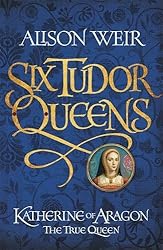
Six Tudor Queens: Katherine of Aragon, the True Queen by Alison Weir, a proof copy – expected publication 5 May 2016. This is the first novel of the Six Tudor Queens series.

Blurb:

A Spanish princess. Raised to be modest, obedient and devout. Destined to be an English Queen. Six weeks from home across treacherous seas, everything is different: the language, the food, the weather. And for her there is no comfort in any of it. At sixteen years-old, Catalina is alone among strangers. She misses her mother. She mourns her lost brother. She cannot trust even those assigned to her protection.

Acclaimed, bestselling historian Alison Weir has based her enthralling account of Henry VIII’s first wife on extensive research and new theories. She reveals a strong, spirited woman determined to fight for her rights and the rightful place of her daughter. A woman who believed that to be the wife of a King was her destiny.

History tells us how she died. This captivating novel shows us how she lived.

I’m also reading SPQR: a History of Ancient Rome by Mary Beard, the Kindle edition.

Blurb:

Ancient Rome matters. Its history of empire, conquest, cruelty and excess is something against which we still judge ourselves. Its myths and stories – from Romulus and Remus to the Rape of Lucretia – still strike a chord with us. And its debates about citizenship, security and the rights of the individual still influence our own debates on civil liberty today. 

SPQR is a new look at Roman history from one of the world’s foremost classicists. It explores not only how Rome grew from an insignificant village in central Italy to a power that controlled territory from Spain to Syria, but also how the Romans thought about themselves and their achievements, and why they are still important to us.

Covering 1,000 years of history, and casting fresh light on the basics of Roman culture from slavery to running water, as well as exploring democracy, migration, religious controversy, social mobility and exploitation in the larger context of the empire, this is a definitive history of ancient Rome.

SPQR is the Romans’ own abbreviation for their state: Senatus Populusque Romanus, ‘the Senate and People of Rome’.

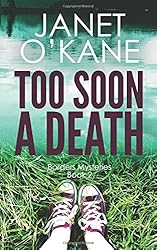
I’ve recently finished Too Soon a Death by Janet O’Kane, crime fiction set in the Scottish Borders.

You can read my thoughts on this book in my previous post.

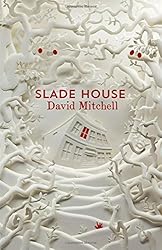
And next I’ll be reading Slade House by David Mitchell, or at least I think I’ll be reading this next. When the time comes I could fancy something completely different.

Blurb:

Born out of the short story David Mitchell published on Twitter in 2014 and inhabiting the same universe as his latest bestselling novel The Bone Clocks, this is the perfect book to curl up with on a dark and stormy night.

Turn down Slade Alley – narrow, dank and easy to miss, even when you’re looking for it. Find the small black iron door set into the right-hand wall. No handle, no keyhole, but at your touch it swings open. Enter the sunlit garden of an old house that doesn’t quite make sense; too grand for the shabby neighbourhood, too large for the space it occupies.

A stranger greets you by name and invites you inside. At first, you won’t want to leave. Later, you’ll find that you can’t.

This unnerving, taut and intricately woven tale by one of our most original and bewitching writers begins in 1979 and reaches its turbulent conclusion around Hallowe’en, 2015. Because every nine years, on the last Saturday of October, a ‘guest’ is summoned to Slade House. But why has that person been chosen, by whom and for what purpose? The answers lie waiting in the long attic, at the top of the stairs…

What have you been reading this week and what have got in mind to read next?

Nagasaki: Life After Nuclear War by Susan Southard

Nagasaki: Life after Nuclear War by Susan Southard is an amazing, heart-wrenching book.

The facts are horrendous – on August 9th 1945, two days after the atomic bombing of Hiroshima, a five-ton plutonium bomb was dropped on the small coastal town of Nagasaki. The effects were cataclysmic.

This must be one of the most devastatingly sad and depressing books I’ve read and yet also one of the most uplifting, detailing the dropping of the bomb, which killed 74,000 people and injured another 75,000. As the subtitle indicates this book is not just about the events of 9 August 1945 but it follows the lives of five of the survivors from then to the present day. And it is their accounts which make this such an emotive and uplifting book, as it shows their bravery, how they survived, and how they were eventually able to tell others about their experiences. Along with all the facts about the after effects of the bombing, the destruction, and radiation, it exposes the true horror of atomic warfare, making it an impressive and most compelling account of pain, fear, bravery and compassion.

Throughout the book the black and white photos illustrate the true horror of the effects of the bomb – photos of Nagasaki both before and after the bomb was dropped, of five survivors – Wada Kohi (aged 18 in August 1945), a street car operator; Nagano Etsuko (aged 16), who worked on a production line in a Mitsubishi airplane parts factory;  Taniguchi Sumiteru (aged 16), who worked at Minchino-o Post Office; Yoshida Katsuji (aged 13), a student at Nagasaki Prefecture Technical School on a ship building course; and Do-oh Mineko (aged 15), formerly a student at Keiho Girls High School, working at the Mitsubishi Arms Factory Onashi Plant. There are also maps showing Japan today and of Nagasaki 1945 showing the Scope of Atomic Bomb Damage.

Susan Southard’s ten years of research has resulted in this impressive book as she reveals what happened in particular to these five survivors, their immediate injuries, the radiation-related cancers and illnesses they have suffered, and their difficulties of daily living still in pain both physical and emotional.

In addition to all that Nagasaki ‘reveals the censorship that kept the suffering endured by the hibakusha [atomic bomb-affected people] hidden around the world. For years after the bombings news reports and scientific research were censored by U.S. occupation forces and the U.S. government led an efficient campaign to justify the necessity and morality of dropping the bombs’ (from the jacket sleeve).

I knew a bit about Hiroshima and Nagasaki before I read this book but it has opened my eyes to the true horror of nuclear war and the need to prevent anything like this happening again.

Many thanks to Souvenir Press Ltd for sending me a complimentary copy for review.

  • Hardcover: 416 pages
  • Publisher: Souvenir Press Ltd (2 Nov. 2015)
  • Language: English
  • ISBN-10: 0285643274
  • ISBN-13: 978-0285643277

Mrs Jordan’s Profession by Claire Tomalin

Mrs. Jordan's Profession: The Actress and the Prince

I loved Mrs Jordan’s Profession: The Story of a Great Actress and a King, Claire Tomalin’s biography of Dora Jordan. It is both well researched and well written making it easy to read despite being packed with information, brilliantly bringing the late 18th and early 19th centuries to life as she tells the story of Dora and her relationship with the Duke of Clarence, later King William IV .  It’s based on material in the Royal Archives at Windsor; letters from Dora held at the Huntingdon Library, San Merino, California; various private family papers, letters and memorabilia, as well as numerous secondary sources from national and local libraries.  The resulting biography took her several years to complete.

Much of the information about Dora is taken from her own letters, written over 25 years, to her children and friends and many hundreds of those to the Duke of Clarence, the father of ten of her children (the FitzClarences) have survived. She was a remarkably strong character and an incomparable actress.

William, the Duke of Clarence and Dora Jordan were born into very different families – born in 1765 he was the third son of George III and Queen Charlotte,  and she was born in 1761, the daughter of Francis and Grace who although not legally married lived together as Mr and Mrs Bland.  He was not expected to succeed to the throne and as a boy served in the navy, later he was given a dukedom, an income and an estate. She became an actress, known as ‘Mrs Jordan’, although there was never a Mr Jordan. She made her stage debut in 1777 at the age of 15 and her first Drury Lane appearance in 1785. The two met and she became his mistress in 1790, eventually living together at Bushy House in Middlesex. Their relationship was a happy one until, as the years went by, William was put under pressure to find a suitable wife and, of course, marriage to Dora was out of the question. They separated in 1811 and she was heart broken.

There is so much in this book that fascinated me. The attacks in the press on their relationship were vicious and there were storms of abuse – as an actress and a prince they could not have private lives and the journalists and cartoonists were savage in their portrayal of the couple. The cartoons in particular amazed me. ‘Jordan’ was a common term for a chamber-pot, so her name came in very handily, and became an instantly recognisable visual symbol:

Sometimes it was put over the Duke’s head; sometimes he was shown standing in it, with her prettily draped round the edge, naked and mermaid-like. In other drawings the pot reverted to its domestic function under the bed; the words ‘Public jordan open to all parties’ were written round one of these. The most effective and cruellest was Gillray’s simple picture showing Dora as a giant chamber-pot, cracked and with a vagina-shaped hole into which the figure of William is disappearing, giving a nautical shout of pleasure as he does so. His braided coat is hanging on a peg to one side and her ankles and feet in dainty slippers appear below the pot. The caption reads ‘The Lubber’s Hole, alias the Cracked Jordan’, (page 123)

Dora comes across as a very likeable person, hard working, and devoted to her family. She was a talented and probably  the most popular actress of the time in Britain, based at the Theatre Royal, Drury Lane and also appearing in theatres throughout the country, acting throughout her pregnancies and often taking a baby with her on tour. Claire Tomalin writes

She was the best-loved and most admired comic actress of her time, hailed by fellow actors, critics and public alike as a uniquely gifted performer, fully the equal in comedy to Mrs Siddons in tragedy: for several decades they were generally referred to as the Muses of Comedy and tragedy. (page 3)

After she and the Duke separated the debts incurred by a son-in-law drawn on her account forced her to live abroad until they could be cleared, but she sank into illness and despair and died near Paris in 1816.

William succeeded to the throne in 1830, after the death of his older brother, George IV. One of the first acts of his reign was to commission a sculpture – he wanted a life-size representation of Dora, She had been dead for  fifteen years, so Francis Chantrey, the sculptor worked from portraits, finishing it in 1834. William’s intention was to place the statue in Westminster Abbey, but the Dean of Westminster refused to allow it and it remained in Chantrey’s studio. Eventually, after passing through several hands, the fifth Earl of Munster bequeathed it to the Queen and it is now in Buckingham Palace among the portraits of kings and queens in the Picture Gallery.

Like all good biographies Mrs Jordan’s Profession has an extensive bibliography, additional notes and an index. There are several photographs, family trees of and an appendix of Mrs Jordan’s Roles.

  • Paperback: 422 pages
  • Publisher: Penguin 1995
  • Language: English
  • ISBN-13: 978-0140159233
  • Source: I bought the book

Reading Challenges: Mount TBR Reading Challenge 2015, Non Fiction Reading Challenge 2015, TBR Pile Challenge 2015.

The Monocled Mutineer by John Fairley & William Allison

When I was asked if I would read and review a revised edition of The Monocled Mutineer by John Fairley and William Allison, the book on which the 1986 BBC TV series was based I was immediately interested as I had watched the TV series.

Description from the Press Release:

In 1917 British, New Zealand and Australian troops stationed at the Étaples Training Camp in northern France protested against the inhuman conditions and the protest erupted into mutiny. Private Percy Toplis was named by the authorities as a leader of this mutiny. While several of the mutineers were executed in its aftermath, Toplis escaped and remained at large for three years. The Army immediately covered up the mutiny, thousands of the participants died shortly afterwards in the Passchendaele offensive while the survivors remained silent for over fifty years. After three years as Britain’s most wanted man Percy Toplis was killed in 1920 by a policeman.

My thoughts:

This is the 2nd and updated edition of The Monocled Mutineer, which  includes a new introduction and epilogue that expand on newly discovered information about the events of the mutiny and the government’s response to it. It is primarily based on interviews and correspondence with survivors of the First World War nearly sixty years after the events they describe. In 1976 the authors advertised in newspapers asking whether any veterans from the First World War had recollections of the events in Étaples in September 1917. They received many replies containing:

  … sharp, bitter accounts of events long ago, but far from forgotten. Inevitably they were careful handwritten stories in old men’s script, teased out without any other prompting than the brief enquiry in their local paper. (page 2)

In addition to the anecdotal evidence the authors have used other sources including the published personal reminiscences of Edwin Woodhall,  Detective and Service Days and Lady Angela Forbes. Memories and Base Details; journalists’ accounts in various periodicals; and have drawn background material from records about the First World War in the  Imperial War Museum, The Public Record Office and the British Newspaper Library.

Not many contemporary records have survived that relate to the mutiny. One of the surviving records is the war diary of the Commandant at the Étaples Camp,  Brigadier-General Andrew Graham Thomson. Thompson describes what happened as a ‘disturbance’ and as ‘riots’ and ‘breakouts’:

Disturbance in Reinforcement Camp between military police and troops, Corporal Wood, 4th Gordons being accidentally shot … a crowd of about 1,000 gathered at Ã‰taples town, and about 7.30 pm tried to break into the Sevigne cafe where two policemen were hiding. (page 1)

But in 1978, after the publication of the 1st edition and the BBC dramatisation, the British government admitted that the events that took place at Ã‰taples had been a mutiny and also that  it was probable that the records relating to the board of inquiry into the events had been destroyed many years ago. The files on the mutiny and Percy Toplis’ military records are closed until 2017.

Historical accuracy is never easy to obtain, especially where records have been lost and where there is a limited number of sources to compare one against the other. In this case the main sources of information are the personal accounts from the veterans as they remembered them many years later.

And the picture they paint is a most remarkable and shocking one of the brutal and inhuman conditions which were in operation at the camp. As for Toplis’ part in the mutiny, the letters from the veterans occasionally mentioned him and whilst some thought he was the main ringleader, few thought he was the only one, but that there were a number of soldiers involved. One remembered Toplis’ name on a wanted poster and wrote:

If he was a villain then he was not the only one around Étaples. Maybe he too was tired of being humiliated, deprived, brutalized and treated like a dog. We had all got tired of being treated with less consideration than that given to horses. (page 91)

Another reported that Toplis, heading a mob of about 1,000 deserters confronted Thompson, surrounding his car. Toplis climbed on the running board and dictated the terms for ending the mutiny (page 93). After the mutiny ended, whilst some of the ringleaders were executed, Toplis escaped. Others were killed in the battle for Passchendale which began on 20th September.

Maybe more information will be available in 2017 when the files are opened and a fuller picture of what happened will emerge.

The Monocled Mutineer also goes into detail about Percy Toplis’ life before and after the war. Coming from a working-class background, by the age of eleven he was already a con artist and a thief. He must have been a charismatic character, able to both charm and deceive people, successfully impersonating officers, able to melt into the background deserting and then rejoining the army seemingly at will, not sentenced to execution by the firing squad (the penalty for desertion). But after the war ended in 1920 his luck ran out as he was accused of murdering a taxi-driver. The inquest held that he was guilty in his absence. Toplis fled, evading capture for six weeks and he was eventually shot down in a police ambush near Plumpton in Cumberland.

  • Paperback: 208 pages
  • Publisher: Souvenir Press Ltd; 2nd Revised edition edition (7 Sept. 2015)
  • Language: English
  • ISBN-10: 028564310X
  • ISBN-13: 978-0285643109
  • Source: review copy from the publisher

Catching the Eagle by Karen Charlton

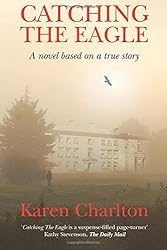
I wanted to read a novel by a local author so I checked the library website for North East writers, where I found Catching the Eagle by Karen Charlton.
Summary from the book cover:

Easter Monday, 1809: Kirkley Hall manor house is mysteriously burgled. When suspicion falls on Jamie Charlton, he and his family face a desperate battle to save him from the gallows.

When 1,157 rent money is stolen from Kirkley Hall, it is the biggest robbery Northumberland has ever known. The owner sends for Stephen Lavender, a principal officer with the Bow Street magistrate’s court in London, to investigate the crime. Suspicion soon falls on impoverished farm labourer, Jamie Charlton, and the unpopular steward, Michael Aynsley.

Jamie Charlton is a loving family man but he is hot-tempered and careless. As the case grows against him, it seems that only his young brother, William, can save him from an impending miscarriage of justice.

But William is struggling with demons of his own–he is falling in love with Jamie’s wife.’Catching the Eagle’, the first novel in the Regency Reivers series, is a fictionalized account of a trial that devastated a family and divided a community.

This is not just by a local author, and set in Northumberland, it is also based on a true story –  that of Karen Charlton’s husband’s ancestors.

I liked the opening of Catching the Eagle beginning with a Prologue, setting the scene as an eagle soared over the Northumberland landscape:

… its huge shadow caressed the ruined walls of crumbling castles and the creaking rotting stumps of ancient gibbets.The eagle plucked unsuspecting prey from the bleak, snow-covered fells and drank from remote rocky waterfalls dripping with golden daggers.

It landed in a tree above a labourer’s cottage where Jamie Charlton lived with his wife Priscilla and their children. I like Karen Charlton’s leisurely descriptive style of writing and found the whole book to be fascinating.  She has written an even-handed account of the robbery and the subsequent trials, so much so that I began to wonder whether Jamie Charlton was innocent or guilty, although you know from the outset that he was transported as a convicted felon to New South Wales. Did he or did he not steal the money? And what will happen to the eagle?

This is the type of historical fiction that I like. The characters come across as real people, with real problems in a real time and place (Northumberland 1809 – 1811). It highlights the social and cultural setting. Jamie was without influence or money behind him up against a judicial system run by people with power who needed to find a culprit. His family suffered along with him as he languished in goal in squalor, where he was caged as he awaited trial – not once, but twice.

I wondered whether Stephen Lavender, the detective employed by  Nathaniel Ogle, the owner of Kirkley Hall was also a real historical figure. Karen Charlton has also written Seeking Our Eagle, another fascinating book, an account of how she came to write Catching the Eagle whilst researching her husband’s family history.  And yes, Stephen Lavender did exist and he was a detective. He later became the Deputy Chief Constable of Manchester after the formation of the police force by Sir Robert Peel.

Indeed reading Catching the Eagle reminded me of The Suspicions of Samuel Whicher by Kate Summerscale, featuring Detective Inspector Jonathan Whicher of Scotland Yard, the book that won the Samuel Johnson Prize for Non-Fiction in 2008.

Karen Charlton has done her research very well and has written a novel full of intrigue, tension and realism that kept me captivated from start to finish. See her website, Karen Charlton, to read more about Karen and her books.

She has also written The Heiress of Linn Hagh, a spin-off novel from Catching the Eagle, which features Detective Stephen Lavender and his sidekick, Constable Woods. And there are more Detective Lavender Series books on the way!

Catching the Eagle:

  • Paperback: 280 pages
  • Publisher: Famelton Publishing; 1 edition (19 July 2014)
  • ISBN-10: 0992803640
  • ISBN-13: 978-0992803643
  • Product Dimensions: 15.2 x 1.8 x 22.9 cm
  • Source: Library book

Seeking the Eagle:

  • Format: Kindle Edition
  • File Size: 1969 KB
  • Print Length: 166 pages
  • Publisher: Famelton Publishing; 1st edition (7 Aug. 2012)
  • Sold by: Amazon Media EU S.à r.l.
  • Language: English
  • ASIN: B008UZYOR2
  • Source: I bought it

As always I didn’t read either book just for any Reading Challenges, but Catching the Eagle does fit very well into a couple – the 2015  Historical Fiction Reading Challenge and the What’s in a Name Challenge, in the book with an animal in the title category and Seeking Our Eagle into the Nonfiction Reading Challenge.