Teaser Tuesdays

The book I’m currently reading is A Place of Greater Safety by Hilary Mantel, a huge book of 872 pages. I’m only on page 136, so it’s early days. In fact so far it’s been setting the scene of pre-Revolutionary France as seen through the key characters of Georges-Jacques Danton, Maximilien Robespierre and Camille Desmoulins. I’m liking it and it brings back to my mind history lessons at school when we listed the causes of the French Revolution.

This extract summarises, I think, the mood of the times in 1788:

Nothing changes. Nothing new. The same old dreary crisis atmosphere. The feeling that it can’t get much worse without something giving way. but nothing does. Ruin, collapse, the sinking ship of state: the point of no return, the shifting balance, the crumbling edifice and the sands of time. Only the cliche flourishes. (page 130)

Not long afterwards everything changed!

Book Beginnings on Friday

This is the opening sentence of the book I’m going to read next:

The night the war ended, both Mrs Trevor and Mrs Wilson went on duty at the Red Cross post as usual.

from The Village by Marghanita Laski. As this sentence indicates the setting is at the end of World War Two – in fact, the very day it ended. It seems to me as though Mrs Trevor and Mrs Wilson don’t want to give up the routine they had during the war and I’m keen to see what effect the end of the war will have on them.

This opening reminds me a bit of One Fine Day by Mollie Panter-Downes, also set in 1946 and chronicles the changes the Marshall family encountered, a book which I loved.

Book Beginnings on Friday is now hosted by Gilion at Rose City Reader.

February’s Books: Little Boy Lost

February was a good reading month. I read 9 books. The full list is on my Books Read in 2012 page (see the tab above).

My Book of the Month is Little Boy Lost by Marghanita Laski. It is a beautiful book. Once I started reading I didn’t want to put it down; I just had to know what happened. It’s the story of Hilary Wainwright, who is searching for his son, lost five years earlier in the Second World War. Hilary had left France just after his wife, Lisa, had given birth to John. Lisa, unable to leave France, worked for the Resistance, but was killed by the Gestapo and her son disappeared.

After the war ended Hilary is contacted by Pierre, a friend of Lisa’s, who told him he may have found the boy, living in an orphanage in rural France and Hilary sets out to discover if the boy is really his son.

It’s written in such clear, straightforward language and yet at the same time it is emotional, heart-wrenching and nerve-wracking, full of tension, but never sentimental. The depiction of post-war France is chilling conveying the deprivations, suspicion and bitterness of the times. Hilary is a solitary person, a poet and an intellectual, who has difficulty with relationships. This makes it difficult for him to accept that the little boy is his without an instinctive feeling or conclusive evidence – looks, mannerisms or the child’s own recollections. Whilst he is longing to find his son, after he Lisa had died and he had lost the boy, he had closed himself off from feelings:

I couldn’t endure being hurt again: I’d sooner feel nothing. I don’t like children as such; they bore me. I used to think that a child of my own would make me happy, but I know that isn’t true any more. I’ve got nothing to offer a child … I just want to be left alone so that I can’t be hurt again. (page 75)

It’s not only the little boy who is lost, it is also his father.

He goes through mental agonies once he meets the child, unsure that he is his son, and in several minds about what he should do. The boy is adorable and by the end of the book I began to think it didn’t matter whether he was his son or not, I just wanted them to be happy together.

My rating: 5/5

  • Paperback: 240 pages
  • Publisher: Persephone Books Ltd (23 Oct 2008)
  • Language English
  • ISBN-10: 1906462054
  • ISBN-13: 978-1906462055
  • Source: I bought my copy

Kerrie at Mysteries in Paradise is collecting crime fiction ‘picks of the month’. During February I read 4 crime fiction and my Crime Fiction Pick of the Month is Sleeping Murder by Agatha Christie – Miss Marple’s last case.

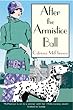
After the Armistice Ball by Catriona McPherson

After the Armistice Ball is the first book in the Dandy Gilver series. I’ve read a couple of the later books in the series and had to read this one in order to find out how Dandy (short for Dandelion) first became an amateur detective, or Society Sleuth, as she is called on the book cover.

It all began when there is an alleged theft of Lena Duffy’s jewels at Daisy Esslemont’s annual Armistice Ball in 1922 and Daisy asks Dandy to find out what really happened. Dandy is a bored wife, whose husband, Hugh is the ‘hunting, shooting and fishing’ type. The theft of the jewels is rapidly pushed to the sidelines after the death of Lena’s daughter, Cara in a lonely beach cottage in Galloway. Accompanied by Cara’s jilted fiancé, Alec Osborne, Dandy is faced with the puzzle of Cara’s death. Was she killed, or did she commit suicide? She had died in a fire, whilst on her own in the cottage – why was the cottage always kept so hot, so hot that the coal that was supposed to last all winter had been finished in one week?

The setting in the 1920s is convincing, the sense of dislocation after the First World War, the class divide and the contrast between the idle rich and the poor. The locations are beautifully described, and the characters are lively and come to life, particularly Dandy, although Hugh does seem to be a cardboard cut-out, but the book dragged in the middle as Dandy and Alec went over and over, and over the events and theorised about what had happened and why.

I too puzzled over the mystery and I did find the ending rather confusing, so much so that I had to re-read parts of the book to sort out what I thought had happened. I’m still not sure, but I think I know. Having said all that, I did enjoy the book, and apart from the middle section I raced through it and that’s probably where I missed some salient points.

My Rating: 3/5

I borrowed the book from my local library

The Woman in White by Wilkie Collins: a Book Review

I read The Woman in White (TWIW) by Wilkie Collins in January and have been wondering how to do justice to it in a post, because it’s a real chunkster of over 700 pages. (For a summary of the plot, with spoilers see the article on the book on Wikipedia.)

It’s one of the first if not the first ‘sensation novel‘. A ‘sensation novel‘ is one with Gothic elements  – murder, mystery, horror and suspense – within a domestic setting. Since reading TWIW I’ve read The Sensation Novel by Lyn Pykett, which describes such novels as a ‘minor subgenre of British fiction that flourished in the 1860s only to die out a decade or two earlier.’ They have complicated plots, are set in modern times, and are reliant on coincidences, with plots hinging on murder, madness and bigamy. They exploited the fear that respectable Victorian families had of hidden, dark secrets and explored the woman’s role in the family. There is a pre-occupation with the law – wills, inheritance, divorce and women’s rights over property and child custody. They are emotional dramas about obsessive and disturbed mental states, with villains hiding behind respectable fronts, and bold assertive women, as well as passive, powerless and compliant women.

These issues and more are present in TWIW. It has several first person narrators, who are each not in possession of the whole story. Their accounts from letters, diaries and formal statements are limited to what each one knew or had experienced, and are not always reliable. It begins with Walter Hartright’s meeting with the mysterious Woman in White, as he is on his way to take up the position of drawing master to Marian Halcombe and Laura Fairlie at Limmeridge House, in Cumberland.

 There, in the middle of the broad bright high-road – there, as if it had that moment sprung out of the earth or dropped from heaven – stood the figure of a solitary Woman, dressed from head to foot in white garments, her face bent in grave inquiry on mine, her hand pointing to the dark cloud over London as I faced her.

Just who she is only becomes clear much later on the story. During their conversation she reveals that she knows Limmeridge House and its occupants. Walter helps her, but then is filled with guilt when he is told that she had escaped from an asylum.

Laura and Marian are half-sisters, living with their uncle, Frederick Fairlie, a weak, effeminate invalid. Walter is immediately struck by the beauty of Marian’s figure, but astonished when he saw her face:

The lady is ugly! …

The lady’s complexion was almost swarthy, and the dark down on her upper lip was almost a moustache. She had a large, firm, masculine mouth and jaw; prominent, piercing, resolute brown eyes; and thick coal-black hair, growing unusually low down on her forehead.

Marian, clever and assertive is in complete contrast in both appearance and character to the lovely Laura. Walter falls in love with Laura, but she is pledged to marry Sir Percy Glyde, a marriage arranged by her dead father. Matters are complicated by the fact that Laura and the Woman in White look remarkably alike, which is central to the plot. Sir Percy attempts to gain total control of Laura’s money and property, aided by the villainous Count Fosco.

I found it a book of two halves – slow to get going, full of descriptive writing and I was beginning to wonder when something was actually going to happen. Then in the second half the pace increased, the action was fast and complicated, with plenty of tension and melodrama. I enjoyed it, although I do prefer The Moonstone.

I read this book as part of November’s Autumn Classics Challenge and The Book Garden’s Tea and Books Challenge (reading books of over 700 pages).

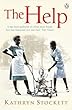
The Help by Kathryn Stockett: a Book Review

The Help is Kathryn Stockett’s first novel. I loved it. I saw the film before I read the book – Octavia Spencer won a Golden Globe award as best supporting actress for her performance as Minny – and even though I knew the story I still found the book full of tension and completely absorbing. When I wrote about the film, I said I hoped the book lived up to my expectations. In fact, it did and more. As good as the film is, the book is even better and I think it’s one of the best books I’ve read for quite a while.

From the back cover:

Enter a vanished and unjust world: Jackson, Mississippi, 1962. Where black maids raise white children, but aren’t trusted not to steal the silver…

There’s Aibileen, raising her seventeenth white child and nursing the hurt caused by her own son’s tragic death; Minny, whose cooking is nearly as sassy as her tongue; and white Miss Skeeter, home from college, who wants to know why her beloved maid has disappeared.

Skeeter, Aibileen and Minny. No one would believe they’d be friends; fewer still would tolerate it. But as each woman finds the courage to cross boundaries, they come to depend and rely upon one another. Each is in a search of a truth. And together they have an extraordinary story to tell…

My thoughts:

I didn’t find anything to detract from my enjoyment – even the fact that The Help is written in the present tense, which I normally don’t like, didn’t spoil it. I didn’t even realise it is in the present tense until I was well into the book. I think it’s better than the film because there is so much more in it, the characters are so well-defined, so believable, and the tension caused by the contrast between the black maids and their white employers is so appalling that I didn’t want to stop reading. The setting in Jackson in the early 1960s is tense to say the least. This book lives up to all the hype it created.

Aibileen, Minny and Skeeter are the three narrators and it is through their eyes that the book comes to life as they take turns telling their stories. As I was reading I could hear their voices.  Skeeter wants to be a writer and decides to write about what it is like working for white families from the coloured maids’ point of view. Aibileen is persuaded by Skeeter to tell her story in an attempt to change the prejudice and bigotry and improve the lives of the black population. Eventually other maids also tell their stories despite their fear of the consequences and the book is finally published. I was holding my breath as the story unfolded, would their cover be blown and how would the white women react?

It’s touching, poignant, funny, compelling and definitely thought-provoking. It’s a book that has stayed in my mind ever since reading it. I hope Kathryn Stockett writes more books!

  • My rating: 5/5
  • Author’s website: http://www.kathrynstockett.com/index.htm
  • Paperback: 464 pages
  • Publisher: Penguin; Reprint edition (13 May 2010)
  • Language English
  • ISBN-10: 0141039280
  • ISBN-13: 978-0141039282