The Calamity Club by Kathryn Stockett

Penguin| 5 May 2026| 638 pages e-Book| Review copy| 4*

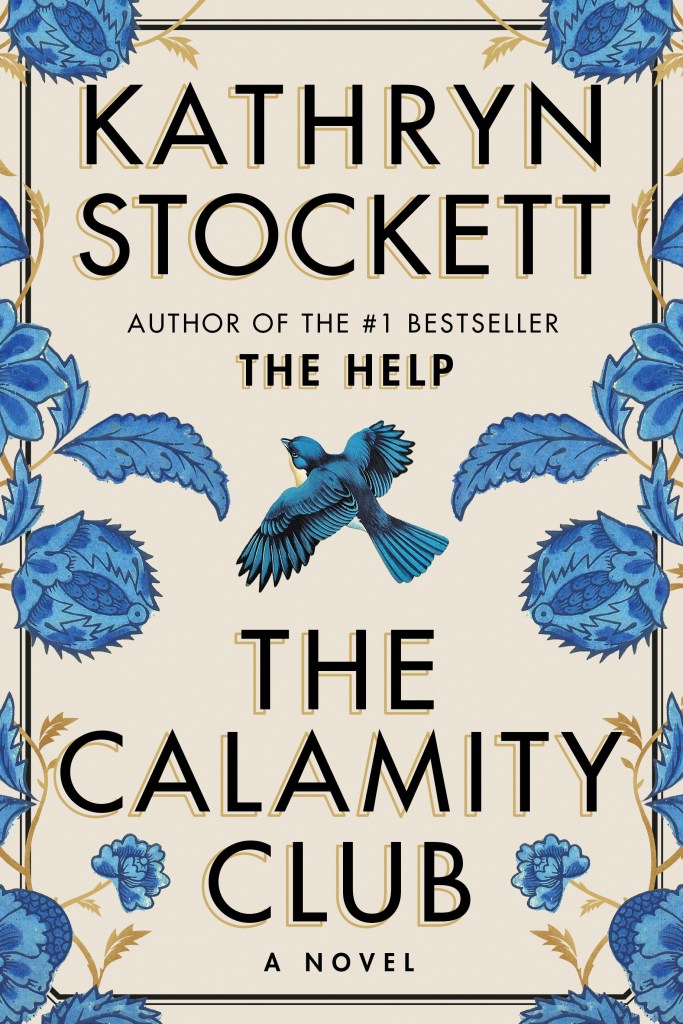
Fourteen years ago I read Kathryn Stockett’s first novel, The Help and loved it. I also watched the film and loved that too. So when I saw on NetGalley she’d written a second novel. The Calamity Club, I requested it and was pleased to find that I loved it, too, although maybe not quite as much as The Help.

My thoughts:

It took me a long time to read this book as it’s so long and detailed, with lots of characters and covering such emotive and serious issues. Maybe it could have been shorter, without losing any impact and it’s unevenly paced with slow sections that made the story drag at times. And I was surprised that the ending was so abrupt. Having said that the characters are wonderfully depicted, with depth making them really believable, especially Birdie, Charlie and Meg (although I wonder if she comes across as too adult for an eleven year old). The locations are well described, which really helped me as I don’t know the area at all.

The title tells you what you need to know. Set in 1933 during the Great Depression calamity follows calamity for all the characters; the miseries, pain and suffering are unrelenting right from the start as Meg enters The Lafayette County Orphan Asylum for Girls in Oxford, Mississippi. Her mother Charlie had gone shopping on Christmas Eve and never returned, leaving eleven year old Meg to fend for herself, until she was rescued by an unknown man – who he is is only revealed much later in the book. But this is not the end of Meg’s misfortunes as she is cruelly treated by Garnet Pitman, the head of the orphanage.

Birdie, meanwhile is living in Footely (a fictional small town) in the Delta, with her mother and sick grandmother. They fear they’ll lose their home as they are unable to pay the forty-three dollars they owe in property taxes. Her sister Frances has married Rory Tartt, a member of a wealthy family living in Oxford and Birdie travels there to ask for help. However, all is not right in the Tartt family and Birdie finds they’re unable to pay off a mortgage of  $2,754. Birdie then helps Frances and her mother-in-law as they try to raise the money to save the Tartt’s grand house as well as Birdie’s home.

What follows is truly remarkable, when Charlie comes up with a plan to raise the money through the Calamity Club she and Birdie set up in the Tartt’s house, employing a group of prostitutes. This could have developed into a farce, but it’s actually a story highlighting the hardships suffered by women at the hands of men and the Anti-Vice Leagues. So-called feeble minded women and those considered to be sexually promiscuous, were imprisoned and sterilized. Above all it’s a story of the women’s resilience, courage and determination to survive against all the odds. I loved it despite its length.

My thanks to the author and NetGalley for a review copy.

Top 5 Tuesday:Books set in the Americas

Top 5 Tuesday was created by Shanah at Bionic Book Worm, and it is now being hosted by Meeghan at Meeghan Reads. For details of all of the latest prompts for January to March, see Meeghan’s post here.

Today the topic is Books set in America – North or South, we’re doing the continents. Tell us about all your fave books set in the Americas.

I have too many books to choose from to say these are the top five books set in the Americas that I’ve read. And it’s so hard to decide which ones to feature, because I could pick five different books on another day. But in the end I decided to pick books from Canada, the USA and South America (Brazil and Chile) They are all books I’ve read and loved.

Canada:

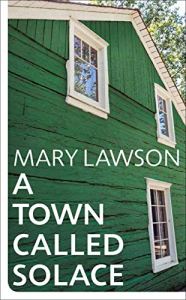
A Town Called Solace by Mary Lawson. It’s set in North Ontario in 1972, but looks back to events thirty years earlier when Elizabeth Orchard first met Liam who was then a small boy of 3 when he and his family lived in the house next door. The last time she saw him he was still only 4 years old. It was not a happy time for either of them, and thirty years later, when she is dying she wants to make amends and gives him her house.

Clara lives next door to Elizabeth, who she loves, and she is alarmed when she sees Liam moving into Elizabeth’s house. Elizabeth had given her a key and she goes in every day to feed Moses, Elizabeth’s cat. She has no idea that Elizabeth is dying and is furious when she discovers that Liam is moving Elizabeth’s things and packing them in boxes. Her life is in turmoil in any case as she is devastated that Rose, her 16 year old sister has gone missing.

The narration moves between these three people, seeing events through their eyes. Elizabeth, in hospital looks back over her life, remembering her despair at not having a child of her own, and her love for little Liam that ended badly, despite her good intentions. Clara spends the time before and after school at the window looking out for Rose’s return and Liam, whilst remembering his sad childhood, is trying to rebuild his life after his marriage ended in divorce.

I loved this book. It’s about families, the things that go wrong, about memories and about friendships and the care that people have for each other. It’s moving and sad, but also filled with hope. And it’s beautifully written.

North America:

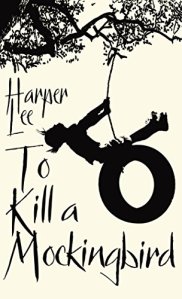
To Kill a Mockingbird by Harper Lee, set in the Deep South of  America in the 1930s. It’s narrated by Scout (Jean Louise Finch) as she looks back as an adult to the Depression, the years when with her older brother, Jem, and their friend, Dill, she witnessed the trial of Tom Robinson, a black man accused of raping a white girl. Scout’s father, Atticus, a lawyer defends Tom. It’s also the story of Boo Radley, their neighbour, a man who is never seen, who is said to only come out at night. 

Scout is a feisty character, always prepared to stand up for what she thinks is right, but Atticus, who also stands for justice and the moral and ethical ideal, has to reign her in sometimes. The book is full of strong characters and for me the outstanding scenes are those when Atticus sat reading outside the jail to stop the lynch mob attacking Tom and the trial itself at the court-house. 

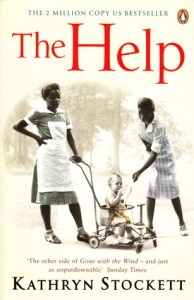
The Help by Kathryn Stockett. Enter a vanished and unjust world: Jackson, Mississippi, 1962. Where black maids raise white children, but aren’t trusted not to steal the silver…

There’s Aibileen, raising her seventeenth white child and nursing the hurt caused by her own son’s tragic death; Minny, whose cooking is nearly as sassy as her tongue; and white Miss Skeeter, home from college, who wants to know why her beloved maid has disappeared.

Skeeter, Aibileen and Minny. No one would believe they’d be friends; fewer still would tolerate it. But as each woman finds the courage to cross boundaries, they come to depend and rely upon one another. Each is in a search of a truth. And together they have an extraordinary story to tell…

South America:

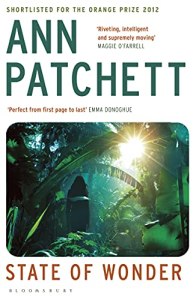
State of Wonder by Ann Patchett. Among the tangled waterways and giant anacondas of the Brazilian Rio Negro, an enigmatic scientist is developing a drug that could alter the lives of women for ever. Dr Annick Swenson’s work is shrouded in mystery; she refuses to report on her progress, especially to her investors, whose patience is fast running out. Anders Eckman, a mild-mannered lab researcher, is sent to investigate.Dr. Annick Swenson, a research scientist, is developing a drug that could alter the lives of women forever.

A curt letter reporting his untimely death is all that returns. Now Marina Singh, Anders’ colleague and once a student of the mighty Dr Swenson, is their last hope. Compelled by the pleas of Anders’s wife, Marina leaves the snowy plains of Minnesota and retraces her friend’s steps into the heart of the South American darkness, determined to track down Dr. Swenson and uncover the secrets being jealously guarded among the remotest tribes of the rainforest.

The novel raises questions about the morality and ethics of research into the use of extreme fertility treatments and drug studies in general, along with the exploitation of native populations. It is wonderfully descriptive and I could easily imagine that I was there in the jungle, experiencing the oppressive heat and humidity. I found it all fascinating and I was totally absorbed in the story.

Portrait in Sepia by Isabel Allende, part of a trilogy, with The House of the Spirits and Daughter of Fortune. Aurora is the narrator and this is the story of her family and after giving details of her birth, Aurora goes back to 1862 beginning her story with details about her grandparents. There is a lot of detail, a lot of 19th century history of Chile, its mix of nationalities, politics and wars.

It’s a book about love, loss, identity, betrayal and about family relationships. It’s a portrayal of the strengths and weaknesses of the characters and their struggle to survive. Aurora tells her family’s story through looking at photographs, snapshots in time, through her own disjointed, incomplete and vague memories of her childhood and through conversations with her family members. Whilst she was still very young her two grandmothers decided her future, thinking that time would erase the memory of the traumatic events she had seen, never realising that the scenes would live forever in her nightmares.

The Help by Kathryn Stockett: a Book Review

The Help is Kathryn Stockett’s first novel. I loved it. I saw the film before I read the book – Octavia Spencer won a Golden Globe award as best supporting actress for her performance as Minny – and even though I knew the story I still found the book full of tension and completely absorbing. When I wrote about the film, I said I hoped the book lived up to my expectations. In fact, it did and more. As good as the film is, the book is even better and I think it’s one of the best books I’ve read for quite a while.

From the back cover:

Enter a vanished and unjust world: Jackson, Mississippi, 1962. Where black maids raise white children, but aren’t trusted not to steal the silver…

There’s Aibileen, raising her seventeenth white child and nursing the hurt caused by her own son’s tragic death; Minny, whose cooking is nearly as sassy as her tongue; and white Miss Skeeter, home from college, who wants to know why her beloved maid has disappeared.

Skeeter, Aibileen and Minny. No one would believe they’d be friends; fewer still would tolerate it. But as each woman finds the courage to cross boundaries, they come to depend and rely upon one another. Each is in a search of a truth. And together they have an extraordinary story to tell…

My thoughts:

I didn’t find anything to detract from my enjoyment – even the fact that The Help is written in the present tense, which I normally don’t like, didn’t spoil it. I didn’t even realise it is in the present tense until I was well into the book. I think it’s better than the film because there is so much more in it, the characters are so well-defined, so believable, and the tension caused by the contrast between the black maids and their white employers is so appalling that I didn’t want to stop reading. The setting in Jackson in the early 1960s is tense to say the least. This book lives up to all the hype it created.

Aibileen, Minny and Skeeter are the three narrators and it is through their eyes that the book comes to life as they take turns telling their stories. As I was reading I could hear their voices.  Skeeter wants to be a writer and decides to write about what it is like working for white families from the coloured maids’ point of view. Aibileen is persuaded by Skeeter to tell her story in an attempt to change the prejudice and bigotry and improve the lives of the black population. Eventually other maids also tell their stories despite their fear of the consequences and the book is finally published. I was holding my breath as the story unfolded, would their cover be blown and how would the white women react?

It’s touching, poignant, funny, compelling and definitely thought-provoking. It’s a book that has stayed in my mind ever since reading it. I hope Kathryn Stockett writes more books!

  • My rating: 5/5
  • Author’s website: http://www.kathrynstockett.com/index.htm
  • Paperback: 464 pages
  • Publisher: Penguin; Reprint edition (13 May 2010)
  • Language English
  • ISBN-10: 0141039280
  • ISBN-13: 978-0141039282

Book or Film? The Help

I have difficulties with films of books, so I don’t often watch them. I’m usually thinking as I’m watching – ‘it’s not like that in the book’ and irritated when the story is changed, parts are missed out or even worse new scenes/characters added in.

One of the books I’ll be reading in the coming weeks is The Help by Kathryn Stockett (our local book group choice for January). I noticed the film was on at our local cinema and with some reservations decided to see it. I thought that if I saw the film first it might not spoil my appreciation of the book. The book is described on the back cover as

Outstanding, immensely funny, very compelling, brilliant. (Daily Telegraph)

Enter a vanished world: Jackson, Mississippi, 1962. Where black maids raise white children, but aren’t trusted not to steal the silver …

I can’t be that good, I thought, normally I wouldn’t read a book with so much hype.

We went last night – in a howling gale! I was completely wrong in my expectations – the film was that good! I just hope the book can live up to it. The audience laughed, and then sighed at the poignant moments as the film rolled on and even if I couldn’t quite catch all the words I thought it was brilliant. It’s essentially a female, domestic look at segregation, with brief glimpses of the contemporary political scene.

I was engrossed in the film and now just want to read the book. So much so that I got it off the bookshelf when I got home and began to read it. Actually I began at the back with Too Little, Too Late – Kathryn Stockett, in her own words, in which she writes about her upbringing and personal experiences. She writes that The Help is ‘by and large fiction’ and wondered what her family and Demetrie, their maid would think of it:

I was scared, a lot of the time, that I was crossing a terrible line, writing in the voice of a black person. I was afraid that I would fail to describe a relationship that was so intensely influential in my life, so loving, so grossly stereotyped in American history and literature. …

Regarding the lines between black and white women, I am afraid I have told too much. I was taught not to talk about such uncomfortable things, that it was tacky, impolite, they might hear us.

I am afraid I have told too little. Not just that life was so much worse for many black women working in the homes in Mississippi, but also that there was so much more love between white families and black domestics than I had the ink or time to portray. (pages 450 -451)

She doesn’t presume to know what is felt like to be a black woman in that place at that time, but thinks

… trying to understand is vital to our humanity.

From my perspective I think she has achieved that.