Books Read in February 2013

I enjoyed all the books I finished reading in February and my Pick of the Month goes to two excellent books – Dead Water (Shetland series 5) by Ann Cleeves and The Redemption of Alexander Seaton by Shona MacLean, both books being crime fiction.

Dead Water & Alex Seaton

The other books I read are also fiction, although Memoirs of a Fox-Hunting Man by Siegfried Sassoon is fictionalised autobiography. Two of the books are from my stock of unread books bought before January 2013, two are books from my local library and one is an e-book borrowed from the Kindle Owners’ Lending Library.

The links are to my posts on the books – I have yet to write my thoughts about Agatha Christie’s Cat Among the Pigeons.

  1. The Lacuna by Barbara Kingsolver (from TBR books). This novel tells the story of Harrison Shepherd, the son of a Mexican mother and an American father. It’s told through his diaries and letters together with genuine newspaper articles, although whether they reported truth or lies is questionable.
  2. Dead Water by Ann Cleeves, crime fiction continuing the Shetland series featuring Inspector Jimmy Perez. I thoroughly enjoyed reading this –  a mixture of mystery and the creation of totally believable characters, set in Shetland Mainland.
  3. Memoirs of a Fox-Hunting Man by Siegfried Sasson (library book). Sassoon was born in 1886 and in this book he relives his childhood, youth and experiences as an officer during the First World War. He comes across as a likeable young man, shy, reserved, and modest, happy-go-lucky but aware of his own shortcomings. But all this changed with the onset of the First World War.
  4. The Redemption of Alexander Seaton by Shona MacLean (library book)  I think this is one of the best novels I’ve read recently. It’s historical crime fiction set in Scotland in the 1620s, mainly in the town of Banff, where on a stormy night Patrick Davidson, the local apothecary’s assistant collapses in the street. The next morning he is found dead.
  5. Death at Wentwater Court by Carola Dunn (Kindle) – this is crime fiction, the first in the Daisy Dalrymple series and it’s a quick and easy read, a mix of Agatha Christie and PG Wodehouse, set in 1923
  6. Cat Among the Pigeons by Agatha Christie (Poirot)

I’ve also been reading two non-fiction books in February and am still reading them –  Quiet: the power of introverts in a world that can’t stop talking by Susan Cain and Wildwood: a Journey Through Trees by Roger Deakin. It takes me longer to read non-fiction than fiction as I read it more slowly, especially these two books that are packed with facts and ideas. But I’m nearing the end of both of them.

After that I’m planning to finish reading The Hand That First Held Mine by Maggie O’Farrell, which I first started reading last year and put to one side. I’ve had to start reading it again!

Other books waiting to be read, if not in March then later in the year are Memoirs of an Infantry Officer by Siegfried Sassoon, which I’ve borrowed from my local library. This is the next book in his fictionalised autobiography  I’ll also be reading (because it’s my book group choice for March) The Kashmir Shawl by Rosie Thomas, a story of wartime, family secrets and forbidden love, set against in the 1940s in Kashmir.

I’ve got a pile of other books from the library which I’m itching to read soon – I think I’ll do a separate post on these books. I’m always tempted to borrow more books than I can possible read in the loan period, but that’s me! As if I don’t have enough of my own unread books to keep me going all year and beyond.

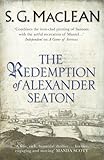
The Redemption of Alexander Seaton by Shona MacLean

There are some books that have the power to transport me to another time and place and The Redemption of Alexander Seaton is one such book. I think it’s one of the best novels I’ve read recently. It’s quite long and detailed but each time I put it down I wanted to get back to it as quickly as possible. It’s a fantastic book, historical crime fiction, full of atmosphere and well-drawn characters.

It’s set in 17th century Scotland, mainly in the town of Banff, where on a stormy night Patrick Davidson, the local apothecary’s assistant collapses in the street. The next morning he is found dead in the school house of Alexander Seaton, a failed minister, now a schoolteacher. Davidson was poisoned and when Charles Thom, one of Alexander’s few friends in the town is arrested for the murder, he sets out to prove his innocence. It’s not an easy task, and Alexander finds himself embroiled in an apparent Spanish Catholic plot to invade Scotland, and bigoted prejudices that result in a witch hunt.

As the story unfolds details of Alexander’s history are gradually revealed, his family background, friends and education and the disgrace that prevented him from becoming a minister. The religious conflict between Catholics and Protestants during the reign of Charles I is slotted into the plot seamlessly, explaining the beliefs and prejudices that struck fear into many hearts. It’s a story of murder and cruelty, but also of love and the power of good over evil. For Alexander it’s a trial that eventually sees him beginning to regain his faith in God.

I found the book totally absorbing, convinced I was back in Scotland in the 17th century, eager to find out who the murderer was and the motivation for killing Patrick Davidson. Alexander Seaton is an engaging character and I’m keen to read more about him as there are other books in the series.

The author originally wrote under her name – Shona Maclean, but now her books are published under the truncated name, S G MacLean. She explained in an interview in Shots magazine that ‘the thinking was that my name was too soft and feminine and men wouldn’t buy my books.’ She has an M.A. and Ph.D. in History from the University of Aberdeen. Her Alexander Seaton books are:

1. The Redemption of Alexander Seaton (2008)
2. A Game of Sorrows (2010)
3. Crucible of Secrets (2011)
4. The Devil’s Recruit (2013)

Note: The cover shown above is from the 2009 paperback edition published by Quercus, which I borrowed from my local library.

First Chapter First Paragraph

First chapterEvery Tuesday Diane at Bibliophile By the Sea hosts First Chapter First Paragraph Tuesday Intros, where she shares the first paragraph or (2) of a book she is reading or thinking about reading soon. Here’s my contribution this week:

This is the opening of The Redemption of Alexander Seaton by Shona MacLean, from the Prologue:

Banff, 26 March 1626, 10 o’clock

The younger of the two whores rifled the man’s pockets with expert fingers. she cursed softly. Nothing.

‘Leave off, then,’ said her sister. The baillie will be here any minute.’

Mary Dawson rolled the man back over onto his face. He groaned, then retched, and she cursed once more as he vomited bile over her foot. ‘Pig’, she said, and kicked him. The wind sent a barrel careering past them down the brae to smash into a wall below. Somewhere a dog took up a demented howling.

What do you think ? — Would you keep reading? I haven’t read much further on, but I will do.

I came across this book whilst reading blogs a few weeks ago and can’t remember which one referred to this author. I was interested firstly because I like historical mysteries,and secondly because this one is set in Banff on the Moray coast where Shona Maclean lives, and where some of my husband’s family came from. It’s a place I’d like to visit one day.
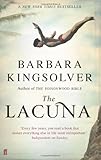
The Lacuna by Barbara Kingsolver

Some years ago I was browsing in a bookshop at Gatwick airport to add to the books I’d brought with me to read on holiday and I bought Barbara Kingsolver’s The Poisonwood Bible. I loved it. I’ve read some of her other books, but none as good as The Poisonwood Bible. When I saw that she had written The Lacuna and it had won the 2010 Orange Prize for Fiction, (actually beating Hilary Mantel’s Wolf Hall!) I bought it, expecting great things. That was two and half years ago and it’s only this year that I’ve read it.

I was disappointed as I don’t think it’s as good as either Wolf Hall or The Poisonwood Bible. There some good parts, but overall I was glad to finish reading it. It’s a long tale (670 pages), moving from Mexico in the 1930s to the McCarthy trials of alleged communists in the USA of the 1940s and 1950s. I thought it began and ended well, with good descriptions and fascinating characters, but I got bored several times in the middle.

It’s the story of Harrison Shepherd, the son of a Mexican mother and an American father and it’s told through his diaries and letters together with genuine newspaper articles, although whether they reported truth or lies is questionable. It begins in Mexico where Harrison’s mother took him to live when she left his father to live with a Mexican businessman, she calls Mr Produce the Cash behind his back. I thought this part came to life with lyrical descriptions of the people and the landscape. But it is only in the second half of the novel that I felt Harrison himself came alive as a character, no longer talking about himself in the third person, ‘the boy’, and referring to himself as ‘I’.

Throughout the book Kingsolver intermingles real characters and events with her fictional ones and I thought that worked well. There are the artists Diego Rivera and his wife Frida Kahlo. Harrison works for Diego, mixing plaster for his huge murals he painted in Mexico City. Whilst working for Rivera, who was a communist he met and subsequently worked for the exiled Bolshevik leader, Lev Trotsky. And it is this connection that eventually lands him in difficulties later on when he had moved to live in the USA and became a novellist writing historical fiction about the Aztecs. He is accused of being a communist and being Un-American.

I found the historical parts very interesting as I knew nothing about Rivera, or his wife, and very little about Trotsky and the McCarthy trials. But eventually I found the level of detail was just too much and the story meandered, losing impetus. Harrison himself comes across as too passive, too accepting of what ever happened to him, a victim of circumstances. Much more interesting is the second narrator, Violet Brown who becomes his secretary and friend, who saved his diaries from being burnt.

There are several instances of lacunas, missing parts and gaps, scattered throughout the book. For example, some of Harrison’s diaries and notebooks go missing. As a boy he loved swimming and diving into a cave, which is only available at certain tides:

Today the cave was gone. Saturday last it was there. Searching the whole rock face below the cliff did not turn it up. Then the tide came higher and waves crashed too hard to keep looking. How could a tunnel open in the rock and then close again? … Leandro says the tides are complicated and the rocks on that side are dangerous, to stay over here in the shallow reef. He wasn’t pleased to hear about the cave. He already knew about it, it is called something already, la lacuna. (page 45)

But although The Lacuna is well written and well researched I felt there was something missing, the personal elements that brought the story to life for me were few and far between; I couldn’t feel involved and just wanted it to end. I persevered because it has had such good reviews and recommendations, but sadly it dragged for me.

First Chapter, First Paragraphs: The Unquiet Bones

Uetred thought he had discovered pig bones. He did not know or care why they were in the cesspit at the base of Bampton Castle Wall.

Then he found the skull. Uetred was a villein, bound to the land of Lord Gilbert, third Baron Talbot, lord of Bampton Castle and had slaughtered many pigs. He knew the difference between human and pig skulls.

I was browsing in the library, when the medieval style script on the spine of this book caught my eye. Taking it from the shelf I was also struck by the dramatic cover, showing a strange wooden or leather artificial foot. When I read the opening paragraphs and flicked through the pages I decided to borrow the book. It seems it’s a good choice because the library assistant said she had enjoyed it as she likes historical crime fiction – so do I. And there are more books in the series.

It’s The Unquiet Bones: the first chronicle of Hugh de Singleton, surgeon by Melvin R Starr.

I was interested in the foot – is it a genuine medieval prosthetic? I discovered that it is actually an Ancient Egyptian prosthetic toe found on a female mummy at Luxor. The big toe is carved from wood and has holes for lacing it to a leather-type casing.

Now, as far as I know, this is nothing to do with The Unquiet Bones, which is set in the English village of Bampton, but I think it’s fascinating. It certainly drew my attention to the book.

First Chapter, First Paragraphs is a weekly event hosted by Diane at Bibliophile By the Sea.

My Day in Books 2012: a meme

Today I was going to write a post about one of the books I’ve read recently but then I saw that Cornflower had posted this meme: ‘œMy Day in Books’. I did this last year and fancied doing it again with this year’s books. The task is to complete the sentences using the titles of books you have read this year.  Here’s what I came up with:

I began the day by The Secret River

before breakfasting on Red Bones (that’s all there was!)

and admiring The Victorian Chaise-Longue.

On my way to work I saw The Woman in White

and walked by The House of Silk

to avoid Our Mutual Friend

but I made sure to stop at The Village.

In the office, my boss said, Death Comes to Pemberley

and sent me to research The Murder on the Links.

At lunch with My Cousin Rachel

I noticed A Man Lay Dead

in A Room Full of Bones

greatly enjoying  A Quiet Life!!

Then on the journey home, I contemplated Endless Night

because I have A Weekend with Mr Darcy

and am drawn to Dancing Backwards.

Settling down for the evening in A Place of Greater Safety

I studied Dark Matter

by Blue Lightning

before saying goodnight to (the) Bad Boy.

I’ve written posts about most of them. Here are the links If anyone wants to to read what I thought about the books: