Book Notes: Daisy Dalrymple

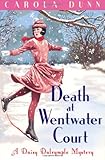
I’ve now read the first three books in Carola Dunn’s Daisy Dalrymple series – all borrowed from the Kindle Owners’ Lending Library. I wrote about the first book Death at Wentwater Court in this post. It’s a typical country house murder mystery.

I’ve recently read the second and third books, The Winter Garden Mystery, another country house murder mystery and Requiem for a Mezzo. These are quick, light, easy and enjoyable to read, not requiring much brain power to work out who did the murders. They provide an interesting glimpse of life in the 1920s..

Set in 1923 Daisy is visiting Occles Hall in Cheshire, the home of her school friend Bobbie, to write an article for the Town and Country magazine and discovers a corpse buried in the Winter Garden. It’s the body of Grace Moss, the blacksmith’s daughter and parlour maid at the Hall. She had gone missing three months earlier.The under-gardener is arrested. Daisy convinced of his innocence contacts Detective Inspector Alex Fletcher of Scotland Yard and their relationship develops as they set about discovering the murderer.
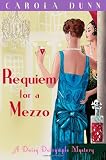
In this book Daisy and DI Alex Fletcher are at the Albert Hall watching a performance of Verdi’s Requiem in which her neighbour, Bettina Westlea is singing , until she drops dead, apparently from cyanide poisoning.  Alex reluctantly lets Daisy help with the investigation into her murder.

Bettina had made many enemies and it surfaces that there are several possible motives and suspects. Daisy has a knack of getting people to talk to her, but I did find this just a little repetitive as Alex tried to stop her involvement. However, this didn’t detract from their continuing relationship.

Saturday Snapshot

This is the Flodden Visitor Centre. It’s in a former telephone box in the village of Branxton in Northumberland. Flodden Visitor Centre P1080503It claims to be the smallest visitor centre in the world:

Flodden Visitor Centre P1080499

It’s part of the commemoration of the Battle of Flodden which took place 500 years ago in September between the English and Scottish armies in the fields near Branxton.

Flodden Visitor Centre P1080501Inside there is a map showing the routes of the two armies and indicating several sites related to the battle. There are leaflets and even a button to press the hear about the battle.

If you are in London on 14 May you can get tickets for a lunchtime lecture on the Battle of Flodden 1513 by historian Clive Hallam Baker at the Tower of London. He is the author of The Battle of Flodden: Why and How.

Other books about Flodden, with links to my reviews:

Fiction:

Non fiction:

  •  Flodden: the Scottish Invasion of Henry VIII’s England by Nigel Barr
  • New Light on Floddon (sic) by Gerard F T Leather – I have not written about this short book published in 1938, which Leather, a member of the Berwickshire Naturalists’ Club had written after studying the battle for a talk. As he explained there were actually four distinct fights going on a more or less the same time and the old name of the battle was that of Branxton Moor, a more correct title, in his opinion, as the battle scene was a mile and a half from Flodden.

For more Saturday Snapshots see Alyce’s blog At Home With Books.

April's Books

I read 8 books in April.

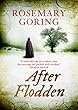
The book I enjoyed the most is After Flodden by Rosemary Goring, which is to be published in June (I read an Advanced Proof Copy supplied by Love Reading).

The full list is (with links to my posts on the books):

  1. The Distant Hours by Kate Morton (TBR book) – historical fiction
  2. After Flodden by Rosemary Goring – historical fiction
  3. The Winter Garden Mystery by Carola Dunn (Daisy Dalrymple 2) (Kindle) – historical crime fiction
  4. Daughters of Fire by Barbara Erskine (TBR book) – historical fiction
  5. Balthazar Jones and the Tower of London Zoo by Julia Stuart (TBR book) (review to follow)
  6. Short Sentence: A crime short story collection from Bloomsbury: 10 stories of dastardly deeds (Kindle) – crime fiction
  7. The Blackhouse by Peter May (library book) – crime fiction
  8. The Lewis Man by Peter May (Kindle) – crime fiction

My Crime Fiction Books of the Month:

Blackhouse& Lewis Man

CF Pick of the monthOf the 8 books, 4 are crime fiction. It’s a tie this month for Crime Fiction Book of the Month between The Blackhouse  and The Lewis Man both by Peter May. I really couldn’t decide between them. I’ll post my thoughts about The Lewis Man soon. For more Crime Fiction Books of the Month go to Kerrie’s blog Mysteries in Paradise.


Notes on the books without reviews:

  • The Winter Garden Mystery* by Carola Dunn (Daisy Dalrymple 2). A quick, easy and enjoyable read. Set in 1923, Daisy is visiting Occles Hall in Cheshire, the home of her school friend Bobbie, to write an article for the Town and Country magazine and discovers a corpse buried in the Winter Garden. It’s the body of Grace Moss, the blacksmith’s daughter and parlour maid at the Hall. She had gone missing three months earlier.The under-gardener is arrested and Daisy convinced of his innocence. Enter Detective Inspector Fletcher of Scotland Yard.
  • Short Sentence: A crime short story collection from Bloomsbury: 10 stories of dastardly deeds*.  This is a free Kindle edition of short stories from Parker Bilal, Alex Cooper, Sarah Evans, Conor Fitzgerald, Calum Macleod, Jan Snook, Mary Waters, Anne Zouroudi, Thomas Mogford and James Runcie. Very quick reads – each just 1000 words or less on the themes of Deception, Bad Judgement, Payback, Secrets and Lies and Obsession. I prefer a more complicated plot and character development, but these are OK for their length. My favourite was Secrets and Lies by Jan Snook (a new-to-me author).

After Flodden by Rosemary Goring

This year is the 500th anniversary of the Battle of Flodden between the forces of James IV of Scotland and Henry VIII of England. After Flodden by Rosemary Goring is the dramatic story of what happened after the battle on 9 September 1513. Well written, well researched this is a compelling and powerful book, bringing the characters and the Edinburgh and Borders of 1513 vividly to life. Once I started reading the book I didn’t want to stop. I read it quickly, devouring the pages, completely involved in this dramatic story.

I was swept away with the action, re-living the scenes through Rosemary Goring’s vivid descriptions €“ the court at Edinburgh, the wild Borderlands, the violence of the battle scenes and the interaction between the characters. It’s a brilliant book.

Louise Brenier is determined to find out what happened to her missing brother Benoit, was he killed in action, or was he captured? Interspersed with the story of Louise’s search for Benoit Brenier, her brother, are flashbacks to the Battle as the two sides gathered together and engaged in warfare, the political intrigue and danger always present.

There is Patrick Paniter, James’s secretary and right-hand man – full of remorse at the death of his king, and tormented by memories he would rather keep buried. Louise appeals to him for help, and when he tells her that Benoit must either be dead or a prisoner she sets off to search for him. Soon Gabriel, Viscount Torrance, a courtier and advisor to Paniter, joins her in her search, which takes them deep into the Border country, the stronghold of the Crozier clan and the retribution that Thomas Dacre, the Lord-Warden of the English Marches has vowed to impose.

After Flodden is due out in June 2013. I read an Advance Proof Copy supplied by Lovereading.co.uk.

FF monumentI’ve written about Flodden Field before, after our first visit to the Flodden Monument. The monument was erected in 1910 at the place where it was then thought that James IV fell in battle. However, more recent opinion is that this happened further south of the village, in the shallow valley close to the road at the foot of Branxton Hill.

There is a programme of events to commemorate this battle that led to the death of 15,000 Scots and English soldiers, 100 noblemen and the Scottish King, James IV. For more information about the battle and the Ecomuseum go to Flodden 1513. As the website explains the Ecomuseum links ‘together 12 sites from across north Northumberland, the Scottish Borders and Edinburgh, which have an intimate connection with the story of Flodden. These sites are all existing attractions, where access and interpretation are already available. They include churches, bridges, castles, museums and of course the battlefield itself.

Also have a look at Remembering Flodden 1513 – 2013, where the Stop Press News is that the One Show on BBC1 is featuring Flodden on Tuesday 30th May at 7pm – showing presenter and historian Dan Snow’s visit to the battlefield and castles of the borderlands.

Daughters of Fire by Barbara Erskine

Daughters of Fire is historical time-slip fiction switching between the present day and the first century CE Britannia, a mix of historical fiction, fantasy and romance.  It was with relief that I finished reading it – relief, because although the story of Cartimandua, Queen of the Brigantes tribe is fascinating and that of historian Viv Lloyd Rees is initially interesting, the book is too long, and too wordy.

Daughters of Fire intermingles two stories, that of  Viv and Cartimandua. Viv has published a book on Cartimandua, a book using alternative as well as traditional historical sources – ie using legends, her dreams and visions as well as the writings of Roman historians. She has ‘borrowed’ an ancient cursed brooch from her boss, Professor Hugh Graham, who has criticised her book as fantasy. The rest of her story is their obsession with and struggle to gain control of the brooch.

Cartimandua, back in the first century is beset by enemies on all sides, Romans and  the leaders of the other tribes. It all goes from bad to worse when she betrays Caradoc (Caractacus), the leader of the Catuvellauni tribe, who led the tribes in resisting the Roman invaders and hands him over in chains to the Romans.

For me the essential story was good, but lost impact as it dragged on, drowned in words and by the repetition of the struggles between the characters. Because of this the ending was drained of any impact and suspense for me. I like time-slip stories, the supernatural and the paranormal, so that wasn’t a problem. And I liked the sections explaining Celtic beliefs – their belief in the immortality of the soul, in reincarnations and transmigration of the soul. As one of the characters said:

Remember the world he lived in was an animistic, rainbow world of links and connections which included vast echelons of spirits and gods and ancestors, people dead and people yet to be born, all of whom could be summoned to his aid. (page 258)

In the Author’s Note, Barbara Erskine emphasises that this is above all fiction:

In the absence of written information one has to make do with imagination, dreams and deductive techniques of a dubious nature! … (page 562)

and regarding Cartimandua:

We don’t know her tribe, or if she had children, and although far more is known about her life than that of he much more famous contemporary, Boudicca, she is still an enigma.

So, for all that is historically known about Cartimandua I refer the reader to the Roman historians.

For the truth of her life we must consult archaeology and the oracles.

The rest is silence. (page 562)

A couple of years ago I read Barbara Erskine’s book, The Warrior Princess, another time-slip book, which I also thought was too drawn out and would have been better if the plotting had been tighter. I own one more of her books, which I’ve yet to read – Sands of Time, a collection of short stories, described on the back cover as ‘spine-tingling‘ tales all with ‘a touch of the unexpected … suspense, romance, passion, unexpected echoes of the past.’ I hope, because these are short stories, they will be more succinct than the two books I have read.

This book qualifies for several challenges – Mount To-Be-Read 2013 (it’s been on my shelves for about 4 years), The Historical Fiction Reading ChallengeWhat’s in a Name 6 (in the Fire category) and Once Upon a Time VII (Fantasy).

The Distant Hours by Kate Morton

I was hoping that The Distant Hours, Kate Morton’s third book would be as good as the first,The House at Riverton, which I loved. I’ve read her second book The Forgotten Garden, which disappointed me, because it was predictable and I thought it was a re-working of Frances Hodgson Burnett’s book, The Secret Garden. However, I think The Distant Hours is the least satisfying, which is a shame as it promised to be so good at the beginning and the story itself is fascinating …

A dilapidated castle, aristocratic twins, a troubled sister and a series of dark secrets cast a whispery spell … (from the back cover)

It begins with a creepy tale, The True History of the Mud Man, a children’s story written by Raymond Blythe, the owner of the castle. It begins:

Hush – Can you hear him?

The trees can. They are the first to know that he is coming.

Listen! The trees of the deep, dark wood, shivering and jittering their leaves like papery hulls of beaten silver; the sly wind, snaking through their tops, whispering that it will soon begin.

The trees know, for they are old and have seen it all before.

A tale which haunts the book. The dark secrets begin to surface when Edie Burchill’s mother receives a long-lost letter written fifty years earlier from one of the sisters at Milderhust Castle. Edie is intrigued but her mother is reluctant to talk about it and about the time that she was an evacuee at the castle during the war.

The story slips backwards and forwards in time between the 1990s and the Second World War and the characters and the descriptions of the settings are fine – up to a point. But the book moves at a snail’s pace over its 670 pages. There is just too much unnecessary detail, about things on the periphery that never go anywhere. There is so much that it stifles the narrative and the heartaches, betrayals and tragedies become a catalogue of events. I just wasn’t involved. But this is still an enjoyable book, if over long and not as good as her earlier books.