Birdcage Walk by Helen Dunmore

Birdcage Walk

Blurb:

It is 1792 and Europe is seized by political turmoil and violence. Lizzie Fawkes has grown up in Radical circles where each step of the French Revolution is followed with eager idealism. But she has recently married John Diner Tredevant, a property developer who is heavily invested in Bristol’s housing boom, and he has everything to lose from social upheaval and the prospect of war. Soon his plans for a magnificent terrace built above the two-hundred-foot drop of the Gorge come under threat. Tormented and striving Diner believes that Lizzie’s independent, questioning spirit must be coerced and subdued. She belongs to him: law and custom confirm it, and she must live as he wants—his passion for Lizzie darkening until she finds herself dangerously alone.

Weaving a deeply personal and moving story with a historical moment of critical and complex importance, Birdcage Walk is an unsettling and brilliantly tense drama of public and private violence, resistance and terror from one of our greatest storytellers.

My thoughts:

This is Helen Dunmore’s last book, but the first one of hers I’ve read, although Exposure is sitting in my Kindle waiting to be read. It’s historical fiction, although I think it’s mainly a meditation on death and the legacy we leave behind. And that is most poignant as although at the time she was writing the book Helen Dunmore didn’t know it she was seriously ill and she died earlier this year. She was the author of 12 novels, three books of short stories, numerous books for young adults and children and 11 collections of poetry.

As she wrote in the Afterword:

I suppose that a writer’s creative self must have access to knowledge of which the conscious mind and the emotions are still ignorant, and that a novel written at such a time, under such a growing shadow, cannot help being full of a sharper light, rather as a landscape becomes brilliantly distinct in the last sunlight before a storm. I have rarely felt the existence of characters more clearly, or understood them more deeply – or enjoyed writing about them more.

I was completely absorbed in this book as I read it. It’s written beautifully and poetically, moving slowly as the details of Lizzie and Diner’s marriage come sharply into focus. Birdcage Walk was first published in March 2017, so I’m coming a bit late to reading it and the drawbacks of that are that I’ve seen several reviews and have realised that (like many books) there are mixed opinions about it. I’ve seen criticisms that the pace is too slow, and that much of the plot is given away in the opening chapters. But I felt the pace was just right for the story and the subject matter, and I think the opening chapters set the scene and the theme of the book – that is, that life is transitory, that the individual vanishes, as it were, that no record is left of the lives of many of past generations, despite the effect they had on the lives of their contemporaries.

The Prelude reveals that Birdcage Walk in the present day is a paved path between railings with pleached lime trees arching overhead on their cast-iron frame. But back at the end of the 18th century it was where Diner had started to build a terrace of houses with fantastic views over the Avon Gorge (before the building of the Clifton Suspension Bridge). When war was declared between Britain and France in 1793 this had a disastrous effect and like many builders and developers, Diner’s building work slowed and then ceased as he went bankrupt.

The novel shows the effect of the French Revolution on England through newspaper reports and letters, which I thought was effective casting light on the contemporary scene and showing the horror of what was happening across the Channel. The main focus, however, is on Lizzie. Diner’s repressive and jealous nature comes increasingly to the fore as his building work decreases, and the tension between him and Lizzie soars, accelerated when she discovers what had happened to Lucie, his first wife. The sense of foreboding and menace present in their marriage pervades the whole novel.

Many thanks to Grove Atlantic for providing me with an ARC copy through NetGalley.

My rating: 4*
Amazon UK
Amazon US

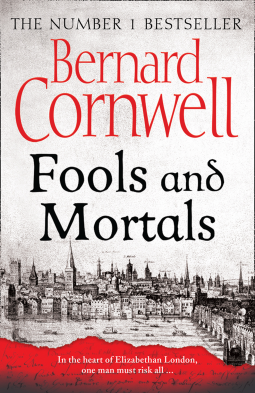
Fools and Mortals by Bernard Cornwell

Publication: 19 October 2017, Harper Collins

Source: Review copy from the publisher via NetGalley

My rating: 5*

First Chapter First Paragraph: The Skeleton Road

eca8f-fistchapEvery Tuesday Diane at Bibliophile by the Sea hosts First Chapter First Paragraph Tuesday Intros to share the first paragraph sometimes two, of a book that she’s reading or is planning to read soon.

This week’s first paragraph is from her third Karen Pirie book,  The Skeleton Road by Val McDermid, a book I’m about to read.

The Skeleton Road


Chapter 1

Fraser Jardine wanted to die. His stomach was knotted tight, his bowels in the twisted grip of panic. A teardrop of sweat trickled down his left temple. The voice in his head sneered at his weakness, just as it had since boyhood. Biting his lip in shame, Fraser forced open the skylight and pushed it outwards. He climbed the last three steps on the ladder one at a time and gingerly emerged on the pitched roof.

Never mind that tourists would have paid for this sensational view of a city classified as a World Heritage Site. All Fraser cared about was how far he was from the ground.

I can empathise with Fraser – I’ve never liked heights and always get that terrifying feeling that I’m about to fall whenever I climb up to the top of a tall building.

Blurb:

When a skeleton is discovered hidden at the top of a crumbling, gothic building in Edinburgh, Detective Chief Inspector Karen Pirie is faced with the unenviable task of identifying the bones. As Karen’s investigation gathers momentum, she is drawn deeper into a dark world of intrigue and betrayal, spanning the dark days of the Balkan Wars.

Karen’s search for answers brings her to a small village in Croatia, a place where people have endured unspeakable acts of violence. Meanwhile, someone is taking the law into their own hands in the name of justice and revenge — but when present resentment collides with secrets of the past, the truth is more shocking than anyone could have imagined . . .

I’ve read the first two Karen Pirie books and enjoyed them both, although I think the first one, The Distant Echo, is better than the second, A Darker Domain.

What do you think?  Would you continue reading? 

Six Degrees from Less than Zero to The Book of Dust

I love doing Six Degrees of Separation, a monthly link-up hosted by Kate at Books Are My Favourite and Best. Each month a book is chosen as a starting point and linked to six other books to form a chain. A book doesn’t need to be connected to all the other books on the list, only to the one next to it in the chain.

This month the chain begins with a controversial bestseller by a member of the eighties ‘literary Brat Pack’ – Bret Easton Ellis’s Less Than Zero.

Lessthan01st1.png

I haven’t read this book and can’t say that it appeals to me at all. Filled with relentless drinking in seamy bars and glamorous nightclubs, wild, drug-fuelled parties, and dispassionate sexual encounters, Less Than Zero – narrated by Clay, an eighteen-year-old student returning home to Los Angeles for Christmas – is a fierce coming-of-age story, justifiably celebrated for its unflinching depiction of hedonistic youth, its brutal portrayal of the inexorable consequences of such moral depravity, and its author’s refusal to condone or chastise such behaviour. (Amazon UK)

Towards Zero

So, the first link in my chain is to an another book with the word ‘zero‘ in the title – Towards Zero by Agatha Christie.

It’s one of my favourite of Agatha Christie’s books, first published in 1944, with an intricately plotted murder mystery featuring Superintendent Battle. The hypothesis is that murder is not the beginning of a detective story, but the end. It is the culmination of causes and events bringing together certain people, converging towards a certain place and time – towards the Zero Hour. The idea presupposes that there is an inevitability – that once events have been set in motion then the outcome is determined. Agatha Christie dedicated this book to Robert Graves, author of I Claudius, who was her neighbour in Devon during the Second World War and the two had become friends.

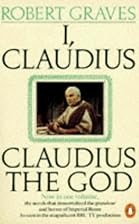
I, Claudius & Claudius the God by Robert…

I read I, Claudius and Claudius the God  by Robert Graves many years ago after watching the TV adaptation with Derek Jacobi playing the role of Claudius. Set in the first century A.D. in Rome, this is the life story of the Roman Emperor Claudius. A lame man and a stammerer, he was despised and dismissed as an idiot. He recorded the antics of the imperial household as its members vied for power; a story of murders, greed and folly. He had a disastrous love affair with the depraved Messalina but his reign as Emperor was surprisingly successful.

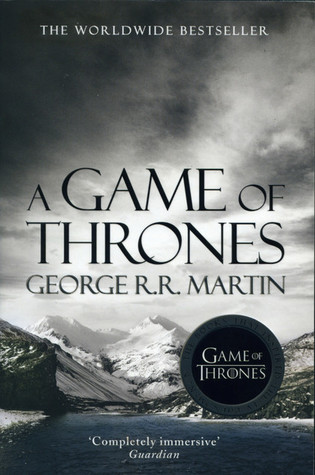
22740513My next link is to another book I read after first watching the TV adaptation – it’s A Game of Thrones by G R R Martin, fantasy fiction. I loved both the book and the TV series. It’s complex and multifaceted, and it’s full of stories and legends, set in a grim and violent world full of tragedy, betrayals and battles; a tale of good versus evil in which family, duty, and honour are in conflict, the multiple viewpoints giving a rounded view of the conflicts the characters face. It’s a love story too.
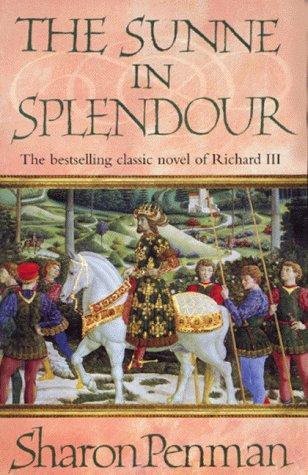
The Sunne In Splendour

Just before I read The Game of Thrones I’d read The Sunne in Splendour by Sharon Penman, historical fiction about the Wars of the Roses and had noticed the similarities between that and A Game of Thrones, the battles between the Houses of York and Lancaster paralleled by those between the Houses of Stark and Lancaster for example. This is one of the best historical novels that I’ve read. It is full of detail, bringing Richard III’s world to life. It’s a long book, nearly 900 pages and it took me a while to read it, but never once did I think it was too long, or needed editing. I loved it.

Another very long book is The Pillars of the Earth by Ken Follett. It has 1,076 pages and is historical fiction set in 12th century England during the time of the civil war between Stephen and Matilda/Maud (she’s known by both names – in this book she’s called Maud, but at school we were taught her name was Matilda). It’s also the story of the building of a cathedral.  It is really a medieval soap opera – in essence a family saga. Parts of the novel came to life more than others and it is rather long-winded and repetitive, terrible things happen, the characters overcome them and recover only to be knocked down again by more terrible events.

La Belle Sauvage (The Book of Dust, #1)Earth‘ made me think of ‘dust to dust’ which in turn made me think of Philip Pullman’s La Belle Sauvage, volume one of The Book of Dust. This is his latest book – I haven’t read it yet – set ten years before His Dark Materials, telling the story of Lyra Belacqua’s early life. Eleven-year-old Malcolm Polstead and his daemon, Asta, live with his parents at the Trout Inn near Oxford. Across the River Thames is the Godstow Priory where the nuns live. A baby by the name of Lyra Belacqua.

The next two books in the series, Pullman has said, will take place after the events of His Dark Materials – he describes this trilogy as neither a prequel nor a sequel but as an ‘equel’.

My chain began with a book I haven’t read and don’t want to read and ended, so far from where it began, with another book I haven’t read, but a book I’m looking forward to reading. It has travelled through time and space, taking in ancient Rome, medieval England and the fantasy worlds of G R R Martin and Philip Pullman.

Next month (December 2, 2017) the chain begins with Stephen King’s It – where that will end I have no idea yet.

The Last Hours by Minette Walters

Blurb:

June, 1348: the Black Death enters England through the port of Melcombe in the county of Dorsetshire. Unprepared for the virulence of the disease, and the speed with which it spreads, the people of the county start to die in their thousands. 

In the estate of Develish, Lady Anne takes control of her people’s future – including the lives of two hundred bonded serfs. Strong, compassionate and resourceful, Lady Anne chooses a bastard slave, Thaddeus Thurkell, to act as her steward. Together, they decide to quarantine Develish by bringing the serfs inside the walls. With this sudden overturning of the accepted social order, where serfs exist only to serve their lords, conflicts soon arise. Ignorant of what is happening in the world outside, they wrestle with themselves, with God and with the terrible uncertainty of their futures. 

Lady Anne’s people fear starvation but they fear the pestilence more. Who amongst them has the courage to leave the security of the walls?

And how safe is anyone in Develish when a dreadful event threatens the uneasy status quo…?

My thoughts:

I liked the historical setting of The Last Hours in 1348 at the time of the Black Death.  It’s well researched, giving vivid descriptions of the setting in an moated manor in the Dorsetshire countryside and of the Black Death, the plague that ravaged the population in 1348. The characters are interesting, showing the clear division between the serfs and the lord of the manor, but I thought some of them were rather one-dimensional, such as Sir Richard of Develish (Lady Anne’s husband) who is portrayed as irredeemably villainous.

I think the book as a whole is overlong and so slow in parts where the description is so detailed that it slows down the action to snail’s pace. It could have been shorter without losing any of the drama.

What really interested me was the medical development and health issues, as people struggled to understand the nature of the plague, what caused it, how it spread so quickly and how could they treat it. And what disappointed me most is the ending – there isn’t one. The last sentence reads: ‘To be continued …

You can watch Minette Walters talking about her book:

My thanks to the publishers and NetGalley for a digital review copy.

Amazon UK

First Chapter First Paragraph: Fools and Mortals

eca8f-fistchapEvery Tuesday Diane at Bibliophile by the Sea hosts First Chapter First Paragraph Tuesday Intros to share the first paragraph sometimes two, of a book that she’s reading or is planning to read soon.

This week’s first paragraph is from Fools and Mortals by Bernard Cornwell.

Fools and Mortals


I died just after the clock in the passageway struck nine.

There are those who claim that Her Majesty, Elizabeth, by the grace of God, Queen of England, France and of Ireland, will not allow clocks to strike the hour in her palaces. Time is not allowed to pass for her. She has defeated time. But that clock struck. I remember it.

I counted the bells. Nine. Then my killer struck.

And I died.


Blurb:

A dramatic new departure for international bestselling author Bernard Cornwell, FOOLS AND MORTALS takes us into the heart of the Elizabethan era, long one of his favourite periods of British history.

Fools and Mortals follows the young Richard Shakespeare, an actor struggling to make his way in a company dominated by his estranged older brother, William. As the growth of theatre blooms, their rivalry – and that of the playhouses, playwrights and actors vying for acclaim and glory – propels a high-stakes story of conflict and betrayal.

Showcasing his renowned storyteller’s skill, Bernard Cornwell has created an Elizabethan world incredibly rich in its portrayal: you walk the London streets, stand in the palaces and are on stage in the playhouses, as he weaves a remarkable story in which performances, rivalries and ambition combine to form a tangled web of intrigue.

This is Bernard Cornwell’s latest book, published on 19th October 2017 and as the blurb says is a new departure for him, set in the Elizabethan era – in 1595 as William Shakespeare and his company are preparing to perform A Midsummer Night’s Dream. I’ve read over half of this book and I’m enjoying it immensely.

What do you think?  Would you continue reading?