My Friday Post: The Seven Sisters by Lucinda Riley

Book Beginnings Button

Every Friday Book Beginnings on Friday is hosted by Gillion at Rose City Reader where you can share the first sentence (or so) of the book you are reading, along with your initial thoughts about the sentence, impressions of the book, or anything else the opener inspires.

The Seven Sisters by Lucinda Riley is one of the books on my 20 Books of Summer list and it’s also one of my TBRs. I recently finished reading it. It’s the first book in her Seven Sisters series of books based on the legends of the Seven Sisters of the Pleiades. 
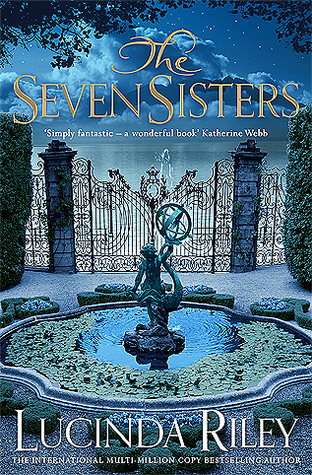
seven sisters ebook

I will always remember exactly where I was and what I was doing when I heard that my father had died.

Also every Friday there is The Friday 56, hosted by Freda at Freda’s Voice.
30879-friday2b56These are the rules:

  1. Grab a book, any book.
  2. Turn to page 56, or 56% on your eReader. If you have to improvise, that is okay.
  3. Find any sentence (or a few, just don’t spoil it) that grabs you.
  4. Post it.
  5. Add the URL to your post in the link on Freda’s most recent Friday 56 post.

Page 56:

‘Presumably, you had a tough night last night, Maia, dealing with Electra’s usual histrionics? said Ce-Ce.

‘As a matter of fact, for Electra, she was relatively calm,’ I answered, knowing there was little love lost between my fourth and fifth sisters. Each was the antithesis of the other: Ce-Ce so practical and loath to show any emotion, and Electra so volatile.

Blurb:

Maia D’Aplièse and her five sisters gather together at their childhood home, ‘Atlantis’ – a fabulous, secluded castle situated on the shores of Lake Geneva – having been told that their beloved father, the elusive billionaire they call Pa Salt, has died. Maia and her sisters were all adopted by him as babies and, discovering he has already been buried at sea, each of them is handed a tantalising clue to their true heritage – a clue which takes Maia across the world to a crumbling mansion in Rio de Janeiro in Brazil. Once there, she begins to put together the pieces of where her story began . . .

Eighty years earlier, in the Belle Epoque of Rio, 1927, Izabela Bonifacio’s father has aspirations for his daughter to marry into aristocracy. Meanwhile, architect Heitor da Silva Costa is working on a statue, to be called Christ the Redeemer, and will soon travel to Paris to find the right sculptor to complete his vision. Izabela – passionate and longing to see the world – convinces her father to allow her to accompany him and his family to Europe before she is married. There, at Paul Landowski’s studio and in the heady, vibrant cafés of Montparnasse, she meets ambitious young sculptor Laurent Brouilly, and knows at once that her life will never be the same again.

My thoughts:

I knew very little about this series when I began reading the book, but I was soon caught up in this family saga. It’s not crime fiction but there is plenty of mystery – first of all why are there only six sisters, not seven? Who was Pa Salt and why did he adopt these  girls from the four corners of the globe when they were babies? He has died before the book begins and immediately buried and, as I read a lot of crime fiction, my first thought was –  why was he adamant that as soon as he died his body was to be buried at sea, with none of the girls present? And I wondered if he had really died? Please don’t tell me the answers to my questions – I intend to read all the Seven Sisters books, when I hope all will become clear.

Pa Salt has left clues for each girl so that if they want they can discover who their parents were and the circumstances of their birth. Having introduced all the sisters Maia’s story unfolds and it is an amazing story, taking her back to Brazil, the country of her birth. It’s beautifully written and completely convincing and I raced through it eager to find out the details of Maia’s family history.

I loved all the details about the building of the statue of Christ the Redeemer on Corcovado Mountain in the Carioca Range, overlooking the city of Rio de Janeiro and how Lucinda Riley incorporated it so seamlessly into Maia’s story.

Have read this book? What did you think about it? And if you haven’t, would you keep on reading?

For more about the series see Lucinda Riley’s website, where she explains why she based the books on the legends of The Seven Sisters of the Pleiades and about the details of her extensive research for each story.

I’ll be reading the next book – The Storm Sister as soon as possible. The six books in the series are:

1. The Seven Sisters (2014)
2. The Storm Sister (2015) – Ally (Alcyone)
3. The Shadow Sister (2016) – Star (Asterope)
4. The Pearl Sister (2017) – CeCe (Celaeno)
5. The Moon Sister (2018) – Tiggy (Taygete)
6. The Sun Sister (2019) – Electra

The seventh sister is Merope – in the cast of characters at the beginning of the first book she is described as ‘missing’ …

The Seven Sisters:

  • Format: Kindle Edition
  • File Size: 2822 KB
  • Print Length: 641 pages
  • Publisher: Pan; Main Market edition (6 Nov. 2014)
  • Source: I bought the book
  • My Rating: 5*

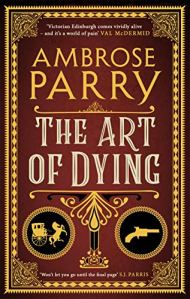
The Art of Dying by Ambrose Parry

Art of Dying

Canongate Books|29 August 2019|416 pages|e-book|Review copy|5*

A Note From the Publisher


Many thanks to Canongate Books for an e-book review copy via NetGalley.

Reading in July

I read nine books in July – it was a really good batch of books. I’ve written about 7 of them – click on the titles to see my reviews.

  1. The Stranger Diaries by Elly Griffiths 3*
  2. Katharina: Fortitude by Margaret Skea 5*
  3. The House by the Loch by Kirsty Wark 4*
  4. The Bear Pit by S G Maclean 5*
  5. Who Killed Ruby? by Camilla Way 3.5*
  6. Dolly by Susan Hill 5*
  7. Blood on the Tracks edited by Martin Edwards *
  8. Clouds of Witness by Dorothy L Sayers 4*
  9. The Art of Dying by Ambrose Parry 4*

I’ll be writing more about Clouds of Witness and The Art of Dying later this month, but for now here are my initial thoughts.

Clouds of witnessClouds of Witness by Dorothy L Sayers is the second Lord Peter Wimsey book. I really enjoyed this book. It has wit and humour as  as well as being a murder mystery. Lord Peter Wimsey’s brother, the Duke of Denver is accused of murder and refuses to explain or defend himself, so it’s down to Peter to get to the truth. The murder took place at the duke’s shooting lodge and Lord Peter’s sister was engaged to marry the dead man. One of the things I like about it is that it is clearly a book of its time with all the class distinctions and snobbery of the 1920s clearly on display.

Art of DyingThe Art of Dying by Ambrose Parry, anothoer book I really enjoyed is a new publication due out on 29 August this year.  It’s the sequel to Ambrose Parry’s debut novel, The Way of all Flesh. Ambrose Parry is a pseudonym for a collaboration between Chris Brookmyre and Marisa Haetzman. It’s historical fiction set in Edinburgh in 1850 as  patients are dying all across the city, with doctors finding their remedies powerless. Will Raven returns to Edinburgh as a doctor having been in Europe studying. Dr. James Simpson is being blamed for the death of a patient in suspicious circumstances, and Will and former housemaid Sarah Fisher are determined to clear his name.


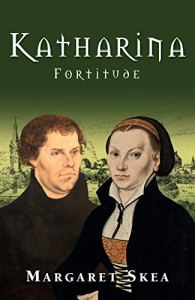
Katharina: Fortitude by Margaret Skea

Katharina fortitude

Last week I wrote about Margaret Skea’s latest book, Katharina: Fortitude, historical fiction based on the life of Katharina von Bora, the escaped nun who married Martin Luther. I loved it. It is beautifully written and meticulously researched giving a vivid portrait of Katharina from the beginning of her married  life with Luther in 1525 to her death in 1552.

For the whole of August it is on sale for 99p in the UK and $0.99 in the USA – a real bargain!

Here’s the link that takes you straight to the book page, whatever country you are in:

https://books2read.com/u/meBAgA

Katharina: Fortitude by Margaret Skea

Historical fiction at its best

‘We are none of us perfect, and a streak of stubbornness is what is needed in dealing with a household such as yours, Kat… and with Martin.’ 

Katharina fortitude

Sanderling Books|23 July 2019|print length 446 pages|e-book review copy|5*

My thoughts:

I loved this book; beautifully written and meticulously researched Katharina: Fortitude by Margaret Skea it presents a vivid portrait of Katharina von Bora from the beginning of her married  life with Martin Luther in 1525 to her death in 1552. It is the conclusion to Katharina: Deliverance, which covered the early years of her life from 1505 up to her wedding to Luther.

They both work well as standalone novels but I think reading both gives a fully rounded picture of her life. Margaret Skea is a skilful storyteller and seamlessly blends historical fact into her fiction. She is an award winning author both for her short stories and her historical novels – and Katharina: Deliverance was Runner-up in the Historical Novel Society Novel Award 2018.

Just as in Katharina: Deliverance, I was transported back in time and place to Reformation Germany, and in particular to Wittenberg in Saxony, experiencing the social, cultural and political situation. It’s also an intensely personal novel and I feel I really came to know Katharina and Martin very well. They lived through turbulent times, suffering outbreaks of plague, political and religious conflict as well as coping with the death of two of their children. Their marriage, initially one of convenience, opposed by some of his friends and fellow reformers, eventually became full of their love for each other and Martin came to value Katharina’s candid opinions and the support she gave him.

I felt immense admiration for Katharina, for her strength of character, resilience and courageous spirit. She gave birth to six children, whilst looking after Martin, who was often ill and suffered from depression. And in addition she also managed the daily life of the Lutherhaus in Wittenberg, often under financial difficulties because of Martin’s generosity towards others. She catered for the students and all the visitors and boarders, as well as working in the garden, with its vegetable beds and herb garden, the brewhouse, stable and piggery. Luther continued to be involved in religious controversy, whilst lecturing students, and holding his Table Talk sessions discussing a variety of topics ranging from theology and politics to diseases and their remedies.  He also translated the Bible into German, composed hymns, catechisms and treatises. 

I have often written in my reviews that I am not a fan of novels written in the present tense, but I had no issues with it in either of these books about Katharina and I think it fits the story perfectly. I was totally immersed in the story, enhanced by the richly descriptive writing, which made it compulsively readable for me.

In her Author’s Note Margaret Skea states that her book, based on a research trip in Saxony, ‘is a work of fiction, and though based on extensive research, the Katharina depicted here is my own interpretation’. There is a list of the main characters, a glossary of German terms and a map showing Saxony and Surroundings to help with the locations. It is a remarkable story, full of drama, centred on Katharina, a strong and courageous woman who never gave up no matter the difficulties that life with Luther brought her. I loved it.

With many thanks to Margaret Skea for sending me an advance review copy.


Library Loans

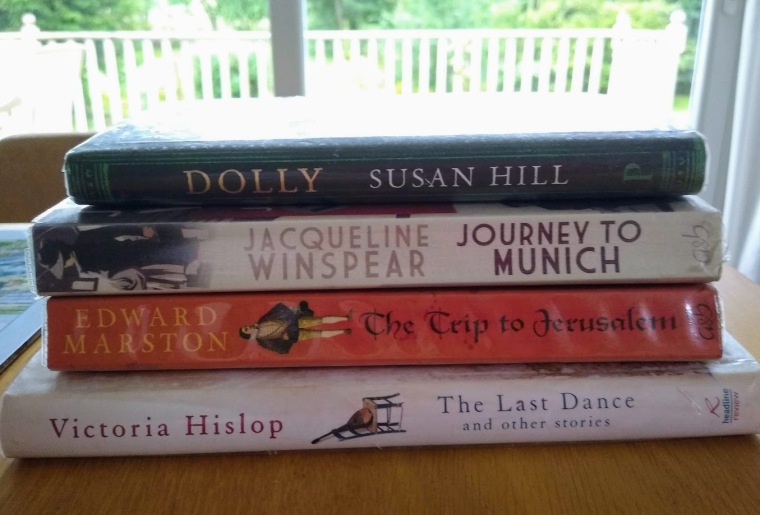
Here are some of my current library books

Lib bks July 2019

  • Dolly by Susan Hill, sub-titled ‘A Ghost Story’, a novella set in the Fens where two young cousins, Leonora and Edward spend a summer at Iyot Lock, a large decaying house, with their ageing aunt.  I’ll be writing more about this book soon.
  • Journey to Munich by Jacqueline Winspear, a Maisie Dobbs novel. This is no. 12 in the series (I’m not reading them in order). This one is set in 1938 when Molly travels into the heart of Nazi Germany.
  • The Trip to Jerusalem: an Elizabethan Mystery by Edward Marston, the 3rd book in the Nicholas Bracewell series about a troupe of players travelling England – not  to Jerusalem but to an ancient inn called The Trip to Jerusalem – whilst the Black Plague rages.
  • The Last Dance and other stories by Victoria Hislop. Ten stories set in Greece, described on the book cover as ‘bittersweet tales of love and loyalty, of separation and reconciliation’. I’ve recently enjoyed reading her latest book, Those Who Are Loved, also set in Greece, so my eye was drawn to this book.

The library van used to visit here once a fortnight, but now it only comes once a month. I hope it continues coming, but I fear that its days are numbered, so I make sure I use it whilst I still can.