Top Five Tuesday: Books with a Direction in the Title

Top 5 Tuesday was created by Shanah at Bionic Book Worm, and it is now being hosted by Meeghan at Meeghan Reads. You can see the Top 5 Tuesday topics for the whole of 2025 here

Today the topic is Books with a Direction in the Title. I’ve chosen books with north, south, east, up and down in their titles:

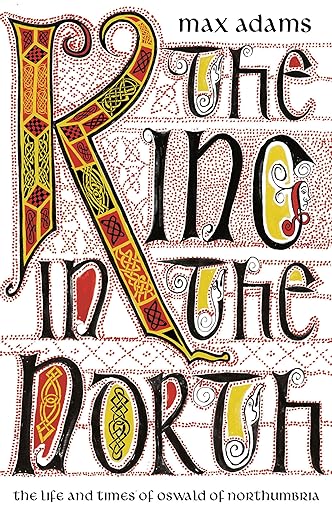
  1. The King in the North by Max Adams – Oswald of Northumbria was the first great English monarch, yet today this legendary figure is all but forgotten. In this panoramic portrait of Dark Age Britain, archaeologist and biographer Max Adams returns the king in the North to his rightful place in history.
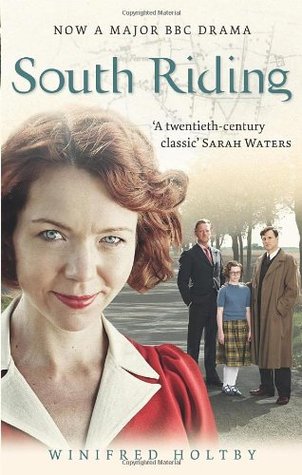
  2. South Riding by Winifred Holtby – portraying life in the 1930s, one of the main characters is Sarah Burton, the new headmistress of Kiplington High School for Girls, a fiercely passionate and dedicated teacher.
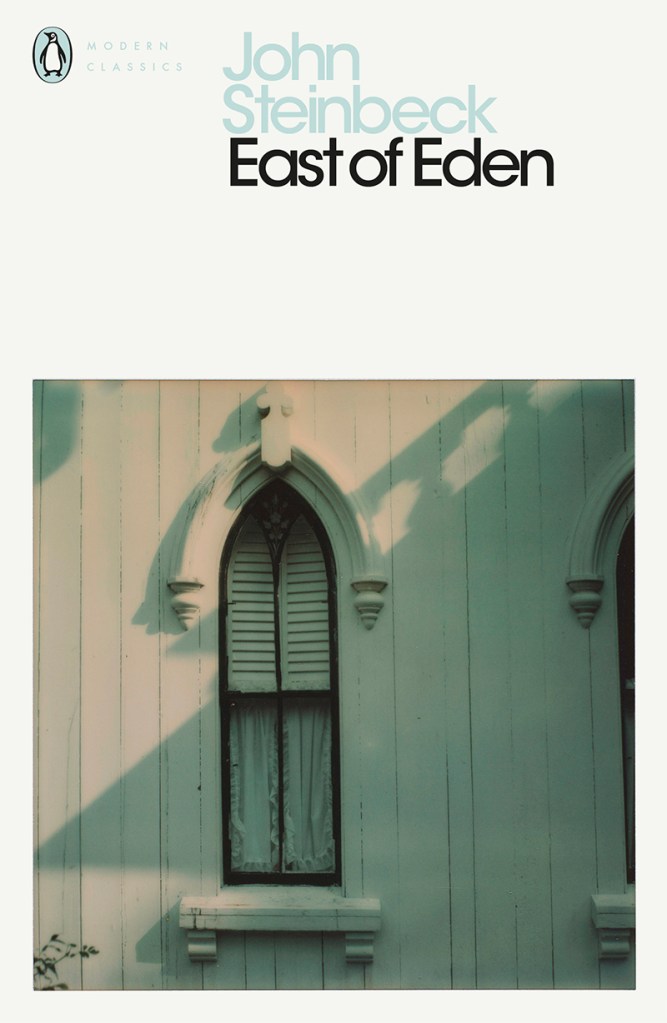
  3. East of Eden by John Steinbeck – the story of two families—the Trasks and the Hamiltons—whose generations helplessly re-enact the fall of Adam and Eve and the poisonous rivalry of Cain and Abel.
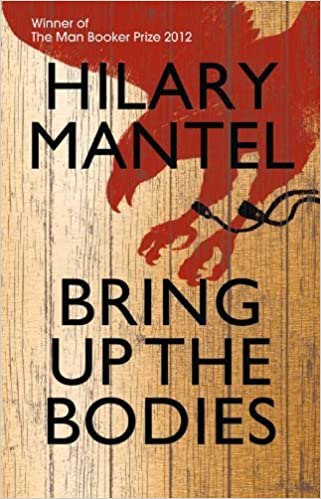
  4. Bring Up the Bodies by Hilary Mantel – the sequel to Wolf Hall. It’s 1535, Thomas Cromwell is Chief Minister to Henry VIII, Anne Boleyn is the king’s new wife. But she has failed to give the king an heir and Henry falls for plain Jane Seymour. Cromwell must find a solution that will satisfy Henry, safeguard the nation and secure his own career. But neither minister nor king will emerge unscathed from the bloody theatre of Anne’s final days.
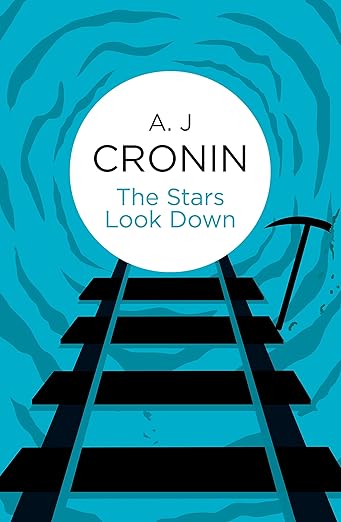
  5. The Stars Look Down by A J Cronin – a family saga chronicling the lives of a number of interconnected families over a period of thirty years.The story starts in 1903 in a North Country mining town, Sleescale, as its inhabitants experienced social and political upheaval. It ends in 1933. It highlights the terrible conditions in the coal mines, the lack of workers’ rights and the need for change in the relationship between the coal miners and the mine owners.

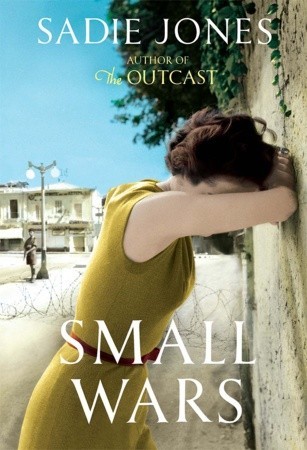
Small Wars by Sadie Jones: Book Beginnings on Friday & The Friday 56

Every Friday Book Beginnings on Friday is hosted by Gillion at Rose City Reader where you can share the first sentence (or so) of the book you are reading. You can also share from a book you want to highlight just because it caught your fancy.

Small Wars by Sadie Jones is historical fiction set mainly in Cyprus in the late 1950s where Major Hal Treherne and his wife Clara and their baby daughters are stationed during the ‘enosis’ (union with Greece) uprising. I’ve read about two thirds of it so far and it is good.

The book begins with a Prologue at Sandhurst in July 1946.

An English rain was falling onto the instruments of the band, onto their olive green uniforms and the uniforms of the cadets as they marched. The quiet rain lay in drops on the umbrellas of the families watching, on the men’s felt hats and the women’s gloved hands; it dampened the grey and green countryside around them and put beads of water onto everything.

The Royal Military Academy Sandhurst (RMAS) is where all officers in the British Army are trained to take on the responsibility of leading their soldiers. The main character is Hal Treherne and this opening chapter is about his passing out parade after he completed his basic training as an officer.

Also every Friday there is The Friday 56, hosted by Freda at Freda’s Voice, but she is taking a break and Anne at My Head is Full of Books has taken on hosting duties in her absence. You grab a book and turn to page 56 (or 56% of an eBook), find one or more interesting sentences (no spoilers), and post them.

Page 56 is in Part Two, which is set in Limassol, Cyprus ten years later in 1956 during the Emergency. Hal has been promoted to a major.

‘It was a sharp sudden valley and it wasn’t fanciful to consider it sinister, with the slithering hard stones and earth that went steeply downward. For most of the day it would be in shadow. Hal had seen the gradients on the map, but was still surprised by the extremity of the land and that anyone would choose to build a farm there, so deep.

Description from Amazon UK:

Hal Treherne is a soldier on the brink of a brilliant career. Impatient to see action, his other commitment in life is to his beloved wife, Clara, and when Hal is transferred to Cyprus she and their twin daughters join him. But the island is in the heat of the emergency; the British are defending the colony against Cypriots – schoolboys and armed guerillas alike – battling for union with Greece.

Clara shares Hal’s sense of duty and honour; she knows she must settle down, make the best of things, smile. But action changes Hal, and the atrocities he is drawn into take him not only further from Clara but himself, too; a betrayal that is only the first step down a dark path.

It was longlisted for the Orange Prize for Fiction in 2010. The Orange Prize for Fiction, now known as the Women’s Prize for Fiction is an annual award that recognizes the best novel written in English by a woman, regardless of nationality.

WWW Wednesday: 23 July 2025

WWW Wednesday is run by Taking on a World of Words.

The Three Ws are:

What are you currently reading?
What did you recently finish reading?
What do you think you’ll read next?

Currently I am reading Small Wars by Sadie Jones, a book I’ve had for years ( I bought it in 2011!). It’s historical fiction set mainly in Cyprus in the late 1950s where Major Hal Treherne and his wife Clara and their baby daughters are stationed during the ‘enosis’ (union with Greece) uprising. It’s tense, gripping and I’m now about halfway into the book and thinking I’ll have to stop reading my other book to concentrate on finishing this one.

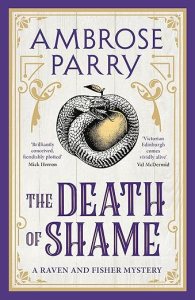
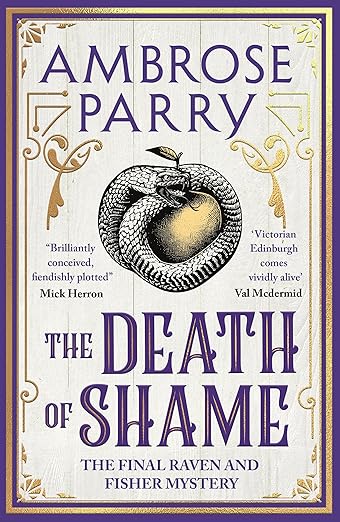
That other book I’m currently reading is a NetGalley review copy of The Death of Shame by Ambrose Parry. This is also historical fiction, set in 1854 in Edinburgh, a mix of fact and fiction incorporating the social scene, historical and medical facts. It’s the 5th book in the Raven and Fisher Mystery series. Dr Will Raven is no longer working with Dr Simpson but is setting up his own medical practice with the financial assistance of Sarah Fisher. They are investigating the disappearance of Sarah’s young niece, the suicide of Will’s father in law and the blackmailing of Dr Simpson.

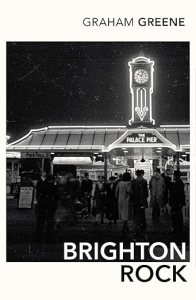
The last book I read was Brighton Rock by Graham Greene. This is set in the dark underworld of Brighton, where a gang war is raging. Seventeen year old gang leader Pinkie Brown, malign and ruthless, has killed a man. What follows is truly terrible, horrifying and full of violence. And yet I felt compelled to read it, fearful about how it would end. I’ll be writing more about it in a later post.
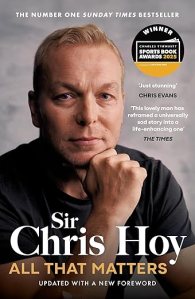
What will I read next? It could be All That Matters by Sir Chris Hoy, his memoir.

In elite sport, the margin between victory and defeat is miniscule, and the pressure is immense. Chris has built a glittering sporting career on understanding these how to feel for them, how to cope with them, how to make them count.

Last year, he faced another life-changing moment. He found out that the ache in his shoulder was in fact a tumour, and that he had Stage 4 cancer.

He will be living with this disease for the rest of his life.

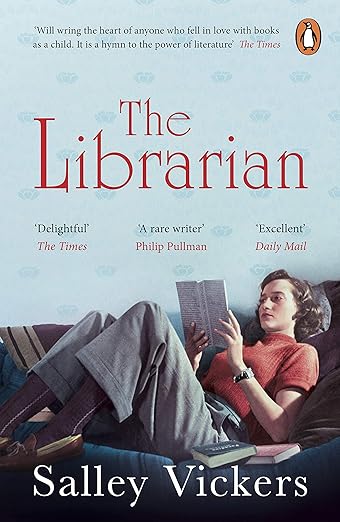
The Librarian by Salley Vickers

Penguin |26 April 2018 | 388 pages| paperback| 3*

Description from Amazon:

In 1958, Sylvia Blackwell, fresh from one of the new post-war Library Schools, takes up a job as children’s librarian in a run down library in the market town of East Mole.

Her mission is to fire the enthusiasm of the children of East Mole for reading. But her love affair with the local married GP, and her befriending of his precious daughter, her neighbour’s son and her landlady’s neglected grandchild, ignite the prejudices of the town, threatening her job and the very existence of the library with dramatic consequences for them all.

The Librarian is a moving testament to the joy of reading and the power of books to change and inspire us all.

‘Underneath the delightful patina of nostalgia for post-War England, there are stern and spiky questions about why we are allowing our children to be robbed of their heritage of story.’ Frank Cottrell Boyce

‘Vickers has a formidable knack for laying open the human heart’ Sunday Times

The Librarian is one of my TBRs (a paperback I bought four years ago) and also one of the books I decided to read as one of my 20 Books of Summer 2025. Frances @ Volatile Rule also identified it as one of her 10 Books of Summer and suggested we could do a buddy read. I am really looking forward to reading what she thinks about it.

I wanted to read The Librarian because I’ve enjoyed some of Salley Vickers’ books – especially Miss Garnet’s Angel and Mr Golightly’s Holiday (both of which I read pre-blogging). But I have to say that I was rather underwhelmed. It seems a bit shallow as I was expecting something that dug deeper beneath the surface, exploring the characters’personalities in more depth. I found the writing style naïve. Nevertheless I did enjoy it. It’s a simple story, simply told, a light read.

Having said that it does reflect life in the 1950s, a time when memories of the Second World War and Hiroshima still lingered. It’s strong on family relationships, and attitudes towards marriage, sex, and morals and shows the class divisions and the social inequality that existed, one in which the role of women was very different from that of today. It also looks at education and the nature of the 11+ exam and its divisive effects on children in deciding whether they went to a grammar or secondary modern or technical school.

In 1958 Sylvia Blackwell moves to East Mole, a fictional town, to become the Children’s Librarian. The town is described as ‘one of those small, middle-English country towns whose reputation rests on an understanding that it has known better days.’ The library is in a redbrick Victorian building that has been neglected over the years and the Children’s Library has suffered from a lack of adequate funding. It contained an outdated collection of books by mainly once fashionable Victorian authors, most of which could ‘hardly pass for children’s reading in the twentieth century.’ Sylvia is keen to update it and to introduce new books to encourage the children to use the library.

Sylvia is renting one of the cottages in Field Row on the outskirts of East Mole, a redbrick terrace, originally a two up, two down building with no inside WC, no bathroom or running hot water. It’s a damp cottage that her landlady, Mrs Bird, had modernised by adding a toilet next to the kitchen and had squeezed in a bathroom upstairs with a chipped bath and water-stained basin. Sylvia thinks it’s rustic and picturesque with its tiled roof greened over with moss.

Sylvia’s neighbours in the terrace of five houses are June and Ray Hedges, and Sam, their son and his little twin sisters, and Mr Collins, a councillor who is a member of the library committee. She gets on well with the Hedges, particularly so with the children. However, Mr Collins is not so friendly, almost antagonistic towards her. She has an affair with Hugh the local doctor, an older married man, putting her job in jeopardy and indeed threatening the closure of the Children’s Library. It causes problems between Hugh’s daughter and Sam. Sylvia’s work life and personal life become entangled, which has both negative and positive consequences for everyone involved.

I think the most interesting part for me is that it is about libraries in 1958, as I was also a librarian, although not a Children’s Librarian, like Sylvia. And I was a child in the 1950s and and used the local town library from the age of 4, so reading this has brought back many memories of using and working in libraries.

I was less enthusiastic about the ending set some sixty years later, when the library was threatened once again with closure. One of the children returned, now a famous author, to speak at an event which they hope might help to keep the library open, thus giving an update on the lives of some of the characters. However, I think it’s too long and neatly ties up all the loose ends. The book doesn’t need it.

In her Author’s Note at the end of the book, Salley Vickers writes:

The years I have spent as a novelist have taught me that there is no knowing how people will take one’s books. And I really believe that a book is finally made by its readers. Books should not be ‘about’ anything but if this book expresses any special interest it is the interest I acquired as a child in reading. The Librarian grew out of my experience as a young girl with a superb local library and a remarkable Children’s Librarian, Miss Blackwell, whose surname I have stolen (I never knew her first name) for my protagonist.

There’s also a list of children’s books from East Mole Library ‘Recommended reading from East Mole Library’, including some of my favourite books I read as a child and some I missed.

What I have taken from this book is Salley Vickers’ love of reading and enthusiasm for opening the children’s eyes to the joy of reading. It centres on Sylvia and her experiences not only as a Children’s Librarian but as a rather naive young woman in her second job away from her parents and her home. And it is that side of the story that I found less engaging. Salley’s inexperience makes her easy prey for Hugh and I thought the outcome was so predictable.

Salley Vickers

Salley Vickers was born in Liverpool, the home of her mother, and grew up as the child of parents in the British Communist Party. She won a state scholarship to St Paul’s Girl’s School and went on to read English at Newnham College Cambridge.

She has worked, variously, as a cleaner, a dancer, an artist’s model, a teacher of children with special needs, a university teacher of literature, and a psychoanalyst. Her first novel, ‘Miss Garnet’s Angel’, became an international word-of-mouth bestseller. She now writes full time and lectures widely on many subjects, particularly the connections between, art, literature, psychology and religion.

Her principal interests are opera, bird watching, dancing, and poetry. One of her father’s favourite poets, W.B.Yeats, was responsible for her name Salley, (the Irish for ‘willow’) which comes from Yeats’s poem set to music by Benjamin Britten ‘Down by the salley gardens’.(Goodreads)

The House of Seymour by Joanna Hickson

This is my third short post to catch up with reviewing books I’ve read recently.

HarperCollins |22 May 2025| 406 pages| e-book| Review book| 3.5*

When Isabel Williams is betrothed to John Seymour, Lord of Wolf Hall Manor, she hopes that love and respect will come, despite his cold streak of ruthless ambition.

Jess the shepherdess tends her flock on the wild spaces of Avebury close by, dismissing those who believe it is work for men. Forced to flee after falling under suspicion for the disappearance of a young man, Isabel’s offer of life with the growing Seymour family is the only refuge available to her.

As John’s ambition draws them into the orbit of the divided court of the young King Henry VI, his hunger to succeed takes on a darker edge. Isabel realises her husband will pay any price to get what he wants, even if it means destroying those he has sworn to protect…

I’ve read some of Joanna Hickson’s historical fiction novels so I was hoping I’d enjoy The House of Seymour, the first in a new trilogy. However, even though it is entertaining reading I felt it’s rather underwhelming, but maybe my expectations were too high.

It opens with a Prologue set in 1537 with Jane Seymour towards the end of her pregnancy looking at a proposed new Seymour coat of arms. She was upset that it didn’t include the badges of her mother and grandmother who were commoners.

The story then goes back over a hundred years to 1424 where we meet Isabel Williams, Jane’s great great grandmother, the daughter of a wealthy merchant. She married John Seymour (c. 1395/1402 – 20 December 1464) Lord of Wulf (Wolf) Hall in Savernake Forest, Wiltshire. Isabel and John’s marriage was not an easy one. John was ambitious, cruel and ruthless, determined to gain the support of Humphrey, the Duke of Gloucester and Protector of the boy king Henry VI. Alongside Isabel’s story is that of Jess, a young shepherdess, who left her home at Avebury, accused of witchcraft. She and Isabel had met at the Easton Priory and after hearing her story Isabel offered her a place in her household to look after her young son.

I really liked the settings, Wolf Hall, close to Savernake Forest, a remnant of primeval forest which became a royal forest soon after the Norman Conquest, and the village of Avebury with its henge and stone circles and the Long Barrow on Silbury Hill, a Neolithic burial site. I enjoyed the details of family life in the fifteenth century at Wolf Hall, and the details about hunting wolves and sheep farming. But overall I think this is very light historical fiction.

At the end of the book there is a useful glossary of words, such as ‘manchet‘, which is the best ‘white-flour’ bread served in wealthy homes, and also a section containing the author’s notes, giving information about the places mentioned, which I think are well worth reading.

Many thanks to Netgalley/Joanna Hickson/HarperCollins UK for a digital review copy of this title.

Six Degrees of Separation from Theory and Practice to The Night Hawks

It’s time again for Six Degrees of Separation, a monthly link-up hosted by Kate at Books Are My Favourite and Best. Each month a book is chosen as a starting point and linked to six other books to form a chain. A book doesn’t need to be connected to all the other books on the list, only to the one next to it in the chain.

This month we start with Theory & Practice by Michelle de Kretser, the winner of the Stella Prize for Fiction 2025, praised for its innovative structure and exploration of young love, jealousy, and literary inheritance.  I’ve not read it but it looks interesting. This is Amazon’s description:

It’s 1986, and ‘beautiful, radical ideas’ are in the air. A young woman arrives in Melbourne to research the novels of Virginia Woolf. In bohemian St Kilda, she meets artists, activists, students – and Kit. He claims to be in a ‘deconstructed’ relationship, and they become lovers. Meanwhile, a dismaying discovery throws her work on ‘the Woolfmother’ into disarray.

Theory & Practice is a mesmerising account of desire and jealousy, truth and shame. It makes and unmakes fiction as we read, expanding our notion of what a novel can contain. Michelle de Kretser, one of Australia’s most celebrated writers, bends fiction, essay and memoir into exhilarating new shapes to uncover what happens when life smashes through the boundaries of art..

I’ve read some of Virginia Woolf’s books, including my first link: Orlando, a fictionalised biography of Vita Sackville-West, based on her life. It tells the tale of an extraordinary individual who lives through centuries of English history, first as a man, then as a woman. This is a book steeped in history showing how the passage of time had changed both the landscape and climate of England along with its society. There are many vivid passages – such as her description of the ‘Great Frost’ of 1608, when the Thames was frozen for six weeks and Frost Fairs were held on the ice.

Second link: There have been several Frost Fairs over the centuries. Another one in 1669 is described in Edward Marston’s The Frost Fair, the fourth in the Christopher Redmayne Restoration series about an architect and Jonathan Bale, a parish constable. They are both visiting the fair when one of Bale’s sons gets into trouble on thin ice. They rescue the boy but in the process make a grim discovery – the frozen corpse of a man. The dead man is Jeronimo Maldini, an Italian fencing master who has been missing for some time. Redmayne is inclined to dismiss the case and leave the investigation to Bale; but all that changes when his own brother, Henry Redmayne, is charged with the murder.

Third link: The first Christopher Redmayne book is The King’s Evil set in London in September 1666, just as the Great Fire of London has begun, eventually devastating a large part of the old medieval City of London. It’s also a murder mystery. Redmayne is working to restore London after the Fire, when he becomes involved in investigating the murder of Sir Ambrose Northcott. whose body was found in the cellars of his partly built new house.

Which links nicely to my fourth link about another architect, Cat (Catherine) Hakesby: The Royal Secret by Andrew Taylor set in 1670. This is the 5th book in the Marwood and Lovett series. After designing a poultry house for the young daughter of Lord Arlington, the Secretary of State, Cat Hakesby (formerly Lovett) gains a commission to design one for Charles II’s sister, ‘Minette,’ the Duchess of Orléans. This is a complicated book, as Marwood is investigating the mysterious death of Richard Abbott, one of Lord Arlington’s men. It’s full of political intrigue, danger and conspiracy, involving witchcraft, poisonings, and tricky international relationships.

My Fifth link is conspiracy, which brings me to Agatha Christie’s They Came to Baghdad. Set in 1950 this is a story about international espionage and conspiracy. The heads of the ‘great powers‘ are secretly meeting in Baghdad, where if it all goes wrong ‘the balloon will go up with a vengeance.’ And an underground criminal organisation is out to make sure it does go wrong, aiming at ‘total war – total destruction. And then – the new Heaven and the new Earth.’ Victoria Jones, a short-hand typist, a courageous girl with a ‘natural leaning towards adventure’ and a tendency to tell lies gets involved after meeting with a young man, Edward, who is going out to Baghdad the following day to join an archaeological dig. 

My sixth link is archaeology in The Night Hawks by Elly Griffiths. Ruth Galloway is now Head of the Department of Archaeology at her old university, the fictional University of North Norfolk. The body of a young man who Detective Chief Inspector Nelson guesses is an illegal immigrant, an asylum seeker, is found on the beach at Blakeney Point. Then a skeleton, buried in a mound of what appears to be Bronze Age weapons, is also discovered on the beach by the group known as the Night Hawks when they were searching for buried treasure. Ruth, however is more interested in the hoard of Bronze Age weapons. 

My chain is mostly made up of two of my favourite genres, historical fiction and crime fiction. What is in your chain?

Next month (August 5, 2025), we’ll start with the 2025 Women’s Prize winner, The Safekeep by Yael Van Der Wouden.