The Drowned City by K J Maitland

Headline Review| 1 April 2021| 495 pages| e-book| Review copy| 3*

1606. England stands divided in the wake of the failed Gunpowder Plot. As a devastating tidal wave sweeps the Bristol Channel, rumours of new treachery reach the King.

In Newgate prison, Daniel Pursglove receives an unexpected – and dangerous – offer. Charles FitzAlan, close confidant of King James, will grant his freedom – if Daniel can infiltrate the underground Catholic network in Bristol and unmask the one conspirator still at large.

Where better to hide a traitor than in the chaos of a drowned city? Daniel goes to Bristol to investigate, but soon finds himself at the heart of a dark Jesuit conspiracy – and in pursuit of a killer.

My thoughts:

I didn’t realise when I began reading The Drowned City that K J Maitland is Karen Maitland, an author whose books I’ve enjoyed in the past. It is the first book of a new series featuring Daniel Pursglove, set in Jacobean England under the reign of James I of England and VI of Scotland. It is an historical thriller set in 1606, a year after the Gunpowder Plot failed.

It begins dramatically as a huge wave surges up the Bristol Channel, flooding the surrounding countryside in south-west England and parts of South Wales causing devastation and loss of life. The drama continues with Daniel Pursglove’s arrival in Bristol sent on the orders of King James to find Spero Pettingar, one of the conspirators of the Gunpowder Plot. King James is fearful of his life as there are rumours of more Catholic uprisings and plots to assassinate him, especially if the flood is taken as a sign of God’s anger, revenge for the executions of the conspirators.

Daniel is an interesting character, but there is a mystery about him. He was in Newgate prison at the start of the book, but no details are given about what crime he had committed, and little is given about his family background. He is offered his freedom if he finds Spero, or torture and death if he doesn’t. King James is an expert on witchcraft and also fears the flood was caused by enchantments, by witches and sorcerers paid by Jesuits to wreck the King’s ports and open the country to an invading army.

Daniel’s real name is not Pursglove. He’s skilled at opening locks, described as a ‘crossbiter’ meaning a trickster, and hints are given about his origins – we know he had been educated as a nobleman and brought up to act the lord, but without money, title of position, raised in Lord Fairfax’s Catholic household. He is also a most determined and courageous investigator and he needs all his skills during his visit to Bristol, as his life is in danger more than once.

I like description in a novel but it is excessive in the this book, so much so, that it slowed down the narrative almost to a standstill in places and I had to really concentrate to keep track of who was who and even what was actually going on. The detailed description makes it a long book.

There is an extensive Glossary at the end of the book that explains many of the terms that puzzled me and was unable to find in a dictionary – I wish I’d discovered it when I began the book, rather than in the middle. Maitland’s historical research is impressive but at times I felt I was reading a history book rather than a novel. However, overall I enjoyed reading it and I’m looking forward to reading the second book in the series, The Traitor in the Ice.
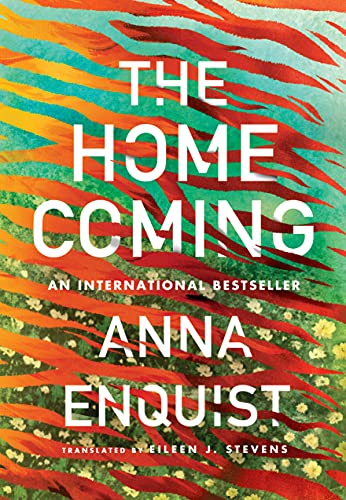
The Homecoming by Anna Enquist

Amazon Crossing| 1 April 2022| Print length 383 pages| 4*

I’ve read one book by Anna Enquist, a Leap, which is a collection of short stories, so when I saw The Homecoming was one of the Amazon First Reads for March this year I decided that was the one for me. It was first published in 2005 in Dutch and this English edition was translated by Eileen J Stevens in 2022.

There’s a lot written about Captain James Cook, the 18th century explorer, but I’d never come across anything about his wife, Elizabeth, before. The story is told from Elizabeth’s perspective and begins as she is at home in Mile End in London, preparing for James’s return home after his Second Voyage round the world in the ships Resolution and Adventure in 1775. This book is historical fiction, based on historical facts, although as the author writes in her Afterword: ‘the story is woven between the cracks of those verifiable cracks.’

So because there is little known about Elizabeth’s life, much of her story is the result of the author’s imagination and conjecture, but using the dates of births and deaths, of James’s departures and homecomings, and of letters and meeting. What is fact, is that she had six children – five sons and one daughter – and she outlived all of them. It is a heart-wrenching story as Elizabeth copes at home alone without her husband, a story of daily, domestic life at the end of the 18th century. She is a strong and resourceful woman who loves her husband, coping whilst desperately hoping he will not leave for a third voyage.

I was immediately drawn into the story and thoroughly enjoyed it, apart from the ending, which did spoil it somewhat. I can’t explain what happens at the end without giving away too much, except to say that it is Anna Enquist’s version of Cook’s death on Hawai’i as she imagines what was going on in his head as the days drew on towards the final tragedy – and it is strange, very strange.

Reading The Homecoming has made me want to know more about the Cook family and James’s life in particular. So, I was pleased to see there is a bibliography at the end of the book. And I also found there is another novel about Elizabeth: Mrs Cook: the Real and Imagined Life of the Captain’s Wife by Marele Day.

Other sources:

The Captain Cook Society

The Royal Naval Museum Information sheet on James Cook and a reading list

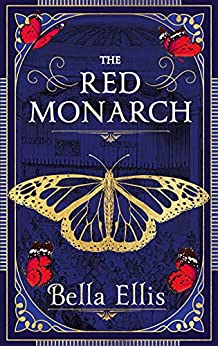
The Red Monarch by Bella Ellis

Hodder and Stoughton| 18 November 2021| 326 pages| e-book| Review copy| 3*

Blurb

The Brontë sisters’ first poetry collection has just been published, potentially marking an end to their careers as amateur detectors, when Anne receives a letter from her former pupil Lydia Robinson.

Lydia has eloped with a young actor, Harry Roxby, and following her disinheritance, the couple been living in poverty in London. Harry has become embroiled with a criminal gang and is in terrible danger after allegedly losing something very valuable that he was meant to deliver to their leader. The desperate and heavily pregnant Lydia has a week to return what her husband supposedly stole, or he will be killed. She knows there are few people who she can turn to in this time of need, but the sisters agree to help Lydia, beginning a race against time to save Harry’s life.

In doing so, our intrepid sisters come face to face with a terrifying adversary whom even the toughest of the slum-dwellers are afraid of . . . The Red Monarch.


The Red Monarch is the third Brontë Mystery book in which the main characters are the three Brontë sisters, Charlotte, Emily and Anne and their brother Branwell. I’ve read the first two and enjoyed them. But when I came across the first book I wasn’t at all sure I wanted to read it, as I’m never very keen on books that use real people as fictional characters. So, I was delighted to find that I thoroughly enjoyed the books even though, of course, the stories about the Brontës being ‘detectors’, or amateur sleuths, are pure imagination. The setting in the Yorkshire Moors is superb, the characters came across as ‘real’ and the books are well plotted.

And so, I was looking forward to reading The Red Monarch and it began well in Haworth in August 1852 as Charlotte is trying to write Villette. She is in despair after the deaths of her siblings – Emily and Branwell in 1848, and Anne in 1849. Instead of writing she reads a little notebook containing Emily’s poems and one particular poem brought back to her the dreadful events that had taken place and the terrors and cruelties they had seen, on their excursion to London. It had all taken place just after the Brontë sisters’ first poetry collection had been published – in 1846.

It was at this point, right at the beginning of the story about their time in London, that I thought I was reading a completely different type of mystery from the earlier books – not only is in not set in Yorkshire this book is a gothic melodrama. In a terrifying attack on Lydia and her husband Harry, a gang of thieves and murderers, led by Noose, had burst into Harry and Lydia’s bedroom. They had seized Harry and threatened to kill him unless Lydia brought them the jewel that Harry had been ordered to collect. Lydia, who was pregnant, had seven days to save their lives. But it is the Red Monarch, who was in control of the gang, and who held them all under his control – a most villainous and fearsome gangster. In desperation Lydia wrote to Anne for help.

The story is melodramatic, sensational and fast-paced. It is told through each of the sisters’ eyes, each one clearly distinctive, whilst Emily (once more) is the standout character. They are all independent women, strong-willed and determined and as Victorian women, vastly underestimated by the men. But, I had a hard time accepting the Brontë sisters in this story. Whereas in the two previous books I could believe that the Brontë family were just as Bella Ellis has described them, in this book I couldn’t.

The descriptions of mid 19th century London are vivid, clearly depicting the filthy living conditions of the poor, the sights and foul smells. The details of the Brontës’ search for Harry and the missing jewel test their strength, courage and skill in detection.

There are a few other real people who play a minor role, notably Charles Dickens, who is dismissive when Charlotte, somewhat in awe of him, asks for his advice as a writer, telling her to abandon any ideas of being a novelist and to marry, or teach. His companion, Mrs Catherine Crowe, another real author who wrote supernatural tales, was much more approachable and friendly, contacting her spirit friends to help with Charlotte’s search as well as giving her useful advice as a writer. Another character, with a larger role, is Louis Parensell, who develops a passion for Emily. He was not a real person, but Virginia Moore, a Brontë biographer, misread the handwritten title of Emily’s poem ‘Love’s Farewell’ as ‘Louis Parensell’, and developed the theory that Louis was Emily’s secret lover.

As the novel reached its dramatic climax, Emily in particular is in danger of losing her life as she dared to challenge the Red Monarch. I was most interested in the identity of The Red Monarch – was he in fact a real person, or totally fictitious? There various references to him throughout the novel, what was the origin of his name, and what was the meaning of his insignia? It seemed to be two capital Rs back to back topped with a crown and contained within a five-pointed star of pentagram. Anne had first discovered them and she felt sure they carried a secret meaning to those in know. When the identity of the Red Monarch is finally revealed I was surprised – but it is appropriate in that the real person has been described as a maniacal, controlling man.

I enjoyed this book, but I think the two previous books are much better and seem more authentic, aided by being set in the Brontës’ Yorkshire. They were out of place in London. It all seems to me to be over dramatic and unbelievable. The fictional element far outweighs the historical.

~~~

‘Bella Ellis’ is the Brontë-inspired pen name for the author Rowan Coleman, who has been a Brontë devotee for most of her life. As well as writing the Brontë Mysteries she is the .author of sixteen novels including the Richard and Judy pick The Memory Book and the Zoe Ball bookclub choice, The Summer of Impossible Things.

My thanks to Hodder Stoughton for a review copy via NetGalley

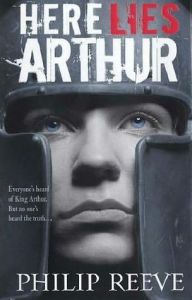
Throwback Thursday: Here Lies Arthur by Philip Reeve

Today I’m looking back at my post on Here Lies Arthur by Philip Reeve, historical fiction, retelling the life of the legendary King Arthur. I first reviewed it on February 5, 2008.

My review begins:

This was one of the best books I read in 2007. Philip Reeve is a new author to me. Here Lies Arthur is an adventure story, set in Britain in AD 500. I have always been fascinated by the legend of King Arthur and this book tells his story, casting a new and original slant on the ‘facts’. Very little historical evidence has survived to give concrete information about life in Britain from the fifth to the sixth centuries. The picture Reeve paints is of a turbulent and harsh world, with Arthur as a war-leader in a land where opposing war-bands fight for supremacy. Arthur is not the romantic hero of legend but a dangerous, quick-tempered man, ‘solid, big-boned with a thick neck and a fleshy face. ‘A bear of a man.’

Click here to read my full review

The next Throwback Thursday post is scheduled for March 31, 2022.

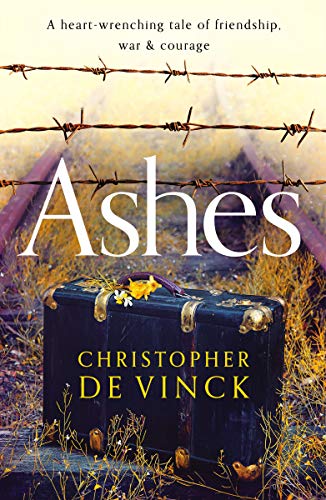
Ashes by Christopher de Vinck

Rating: 3 out of 5.

Harper Inspire| 18 August 2020| 332 pages| e-book| review copy via NetGalley| 3 stars

This is a book that has lingered on my NetGalley shelf for a while. There are some books that I find hard to review and this is one of them, mainly because I couldn’t get really involved in the story.

Synopsis:

Belgium, July 1939: Simone Lyon is the daughter of a Belgium national hero, the famous General Joseph Lyon. Her best friend Hava Daniels, is the eldest daughter of a devout Jewish family. Despite growing up in different worlds, they are inseparable.But when, in the spring of 1940, Nazi planes and tanks begin bombing Brussels, their resilience and strength are tested. Hava and Simone find themselves caught in the advancing onslaught and are forced to flee.

In an emotionally-charged race for survival, even the most harrowing horrors cannot break their bonds of love and friendship. The two teenage girls, will see their innocence fall, against the ugly backdrop of a war dictating that theirs was a friendship that should never have been.

Ashes by Christopher de Vinck is historical fiction set in World War Two in Belgium, following the lives of two eighteen year old girls. It’s a mix of fact and fiction, based on the evacuation of Belgian refugees trying to outrun the Nazi invasion of 10 May 1940. Each chapter begins with either a quotation in italics either from a speech by a country’s leader such as Woodrow Wilson, Churchill or Hitler, or information about the progress of the war or extracts or memories recorded in the war journal of Major General Joseph Henri Kestens, the author’s grandfather. I found these extracts, particularly from Hitler’s speeches that illustrated the hatred and horror that Hitler inflicted on the Jewish and Polish people, the most interesting and chilling parts of the novel.

It’s narrated by Simone in short chapters that kept the action moving quite quickly as the two girls react to the Nazi invasion of their country. The friendship between Simone and Hava is poignant in the context of the war, even though I found it hard to believe that they were eighteen years old. I thought they came across as younger and the novel has the feel of a YA novel. But that was only a minor distraction for me. I also appreciated the detail about the Jewish religion and traditions. I think that gives more depth to the novel, but overall, I think the storytelling aspect was a bit too matter of fact for me, which lessened its impact.

My thanks to Harper Inspire for a review copy via NetGalley.

Library Books 24 February 2022

I love libraries – here are some of the books I have on loan at the moment. I had made a few attempts to take a photo of these books and wasn’t happy with any of them. I’d left the books in a pile on the floor and was delighted to see this photo that my husband had taken – much better than any of my attempts.

Trigger Mortis by Anthony Horowitz – because I enjoy his books, but I’m not sure I’ll like this one as much as his crime fiction books. It’s a James Bond thriller set in 1957 re-inventing the golden age of Bond, incorporating previously unseen Ian Fleming material.

An Event in Autumn by Henning Mankell, a Wallender thriller, again because I’ve enjoyed other books by him. This is a novella in which Wallender makes an offer on a house, and then discovers the skeleton of a middle-aged woman in the garden. What a nightmare!

Prague Nights by Benjamin Black. Black is the pen name of John Banville, another author whose books I like. This is historical crime fiction set in Prague in 1599, when the mistress of Rudolf II, the Holy Roman Emperor, is killed and her body found thrown upon the snow in Golden Lane.

Presumed Innocent by Scott Turow, the first book in his Kindle County series, because I enjoyed the last book in the series, The Last Trial so much. This is a courtroom drama in which prosecutor Rusty Sabich stands accused of killing Carolyn with whom he had been having an affair.

Ordinary Heroes by Scott Turow, historical fiction set in World War Two, described on the front cover as ‘part mystery, part thriller, this is a quietly powerful piece of fiction.’ A courtroom journalist researches the experiences of his grandfather during the War.