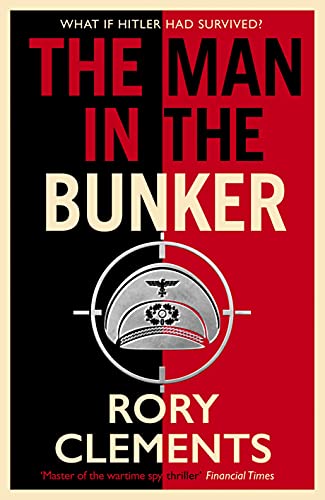
The Man in the Bunker by Rory Clements

Rating: 5 out of 5.

Bonnier Books UK Zaffre| 22 January 2022| 453 pages| e-book| review copy via NetGalley| 5 stars

I’ve read two of Rory Clements’ books in his Tom Wilde series, the first one, Corpus and the fourth Hitler’s Secret, both of which I loved. So I was looking forward to reading more of his books – The Man in the Bunker is the sixth book in the series, but fortunately they all read perfectly as standalone books.

This is a complicated novel and I am not going to attempt to describe all the details. In August 1945 an American and professor of history, Tom Wilde is preparing for the Michaelmas term at his Cambridge University college. He had spent most of the last three years in a senior advisory role with the Office of Strategic Services, America’s wartime intelligence outfit. He has quit the OSS and wants to put the war behind him, so when he sees a big American car parked outside his home where he lives with his wife and young son, he is not at all pleased. His three visitors bring news that there’s reason to believe that Hitler is alive and hiding out in Bavaria – and they want Wilde to find him.

The rumour that Hitler didn’t die in the Berlin bunker has always interested me, especially as his body was never found. I remember seeing a TV documentary about it, so I wondered what Clements would make of it and what his conclusion would be. Did Hitler live on after the war or not? His version of events is thrilling and dramatic as Wilde travels across the continent, mainly in Germany and Austria, seeing the devastation the War had brought both to places and to people. There were millions of people without homes – refugees, some living in displaced persons camps dotted around Europe. Some had been slave labourers interned in concentration camps, others were survivors of the death camps.

Wilde was accompanied by a young lieutenant, Mozes Heck, a Dutch Jew who had escaped to England and joined the British Army. Heck is desperate to find out what had happened to his family, loathes the Nazis and Hitler, and he is set on revenge. He is both headstrong and dangerous. They were both co-opted to the US Counter Intelligence Corps in Garmisch, an Alpine town in Bavaria. Wilde has a difficult job restraining Heck, but eventually they work well together in tense and extremely dangerous situations.

I thoroughly enjoyed it. The search for Hitler across Germany and Austria is fast paced, full of action, danger, and violence. Needless to say really, but I was gripped by this novel and I just had to find out what had happened, whether Hitler had died in the bunker – or did Wilde find him in hiding somewhere in the Alps? I’m not telling – you’ll have to read the book to find out.

Many thanks to Bonnier Books for a review copy via NetGalley.
Library Books: February 2022

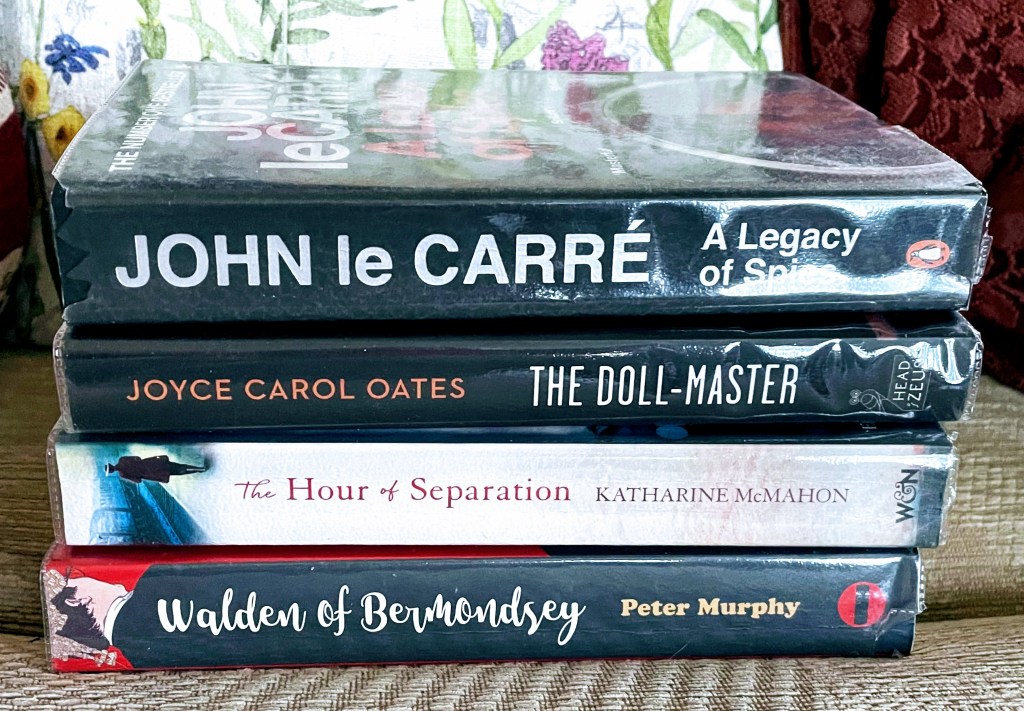
The mobile library service is back to normal now and I borrowed these books this week:

From top to bottom they are:

A Legacy of Spies by John Le Carré. It’s the 9th book in his George Smiley series. I’m not sure about reading this one yet as I’ve only read 2 of the series, The Spy Who Came in from the Cold and Tinker, Tailor, Soldier, Spy. But whilst it was there on the shelves I decided to borrow it and at least start it to see if it reads like a standalone. And according to this article on the Penguin website all five of novels in the Smiley series are easily read as standalones. You do not need to read them in order but they do suggest a reading order.

Book description: Peter Guillam, former disciple of George Smiley in the British Secret Service, has long retired to Brittany when a letter arrives, summoning him to London. The reason? Cold War ghosts have come back to haunt him. Intelligence operations that were once the toast of the Service are to be dissected by a generation with no memory of the Berlin Wall. Somebody must pay for innocent blood spilt in the name of the greater good . . .

The Doll-Master and Other Tales of Terror by Joyce Carol Oates. I’m not sure I want to read this book – it’s described on the back cover as ‘Six terrifying tales to chill the blood’.They may be too terrifying! But I have enjoyed her books before, so maybe this one will be OK.

Book description: .

In the title story, a young boy becomes obsessed with his cousin’s doll after she tragically passes away from leukemia. As he grows older, he begins to collect “found dolls” from the surrounding neighborhoods and stores his treasures in the abandoned carriage house on his family’s estate. But just what kind of dolls are they?

In “Gun Accident”, a teenage girl is thrilled when her favorite teacher asks her to house-sit, even on short notice. But when an intruder forces his way into the house while the girl is there, the fate of more than one life is changed forever.

In “Equatorial”, set in the exotic Galapagos, an affluent American wife experiences disorienting assaults on her sense of who her charismatic husband really is, and what his plans may be for her.

The Hour of Imagination by Katharine McMahon. I borrowed this because I’ve read two of her books and enjoyed them.

Book description: Estelle never really knew her mother, Fleur, but is haunted by her legacy. A legendary resistance heroine in the Great War, she had helped Allied soldiers escape from Belgium – and was not alone in paying a terrible price.

Christa’s father was one of those Fleur saved – but he returned home a ruined man. So, when Estelle arrives on Christa’s doorstep hungry for information about her mother, an intense and complex friendship is ignited.

In 1939, as conflict grips Europe once more, Estelle follows her mother’s destiny. Then Christa discovers that Fleur was betrayed by someone close to her and the truth may destroy them all…

Walden of Bermondsey by Peter Murphy. I’ve not read any of his books, so this is unknown territory for me. Peter Murphy spent a career in the law, as an advocate, teacher, and judge. He has worked both in England and the U.S., and served for several years as counsel at the Yugoslavian War Crimes Tribunal in The Hague. This book is the first in his Judge Walden series.

Book description: When Charlie Walden takes on the job of Resident Judge of the Bermondsey Crown Court, he is hoping for a quieter life. But he soon finds himself struggling to keep the peace between three feisty fellow judges who have very different views about how to do their jobs, and about how Charlie should do his. And as if that’s not enough, there’s the endless battle against the “Grey Smoothies”: the humorless grey-suited civil servants who seem determined to drown Charlie in paperwork and strip the court of its last vestiges of civilization. No hope of an easy life for Charlie then, and there are times when his real job – trying the challenging criminal cases that come before him – actually seems like light relief.

I’d love to know what you think – have you read any of these books, if so did you enjoy them? If not, do they tempt you?

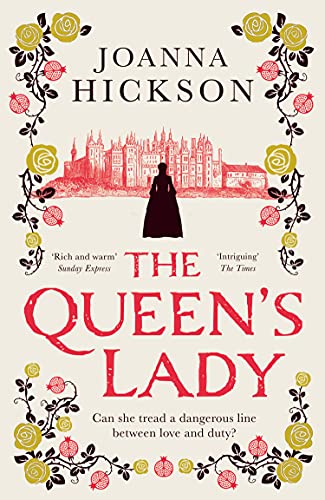
The Queen’s Lady by Joanna Hickson

Harper Collins|20 January 2022|451 pages|e-book via NetGalley|Review copy|4*

Publishers’ Description:

As lady-in-waiting and confidante to Queen Elizabeth, wife of Henry VII, Joan understands royal patronage is vital if she and her husband, Sir Richard, are to thrive in the volatile atmosphere of court life.

But Tudor England is in mourning following the death of the Prince of Wales, and within a year, the queen herself. With Prince Henry now heir to the throne, the court murmurs with the sound of conspiracy. Is the entire Tudor project now at stake or can young Henry secure the dynasty?

Drawn into the heart of the crisis, Joan’s own life is in turmoil, and her future far from secure. She faces a stark choice – be true to her heart and risk everything, or play the dutiful servant and watch her dreams wither and die. For Joan, and for Henry’s Kingdom, everything is at stake…

My thoughts:

I enjoyed reading Joanne Hickson’s first book in her Queens of the Tower series, The Lady of the Ravens (my review), so I was keen to read the sequel, The Queen’s Lady, continuing the story of Joan Vaux, Lady Guildford. She was a lady in waiting to Queen Elizabeth, the wife of Henry VII and had became a good friend and confidante of Elizabeth. Her son Henry, known as Hal, had also became a good friend to the young Prince Henry.

It begins one evening at the Tower of London in April 1502. There’s strange atmosphere, as the ravens sit hunched in silence in the trees around the White Tower, Joan thought, as if awaiting some sad event, sensing death. One of the things I had particularly enjoyed in The Lady of the Ravens was Joan’s fascination for and care of the ravens of the Tower of London firmly believing in the legend that should the ravens leave the Tower for good then the crown would fall and ruin would return to the nation.

1502 had begun with pageantry and the New Year celebrations for the wedding of Prince Arthur, the heir to the throne, and Katharine of Aragon. It looks as if the ravens had indeed sensed death because in April he became seriously ill and died. It was Joan who had to break the news to Elizabeth and help console her in her grief. His death left Prince Henry as the heir to the throne.

In addition King Henry’s agents had uncovered a new Yorkist plot against the throne. Joan’s husband, Sir Richard Guildford is a Privy Councillor and loyal to Henry, but Henry is persuaded that he could be guilty of treason and he is imprisoned. Joan’s life is suddenly turned upside down. What happens next is fascinating to read covering Joan’s involvement in both national affairs and in her personal life.

I thoroughly enjoyed this novel. It is beautifully written, grounded in its historical context, full of colour and life. At the end of the book there’s a Glossary of words and terms that are not commonly in use today, which I wish I’d realised was there earlier. Intriguingly, Joanna Hickson promises in her Author’s Note that she has ‘more fascinating fifteenth century lives in sight’. I’m looking forward to see what she writes next.

The Author:

Joanna Hickson became fascinated with history when she studied Shakespeare’s history plays at school. However, having taken a degree in Politics and English she took up a career in broadcast journalism with the BBC, presenting and producing news, current affairs and arts programmes on both television and radio. Now she writes full time.

My thanks to the publishers for my review copy via NetGalley.

Historical Fiction Challenge 2022

Marg at The Intrepid Reader hosts the Historical Fiction Reading Challenge. Each month, a new post dedicated to the HF Challenge will be created where you can add the links for the books you have read.

Everyone can participate! If you don’t have a blog you can post a link to your review if it’s posted on Goodreads, Facebook, or Amazon, or you can add your book title and thoughts in the comment section if you wish.

Any sub-genre of historical fiction is accepted (Historical Romance, Historical Mystery, Historical Fantasy, Young Adult, History/Non-Fiction, etc.)

During the following 12 months you can choose one of the different reading levels:

20th Century Reader – 2 books
Victorian Reader – 5 books
Renaissance Reader – 10 books
Medieval – 15 books
Ancient History – 25 books
Prehistoric – 50+ books

I love historical fiction so in 2022 I’m hoping to reach the Medieval level, that is read 15 books.

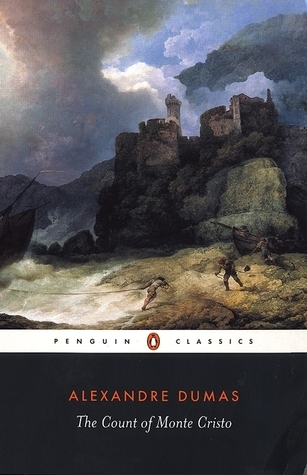
The Count of Monte Cristo by Alexandre Dumas

Penguin| Revised edition 2003| 1313 pages| 4*

I have had a paperback copy of The Count of Monte Cristo for many years. This year I joined in Karen’s Back to the Classics 2021 Reading Challenge, which gave me the incentive to read it now, as it meets the criteria for category five: a classic by a non-white author. It’s also a book on my Classics Club list. Dumas was born in 1802. His father was the illegitimate son of the Marquis de La Pailleterie and Marie Cessette Dumas, a black slave from Haiti. He was a prolific writer, producing 41 novels, 23 plays, 7 historical works and 6 travel books.

The Count of Monte Cristo was first serialised in a French newspaper in 18 parts in 1844 and later translated into English. There have been several translations, editions and abridged versions since then. I really had very little idea of the plot and had not watched any of the film or TV adaptations. As I found it hard to read my paperback version I read an e-book version, so much easier to see!

It begins in 1815 when Edmond Dantès, a sailor, having returned to Marseilles, and celebrating his betrothal to Mercedes is wrongly accused of being a Bonapartist and imprisoned in the Chateau d’If on the Isle of Monte Cristo, for fourteen years. His accusers were Fernand, who was also in love with Mercedes, assisted by Danglars, one of Dantès’ shipmates and Caderousse, a drunkard who went along with the others’ plot to get rid of him. The King’s Attorney, Villefort has his own reasons for condemning Dantès to conceal his father’s involvement with the Bonapartists.

I was quickly drawn into the story with the account of how Dantès survived his imprisonment after meeting the Abbé Faria, who tells him of a great hoard of treasure and offers to share it with him. He educates Dantès in languages, culture, mathematics, chemistry, medicine, and science and together they plan to escape. But the Abbé dies and Dantès ingeniously uses his death to make his own miraculous escape. Whilst in prison Dantès had vowed to get his revenge on the four men responsible for his imprisonment and the rest of the books tells how he went about it. It’s a complicated and elaborate plan that he carries out remorselessly, one that takes him several years to achieve.

It’s a great story, action-packed, and full of high drama and emotion. It’s a love story, a story of revenge and retribution, about justice, intrigue and betrayal. There’s imprisonment and a daring escape, bandits, murder, madness, and suicide. In addition there’s a female poisoner, a scene of torture, an execution, drug-induced sexual fantasies and above all a conflict between good and evil.

But it is very long (Dumas was paid by the line) and a difficult book to review as there is so much in it.There’s a wealth of characters, but the absolute star of the book is the Count of Monte Cristo himself, in his several guises. It’s a theatrical drama, melodramatic in parts, a book I found difficult to put down and it had me turning page after page as I just had to find out what would happen next. There are episodes that really beggar belief, and it has its slow moments where I just wanted Dumas to get on with the story and for Monte Cristo to get his revenge, but it all wove together to make a spectacular whole.

I loved it!

Picnic at Hanging Rock by Joan Lindsay

Picnic at Hanging Rock is one of the best books I’ve read this year. It was first published in 1967 and has since been republished a few times. The copy I read was published by Vintage in 1998. It’s a novella of 189 pages, with a list of characters at the beginning followed by a note, that indicates the truth of the story it tells is in question:

Whether Picnic at Hanging Rock is fact or fiction the readers must decide for themselves. As the fateful picnic took place in the year nineteen hundred, and all the characters who appear in this book are long since dead, it hardly seems important.

On St Valentine’s Day in 1900, a party of nineteen girls accompanied by two schoolmistresses sets off from the elite Appleyard College for Young Ladies, for a day’s outing at the spectacular volcanic mass called Hanging Rock. The picnic, which begins innocently and happily, ends in explicable terror, and some of the party never returned. What happened to them remains a mystery.

I enjoyed it immensely. I love the detailed descriptions of the Australian countryside and the picture it paints of society in 1900, with the snobbery and class divisions of the period. It’s a hot day, the picnic at the base of Hanging Rock shaded from the heat by two or three spreading gums was going well, and while some of the party dozed in the sunshine four of the girls walked to the Rock to get a closer view. As they walked up to the pinnacles and crags the plain below came into sight, but infinitely vague and distant and a rather curious sound was coming up from the plain, like the beating of far off drums. They neared a monolith rising up in front of them and:

Suddenly overcome by an overpowering lassitude, all four girls flung themselves down on the gently sloping rock in the shelter of the monolith, and there fell into a sleep so deep that a horned lizard emerged from a crack to lie without fear in the hollow of Miranda’s outflung arm.

Nobody had noticed that one of the teacher had also left the picnic. The day ended dramatically when one of the girls ran screaming down to the plain, back to the picnic grounds. She had left the other three girls ‘somewhere up there’, but she had no idea where that was. Despite lengthy searches only one girl was found and she couldn’t remember what had happened. It was all very strange. There’s an eerie feeling hanging over the whole event – during the picnic two of the adults found that their watches had stopped at twelve o’clock and they had no idea of the time. It was as though time had been suspended.

It’s a deceptively simple story, but with so many layers and undercurrents, making this mysteriously compelling reading. All the characters are believable people, each with their own backstories, and all their lives are affected and changed by the events of that one day. There’s a dreamlike quality to the mystery and a suspicion of the supernatural surrounding it. I loved the ambiguity of it all.

This is a Novella in November contribution and also qualifies as an entry for AusReading Month 2021.