Undercurrent by Barney Norris

This is another short review of a book I read in the summer and didn’t manage to review before I went away on holiday. I really enjoyed it.

Random House| 25 August 2022| 257 pages| e-book Review Copy| 4*

Blurb:

Years ago, in an almost accidental moment of heroism, Ed saved Amy from drowning. Now, in his thirties, he finds himself adrift. He’s been living in London for years – some of them good – but he’s stuck in a relationship he can’t move forward, has a job that just pays the bills, and can’t shake the sense that life should mean more than this. Perhaps all Ed needs is a moment to pause. To exhale and start anew. And when he meets Amy again by chance, it seems that happiness might not be so far out of reach. But then tragedy overtakes him, and Ed must decide whether to let history and duty define his life, or whether he should push against the tide and write his own story.

Filled with hope and characteristic warmth, Undercurrent is a moving and intimate portrait of love, of life and why we choose to share ours with the people we do.

A few years ago I read Turning for Home by Barney Norris and thought it was a moving book with emotional depth. Undercurrent has very much the same tone, plumbing the same depth of emotion, as he tells the story of a family’s grief and loss as well as love.

The main story centres around Ed and his immediate family, but the narrative includes the stories of his grandparents and great grandparents. He had a troubled childhood, living on a farm in Wales with his mother, stepfather and stepsister, Rachel. His mother wants him and Rachel to take over the farm when she dies, but neither of them want to, which leaves Ed feeling guilty and frustrated. But when his mother becomes seriously ill and dies he has to make a decision.

It’s also the story of his grandparents and great grandparents, beginning in 1911 in India when Arthur, an Englishman met and later married Phoebe a young Indian teenager. When the First World War broke out they moved to England and Arthur enlisted in the navy. She never got over leaving India and sank into depression and melancholy. Their son, Leo, was greatly affected by his mother’s mental illness and caring for her and the farm became too much for him, resulting in tragedy. The women in the family followed the same pattern as Phoebe – following the men, their lives changing for better or worse.

I don’t feel I have done justice to this novel, finding it quite difficult to review. It’s a quiet thoughtful book that explores the nature of our relationships and emotions. The central theme is the pull of home, that sense of belonging, of attachment to a place, and how our past has shaped our lives. Alongside this there is the desire for a new life, and new experiences. It is beautifully written.

My thanks to the publishers for a review copy via NetGalley.
White Rose, Black Forest by Eoin Dempsey

Rating: 3 out of 5.

This is the second of several short posts as I try to catch up with writing reviews of books I read earlier this year.

White Forest, Black Rose by Eoin Dempsey is a World War 2 novel which is different from other books set during the War that I’ve read before, told from the perspective of a German who opposed the Nazis. It is set in the Black Forest, Germany in 1943, where Franka Gerber is living alone in an isolated cabin, having returned to her home town of Freiburg after serving a prison sentence for anti-Nazi activities.

It is December and the Forest is blanketed in deep snow when she discovers an unconscious airman lying in the snow wearing a Luftwaffe uniform, his parachute flapping in the wind. Taking him back to the cabin she saves his life, but whilst he is unconscious she hears him speak in English and so it seems that he is not who she first thought he was. Both his legs are broken and, having been a nurse, Franka is able to set the bones, and tries to discover his true identity. Trapped in the cabin they both gradually reveal details of their past lives and learn to trust each other.

It is a tense, claustrophobic novel and as soon as he is able to walk they decide to leave the cabin and so begins a race against time, as they are hunted by the Gestapo. Can they trust each other enough to join forces on a mission that could change the face of the war and their own lives forever?

White Rose, Black Forest is a novel inspired by true events, although the author doesn’t clarify what is fact and what is fiction. I enjoyed it, especially the historical aspects. The White Rose movement in Germany was a non-violent intellectual resistance group in Nazi Germany, who conducted an anonymous leaflet and graffiti campaign that called for active opposition to the Nazi regime.

It slots into the Forest box in the Wanderlust Bingo card and is also one of my TBRs, a book I’ve owned since 2018.

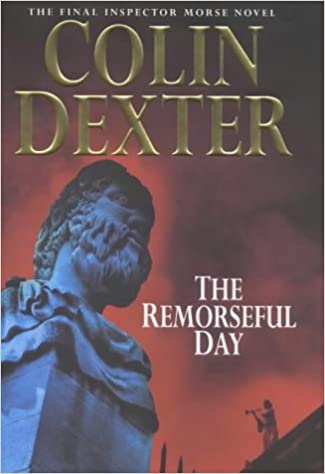
Throwback Thursday: The Remorseful Day by Colin Dexter

Today I’m looking back at my post on The Remorseful Day by Colin Dexter, the last Inspector Morse book. I first reviewed it on August 2, 2015.

My review begins:

Chief Inspector Morse is one of my favourite fictional detectives (maybe even the favourite). I first ‘met’ him years ago in the ITV series Inspector Morse and so, just as Joan Hickson is forever in my mind as Miss Marple and David Suchet is Poirot, John Thaw is Morse. The series was first broadcast in 1987, but I don’t intend to write about the books versus the TV adaptations – I’ve enjoyed both. This post is just about the last book in the series – The Remorseful Day.

Click here to read my full review

~~~

The next Throwback Thursday post is scheduled for September 29, 2022.

Book Beginnings & The Friday 56: All Among the Barley by Melissa Harrison

Every Friday Book Beginnings on Friday is hosted by Gillion at Rose City Reader where you can share the first sentence (or so) of the book you are reading. You can also share from a book you want to highlight just because it caught your fancy.

Yesterday I finished reading Shrines of Gaiety, Kate Atkinson’s new book which will be published in September. I’ll write about it in a later post. Although I’m still reading The Return of the King and The Island, I wondered what I’d like to read next. I was thinking of reading  Lion by Conn Iggulden, the first in a new series ‘The Golden Age’, set in Ancient Greece in the 5th century BC. But, today I wasn’t in the mood for ancient historical fiction and fancied something more rural and more modern – and spotted All Among the Barley in a pile of books waiting to be read. It’s set on a farm in Suffolk just before the Second World War.

Prologue

Last night I lay awake again, remembering the day the Hunt ran me down in Hulver Wood when I was just a girl.

And then Chapter 1:

My name is Edith June Mather and I was born after the end of the Great War. My father, George Mather, had sixty acres of arable land known as Wych Farm; it is somewhere not far from here, I believe. Before him my grandfather Albert farmed the same fields, and his father before him, who ploughed with a team of oxen and sowed by hand.

Also every Friday there is The Friday 56, hosted by Freda at Freda’s Voice, where you grab a book and turn to page 56 (or 56% of an eBook), find one or more interesting sentences (no spoilers), and post them.

Page 56:

Unlike Doble, whose family had been tied to ours for generations, John was what we in the village called a ‘furriner’, having been born sixty miles or more north of us, where our clay gave way to flat, rich peat.

Synopsis from Amazon:

WINNER OF THE EU PRIZE FOR LITERATURE

‘BOOK OF THE YEAR’ NEW STATESMAN, OBSERVER, IRISH TIMES, BBC HISTORY MAGAZINE

The fields were eternal, our life the only way of things, and I would do whatever was required of me to protect it.


The autumn of 1933 is the most beautiful Edie Mather can remember, though the Great War still casts a shadow over the cornfields of her beloved home, Wych Farm.

When charismatic, outspoken Constance FitzAllen arrives from London to write about fading rural traditions, she takes an interest in fourteen-year-old Edie, showing her a kindness she has never known before. But the older woman isn’t quite what she seems.

As harvest time approaches and pressures mount on the whole community, Edie must find a way to trust her instincts and save herself from disaster.

I chose this book because earlier this year I enjoyed Melissa Harrison’s novella, Rain: Four Walks in English Weather, which is about four rain showers, in four seasons, across Wicken Fen, Shropshire, the Darent Valley and Dartmoor. I like the way she writes about the natural world and All Among the Barley looks as though it will bring to life a world governed by the old rural traditions, in an evocation of place and a lost way of life.

What do you think? Have you read this book ?

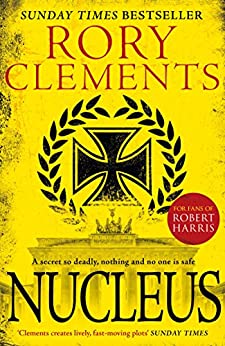
Nucleus by Rory Clements

Rating: 5 out of 5.

Zaffre| January 2018| 453 pages| Hardback| My own copy| 5 stars

Nucleus by Rory Clements is the second book in his Tom Wilde series (the full list is at the end of this post). I have been reading them out of order, as I came across them. I think I’d have understood the relationship of the characters better if I had read the series in order from the start, but that has not stopped me from enjoying them.

Blurb

WINNER OF THE CWA HISTORICAL DAGGER 2018.
The eve of war: a secret so deadly, nothing and no one is safe

June 1939. England is partying like there’s no tomorrow . . . but the good times won’t last. The Nazis have invaded Czechoslovakia, in Germany Jewish persecution is widespread and, closer to home, the IRA has embarked on a bombing campaign.

Perhaps most worryingly of all, in Germany Otto Hahn has produced man-made fission and an atomic device is now possible. German High Command knows Cambridge’s Cavendish Laboratory is also close, and when one of the Cavendish’s finest brains is murdered, Professor Tom Wilde is drawn into the investigation. In a conspiracy that stretches from Cambridge to Berlin, and from the US to Ireland, can he discover the truth before it’s too late?

I’ve found this quite a difficult book to summarise as there are various elements to the plot. I think the publishers’ blurb merely skims the surface, but to go into detail would give away too much. With several plot lines, this is a mix of historical fact and fiction, set in 1939 when England and Germany are on the brink of war. It is a fast-paced and gripping book, involving murder, IRA bombers, and espionage, with many twists and turns

In Nazi Germany Jews are in fear of their lives, trying to leave the country. Some have made it to England and America. In both countries the race is on to develop an atomic bomb.

There’s a large cast of characters – the main one being Tom Wilde, an American professor of history at Cambridge University, who has returned from America after a meeting with President Roosevelt. There he was asked to liaise with two Americans in England, Colonel Dexter Flood and also to keep an eye on Milt Hardman, an American millionaire who is staying at Old Hall in Cambridgeshire with his family.

And so Wilde is drawn into Hardman’s world, meeting a Hollywood actress, drinking champagne, playing tennis, and partying. And then he soon finds himself having to deal with an increasingly complex situation when one of the Cavendish scientists, an introverted genius who was due to move to America to work with Oppenheimer, is found drowned in the River Cam, and then another one goes missing.

Meanwhile Albert, Eva Haas’ young son is also missing, apparently having been abducted from a Kindertransport train. Eva is a German Jewish physicist, who along with Arnold Lindberg, an elderly scientist rescued from Dachau, has arrived in Cambridge. Lydia, who is Tom’s neighbour and lover is a friend of Eva’s. She was to meet Albert in England and goes to Berlin to try to find out what has happened to him. There she is helped by Bertha Bracey and Frank Foley (real-life heroes). Bertha was working to rescue German Jewish children, organising Kindertransports, finding homes and schools for the children in Britain, and Frank, who was MI6’s top spy in Berlin. He broke all the rules to make sure as many Jewish people had visas to leave the country, saving many thousands of people.

I was totally immersed in the plot. It’s full of danger and action, and I thoroughly enjoyed it. I learned much – not only about atomic fission, but also about the situation in Germany leading up to the Second World War – I hadn’t heard of the work of Bertha Bracey and Frank Foley before.

I’ve read three of Rory Clements’ books in his Tom Wilde series, with links to my posts:

Book Beginnings & The Friday 56: The Island by Victoria Hislop

Every Friday Book Beginnings on Friday is hosted by Gillion at Rose City Reader where you can share the first sentence (or so) of the book you are reading. You can also share from a book you want to highlight just because it caught your fancy.

I’m currently reading The Island by Victoria Hislop, a book I’ve had on my bookshelves for years. The Wanderlust Bingo challenge has given me a massive nudge to read it now as it is the perfect book for the Island category! It is historical fiction inspired by a visit to Spinalonga, the abandoned Greek leprosy colony, an island off the coast of Crete, a stone’s throw from Plaka. I’ve now read 25% of this book and am enjoying it so far.

Plaka, 1953

A cold wind whipped through the streets of Plaka and the chill of the autumnal air encircled the woman, paralysing her body and mind with a numbness that almost blocked her senses but could do nothing to alleviate her grief.

Also every Friday there is The Friday 56, hosted by Freda at Freda’s Voice, where you grab a book and turn to page 56 (or 56% of an eBook), find one or more interesting sentences (no spoilers), and post them.

Page 57 (page 56 is blank):

1939

Early May brings Crete its most perfect and heaven-sent days. On one such day, when the trees were heavy with blossom and the very last of the mountain snows had melted into crystal streams, Elena left the mainland for Spinalonga. In cruel contrast to this blackest of events, the sky was brilliant, a cloudless blue

Synopsis from Amazon:


On the brink of a life-changing decision, Alexis Fielding longs to find out about her mother’s past. But Sofia has never spoken of it. All she admits to is growing up in a small Cretan village before moving to London. When Alexis decides to visit Crete, however, Sofia gives her daughter a letter to take to an old friend, and promises that through her she will learn more.

Arriving in Plaka, Alexis is astonished to see that it lies a stone’s throw from the tiny, deserted island of Spinalonga – Greece’s former leper colony. Then she finds Fotini, and at last hears the story that Sofia has buried all her life: the tale of her great-grandmother Eleni and her daughters and a family rent by tragedy, war and passion.

She discovers how intimately she is connected with the island, and how secrecy holds them all in its powerful grip…

I’ve read three other books by Victoria Hislop and enjoyed them so I’m expecting this one to be good too.

What do you think? Have you read this book ?