New Additions to BooksPlease June 2022

Yesterday we went Barter Books in Alnwick, my favourite bookshop. This is a secondhand bookshop where you can ‘swap’ books for credit that you can then use to get more books from the Barter Books shelves. It’s back to ‘normal’ now, so there was no queue to get in, although they are still limiting the number of books you can take in.

These are the books I brought home – from top to bottom they are:

Hemingway’s Chair by Michael Palin, a comic novel about Martin, an assistant postmaster who is obsessed with Ernest Hemingway. But when Nick arrives and is appointed postmaster instead of Martin, Martin’s life is turned upside down and he plans the ultimate Hemingwayesque act of revenge.

The Mammoth Book of Historical Detectives edited by Mike Ashley, published in 1995 this anthology includes stories from the earliest locked-room mystery (35,000 BC), through ancient Rome and China to medieval England, the Wild West, the Indian Raj and Victoriam London. It’s arranged chronologically and includes stories by R L Stevenson, Ellis Peters, Peter Tremayne, Steven Saylor and others new to me.

Mr Mac and Me by Esther Freud. I remember seeing this on book blogs a while ago and thought it looked interesting. Set in 1914 on the Suffolk coast just as war with Germany is declared, this is a story of an unlikely friendship between a mysterious artist the locals call Mr Mac (Charles Rennie Macintosh)n and Thomas the crippled son of the village publican.

The Sisters Brothers by Patrick de Witt, another book I’ve spotted on some book blogs. It was shortlisted for the Man Booker Prize 2011. It’s described on the inside cover as ‘an unforgettable comic tour de force. Filled with a remarkable list of characters – losers, cheaters, and ne’er-do-wells’ … ‘it captures the humour, melancholy and grit of the Old West and two brothers bound by blood, violence and love.

All Among the Barley by Melissa Harrison – I enjoyed her book, Rain: Rour Walks in English Weather, so I’m keen to read this one, the winner of the EU Prize for Literature and the ‘Book of the Year’ New Statesman, Observer, Irish Times, BBC History Magazine. Set on a farm in Suffolk just before the Second World War, it introduces a girl on the cusp of adulthood. Glamorous outsider Constance FitzAllen arrives from London, determined to make a record of fading rural traditions and beliefs, and to persuade Edie’s family to return to the old ways rather than embrace modernity. She brings with her new political and social ideas – some far more dangerous than others. (Goodreads)

What do you think? Have you read any of these? Do they tempt you too?

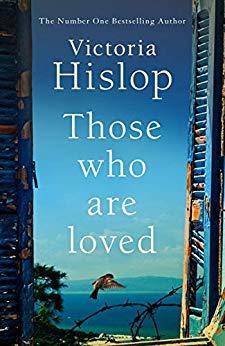
Throwback Thursday: Those Who Are Loved by Victoria Hislop

Today I’m looking back at my post on Those Who Are Loved by Victoria Hislop. I first reviewed it on June 15, 2019.

My review begins:

Those Who Are Loved by Victoria Hislop is one of the most moving novels I’ve read for a long time. But it begins slowly and it was only at about the halfway stage that it really took off for me. And now I’ve come to write about it I’m finding it difficult to put into words just how exceptional I think it is. Whatever I write will not do it justice – it really is ‘an epic tale of an ordinary woman compelled to live an extraordinary life‘.

It is historical fiction ‘set against the backdrop of the German occupation of Greece, the subsequent civil war and a military dictatorship, all of which left deep scars.’

Click here to read my full review

~~~

~~~

The next Throwback Thursday post is scheduled for August 4, 2022.

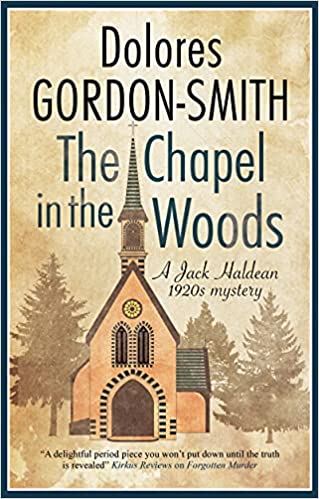
The Chapel in the Woods by Dolores Gordon-Smith

Severn House| 1 March 2022| 256 pages| e-book| Review copy| 3*

The Chapel in the Woods is the 11th Jack Haldean Murder Mystery, set in the 1920s.

Major Jack Haldean, a former World War I pilot, is a detective story writer. He and his wife Betty are visiting his cousin Isabelle and her husband Arthur in the hamlet of Croxton Abbas in Sussex. The neighbouring estate, Birchen Bower, had recently been bought by Canadian Tom Jago and his wife Rosalind. A fortnight earlier he had sent Derek Martin and his wife, Jean, in advance to open up the house and unpack their belongings, but when the Jagos arrive they discover the house open and that most of their things including Rosalind’s diamonds had been stolen. And the Martins have disappeared. But Jago can’t believe that Martin is the thief, maintaining he is perfectly honest. Jack has formerly helped his friend Detective Superintendent Ashley of the Sussex Police with a number of cases and as he is staying locally he gets involved in the police investigations.

Jago is renovating the 17th century house, built around 1620, by William Cayden, set in woodland. The chapel in the woods contains the tomb of Anna, Cayden’s wife who was a native of Peru. Her tomb, a box tomb, is decorated with an elaborately carved leaping jaguar – hence the legend of the Jaguar Princess who haunts the chapel and grounds taking the form of a jaguar.

It gets more and more complicated. In the Victorian period Josiah Cayden, an explorer and big game hunter had imported wild animals from South America, wanting to recreate a piece of the Amazon in the grounds. And now the locals are convinced that there is something in the woods that shouldn’t be there. There have been stories about dead and mutilated animals being found around Birchen Bower woods, and every so often dogs and ponies go missing. So, when Jago hosts the village fete, the local residents throng to the estate, some keen to follow the path into the woods to visit the chapel, only to find a dead body, apparently mauled by a jaguar.

And then there is another body … Is there really a jaguar roaming the woods, or is something supernatural going on? And who stole the diamonds, was it Derek Martin or someone else? Where is Derek Martin? What is the truth about the legend of the Jaguar Princess?

It is entertaining, with a mysterious, even supernatural atmosphere in parts, but it all seems to me too unlikely and fanciful and too convoluted. I liked the setting, the scenes in the woodlands and the historical aspects. But, there is too much repetition of the events and too much discussion about the various possibilities. I lost interest and just wanted to know how the mystery was resolved. It all gets sorted out and ends as Jack explains how he uncovered what had really happened.

My thanks to Severn House for a review copy via NetGalley.

Traitor in the Ice by K J Maitland

Headline Review| 31 March 2022| 461 pages| e-book| Review copy| 2*

I don’t have very much to say about Traitor in the Ice, the second Daniel Pursglove book, by K J Maitland. It is set during the Great Frost of 1607-8 in England, when the Thames and many other rivers were frozen solid, but the countryside was the hardest hit. I preferred the first Daniel Pursglove book, The Drowned City.

It is a dark historical novel, describing life in England under the new king, James I of England and VI of Scotland. Daniel is continuing his search for the mysterious Spero Pettingar, suspected of plotting another conspiracy to kill James and reinstate a Catholic monarch and is sent by the Secretary of State, Robert Cecil, Lord Salisbury, to Battle Abbey, near Hastings, in Sussex, a Catholic household, suspected of sheltering Catholic priests.

Daniel is an interesting character, needing all his determination and courage to discover what has been going on at Battle Abbey. It’s made even more difficult as it seems that everyone has something to hide, not just their politics and religious dissent, but also murder. A little bit more of his background is revealed in this second book, but he still remains a mysterious figure. And Spero Pettingar is an even more mysterious character, who is he – is he hiding at Battle Abbey? And will Daniel uncover all the secrets concealed within the Abbey?

But I enjoyed K J Maitland’s Author’s Note and information she gives in ‘Behind the Scenes of this Novel’ more than the novel. The details of her historical research are fascinating, with information about the real people behind her characters, such as Lady Magdalen, Viscountess Montague who did live at Battle Abbey. And the Glossary at the end of the book is also most helpful explaining a lot of the terms in the book I hadn’t come across before.

However, the book failed to hold my interest throughout as the wealth of detail she has put into the novel slows the action down and took away much of the suspense and tension – I felt like I was drowning in description. And at times I wasn’t really sure what was happening, especially at the end of the book – the Epilogue is mystifying.

My thanks to Headline Review for a review copy via NetGalley

Book Beginnings & The Friday 56: The Silence of the Girls by Pat Barker

Every Friday Book Beginnings on Friday is hosted by Gillion at Rose City Reader where you can share the first sentence (or so) of the book you are reading. You can also share from a book you want to highlight just because it caught your fancy.

The Silence of the Girls is one of the latest books I bought. It is the first book in Pat Barker’s Troy series, historical fiction retelling the story of the Trojan war from the point of view of the women.

The Book begins:

Great Achilles. Brilliant Achilles, shining Achilles, godlike Achilles … How the epithets pile up. We never called him any of those things; we called him ‘the butcher’.

Also every Friday there is The Friday 56, hosted by Freda at Freda’s Voice, where you grab a book and turn to page 56 (or 56% of an eBook), find one or more interesting sentences (no spoilers), and post them.

Page 56:

Somebody once said to me: You never mention his looks. And it’s true, I don’t, I find it difficult. At that time, he was probably the most beautiful man alive, as he was certainly the most violent, but that’s the problem. How do you separate a tiger’s beauty from its ferocity? Or a cheetah’s elegance from its speed of attack? Achilles was like that – the beauty and the terror were two sides of a single coin.

Synopsis from Fantastic Fiction:

Here is the story of the Iliad as we’ve never heard it before: in the words of Briseis, Trojan queen and captive of Achilles. Given only a few words in Homer’s epic and largely erased by history, she is nonetheless a pivotal figure in the Trojan War. In these pages she comes fully to life: wry, watchful, forging connections among her fellow female prisoners even as she is caught between Greece’s two most powerful warriors. Her story pulls back the veil on the thousands of women who lived behind the scenes of the Greek army camp—concubines, nurses, prostitutes, the women who lay out the dead—as gods and mortals spar, and as a legendary war hurtles toward its inevitable conclusion. Brilliantly written, filled with moments of terror and beauty, The Silence of the Girls gives voice to an extraordinary woman—and makes an ancient story new again.

The Silence of the Girls was nominated for


Baileys Women’s Prize for Fiction Best Book
Women’s Prize For Fiction Best Novel
Costa Book Awards Best Novel

It was also:

A Washington Post Notable Book
One of the Best Books of the Year: NPR, The Economist, Financial Times
 
Shortlisted for the Costa Novel Award
Finalist for the Women’s Prize for Fiction

So, I’m really hoping I’ll enjoy it. What do you think? If you’ve read it do you think it lives up to its reputation?

Moonlight and the Pearler’s Daughter by Lizzie Pook

Mantle| 3 March 2022| 304 pages| e-book| Review copy| 3*

1886, BANNIN BAY, AUSTRALIA.

The Brightwell family has sailed from England to make their new home in Western Australia. Ten-year-old Eliza knows little of what awaits them on these shores beyond shining pearls and shells like soup plates – the things her father has promised will make their fortune.

~~~

Ten years later and Charles Brightwell, now the bay’s most prolific pearler, goes missing from his ship while out at sea. Whispers from the townsfolk suggest mutiny and murder, but headstrong Eliza, convinced there is more to the story, refuses to believe her father is dead, and it falls to her to ask the questions no one else dares consider.

But in a town teeming with corruption, prejudice and blackmail, Eliza soon learns that the truth can cost more than pearls, and she must decide just how much she is willing to pay – and how far she is willing to go – to find it . . .

My thoughts:

I knew about diving for pearls, but I knew nothing about pearlers – the pearl divers/the people who trade in pearls – so I thought Moonlight and the Pearler’s Daughter would be a good way to find out more about it. And it is – I learned a lot. It has a great sense of both time and place. Although Bannin Bay is a fictional town in Western Australia its geography is modelled on parts of the north-west Kimberley coast. Lizzie Pook’s research, which she details in her Historical and Cultural Note at the end of the book, is fascinating. Her descriptive writing is very good and I felt that I was transported back to 19th century Australia experiencing the sights and smells of the coastal town and witnessing the appalling abuse and violence dealt out to the aboriginals who were forced to become pearl divers.

And I was also convinced by the main characters, Eliza in particular who comes across as a determined young woman, not cowed into conforming with the behaviour expected of women in the local community. She does everything she can to find out what happened to Charles, her father when he doesn’t return with his ship, the White Starling. It seems he just disappeared and no one can tell her what happened to him. She finds his diary and realises that there must be a reason why he didn’t take it with him as he always did. It contains detailed information about shell-beds, stars, storms, sharks and life at sea, but she also finds a sheet of paper between its pages with a cryptic clue she is convinced will help her find him. The police assume he went overboard and arrest one of the aboriginal divers for his murder. But Eliza is convinced that he is not dead and helped by Axel Kramer, a German and a newcomer to Bannin Bay, she sets sail on his lugger, Moonlight to search for him.

The book starts slowly, building up a picture of the town, its inhabitants, and landscape, and builds to a crescendo as Eliza’s search takes a dramatic turn when the Moonlight is caught up in a terrible storm putting their lives in danger. I enjoyed the book, just as much for its historical detail and vivid descriptions of the landscape and wildlife, as for the mystery of Charles’ disappearance.