My Friday Post: A Place of Execution

Book Beginnings ButtonEvery Friday Book Beginnings on Friday is hosted by Gillion at Rose City
Reader
 where you can share the first sentence (or so) of the book you are reading, along with your initial thoughts about the sentence, impressions of the book, or anything else the opener inspires.

One of the books I’m reading is A Place of Execution by Val McDermid.

A Place of Execution

It begins:

Like Alison Carter I was born in Derbyshire in 1950. Like her, I grew up familiar with the limestone dales of the White Peak, no stranger to the winter blizzards that regularly cut us off from the rest of the country. It was in Buxton, after all, that snow once stopped play in a county cricket match in June.

Blurb:

In the Peak District village of Scarsdale, thirteen-year-old girls didn’t just run away. So when Alison Carter vanished in the winter of ’63, everyone knew it was a murder.

Catherine Heathcote remembers the case well. A child herself when Alison vanished, decades on she still recalls the sense of fear as parents kept their children close, terrified of strangers.

Now a journalist, she persuades DI George Bennett to speak of the hunt for Alison, the tantalising leads and harrowing dead ends. But when a fresh lead emerges, Bennett tries to stop the story ‘“ plunging Catherine into a world of buried secrets and revelations.

Also every Friday there is The Friday 56, hosted by Freda at Freda’s Voice.

Friday 56

These are the rules:

  1. Grab a book, any book.
  2. Turn to page 56, or 56% on your eReader.
  3. Find any sentence (or a few, just don’t spoil it) that grabs you.
  4. Post it.
  5. Add the URL to your post in the link on Freda’s most recent Friday 56 post.

From Page 56:

Nothing made sense. If someone was ruthless enough to kidnap a young girl, surely they wouldn’t show mercy to a dog? Especially a dog as lively as Shep. He couldn’t imagine a dog with the collie’s spirit meekly submitting to having elastoplast tightly wound round its muzzle. Unless it had been Alison who’d done the deed.

I’ve read nearly half the book so far and I’m really enjoying it so far. It’s a standalone mystery and is compelling reading.

My Friday Post: Night Falls on Ardnamurchan

Every Friday Book Beginnings on Friday is hosted by Gillion at Rose City
Reader
 where you can share the first sentence (or so) of the book you are reading, along with your initial thoughts about the sentence, impressions of the book, or anything else the opener inspires.

One of the books I’m currently reading is Night Falls on Ardnamurchan: The Twilight of a Crofting Family by Alasdair Maclean.

Night Falls on Ardnamurchan: The Twilight of a Crofting Family

It begins:

Introduction 1: Father and Son

We hardly conceive of our parents as human. There are innumerable actions, there are whole areas of life and thought, that we do not care to see connected with them, that we scarcely allow ourselves, far less others, to connect with them.

From the back cover:

The Scottish poet Alasdair Maclean records the rise and fall of the remote crofting hamlet in the little-known area of Ardnamurchan where his family had its roots.

Perceptive, humorous and sharp he binds his own account of the crofter’s lifestyle and extracts from his father’s journal, a terser, more factual and down-to-earth vision of the day-to-day. It is an unusual and memorable story, one that not only describes life in a dying crofting community but also illuminates the shifting, often tortuous, relationship between children and their parents.

Also every Friday there is The Friday 56, hosted by Freda at Freda’s Voice.

Friday 56

These are the rules:

  1. Grab a book, any book.
  2. Turn to page 56, or 56% on your eReader.
  3. Find any sentence (or a few, just don’t spoil it) that grabs you.
  4. Post it.
  5. Add the URL to your post in the link on Freda’s most recent Friday 56 post.

The events on page 56 are concerned with winkle gathering, which provided an additional income to many of the crofters. The winkles were gathered and then stored where they could be refreshed by sea water until they were shipped to a merchant.

The reaction of a bag of thirsty winkles to a good splash of Mother Atlantic is delightful. For a few minutes all is creaks and squeaks and bubblings, as though a buzz of winkly conversation had broken out.

I found it was slow going at first, but now I’ve read half the book I’m really enjoying Maclean’s commentary on his father’s journal.

My Friday Post: Caedmon’s Song

Book Beginnings ButtonEvery Friday Book Beginnings on Friday is hosted by Gillion at Rose City
Reader
 where you can share the first sentence (or so) of the book you are reading, along with your initial thoughts about the sentence, impressions of the book, or anything else the opener inspires.

I’ve been rather neglecting my TBRs so far this year, so I’ve been going through them deciding which one to read next and came across Caedmon’s Song by Peter Robinson, one of his standalone books.

Caedmon's Song

It begins:

Martha Browne arrived in Whitby one clear afternoon in early September, convinced of her destiny.

Also every Friday there is The Friday 56, hosted by Freda at Freda’s Voice.

Friday 56

These are the rules:

  1. Grab a book, any book.
  2. Turn to page 56, or 56% on your eReader.
  3. Find any sentence (or a few, just don’t spoil it) that grabs you.
  4. Post it.
  5. Add the URL to your post in the link on Freda’s most recent Friday 56 post.

Page 56:

Kirsten looked away towards the window. Outside, beyond the flowers, and the get-well cards on her table, she could see the tops of trees swaying slowly in the wind and a distant block of flats, white in the July sun, ‘I don’t know if I want to remember,’ she whispered. ‘I feel so empty.’

Blurb:

On a balmy June night, Kirsten, a young university student, strolls home through a silent moonlit park. Suddenly her tranquil mood is shattered as she is viciously attacked.

When she awakes in hospital, she has no recollection of that brutal night. But then, slowly and painfully, details reveal themselves – dreams of two figures, one white and one black, hovering over her; wisps of a strange and haunting song; the unfamiliar texture of a rough and deadly hand . . .

In another part of England, Martha Browne arrives in Whitby, posing as an author doing research for a book. But her research is of a particularly macabre variety. Who is she hunting with such deadly determination? And why?

I’ve enjoyed reading some of Peter Robinson’s Inspector Banks books. Caedmon’s Song, described as a ‘psychological thriller‘ looks a bit different and I’m wondering about Martha’s research – is it connected to Dracula? after all Whitby Abbey was Bram Stoker’s inspiration for his novel, Dracula.

My Friday Post: Harriet Said by Beryl Bainbridge

Book Beginnings Button

Every Friday Book Beginnings on Friday is hosted by Gillion at Rose City Reader where you can share the first sentence (or so) of the book you are reading, along with your initial thoughts about the sentence, impressions of the book, or anything else the opener inspires. Harriet Said...

My opener this week is from Harriet Said by Beryl Bainbridge. I’ve enjoyed all of Beryl Bainbridge’s books that I’ve read so far, so I’m keen to read this one – the first book she wrote and submitted for publication in 1958. However, it was rejected because of its content and was not published until 1972. It is set just after the war in a Liverpool suburb near the Formby sand dunes where Beryl Bainbridge grew up.

It begins:

When I came home for the holidays, Harriet was away with her family in Wales. She had written to explain it was not her fault and that when she came back we would have a lovely time.

Also every Friday there is The Friday 56, hosted by Freda at Freda’s Voice.

30879-friday2b56

These are the rules:

  1. Grab a book, any book.
  2. Turn to page 56, or 56% on your eReader.
  3. Find any sentence (or a few, just don’t spoil it) that grabs you.
  4. Post it.
  5. Add the URL to your post in the link on Freda’s most recent Friday 56 post.

Page 56:

We rode the roundabouts, shrieking among the painted horses, riding endlessly round and round, waiting for the Tsar to come.

Blurb (from Goodreads):

Two schoolgirls are spending their holiday in an English coastal town: Harriet is the older at 14 and the leader of the two. The 13-year-old unnamed narrator develops a crush on an unhappily married middle-aged man, Peter Biggs, whom they nickname “the Tsar.” Led by pretty, malevolent Harriet they study his relationship with his wife, planning to humiliate him. Their plan quickly goes wrong, however, with horrifying results.

My Friday Post: All the Light We Cannot See

Book Beginnings Button

Every Friday Book Beginnings on Friday is hosted by Gillion at Rose City Reader where you can share the first sentence (or so) of the book you are reading, along with your initial thoughts about the sentence, impressions of the book, or anything else the opener inspires.

18143977

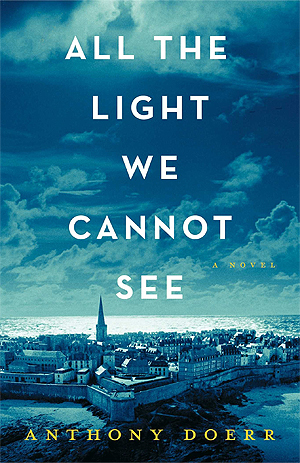
This morning I began reading All the Light We Cannot See by Anthony Doerr (one of the TBRs on my Kindle) and already I think I’m going to like it very much.

It begins:

Zero

7 August 1944

Leaflets

At dusk they pour from the sky. They blow across the ramparts, turn cartwheels over rooftops, flutter into the ravines between houses. Entire streets swirl with them, flashing white against the cobbles. Urgent message to the inhabitants of this town, they say. Depart immediately to open country.

A dramatic opening, immediately alerting me to the danger that is to come.

Also every Friday there is The Friday 56, hosted by Freda at Freda’s Voice.

Friday 56

These are the rules:

  1. Grab a book, any book.
  2. Turn to page 56, or 56% on your eReader.
  3. Find any sentence (or a few, just don’t spoil it) that grabs you.
  4. Post it.
  5. Add the URL to your post in the link on Freda’s most recent Friday 56 post.

Page 56:

All day Marie-Laure lies on her stomach and reads. Logic, reason, pure science: these Aronnax insists, are the proper ways to pursue a mystery. Not fables and fairy tales.

Synopsis:

A beautiful, stunningly ambitious novel about a blind French girl and a German boy whose paths collide in occupied France as both try to survive the devastation of World War II

Marie-Laure has been blind since the age of six. Her father builds a perfect miniature of their Paris neighbourhood so she can memorize it by touch and navigate her way home. But when the Nazis invade, father and daughter flee with a dangerous secret.

Werner is a German orphan, destined to labour in the same mine that claimed his father’s life, until he discovers a knack for engineering. His talent wins him a place at a brutal military academy, but his way out of obscurity is built on suffering.

At the same time, far away in a walled city by the sea, an old man discovers new worlds without ever setting foot outside his home. But all around him, impending danger closes in.

Doerr’s combination of soaring imagination and meticulous observation is electric. As Europe is engulfed by war and lives collide unpredictably, ‘˜All The Light We Cannot See’ is a captivating and devastating elegy for innocence.

My Friday Post: The Eagle of the Ninth

Book Beginnings Button

Every Friday Book Beginnings on Friday is hosted by Gillion at Rose City Reader where you can share the first sentence (or so) of the book you are reading, along with your initial thoughts about the sentence, impressions of the book, or anything else the opener inspires.

The Eagle of the Ninth

This year I’m hoping to read more from my own shelves than last year so I’ve been looking at some of the books that I’ve had for years. The Eagle of the Ninth by Rosemary Sutcliff is one of my TBRs – I bought it in a library book sale, not sure when that was, over 10 years ago, I should think. Today I got it down off the shelf and began reading:

From the Fosseway westward to Isca Dumnoniorum the road was simply a British trackway, broadened and roughly metalled, strengthened by corduroys of logs in the softest places, but otherwise unchanged from its old estate, as it wound among the hills, thrusting further and further into the wilderness.

Also every Friday there is The Friday 56, hosted by Freda at Freda’s Voice.

Friday 56

These are the rules:

  1. Grab a book, any book.
  2. Turn to page 56, or 56% on your eReader.
  3. Find any sentence (or a few, just don’t spoil it) that grabs you.
  4. Post it.
  5. Add the URL to your post in the link on Freda’s most recent Friday 56 post.

Page 56:

A great gust of wind swooped against the house like a wild thing striving to batter its way in; the lamplight jumped and fluttered, sending shadows racing across the chequered board – and the ghost of last year were once more a year away. Marcus looked up, and said, as much for the sake of shutting out his own thoughts as for anything else, ‘I wonder what possessed you to settle here in Britain, Uncle Acquila, when you could have gone home?’

Blurb from the back cover:

The Ninth Legion marched into the mists of northern Britain. And they were never seen again. Four thousand men disappeared and the eagle standard was lost.

Marcus has to find out what happened to his father, who led the Ninth Legion. So he sets out into the unknown, on a quest so hazardous that no one expects him to return …

This is the first of Sutcliff’s series of novels about Roman Britain. The film, The Eagle (2011) is adapted from her book. I read some of her books when I was a child and loved them. I’m hoping this one will be as good.