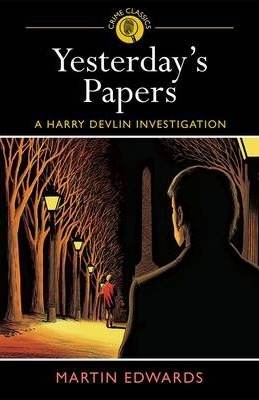
Yesterday’s Papers by Martin Edwards

Yesterday’s Papers is the 4th book in Martin Edwards’ Harry Devlin book in his Liverpool series, first published in 1991 and it’s the first one I’ve read. There are eight books in the series. My copy is a paperback edition, published in 2013 and it is one of my TBRs.

About the book

On Leap Year Day in 1964, an attractive teenager called Carole Jeffries was strangled in a Liverpool park. The killing caused a sensation: Carole came from a prominent political family and her pop musician boyfriend was a leading exponent of the Mersey Sound. When a neighbour confessed to the crime, the case was closed. Now, more than thirty years later, Ernest Miller, an amateur criminologist, seeks to persuade lawyer Harry Devlin that the true culprit escaped scot free. Although he suspects Miller’s motives, Harry has a thirst for justice and begins to delve into the past. But when another death occurs, it becomes clear that someone wants old secrets to remain buried – at any price…

My thoughts

I’ve enjoyed Martin Edwards’ Lake District mysteries, so I was expecting to enjoy his Liverpool novels, featuring solicitor Harry Devlin, and I’m glad to say that I did enjoy this one. The titles of the books are all taken from songs – Yesterday’s Papers is a song by the Rolling Stones from their 1967 album, Breaking the Buttons. In this book Harry is investigating a crime dating back thirty years to the 1960s, the period of Beatlemania, with the focus on the sixties music scene. It has a great sense of place – Martin Edwards obviously knows Liverpool very well.

Although I wanted to know more about Harry Devlin, this does work well as a standalone as there is enough information to get some idea about his character and personal life – his wife, Liz, died – murdered – ten years earlier; he has no family and lives alone. (I must read the first book, All the Lonely People to find out what happened to Liz. ) He is in partnership with Jim Crusoe. Thirty years ago when Edwin Smith was charged with murdering Carole Jeffries Tweats had been his solicitor, so when Crusoe and Devlin had taken over Tweats’ practice the case files, including that of her murder, were handed over to them. Harry is intrigued when Ernest Miller is convinced that Smith was innocent and when Smith is found dead, possibly murdered too, he decides to look into the case.

I like Harry. He is thorough and is not easily deterred, even though it’s difficult to get to the truth after the passage of thirty years, especially when Carole’s father had died and her mother is extremely reluctant to talk to Harry. Needless to say, this proves to be a complicated case and I had little idea what the outcome would be. I had my suspicions, but was wrong and only worked it out just before the end of the book. I thoroughly enjoyed Yesterday’s Papers and am keen to read more about Harry Devlin!

The Liverpool series:

  • All the Lonely People (1991)
  • Suspicious Minds (1992)
  • I Remember You (1993)
  • Yesterday’s Papers (1994)
  • Eve of Destruction (1996)
  • The Devil in Disguise (1998)
  • First Cut is the Deepest (1999)
  • Waterloo Sunset (2008)
Top Ten Tuesday is Ten Years Old!

Top Ten Tuesday is a weekly meme created by The Broke and the Bookish and now hosted by Jana at That Artsy Reader Girl. For the rules see her blog. For this week’s topic there are a number of options and as I only posted my first TTT in December 2018, I decided to pick a past TTT topic from March 2018.

It’s Books that Take Place in Another Country, because although travel is restricted right now, I can virtually go anywhere in place and time through books.

These are all books I own but haven’t read – yet.

Greece in Cartes Postales from Greece by Victoria Hislop – ‘a tantalising glimpse of a country far removed from the usual tourist resorts and beaches.’

Australia in The Lieutenant by Kate Grenville – based on real events, this tells the unforgettable story of Lt Rooke’s connection to an Aboriginal child – a remarkable friendship that resonates across the oceans and the centuries.

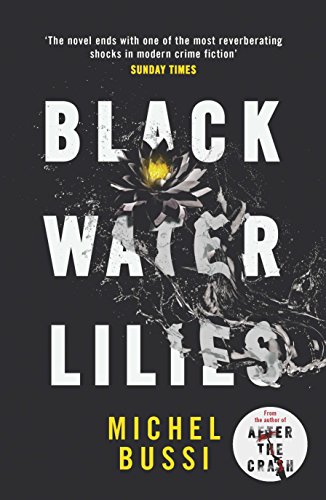
France in Black Water Lilies by Michel Bussi – crime fiction – where a man has been found dead in the stream running through Monet’s garden of Giverney. Bussi explains the descriptions of Giverney, Monet’s house, the water lily pond – all the locations are as exact as possible and the information about Monet’s life and works are authentic.

Iceland in Snowblind by Ragnar Jonasson in an isolated fishing town, Siglufjordur, in Northern Iceland, only accessible via a small mountain tunnel. Crime fiction where a killer is on the loose as an avalanche closes the mountain pass.

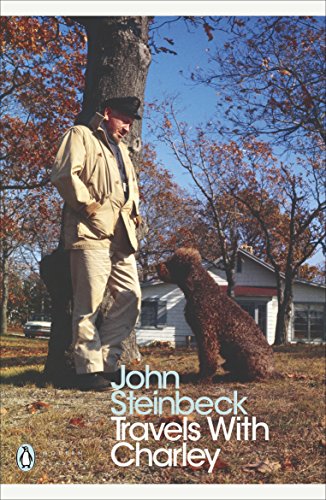
America in Travels with Charley: In Search of America by John Steinbeck – In 1960, John Steinbeck set out in his pick-up truck with his dog Charley to rediscover and chronicle his native USA, from Maine to California.

Italy in Italian Neighbours an Englishman in Verona by Tim Parks – this book is the story of Tim Parks’ love affair with life in Verona. Gradually he comes to accept what the locals take for granted. Infused with an objective passion, he unpicks the idiosyncrasies and nuances of Italian culture with wit and affection.

Germany in Death in Berlin by M M Kaye – this is set against a background of war-scarred Berlin in the early 1950s, when Miranda is on a holiday in Germany. When murder strikes on the night train to Berlin, she gets involved in a complex chain of events that will soon throw her own life into peril.

South Africa in Disgrace by J M Coetzee – set in post-apartheid South Africa, this book won the Booker Prize in 1999. Professor, David Lurie and his daughter, Lucy, moved to an isolated smallholding in the bush, after he had an affair with a student. The balance of power in the country is shifting and they are savagely attacked. A multilayered story about what it means to be human.

Europe in Between the Woods and the Water by Patrick Leigh Fermor – continuing his journey on foot across Europe in 1933, begun in A Time of Gifts (a book I have read). This book begins on the bridge over the Danube in Esztergom in Hungary as he continues his journey to Constantinople, following ancient ways that were later destroyed during the Second World War.

Europe in New Europe by Michael Palin, continuing on from Between the Woods and Water, I think it’s interesting to see how this area has changed since 1933. New Europe does just that, beginning in the mountains of Slovenia, he travels down through the area in Between the Woods, on his way to Estonia.

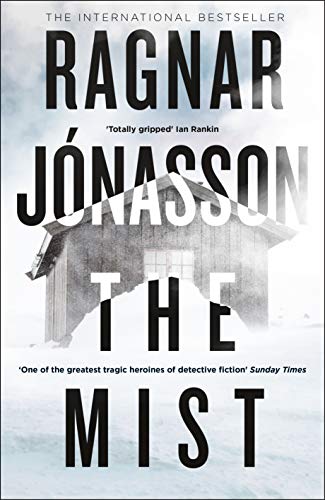
The Mist by Ragnar Jonasson

Nordic noir, as bleak, cold, snowy and empty as Iceland.

Penguin UK – Michael Joseph/ 30 April 2020/ 320 pages/ review copy/ 4*

About the book

1987. An isolated farm house in the east of Iceland.

The snowstorm should have shut everybody out. But it didn’t.

The couple should never have let him in. But they did.

An unexpected guest, a liar, a killer. Not all will survive the night. And Detective Hulda will be haunted forever.

My thoughts

The Mist is the third novel in Ragnar Jonasson’s Hidden Iceland series, translated from the Icelandic by Victoria Cribb. The trilogy began with The Darkness in which Detective Inspector Hulda Hermannsdottir was on the verge of retirement. The second book, The Island goes backwards in time with an investigation in 1997. The Mist featuring Hulda goes back yet again to 1987 as Hulda is worrying about her daughter, Dimma and her relationship with her husband, Jon. Alongside the story of what is happening in her personal life, she is also investigating the disappearance of a young woman and a suspected murder case, a particularly horrific one in an isolated farmhouse in the east.

I thought the first part of this book, about Erla and her husband, Einar, who live in the furthest reaches of eastern Iceland was completely gripping, especially with the arrival of a stranger lost in a snowstorm. Erla invites him in and the nightmare begins. This is one of those books where to know too much about the plot would really spoil it. All I’m going to say is that it starts slowly, and the tension and suspense gradually rise throughout, with an increasing sense of dread.

I loved the setting, Jonasson’s writing bringing the scenery and the weather to life – you can feel the isolation and experience what it is like to be lost in a howling snowstorm. The emotional tension is brilliantly done too, the sense of despair, confusion and dread is almost unbearable. My only criticism, a small one, is that when I reached a certain point in the novel, quite a bit before the end, it seemed obvious to me what the outcome would be. It didn’t spoil my enjoyment, but I would have preferred not to have known and is the reason I’ve given this 4 stars instead of 5.

My thanks to the publishers for my copy via Netgalley.

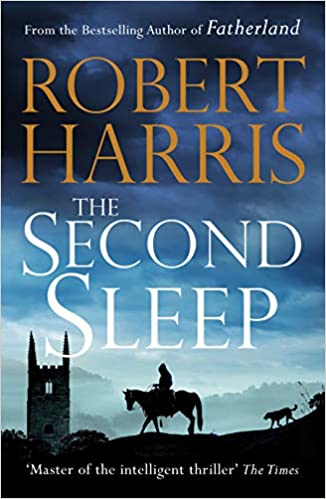
My Friday Post: The Second Sleep by Robert Harris

Every Friday Book Beginnings on Friday is hosted by Gillion at Rose City Reader where you can share the first sentence (or so) of the book you are reading, along with your initial thoughts about the sentence, impressions of the book, or anything else the opener inspires.

My choice this week is a book that I’ve just started to read – The Second Sleep by Robert Harris and it promises to be good.

It begins:

Chapter One – The Hidden Valley

Late on in the afternoon of Tuesday the ninth of April in the Year of Our Risen Lord 1468, a solitary traveller was to be observed picking his way on horseback across the wild moorland of that ancient region of south-western England known since Saxon times as Wessex. If this young man’s expression was troubled, we may grant he had good cause.

Also every Friday there is The Friday 56, hosted by Freda at Freda’s Voice.

30879-friday2b56

These are the rules:

  1. Grab a book, any book.
  2. Turn to page 56, or 56% on your eReader. If you have to improvise, that is okay.
  3. Find any sentence (or a few, just don’t spoil it) that grabs you.
  4. Post it.
  5. Add the URL to your post in the link on Freda’s most recent Friday 56 post.

Page 56:

One letter, however, had been sealed in its own plastic wallet, and this was found to be in near-perfect condition. Mr Shadwell had made a copy, and asked permission to read it aloud to the society. His proposal was approved unanimously

Imperial College, London, 22 March 2022

Blurb:

Dusk is gathering as a young priest, Christopher Fairfax, rides across a silent land.

It’s a crime to be out after dark, and Fairfax knows he must arrive at his destination – a remote village in the wilds of Exmoor – before night falls and curfew is imposed.

He’s lost and he’s becoming anxious as he slowly picks his way across a countryside strewn with the ancient artefacts of a civilisation that seems to have ended in cataclysm.

What Fairfax cannot know is that, in the days and weeks to come, everything he believes in will be tested to destruction, as he uncovers a secret that is as dangerous as it is terrifying …

~~~

If the quotation from the Sunday Times is right, this is exactly what I want to read right now:

thoroughly absorbing, page-turning narrative in which the author, with his customary storytelling skills, pulls us ever deeper into the imaginative world he has created. It [also] poses challenging questions about the meaning of the past, the idea of progress and the stability of civilisation. It is a fine addition to Harris’s diverse body of work. Sunday Times

Top Ten Tuesday: Books on My Summer 2020 TBR

Top Ten Tuesday is a weekly meme created by The Broke and the Bookish and now hosted by Jana at That Artsy Reader Girl. For the rules see her blog. This week’s topic is Books on My Summer 2020 TBR.

As I’m taking part in the 20 Books of Summer Challenge I’ve included some of the books I’ve identified for that challenge together with a few other books. Some of these books are ones that have been on my TBR list for ages and some are more recent additions from NetGalley.

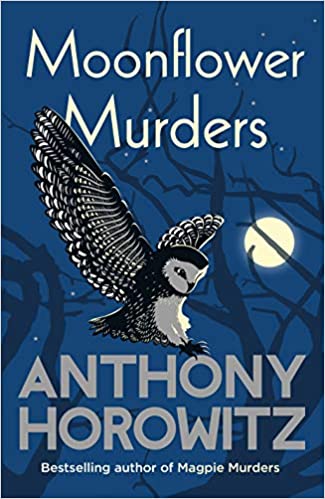
Moonflower Murders by Anthony Horowitz – The second book in the Magpie Murders series featuring literary detective Atticus Pund and Susan Ryeland, a retired publisher, as the amateur sleuth. I loved Magpie Murders, so I have high expectations of this book. It’ll be released on 20 August 2020.

Susan Ryeland is running a small hotel on a Greek island with her long-term boyfriend. But life isn’t as idyllic as it should be. So when an English couple come to visit with tales of a murder that took place in a hotel on the same day their daughter Cecily was married there, Susan can’t help but find herself fascinated.

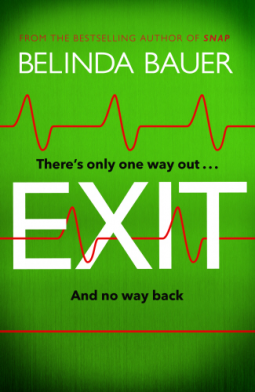
Exit by Belinda Bauer – due to be released 4 February 2021. When Felix lets himself in to Number 3 Black Lane, he’s there to perform an act of charity: to keep a dying man company as he takes his final breath . . . But just fifteen minutes later Felix is on the run from the police – after making the biggest mistake of his life.

The Butcher’s Hook by Janet Ellis – historical fiction, set in Georgian London the summer of 1763, when Anne wants to marry Fub, a butcher’s apprentice, but her parents have chosen a more suitable husband for her.

Missing Joseph: An Inspector Lynley Novel by Elizabeth George. This is the sixth in the series, telling the story of a woman’s quest to solve the mystery of the death of her friend, an Anglican priest. Deborah and her husband, Simon, turn to their old friend, Inspector Lynley.

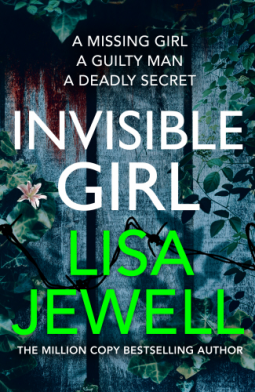
Invisible Girl by Lisa Jewell – more crime fiction, from a favourite author. A story of secrets and injustices, and of how we look in the wrong places for the bad people while the real predators walk among us in plain sight

The Silent Wife by Karin Slaughter – a new-to-me author who has written many books. This is a crime thriller. due to be released on 23 June. A woman runs alone in the woods. She convinces herself she has no reason to be afraid, but she’s wrong. A predator is stalking the women of Grant County. He lingers in the shadows, until the time is just right to snatch his victim.

How to Disappear by Gillian McAllister- a psychological-suspense thriller, to be released on 9 July. I’ve read three of her books and loved each one, so I really hope I’ll love this one too. It’s about Zara who witnessed a murder, but she becomes a target and has to disappear.

Hamnet by Maggie O’Farrell – On a summer’s day in 1596, a young girl in Stratford-upon-Avon takes to her bed with a fever. Her twin brother, Hamnet, searches everywhere for help. Why is nobody at home? This is historical fiction inspired by Hamnet, Shakespeare’s son and is a story of the bond between twins. Maggie O’Farrell is another favourite author and I am really looking forward to reading this book.

The Ghost of the Mary Celeste by Valerie Martin – more historical fiction about the mystery of the ship that was discovered in the middle of the Atlantic, headed for Gibraltar, with no one aboard. It weaves fact and fiction told from different viewpoints. This is a book I’ve had for years and it’s about time I read it.

The Second Sleep by Robert Harris – another book by one of my favourite authors. It begins in 1468 when a young priest, Christopher Fairfax, arrives in a remote Exmoor village to conduct the funeral of his predecessor. He’s lost and he’s becoming anxious as he slowly picks his way across a countryside strewn with the ancient artefacts of a civilisation that seems to have ended in cataclysm.

I was intrigued by the blurb, so this morning I began reading and the ‘ancient artefacts’ include plastic and a mobile phone. Not the 15th century then?

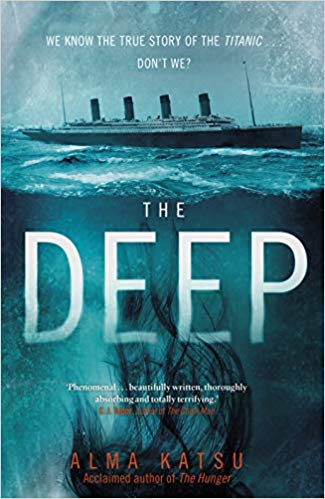
The Deep by Alma Katsu

Random House Bantam Press| 5 March 2020| 391 pages|e-book| Review copy| 3*

About the Book

Deaths and disappearances have plagued the vast liner from the moment she began her maiden voyage on 10 April 1912. Four days later, caught in what feels like an eerie, unsettling twilight zone, some passengers – including millionaire Madeleine Astor and maid Annie Hebbley – are convinced that something sinister is afoot. And then disaster strikes.

Four years later and the world is at war. Having survived that fateful night, Annie is now a nurse on board the Titanic’s sister ship, the Britannic, refitted as a hospital ship. And she is about to realise that those demons from her past and the terrors of that doomed voyage have not finished with her yet . . .

Bringing together Faustian pacts, the occult, tales of sirens and selkies, guilt and revenge, desire and destiny, The Deep offers a thrilling, tantalizing twist on one of the world’s most famous tragedies.

My thoughts

I loved The Hunger by Alma Katsu, so I was looking forward to reading The Deep. It began really well and it’s beautifully written. It’s a mix of fact and fiction. It moves between 1912 as the Titanic sets sail on its maiden voyage and 1916, as its sister ship the Britannic, converted to a hospital picks up soldiers injured in the battlefields to take them back to England. There is a large cast of characters, some are real people and others are fictional; the stories on the two ships are told from their different perspectives.

The story revolves around Annie Hebbley, a stewardess on the Titanic and a nurse on the Britannic. It begins in 1916 when she is in an asylum and receives a letter from a friend, Violet Jessop (a real person) who had been on the Titanic with her, asking her to join her as nurse on the Britannic. Annie, however, has a dark secret in her past, which is slowly revealed – most of the time I was reading I couldn’t decide how much was real and how much imaginary. She grew up in Ireland and her mind is full of the fairy stories and superstitions her grandmother had told her. And things start to go wrong as soon as she boards the Titanic.

It didn’t grip me as much as The Hunger, although it’s a very atmospheric novel and I loved the way Alma Katsu has combined fact and fiction. The scenes on the Titanic convey the splendour of the ship, the wealth of the passengers and the contrasting conditions between the different classes of passengers, and the crew. Similarly, the stark conditions on The Britannic and the suffering of its passengers are vividly portrayed. Some of the passengers are convinced that the ship is haunted and there is a genuine sense of menace, of something sinister and supernatural waiting to strike them all. However, I didn’t think the supernatural elements were as convincing later on in the novel and I found the ending confusing.

It’s not a quick read, beginning slowly and, although at first I thought this was going to be a really engrossing novel, my interest began to flag later on. I was actually relieved when I finished it. That maybe because I knew the fate of the Titanic and I didn’t empathise with Annie, the main character. As historical fiction I think it works quite well, but the main focus of the book is not the sinking of the Titanic or of the Britannic – it’s the story of the passengers and crew of both ships. The supernatural elements just confused me – especially the ending, which is so ambiguous – just who was Annie Hebbley? It’s surreal and I suppose you just have to make your own mind up. It’s been in my mind ever since I finished reading.

My thanks to the publishers and NetGalley for providing me with a review copy.

This is my first book for Cathy’s 20 Books of Summer, and my eighth book for the Historical Fiction Challenge.