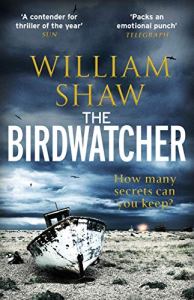
I read The Birdwatcher by William Shaw in the summer and didn’t get round to reviewing it. So, this is a short post summarising what I thought about it.
I enjoyed this book, set in Dungeness on the Kent coast. Sergeant William South is a birdwatcher a methodical and quiet man. Very much a loner, South is not a detective and has always avoided investigating murder. But he does have one friend, a fellow birdwatcher, Bob Rayner and one morning he finds Bob has been brutally beaten to death. DS Alexandra Cupidi, a new CID officer, is leading the investigation and Shaw is reluctantly assigned to her team. Having recently moved from London she relies on William for his knowledge of the area.
Alternating with the present day story is the story of Billy, a thirteen year old living in Northern Ireland during the ‘Troubles’. And hidden within that story is the reason for South’s reluctance to investigate murders. Life becomes uncomfortable for South as Cupidi takes over his house for the base for their investigation and also lands him with the responsibility of entertaining her troubled teenage daughter, Zoe after school – he introduces her to birdwatching.
Shaw is an excellent storyteller and I liked his writing style. This is very much a character-driven mystery as the suspense builds to a climax and his description of Dungeness, with its wind-swept shingle beach close to the Nuclear Power Station and Romney Marsh provides an atmospheric and vivid backdrop. I liked William, and was irritated by Alexandra. So I’m pleased to discover that this is a prequel to Shaw’s DS Alexandra Cupidi series. Currently there are five books, with the sixth to be published next year, so I have plenty more to read.
Every Friday Book Beginnings on Friday is hosted by Gillion at Rose City Readerwhere you can share the first sentence (or so) of the book you are reading. You can also share from a book you want to highlight just because it caught your fancy.
It was about the beginning of September, 1664, that l, among the rest of my neighbours, heard in ordinary discourse that the plague was returned again in Holland; for it had been very violent there, and particularly at Amsterdam and Rotterdam, in the year 1663, whither they say it was brought, some said from Italy, others from the Levant, among goods which were brought home by their Turkish fleet; others said it was brought from Canada; others from Cyprus.
Also every Friday there is The Friday 56, hosted by Freda at Freda’s Voice. *Grab a book, any book. *Turn to Page 56 or 56% on your ereader . If you have to improvise, that is okay. *Find a snippet, short and sweet, but no spoilers!
These are the rules:
Grab a book, any book.
Turn to page 56, or 56% on your eReader. If you have to improvise, that is okay.
Find any sentence (or a few, just don’t spoil it) that grabs you.
Post it.
Add the URL to your post in the link on Freda’s most recent Friday 56 post.
Grab a book, any book.
Turn to page 56, or 56% on your eReader. If you have to improvise, that is okay.
Find any sentence (or a few, just don’t spoil it) that grabs you.
Post it.
Add the URL to your post in the link on Freda’s most recent Friday 56 post.
On page 56 Defoe is describing the work of the undersexton – the grave digger and bearer of the dead – in the parish of St Stephen, Coleman, who went out along the many alleys and thoroughfares to fetch the bodies a very long way:
Here they went with a kind of hand-barrow and laid dead bodies on it, and carried them to the carts; which work he performed and never had the distemper [the plague] at all, but lived about twenty years after it, and was sexton of the parish to the time of his death. His wife at the same time was a nurse to infected people, and tended many who died in the parish, being for her honesty recommended by the parish officers; yet she was never infected either.
Defoe went on to describe how the sexton and his wife protected themselves against the infection. He held garlic and rue in his mouth and smoked tobacco. His wife’s remedy was to wash her head in vinegar and she sprinkled her head-clothes with vinegar – if the smell was particularly offensive she snuffed vinegar up her nose and held a handkerchief wetted with vinegar to her mouth.
Blurb:
In 1665 the plague swept through London, claiming over 97,000 lives. Daniel Defoe was just five at the time of the plague, but he later called on his own memories, as well as his writing experience, to create this vivid chronicle of the epidemic and its victims. ‘A Journal’ (1722) follows Defoe’s fictional narrator as he traces the devastating progress of the plague through the streets of London. Here we see a city transformed: some of its streets suspiciously empty, some – with crosses on their doors – overwhelmingly full of the sounds and smells of human suffering. And every living citizen he meets has a horrifying story that demands to be heard.
This week’s top is Long Book Titles. Here are some of the longest book titles I’ve reviewed on this blog. It appears that non-fiction books lend themselves more to long titles than fiction as six of them are non-fiction –
The Woman Who Walked into the Sea by Mark Douglas-Hume – I don’t think this quite lived up to The Sea Detective, the first Cal McGill book. Cal is an oceanographer using his skills in tracking human bodies and sea-borne objects.
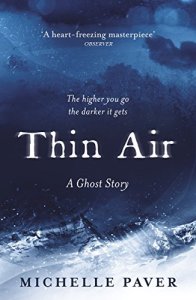
I read Thin Air: A Ghost Story by Michelle Paver in the summer, but it’s a good choice to read for Halloween. I didn’t find it as scary as Dark Matter, but even so it is very atmospheric and chilling – in more ways than one. The setting is Kangchenjunga in the Himalayas as a group of five men set out to climb the mountain in 1935.
Kanchenjunga, the third highest mountain in the world, had claimed many lives and no one had reached the summit. Held to be a sacred mountain, it is one of the most dangerous mountains in the world – believed to be the haunt of demons and evil spirits. An unsuccessful attempt had been made in 1907, led by Edmund Lyell, when only two men had returned. The group in 1935, led by Major Cotterell, attempted to follow the 1907 route up the south-west face.
Their story is narrated by medic, Dr. Stephen Pearce, accompanying his older brother, Kits. The brothers have always been rivals and this continues as they make their way up the mountain. Things start to go wrong almost straight away and Stephen is full of foreboding. He fears someone is following them and when he finds a rucksack left behind by the earlier climbers he fears he is loosing his mind. Under the most extreme weather conditions, the constant fear of an avalanche and the increasing effects of mountain sickness Stephen’s paranoia rises. More horrors keep piling on.
It’s not a long book, 240 pages, and almost half of it describes the mountain itself and the route the climbers took to get to the start of the climb and setting up their base camp. So it is only in the later part where the terror hinted at before sets in. The isolation, a sense of ‘otherness’, the extreme cold and the immense scale of the mountain with its towering pinnacles, deep crevasses, and above all the silence dominates. Were Stephen’s experiences the result of being at a high altitude, were they hallucinations – or was what he saw really there? I was never sure and that was part of the horror.
Thin Air is based on real events, although the 1907 and 1935 expeditions described in it are fictional. But the setting is real, the characterisation is excellent as is the feel of the 1930s, with its class snobbery, and racism and above all the creeping sense of dread that pervades the whole book.
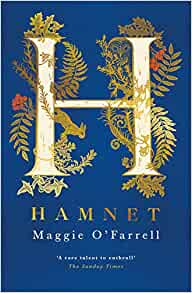
Set mainly in Stratford-on-Avon, it is historical fiction inspired by Hamnet, Shakespeare’s son and is a story of the bond between him and his twin sister, Judith. (At the time the names Hamlet and Hamnet were considered virtually interchangeable.) The central theme, though is the grief – the overwhelming and all consuming grief, that the whole family and in particular, Agnes, Hamnet’s mother suffered when he died at the age of eleven in 1596. Although the cause of his death was not recorded in the parish registers, in Hamnet Maggie O’Farrell imagines it was the plague.
The opening chapters confused me a bit at first as they cover the events in 1596 alternating with chapters about the time some fifteen years earlier when William Shakespeare, never named in this book, first met Anne Hathaway, also known as Agnes, pronounced Ann-yis. He was employed by her father as a tutor to his sons and much to her family’s disapproval they fell in love. Their first child, Susannah, was born six months after their marriage, followed by the twins in 1585. Four years, or so later, Shakespeare wrote the play, Hamlet giving its tragic hero a variation of his dead son’s name.
But Hamnet and Shakespeare are not the main focus, rather it is Agnes who takes centre stage. Little is actually known about her and she comes across to me in this book as a rather wayward, wild young woman when Shakespeare first met her, flouting convention and set on getting her own way, manipulating the people around her. Even Shakespeare’s decision to leave Stratford for London is presented as Agnes’s decision as she subtly persuaded him to leave. She was a skilled herbal healer and had the ‘second sight’ able to see a person’s future. Her grief over Hamnet’s death is intense, so overwhelming that I could hardly bear to read about it. It is a tragedy almost beyond telling – raw unrelenting, and powerful, especially the scene where she washes Hamnet’s dead body. I was relieved to finish it.
However, it is written in the third person present tense which distracted and distanced me from the story, although it is richly descriptive. There are some vivid scenes in the early part of the book, such as the scenes in the apple shed and later in the wood where Agnes gave birth to her first child. And an episode about a flea is slotted into the text, giving an explanation of the spread of the plague from Venice across Europe to Stratford. As this written before the outbreak of the current pandemic, it struck me as particularly prescient.
I also enjoyed the final section of the book in which Agnes travelled to London to see a performance of her husband’s new play, Hamlet. But in the middle section I found myself thinking the description passages were overwritten and this lessened their impact on me diluting somewhat the portrait of grief. Overall though, I found the whole book fascinating and I’m glad I read it.
It’s time again for Six Degrees of Separation, a monthly link-up hosted by Kate atBooks Are My Favourite and Best. Each month a book is chosen as a starting point and linked to six other books to form a chain. A book doesn’t need to be connected to all the other books on the list, only to the one next to it in the chain.
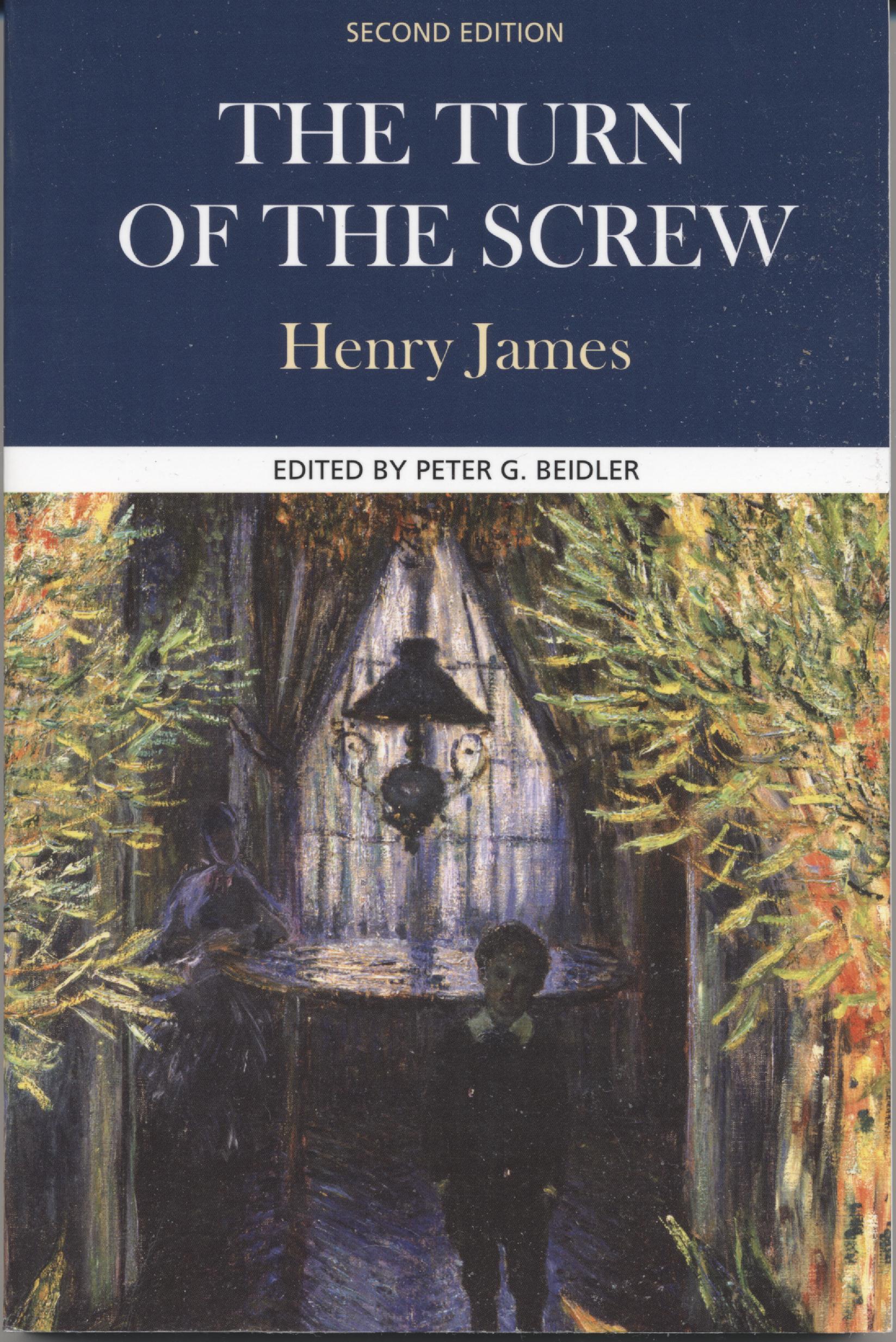
The chain this month begins with a book I’ve read, The Turn of the Screw by Henry James. But is it a ghost story or a psychological study? Either way there are creepy, disturbing things going on. It’s a story within a story, told as a ghost story to a group of people as they sit gathered round a fire in an old house. It tells of two children and their governess. She has been employed by their uncle who wants nothing to do with them. Their previous governess had died under mysterious circumstances (was it in childbirth?).
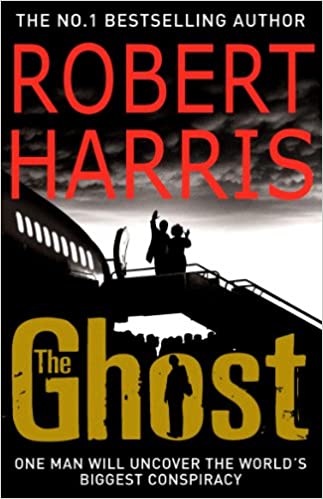
There’s a very different kind of ghost in Robert Harris’s book, The Ghost – a ghostwriter, employed to finish writing the memoirs of recently retired prime minister of Great Britain, Adam Peter Benet Lang. The ghostwriter soon discovers that Lang has secrets in his past that are returning to haunt him – secrets with the power to kill.
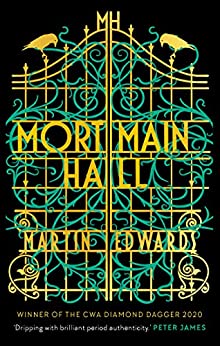
There’s also a different kind of ghost in Mortmain Hall by Martin Edwards, which begins, ‘The ghost climbed out of a hackney carriage‘. Rachel followed the ghost as he entered a funeral train run by the London Necropolis Company for privileged first-class passengers. Set in 1930 this is a complex murder mystery with several plot lines.
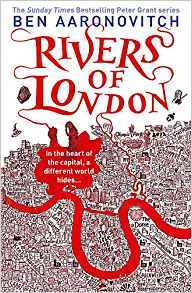
There’s a ‘real’ ghost in Rivers of London by Ben Aaronovitch – Nicholas Wallpenny, who has been dead for at least a hundred and twenty years – he is a ghost. This is an urban fantasy set in the real world of London, a mix of reality and the supernatural.
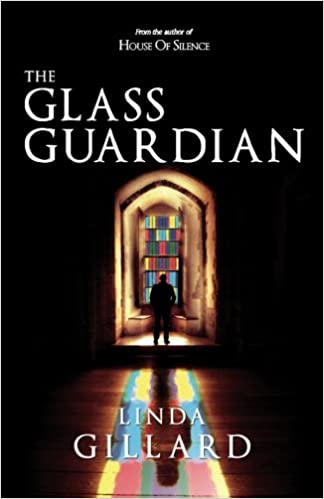
There’s ghost in a stained glass window in The Glass Guardian by Linda Gillard. Ruth has inherited a dilapidated Victorian house on the Isle of Skye: Tigh na Linne, the summer home she shared as a child with her beloved Aunt Janet. As she attempts to sort through her aunt’s belongings it becomes clear that there is more about her aunt and her family history than she ever knew before. And then she realises there is someone else in the house and there is a stained glass window behind a large wardrobe, which she never knew existed. From there on Ruth is unsure whether she is in her ‘Sane Mind’ or her ‘Insane Mind’, as she hears the wardrobe being dragged from its position in the dead of night.
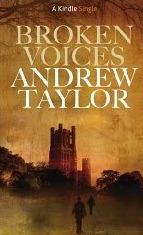
Next, a ghost in a cathedral in Broken Voices by Andrew Taylor, set in an East Anglian cathedral city just before the First World War when two schoolboys are left at the cathedral school during the Christmas holidays. They lodge with Mr Ratcliffe, a semi-retired schoolmaster, a bachelor now in his seventies. The two boys are entertained by the ghost stories that Mr Ratcliffe tells them. There was an ancient tragedy connected with the cathedral bells, the tower and a Canon who had been commissioned to write an anthem to mark the occasion when the bells were recast. The cathedral is full of shifting shadows, and the bell tower is haunted by fragments of melody, which one of the boys can hear.
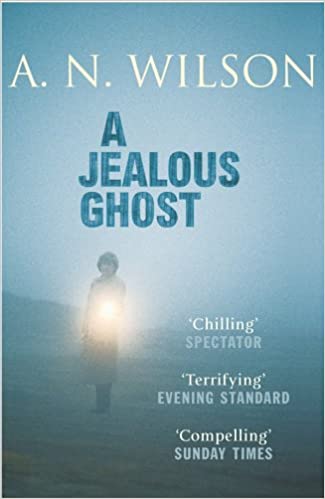
A N Wilson’s book, The Jealous Ghost, brings us back full circle in the chain, because it’s a re-writing of The Turn of the Screw. Sallie Declan is a young American in London, obsessed with Henry James’s The Turn of the Screw, the subject of her PhD. thesis. She leaves her studies for a temporary job as a nanny in a large country house and builds a fantasy about her emotional future there. Surely she can see it is all delusion? But a progressively darker reality unfolds leading inevitably to a terrible and shocking climax. I enjoyed this book, but prefer the original.
~~~
My six degrees are full of ghosts of different types, some literal, some literary, some in a supernatural sense and some psychological. From spooky and creepy to loving and urban fantasy fun. All of them haunting tales in one sense or another.





 BooksPlease