Martin Chuzzlewit by Charles Dickens: a Brief Overview

The Life and Adventures of Martin Chuzzlewit is my last book to review on my first Classics Club list. I read this in December 2017 and didn’t write a post, mainly because it was during the Christmas/New Year period, a busy time. All I recorded was this: ‘It is long, starts very slowly and then gets more interesting, with great characters and some comic and satirical episodes. It’s a study of selfishness and hypocrisy.’

From the back cover of my paperback copy:

Moving from the sunniest farcicality to the grimmest reaches of criminal psychology, Martin Chuzzlewit is a brilliant study in selfishness and hypocrisy.

The story of an inheritance, it relates the contrasting destinies of the two descendants of the brothers Chuzzlewit, both born and bred to the same heritage of selfishness, showing how one, Martin, by good fortune escapes and how the other, Jonas, does not – only to reap a fatal harvest. Peopled with Dickens immortals as Mrs Gamp, Poll Sweedlepipe, Montague Tiggs, Chevy Slime, it is one of Dickens’ great comic masterpieces.

It was Dickens’ sixth novel, serially published in 1843-44, and was something of a flop, with a dramatic decline in sales, compared to his early books. I can understand that because it’s not one of my favourites of his books. It is too long – over 900 pages in my Penguin Classics edition. I stuck with it as I had previously enjoyed watching the 1994 TV Mini Series with an excellent cast including Paul Schofield, Keith Allen, Julia Sawalha, Ben Walden, and Lynda Bellingham amongst others.

In this case I think the TV adaptation scores over the novel, which dragged in parts for me. It is a satire, a black comedy, a romance of the sickly sentimentality sort, a story of blackmail and murder, that involves hypocrisy, greed and selfishness.

I thought the section set in America where young Martin went to seek his fortune was overdone and it became tedious. It seems that Dickens had not enjoyed his own visit to America in 1842 as in this section he mocks what he disliked about America – the corrupt newspapers, slavery, the violence, obsession with business and money and so on and so forth. I was glad when young Martin returned to England.

But I enjoyed the comic characters – the drunken nurse of sorts, Mrs Gamp and her invisible friend, Mrs Harris, and Sam Pecksmith, the scheming architect. The Pecksmith family’s visit to London is hilarious. These characters saved the book for me. Mrs Gamp is one of the most bizarre characters with her mispronunciations and monologues recounting her conversations with her imaginary friend Mrs Harris. Her speciality lies in the polar extremities of life, birth and death:the lying in and the laying out.

  • Publisher ‏ : ‎ Penguin Classics; Reissue edition (30 Jan. 1986)
  • Language ‏ : ‎ English
  • Paperback ‏ : ‎ 944 pages
  • Source: my own copy
  • My Rating: 3*

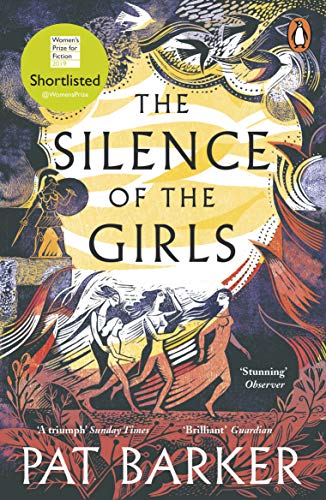
Book Beginnings & The Friday 56: The Silence of the Girls by Pat Barker

Every Friday Book Beginnings on Friday is hosted by Gillion at Rose City Reader where you can share the first sentence (or so) of the book you are reading. You can also share from a book you want to highlight just because it caught your fancy.

The Silence of the Girls is one of the latest books I bought. It is the first book in Pat Barker’s Troy series, historical fiction retelling the story of the Trojan war from the point of view of the women.

The Book begins:

Great Achilles. Brilliant Achilles, shining Achilles, godlike Achilles … How the epithets pile up. We never called him any of those things; we called him ‘the butcher’.

Also every Friday there is The Friday 56, hosted by Freda at Freda’s Voice, where you grab a book and turn to page 56 (or 56% of an eBook), find one or more interesting sentences (no spoilers), and post them.

Page 56:

Somebody once said to me: You never mention his looks. And it’s true, I don’t, I find it difficult. At that time, he was probably the most beautiful man alive, as he was certainly the most violent, but that’s the problem. How do you separate a tiger’s beauty from its ferocity? Or a cheetah’s elegance from its speed of attack? Achilles was like that – the beauty and the terror were two sides of a single coin.

Synopsis from Fantastic Fiction:

Here is the story of the Iliad as we’ve never heard it before: in the words of Briseis, Trojan queen and captive of Achilles. Given only a few words in Homer’s epic and largely erased by history, she is nonetheless a pivotal figure in the Trojan War. In these pages she comes fully to life: wry, watchful, forging connections among her fellow female prisoners even as she is caught between Greece’s two most powerful warriors. Her story pulls back the veil on the thousands of women who lived behind the scenes of the Greek army camp—concubines, nurses, prostitutes, the women who lay out the dead—as gods and mortals spar, and as a legendary war hurtles toward its inevitable conclusion. Brilliantly written, filled with moments of terror and beauty, The Silence of the Girls gives voice to an extraordinary woman—and makes an ancient story new again.

The Silence of the Girls was nominated for


Baileys Women’s Prize for Fiction Best Book
Women’s Prize For Fiction Best Novel
Costa Book Awards Best Novel

It was also:

A Washington Post Notable Book
One of the Best Books of the Year: NPR, The Economist, Financial Times
 
Shortlisted for the Costa Novel Award
Finalist for the Women’s Prize for Fiction

So, I’m really hoping I’ll enjoy it. What do you think? If you’ve read it do you think it lives up to its reputation?

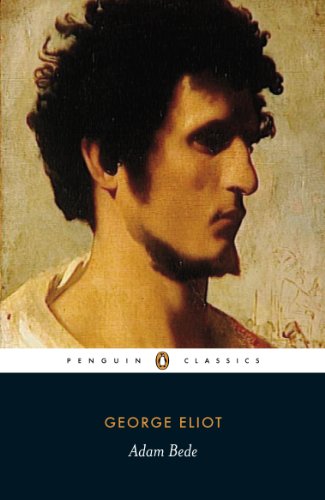
Adam Bede by George Eliot

I’ve finished reading the 50 books on my first Classics Club List, but there are two books I didn’t review immediately after I finished reading them, which means now I can only write short reviews as the details are no longer fresh in my mind. And that is difficult as they are both long novels.

The first is Adam Bede by George Eliot (Mary Ann Evans). It was her first novel, published in 1859.

Rating: 3 out of 5.

Synopsis

Carpenter Adam Bede is in love with the beautiful Hetty Sorrel, but unknown to him, he has a rival, in the local squire’s son Arthur Donnithorne. Hetty is soon attracted by Arthur’s seductive charm and they begin to meet in secret. The relationship is to have tragic consequences that reach far beyond the couple themselves, touching not just Adam Bede, but many others, not least, pious Methodist Preacher Dinah Morris. A tale of seduction, betrayal, love and deception, the plot of Adam Bede has the quality of an English folk song. Within the setting of Hayslope, a small, rural community, Eliot brilliantly creates a sense of earthy reality, making the landscape itself as vital a presence in the novel as that of her characters themselves. (Amazon)

This is a long and slow-moving novel set in the rural community of Hayslope, a fictional village, based on Ellastone in the West Midlands in 1799. Overall I liked the book, but not as much as I remember liking Middlemarch, which I read long before I began this blog, and Silas Marner (my review). As in those two books it took me a while to get used to George Eliot’s style of writing, with her long, long sentences – some so long I had forgotten how they had started, before I got to the end. But I liked the dialect used by the characters, according to their class, that helps identify their position within the village community.

They’re cur’ous talkers i’ this country, sir; the gentry’s hard work to hunderstand ’em. I was brought hup among the gentry, sir, ‘an’ got the turn o’ their tongue when I was a bye. Why, what do you think the folks here says for ‘hevn’t you?’ – the gentry, you know, says, ‘hevn’t you’ – well, the people about here says ‘hanna yey.’ It’s what they call the dileck as is spoke hereabout, sir. That’s what I’ve heared Squire Donnithorne say many a time; it’s the dileck, says he.’

It is about love, seduction, remorse, crime and religion. a study of early 19th century rural life and education. It emphasises the value of hard work; the power of love; and the consequences of bad behaviour. As the title indicates the main character is Adam Bede, a hard working young man, a carpenter, with a strong sense of right and wrong, strong and intelligent:

In his tall stalwartness Adam Bede was a Saxon, and justified his name; but the jet black hair, made the more noticeable by its contrast with the light paper cap, and the keen glance of the dark eyes that shone from under strongly marked, prominent and mobile eyebrows, indicated a mixture of Celtic blood. The face was large and roughly hewn, and when in repose had no other beauty than such as belongs to an expression of good-humoured honest intelligence.

The novel revolves around a love ‘rectangle’ – the beautiful but self-absorbed Hetty Sorrel; Captain Arthur Donnithorne, the young squire who seduces her; Adam Bede, her unacknowledged suitor; and Dinah Morris, Hetty’s cousin, a fervent, virtuous and beautiful Methodist lay preacher.

This short post doesn’t do justice to the novel. I gave it 3 stars on Goodreads when I read it in 2015, but I have started to re-read it and I am enjoying it. I think that this time round maybe l’ll change my rating to 4 stars …

~~~

The other book I have left to review is Martin Chuzzlewit by Charles Dickens – my post will follow next week.

Cécile is Dead by Georges Simenon

Cécile is Dead by Georges Simenon, translated by Anthea Bell, an Inspector Maigret novel.

Synopsis (Amazon)

Poor Cécile! And yet she was still young. Maigret had seen her papers: barely twenty-eight years old. But it would be difficult to look more like an old maid, to move less gracefully, in spite of the care she took to be friendly and pleasant. Those black dresses that she must make for herself from bad paper patterns, that ridiculous green hat!

In the dreary suburbs of Paris, the merciless greed of a seemingly respectable woman is unearthed by her long suffering niece, and Maigret discovers the far-reaching consequences of their actions.

This novel has been published in a previous translation as Maigret and the Spinster.


My thoughts:

This is one of the best Maigret books I’ve read – and it is complicated, remarkably so in a novella of just 151 pages. At first it seems quite straight forward. Cécile has been wanting to see Detective Chief Inspector Maigret for months, sitting patiently in the ‘Aquarium’, as the waiting room at the Police Judiciaire in Paris, is known. She was convinced that someone had been breaking into her aunt’s apartment. But no one takes her seriously and Maigret is always busy, until one day he decides to see her. But she had left the waiting room, so he goes to the apartment where she lives with her elderly aunt, Juliette Boynet, the owner of the apartment building. She wasn’t there, but her aunt was – lying dead on the floor, strangled. Cécile was missing and the title tells you why – she was indeed dead.

And from then on, the mystery became more complex, with several suspects with a variety of motives. Juliette was very wealthy, but also miserly. She had a large family, mostly estranged from her and at odds with each other. They all turn up for her funeral, arguing about who should take precedence in the funeral cortège, and about who should inherit her money and property.

Maigret has to sort it out in his own way – musing over the details and feeling bad that he hadn’t spoken to Cécile earlier, thinking her worry over an intruder who just moved things around the apartment without taking anything was trivial. We see more of how he thinks and works when later in the investigation he is accompanied by an American, a Mr Spencer Oates from the Institute of Criminology of Philadelphia, who had asked if he could study Maigret’s methods.

This is the second time I’ve read Cécile is Dead. I first read it in 2018, but didn’t write about it at that time. Reading it for the second time, I realised I had forgotten all the details – it was like reading a new book. I thoroughly enjoyed it. It is either the 20th or the 22nd Maigret novel – Amazon records it as the 20th, whereas Goodreads has it as the 22nd! Whichever it is, it is a good read.

  • ASIN ‏ : ‎ B00SSKM6OC
  • Publisher ‏ : ‎ Penguin (4 Jun. 2015)
  • Print length ‏ : ‎ 151 pages
  • Source: I bought the e-book
  • My Rating: 4*

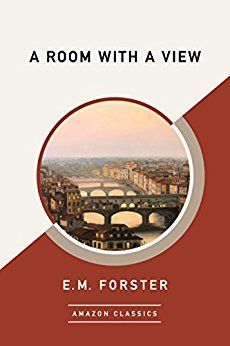
A Room with a View by E M Forster

A Room with a View by E M Forster is an early twentieth century comedy of manners, satirising the manners and social conventions of Vistorian/Edwardian society. It is Forster’s third novel, first published in 1908, a short novel of 161 pages and is light reading with some humorous dialogue.

Rating: 4 out of 5.

Lucy has her rigid, middle-class life mapped out for her, until she visits Florence with her uptight cousin Charlotte, and finds her neatly ordered existence thrown off balance. Her eyes are opened by the unconventional characters she meets at the Pension Bertolini: flamboyant romantic novelist Eleanor Lavish, the Cockney Signora, curious Mr Emerson and, most of all, his passionate son George.

Lucy finds herself torn between the intensity of life in Italy and the repressed morals of Edwardian England, personified in her terminally dull fiancé Cecil Vyse. Will she ever learn to follow her own heart? (Goodreads)

My thoughts:

I enjoyed Forster’s A Passage to India years ago and was looking forward to reading A Room with a View. Overall I enjoyed it, although I was rather underwhelmed by it and even in parts bored, especially near the end of the book, where there are some philosophical paragraphs that left me thinking I didn’t really understand them. It is about a young woman, Lucy Honeychurch, and her journey to self-discovery as she breaks out of the restrained culture of Edwardian England. It’s also a romance. The writing is ambiguous at times, so that you have to read between the lines in places.

It begins in Florence where Lucy is staying at the Pensione Bertolini, with her older cousin and chaperone Charlotte Bartlett. At dinner, they were complaining that their rooms didn’t have views over the River Arno as they had been promised.They were rather taken aback by two other guests, a Mr Emerson and his son George who offered to swap rooms with them. The Emersons are not bound by the conventions of the day and Charlotte considers they are ill-bred. But Lucy is attracted by the Emersons’ free thinking ideas. They spend time in Florence visiting various locations including the Santa Croce church, the Piazza Della Signoria and the San Miniato church, with its beautiful facade, and take a trip into the hills. Lucy finds herself in a little open terrace, covered in violets:

From her feet the ground sloped sharply into view, and violets ran down in rivulets and streams and cataracts, irrigating the hillside with blue, eddying round the tree stems collecting into pools in the hollows, covering the grass with spots of azure foam.

And it is there on that terrace that she comes across George and she is shocked and delighted, I think, when he kisses her. Charlotte witnesses the scene and urges/persuades Lucy to move to Rome where she meets Cecil Vyse, a most boring and priggish young man, whom she knew in England. The second half of the book takes place in England at Lucy’s home at Windy Corner where we meet the rest of her family and Lucy has to decide between the insufferable Cecil and the unconventional George. Will she give into convention or will she choose George, despite opposition from her family?

E M Forster from Goodreads:

Edward Morgan Forster, generally published as E.M. Forster, was an novelist, essayist, and short story writer. He is known best for his ironic and well-plotted novels examining class difference and hypocrisy in early 20th-century British society. His humanistic impulse toward understanding and sympathy may be aptly summed up in the epigraph to his 1910 novel Howards End: “Only connect”.

He had five novels published in his lifetime, achieving his greatest success with A Passage to India (1924) which takes as its subject the relationship between East and West, seen through the lens of India in the later days of the British Raj.

Forster’s views as a secular humanist are at the heart of his work, which often depicts the pursuit of personal connections in spite of the restrictions of contemporary society. He is noted for his use of symbolism as a technique in his novels, and he has been criticised for his attachment to mysticism. His other works include Where Angels Fear to Tread (1905), The Longest Journey (1907), A Room with a View (1908) and Maurice (1971), his posthumously published novel which tells of the coming of age of an explicitly gay male character.

A Room with a View was my Classics Club Spin book to read between 20th March and the 30th April. It is on my Classics Club list and it counts toward the Back to the Classics Challenge (as a 20th century classic).

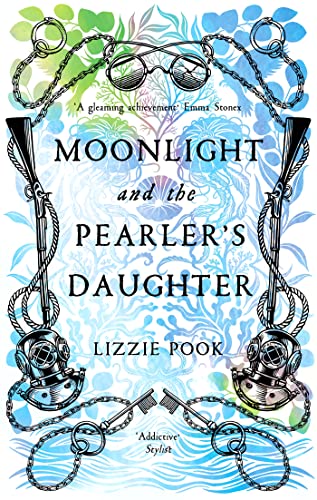
Moonlight and the Pearler’s Daughter by Lizzie Pook

Mantle| 3 March 2022| 304 pages| e-book| Review copy| 3*

1886, BANNIN BAY, AUSTRALIA.

The Brightwell family has sailed from England to make their new home in Western Australia. Ten-year-old Eliza knows little of what awaits them on these shores beyond shining pearls and shells like soup plates – the things her father has promised will make their fortune.

~~~

Ten years later and Charles Brightwell, now the bay’s most prolific pearler, goes missing from his ship while out at sea. Whispers from the townsfolk suggest mutiny and murder, but headstrong Eliza, convinced there is more to the story, refuses to believe her father is dead, and it falls to her to ask the questions no one else dares consider.

But in a town teeming with corruption, prejudice and blackmail, Eliza soon learns that the truth can cost more than pearls, and she must decide just how much she is willing to pay – and how far she is willing to go – to find it . . .

My thoughts:

I knew about diving for pearls, but I knew nothing about pearlers – the pearl divers/the people who trade in pearls – so I thought Moonlight and the Pearler’s Daughter would be a good way to find out more about it. And it is – I learned a lot. It has a great sense of both time and place. Although Bannin Bay is a fictional town in Western Australia its geography is modelled on parts of the north-west Kimberley coast. Lizzie Pook’s research, which she details in her Historical and Cultural Note at the end of the book, is fascinating. Her descriptive writing is very good and I felt that I was transported back to 19th century Australia experiencing the sights and smells of the coastal town and witnessing the appalling abuse and violence dealt out to the aboriginals who were forced to become pearl divers.

And I was also convinced by the main characters, Eliza in particular who comes across as a determined young woman, not cowed into conforming with the behaviour expected of women in the local community. She does everything she can to find out what happened to Charles, her father when he doesn’t return with his ship, the White Starling. It seems he just disappeared and no one can tell her what happened to him. She finds his diary and realises that there must be a reason why he didn’t take it with him as he always did. It contains detailed information about shell-beds, stars, storms, sharks and life at sea, but she also finds a sheet of paper between its pages with a cryptic clue she is convinced will help her find him. The police assume he went overboard and arrest one of the aboriginal divers for his murder. But Eliza is convinced that he is not dead and helped by Axel Kramer, a German and a newcomer to Bannin Bay, she sets sail on his lugger, Moonlight to search for him.

The book starts slowly, building up a picture of the town, its inhabitants, and landscape, and builds to a crescendo as Eliza’s search takes a dramatic turn when the Moonlight is caught up in a terrible storm putting their lives in danger. I enjoyed the book, just as much for its historical detail and vivid descriptions of the landscape and wildlife, as for the mystery of Charles’ disappearance.