Mini Reviews

This year has been a good time for reading books, but not a good time as far as writing reviews goes and I am way behind. This is the second set of mini reviews in an attempt to catch up with the backlog.

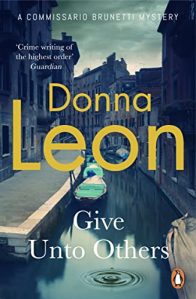
Give Unto Others by Donna Leon 3*

I read this because I’ve read just a few of the Commissario Guido Brunetti crime fiction novels and enjoyed them. This one is described on Goodreads as follows:

The gifted Venetian detective returns in his 31st case – this time, investigating the Janus-faced nature of yet another Italian institution. Brunetti will have to once again face the blurred line that runs between the criminal and the non-criminal, bending police rules, and his own character, to help an acquaintance in danger.

This is an unusual mystery, slow to begin with then gradually gathering pace, as Brunetti unofficially agrees to do Elisabetta Foscarini, an ex-neighbour a favour. She is worried about her daughter’s husband, Enrico Fenzo an accountant, who she fears is in danger. Brunetti enlists the help of his colleagues Griffoni, Vianello, and Signorina Elettra with his investigations. What they uncover is a tangled web surrounding a South American charity that Fenzo had helped Elisabetta’s husband set up, the Belize nel Cuore, providing a hospital and medical services to the poor.

It was entertaining and I enjoyed the descriptions of Venice, just opening up to tourists again after the pandemic. I thought it would have been better as an official police investigation. But it does give an insight into the way charities are set up and can be misused. And there’s a particularly disturbing picture of what dementia can do to a person.

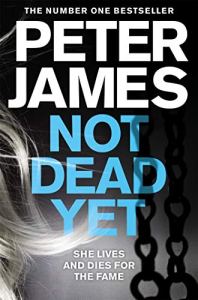
Not Dead Yet by Peter James 4*

I really enjoyed this book, the 8th Roy Grace book. If you’ve been watching the TV adaptation this story was the last one they produced, as usual with adaptations, with several differences from the book. As I’ve said before I prefer the books and this one was very good. This is the summary from Amazon:

The return of a Brighton girl turned movie star spells nothing but trouble for Detective Superintendent Roy Grace in the gripping crime novel Not Dead Yet, by award winning author Peter James.

Gaia Lafayette has a movie to shoot back home and Grace is in charge of her security. Yet when a vicious gangster is released from prison and an unidentifiable headless torso is found, a nightmare unfolds before Grace’s eyes.

An obsessed stalker is after Gaia – and Grace knows that they may be at large in his city, waiting, watching, planning . . .

It’s fast paced, complicated and totally gripping. I loved all the details of the scenes of the filming in Brighton’s Royal Pavilion and also the ongoing story of Roy’s missing wife. Now I’m looking forward to reading the 9th book in the series, Dead Man’s Time.

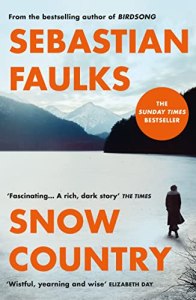
Snow Country by Sebastian Faulks 2*

This is the synopsis on Goodreads:

1914: Young Anton Heideck has arrived in Vienna, eager to make his name as a journalist. While working part-time as a private tutor, he encounters Delphine, a woman who mixes startling candour with deep reserve. Entranced by the light of first love, Anton feels himself blessed. Until his country declares war on hers.

1927: For Lena, life with a drunken mother in a small town has been impoverished and cold. She is convinced she can amount to nothing until a young lawyer, Rudolf Plischke, spirits her away to Vienna. But the capital proves unforgiving. Lena leaves her metropolitan dream behind to take a menial job at the snow-bound sanatorium, the Schloss Seeblick.

1933: Still struggling to come terms with the loss of so many friends on the Eastern Front, Anton, now an established writer, is commissioned by a magazine to visit the mysterious Schloss Seeblick. In this place of healing, on the banks of a silvery lake, where the depths of human suffering and the chances of redemption are explored, two people will see each other as if for the first time.

Sweeping across Europe as it recovers from one war and hides its face from the coming of another, SNOW COUNTRY is a landmark novel of exquisite yearnings, dreams of youth and the sanctity of hope. In elegant, shimmering prose, Sebastian Faulks has produced a work of timeless resonance.

My thoughts:

I was disappointed by this novel, mainly because I found it quite dull in places, which I hadn’t expected from the synopsis or the 5 and 4 star reviews on both Amazon and Goodreads. The best defined character is Lena, but the others seem rather flat – one dimensional and hard to distinguish. This may, of course, be down to me as I found it rather muddled and I had to keep recapping just to clarify who they were. So, I struggled to read it and eventually lost interest. But I did finish it.

Mini Reviews

This year has been a good time for reading books, but not a good time as far as writing reviews goes and I am way behind. So before I forget about them here are some notes about four of the backlog:

On the Beach by Nevil Shute 5*

I read this because I loved A Town Like Alice. It’s described on Goodreads as follows:

After the war is over, a radioactive cloud begins to sweep southwards on the winds, gradually poisoning everything in its path. An American submarine captain is among the survivors left sheltering in Australia, preparing with the locals for the inevitable. Despite his memories of his wife, he becomes close to a young woman struggling to accept the harsh realities of their situation. Then a faint Morse code signal is picked up, transmitting from the United States and the submarine must set sail through the bleak ocean to search for signs of life. On the Beach is Nevil Shute’s most powerful novel. Both gripping and intensely moving, its impact is unforgettable.

I think this is a terrifying and incredibly sad book, and yet it all seems low key. People go about their everyday lives but set against the background that the world is about to end. It was first published in 1957 and is set sometime in the early 1960s about a group of people living in Melbourne and on the USS submarine, Scorpion, as they await the arrival of deadly radiation spreading towards them from the Northern Hemisphere, following a nuclear war the previous year. It is slow moving, focusing on the individual characters and on the differing ways they deny or accept what is happening. How will they live the remaining few months ahead of them and how will they face the end of their lives? It’s a powerful book, well written and full of fascinating characters.

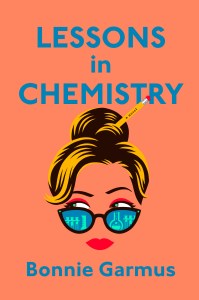
Lessons in Chemistry by Bonnie Garmus 4*

I enjoyed this book but not as much as I’d expected. It’s described on Goodreads as ‘Laugh-out-loud funny, shrewdly observant, and studded with a dazzling cast of supporting characters‘. But although I found parts of it amusing I didn’t laugh out loud. It’s about Elizabeth Zott, covering her life from the early 1950s through to the 1960s. She is a scientist, an independent single mother, who having lost her job, found herself as ‘the star of America’s most beloved cooking show Supper at Six. Elizabeth’s unusual approach to cooking (“combine one tablespoon acetic acid with a pinch of sodium chloride”) proves revolutionary. But as her following grows, not everyone is happy. Because as it turns out, Elizabeth Zott isn’t just teaching women to cook. She’s daring them to change the status quo.

I found Elizabeth quite an unlike able character and couldn’t warm to her. The book is full of exaggeration and hyperbole – examples are Elizabeth’s daughter Madeleine who at the age of four could read Nabakov and Six Thirty, the dog who was so clever and kind, worrying about Elizabeth and Madeleine. I don’t think we’re meant to take this as realistic – it’s a larger-than-life world with a semi-magic-realist strand and all just that bit over the top. In a complete contrast to the whimsy there’s a brutal rape, the death of Calvin, Elizabeth’s husband, abuse, abandonment, bullying and sexism thrown into the mix. Then there’s Elizabeth’s TV cookery show – I enjoyed the details of this more than the rest of the book. The ending is a bit of a let down and a bit rushed.

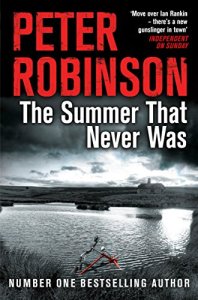
The Summer That Never Was by Peter Robinson 4*

This is crime fiction, the 13th Inspector Banks book. I’m gradually reading through the whole series. This is Goodread’s description:

A skeleton has been unearthed. Soon the body is identified, and the horrific discovery hits the headlines . . .

Fourteen-year-old Graham Marshall went missing during his paper round in 1965. The police found no trace of him. His disappearance left his family shattered, and his best friend, Alan Banks, full of guilt . . .

That friend has now become Chief Inspector Alan Banks, and he is determined to bring justice for Graham. But he soon realises that in this case, the boundary between victim and perpetrator, between law-guardian and law-breaker, is becoming more and more blurred . . .

What I particularly liked about this one is that it gives an insight into Banks’s childhood, as he investigates the murder of his childhood friend. The book alternates between this case and that of a present day case, that of the disappearance of another schoolboy, Luke Armitage, the son of an ex-football player. DI Annie Cabbot is in charge of that investigation. Although this can be read as a stand-alone novel, part of the enjoyment in reading the series in order is that you see the development of the main characters and their relationships over the years. There are now 27 books in the series with the 28th, Standing in the Shadows, due to be published in June 2023.

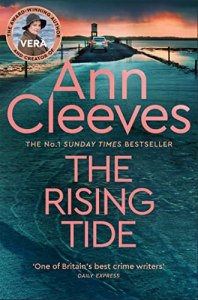
The Rising Tide by Ann Cleeves 5*

More crime fiction, this is the 10th Vera Stanhope mystery novel. I love the Vera books and this one is no exception. Ann Cleeves is a superb storyteller. Her books are deceptively easy to read,  moving swiftly along as the tension rises. They are layered, cleverly plotted and above all convincing.

The Rising Tide is set on the Holy Island of Lindisfarne, a tidal island just off the coast of Northumberland, only accessible across a causeway when the tide is out. Ann Cleeves explains whilst the background to the novel is real any specific places on the island or the nearby coast are fictional. I’ve visited the island several times and know just how fast the tide comes in over the causeway. If you’ve watched the TV series it shows Vera crossing the causeway in her Land Rover in the opening titles.

It has a complex plot and plenty of twists and turns as DCI Vera Stanhope and her team investigate the death of Rick Kelsall who was discovered hanged from the rafters of his small bedroom on Holy Island. He is one of a group of friends who have met for a reunion each year on the island for the past fifty years. It appears to be suicide but Vera is convinced that it is murder and that the clue to his death lies in the past. I was kept guessing almost to the end as the secrets from the past are revealed.

These notes don’t do just justice to the books but I enjoyed all of them, even Lessons in Chemistry. My favourite though is The Rising Tide and I wish I’d written more detail about it just after I read it!

Asking for the Moon by Reginald Hill

Asking for the Moon is described on the cover as a Dalziel and Pascoe novel, but it is actually a collection of four novellas. According to Wikipedia the collection was first published in 1996 in hardback by HarperCollins.

The first story is The Last National Service Man which tells how Dalziel and Pascoe first met. Neither of them are impressed by the other. Dalziel thinks Pascoe is everything he dislikes – a graduate, well spoken, and a Southerner from south of Sheffield. Pascoe thinks Dalziel is an archetypical bruiser who got results by kicking down doors and beating out questions in Morse code on a suspect’s head. When Dalziel and Pascoe are kidnapped by a madman with a serious and justifiable grudge against the Superintendent they need to get over their differences and work together to escape their jailer.

The next two stories both feature ‘ghosts’ – Pascoe’s Ghost and then Dalziel’s Ghost (both first published in 1979 in another collection of short stories). In Pascoe’s Ghost a man whose wife has been missing for a year gets some strange phone calls—as well as a visit from Detective Inspector Pascoe—in a novella that pays homage to Edgar Allan Poe, with each chapter headed with a quotation from Poe’s poetical works. This is the longest story and reminded me of Agatha Christie’s Golden Age Mysteries as Pascoe interviews the suspects in the library.

Dalziel’s Ghost is a brief and rather odd story in which the two detectives keep a nightly vigil in Sandstone Rigg farmhouse, an isolated house that had been renovated, apparently disturbing a ghost. In Dalziel’s experience there are three main causes of ghosts – ‘One: bad cooking. Two: bad ventilation and Three – bad conscience.’ Things aren’t what they seem and Dalziel is once again his devious self. But I think this one is the least convincing of the four stories.

One Small Step, was originally published in 1990 by Collins Crime Club.The story is set in 2010, when a French astronaut, one of an international space team from the Federated States of Europe, became the first man to be murdered on the moon. Retired Detective-Superintendent Andrew Dalziel, suffering from gout and Peter Pascoe, now Commissioner of Eurofed Justice are called upon to investigate – on board the space ship. In his Foreword I gather that Hill wrote this to celebrate the twenty years he’d been writing the Dalziel and Pascoe novels.

I think the best story in the book is the first one, The Last National Service Man.

If you haven’t read any of the Dalziel and Pascoe novels, don’t start with this one. It’s not the best, but still an enjoyable 3* book for me.

Tortilla Flat by John Steinbeck

Tortilla Flat was my Classics Club Spin book to read by 30th April. It was John Steinbeck’s fourth novel, first published in 1935. Tortilla Flat is on the hill high above Monterey, an old city on the coast of California. Monterey is also the setting for Cannery Row (the first of John Steinbeck’s novels that I read) and Sweet Thursday, both of which I enjoyed, so I was expecting this book to be just as good. And after a somewhat slow start I soon settled into the book and thoroughly enjoyed it.

As Steinbeck explained in his Preface this is the story of Danny and of Danny’s friends, Pilon, Pablo, Jesus Maria, and Big Joe. Tortilla Flat is a collection of stories about their escapades, and their thoughts and endeavours. They are paisanos, being a mix of Spanish, Indian, Mexican and assorted Caucasian bloods, living in old wooden houses in the midst of pine trees. The stories have almost a mythical feel and indeed, Steinbeck compares Danny and his friends to the Knights of the Round Table.

It begins just after the end of the First World War, when they return to find that Danny has inherited two houses from his grandfather. He lives in one house and ‘rents’ the other to his friends, but they are all poor, do not work and never pay him, except in wine. They spend their days partying, drinking, sleeping, thieving or in jail. After a while Pirate joins them along with his five dogs who follow him everywhere. He’s the only paisano who works, making 25 cents a day selling kindling, but he doesn’t spend it, saving it and hiding it. But they don’t really care about money, they trade what they have or what they find for wine and then share it before sleeping it off.

Some of the stories are humorous, and some are tragic. I enjoyed them all. They stress the importance of home, friendship, and survival, giving an insight into their life in Tortilla Flat. And I loved the descriptions of the landscape:

In the morning when the sun was up clear of the pine trees, when the blue bay rippled and sparkled below them, they arose slowly and thoughtfully from their beds.

It is a time of quiet joy, the sunny morning. when the glittery dew is on the mallow leaves, each leaf holds a jewel which is beautiful if not valuable. This is no time for hurry or for bustle. Thoughts are slow and deep and golden in the morning. (page 25)

And this passage:

They walked side by side along the dark beach toward Monterey, where the lights hung, necklace above necklace against the hill. The sand dunes crouched along the back of the beach like tired hounds, resting; and the waves gently practiced at striking, and hissed a little. (page 87)

Book Beginnings & The Friday 56: The Close by Jane Casey

Every Friday Book Beginnings on Friday is hosted by Gillion at Rose City Reader where you can share the first sentence (or so) of the book you are reading. You can also share from a book you want to highlight just because it caught your fancy.

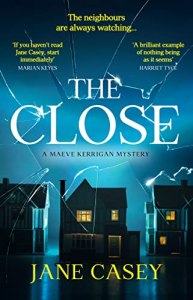
One of the books I’m currently reading is The Close by Jane Casey, the 10th Maeve Kerrigan book, one of my favourite detective series. I’ve been looking forward to reading this as I’ve read all the earlier books.

They are police procedurals, fast-paced novels, with intriguing and complex plots that also develop the relationship between the main characters, Maeve and her boss, Detective Inspector Josh Derwent. They have a confrontational working relationship and this is a recurring theme in the books. In the 9th book, The Cutting Place, it seemed to me that their relationship took a significant turn. So, I can’t wait to find out what will happen next.


All murder investigations were different and yet all of them began the same way, at least for me: standing in silence near a body, trying to catch the faintest echo of what had happened.

Also every Friday there is The Friday 56, hosted by Freda at Freda’s Voice, where you grab a book and turn to page 56 (or 56% of an eBook), find one or more interesting sentences (no spoilers), and post them.

Page 56:

‘You don’t want to look as if you’re patrolling the place. It’s a small community and we’ll stick out anyway. You’ll be attracting plenty of attention, believe me, so you need to look as if you don’t mind it. Start from now. Loosen up. Let your hair down.’

‘Literally?’ I kept my hair tied back at work, always.

‘Why not? And while you’re at it, don’t be so guarded all the time. You’re constantly on the defensive with me.’

Description from Amazon:

At first glance, Jellicoe Close seems to be a perfect suburban street – well-kept houses with pristine lawns, neighbours chatting over garden fences, children playing together.

But there are dark secrets behind the neat front doors, hidden dangers that include a ruthless criminal who will stop at nothing.

It’s up to DS Maeve Kerrigan and DI Josh Derwent to uncover the truth. Posing as a couple, they move into the Close, blurring the lines between professional and personal as never before.

And while Maeve and Josh try to gather the evidence they need, they have no idea of the danger they face – because someone in Jellicoe Close has murder on their mind.

~~~

What do you think, does it appeal to you? What are you currently reading?

Excellent Women by Barbara Pym

Rating: 5 out of 5.

Excellent Women was first published in 1952, Barbara Pym’s second published novel. In his introduction to the book Alexander McCall Smith describes it asone of the most endearingly amusing English novels of the twentieth century. It’s certainly not laugh-out-loud funny, but it is most entertaining, subtly and gently comic. And as McCall Smith says it’s about ‘those small things in life that become immensely important to us … a novel that on one level is about very little [but] is a great novel about a great deal.’

It’s set just after the end of the Second World War, about the everyday life of Mildred Lathbury, an unmarried woman – in other words a spinster – in her early 30s. The daughter of a clergyman she is one of those ‘excellent women’ who could be relied upon to help out at Church jumble sales, garden fêtes, to make tea when required or to make up numbers at social gatherings. She finds herself involved in the quarrel between her new neighbours, Helena and Rockingham (Rocky) Napier, a married couple who live in the flat below her, as well as in the difficult relationship between Julian Mallory, the local vicar and his unmarried sister, when he finds himself trapped by Allegra Grey, a vivacious widow when she moves into their spare room.

I’ve been meaning to read some of Barbara Pym’s books for years, so I was delighted that I found it so enjoyable. It’s such a change from some of the books I’ve been reading recently, as Pym is such a keen observer of human nature, giving the little details that bring the characters to life. I found them all totally believable, each with their own eccentricities. She writes so simply but with such depth. It’s a slow-paced book but all the better because of that.

I read the Virago e-book edition, published in 2011, print length 299 pages.