The Voyage Out by Virginia Woolf

The idea for March and April in HeavenAli’s Virginia Woolf Read-a-long was to read one or more of: The Voyage Out, Night and Day (Virginia Woolf’s first and second novels) or Between the Acts which was her final novel. This was just the reminder I needed to get The Voyage Out down from my bookshelves where it’s been sitting unread for years.

This post is far too long, but one reason for writing this blog is to record what I think of a book and what I want to remember about it – this post only touches on that even at this length! There is so much more to be said about it.

I’ve not written much about the plot. This is the Synopsis from the back cover of my copy (published by Penguin in 1992):

The Voyage Out opens with a party of English people aboard the Euphrosyne, bound for South America. Among them is Rachel Vinrace, a young girl, innocent and wholly ignorant of the world of politics and society, books, sex, love and marriage. She is a free spirit half-caught, momentarily and passionately, by Terence Hewet, an aspiring writer met in Santa Marina. But their engagement is to end abruptly, and tragically.

Background to the novel:

In 1913 Virginia Woolf (1882 – 1941) had been suffering ill health for some time – depression,  nervous breakdowns and anorexia – when her half-brother George Duckworth published The Voyage Out in 1915. She had started writing it years earlier and had revised it several times before finalising it in 1912 and 1913.

I don’t like to read the introduction of a book first as often it gives away elements of the plot that I’d rather not know in advance, but I think that this paragraph does help to explain much that I wondered about as I read the book. But if you don’t want to know just skip this next paragraph.

In the introduction to the book, Jane Wheare wrote:

A knowledge of Woolf’s life will certainly deepen our response to all her work. Amongst many other details from the young Virginia Woolf’s experience that appear in fictional form in The Voyage Out one can single out her bouts of mental illness, on which she drew for the description of Rachel’s  fever; the voyage which she made to Spain and Portugal with her brother Adrian in the spring of 1905, her sister Vanessa’s illness and her brother Thoby’s death from typhoid in 1906; and her interest on feminism. (page xiii)

My thoughts:

I finished reading it a short time ago, but have found it difficult to write about it. It is an intriguing book, beginning in a leisurely fashion as Mr and Mrs Ambrose (Rachel’s aunt and uncle) stroll down the Strand to the Embankment on their way to board the ship, Euphrosyne  and yet there is tension in the air and Mrs Ambrose has tears rolling down her face. This tension and sense of underlying trouble and anxiety continues throughout the book.

It begins mid-stream, as it were, with little background at first about the characters or about why the people are on board the Euphrosyne. It is only when the ship arrives at Santa Marina (a fictional place) that Woolf explains why they are going there; and their relationships are slowly revealed through their conversations and actions. The Dalloways make a brief appearance in the book when they spend a short time aboard the ship, leaving before the ship reaches Santa Marina.

I was surprised at just how naive Rachel is for a young woman of 24, even though she had been brought up by her two aunts. Helen Ambrose is shocked, writing about her niece in a letter to a friend, criticising the current methods of education:

This girl, though twenty-four, had never heard that men desired women, and until I explained it did not know how children were born. (page 59)

In some ways this is a coming-of -age novel and Rachel’s actions and reactions are the focus of the book. In it Woolf explores the nature of Rachel’s mind, her obsessions and beliefs and through it her own thoughts about depression, suicide, death and the meaning of life. It’s a huge subject, at times celebrating the wonder and beauty of life and at other times plunging down into the hopelessness and despair that some of the characters experience.

I knew from the book’s description that it ends in tragedy and I wondered as I read what form it would take. But even so, I was taken aback at the desperate sadness of it – it was draining!

Some quotations:

On religion: Mrs Dalloway is talking to Helen Ambrose – “I always think religion’s like collecting beetles,” she said, summing up the discussion as she went up the stairs with Helen. “One person has a passion for black beetles; another hasn’t; it’s no good arguing about it.” (Page 33)

On politics: Mr Dalloway (a politician) talking about a suffragette sitting outside the house (House of Commons): “My good creature, you’re only in the way where you are. You’re hindering me, and you’re doing no good to yourself.” And later in the conversation he says: “Nobody can condemn the utter folly and futility of such behaviour more than I do: and as for the whole agitation, well! may I be in my grave before a woman has a right to vote in England! That’s all I say.” (page 24)

Mr Ambrose replies: “I don’t care a fig one way or t’other. If any creature is so deluded as to think that a vote does him or her any good, let him have it. He’ll soon learn better.”

On women:  St. John Hirst speaking, “Just consider: it’s the beginning of the twentieth century, and until a few years ago no woman had ever come out by herself and said things at all.” …

It’s the man’s view that’s represented, you see. Think of a railway train: fifteen carriages for men who want to smoke. Doesn’t it make your blood boil? If I were a woman I’d blow someone’s brains out. Don’t you laugh at us a great deal? Don’t you think it’s all humbug? (page 139)

There is much more I could quote on women’s suffrage in this book.

On England in June – an example of Woolf’s descriptive writing: The thought of England was delightful, for they would see the old things freshly; it would be England in June, and there would be June nights in the country; and the nightingales singing in the lanes, into which they would steal when the room grew hot; and there would be English meadows gleaming with water and set with stolid cows, and clouds dipping low and trailing across the green hills.

and comparing it with South America:

… “Lord, how good it is to think of lanes, muddy lanes, with brambles and nettle, you know, and real grass fields, and farmyards with pigs and cows, and men walking beside carts with pitchforks – there’s nothing to compare with that here – look at the stony red earth, and the bright blue sea, and the glaring white houses – how tired one gets of it! And the air without a stain or a wrinkle. I’d give anything for a sea mist.” (pages 138-9)

A note about the cover

I think the cover is striking. It’s from a painting by Roger Fry – Roquebrune and Monte Carlo from Palm Beach, in the City of Glasgow Art Gallery.

Roger Eliot Fry (14 December 1866 ‘“ 9 September 1934) was an English painter and critic, and a member of the Bloomsbury Group. Establishing his reputation as a scholar of the Old Masters, he became an advocate of more recent developments in French painting, to which he gave the name Post-Impressionism. He was the first figure to raise public awareness of modern art in Britain, and emphasised the formal properties of paintings over the “associated ideas” conjured in the viewer by their representational content. He was described by the art historian Kenneth Clark as “incomparably the greatest influence on taste since Ruskin … In so far as taste can be changed by one man, it was changed by Roger Fry”.[1] The taste Fry influenced was primarily that of theAnglophone world, and his success lay largely in alerting an educated public to a compelling version of recent artistic developments of the Parisian avant-garde. (from wikipedia)
Fry, who for a while had an affair with Vanessa Bell, Virginia’s sister, was a friend of Virginia’s. She wrote three books subtitled ‘A Biography‘ – her biography of Roger Fry is one of them, first published in 1940.

For more information on Roger Fry see Art UK.

Needless to say – I enjoyed this book and it has encouraged me to read more of Virginia Woolf’s books (I’ve already read Mrs Dalloway, To the Lighthouse and Flush, all before I began my blog, and Death of a Moth and Other Essays – see also this post.)
Adding to the TBRs

As usual I am behind with writing about the books I’ve read, with four to do. I’m in the middle of writing about The Voyage Out by Virginia Woolf, but it is taking me longer than I’d hoped and I haven’t finished my post yet.

So, here’s a post about the four books I’ve added to my TBRs this week:

STSmall

Stacking The Shelves is all about sharing the books you are adding to your shelves. This means you can include ‘˜real’ and ‘˜virtual’ books (ie physical and ebooks) you’ve bought, books you’ve borrowed from friends or the library, review books, and gifts.

I’ve added one paperback and three e-books:

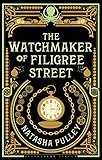
  • The Watchmaker of Filigree Street by Natasha Pulley. A friend recommended this book to me and I was delighted to see that it is one of the Kindle Daily Deals this morning. It’s steam-punk, a genre completely new to me! It is described as:

Utterly beguiling, The Watchmaker of Filigree Street blends historical events with dazzling flights of fancy to plunge readers into a strange and magical past, where time, destiny, genius ? and a clockwork octopus ? collide.

I hope I’ll like it as much as my friend did!

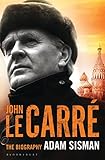
  • John Le Carré: the Biography by Adam Sisman, because I want to know more about the author of Tinker, Tailor, Soldier, Spy; The Night Manager and his other espionage books. During the 1950s and the 1960s, he worked for the Security Service and the Secret Intelligence Service, and began writing novels under a pen name. This is the definitive biography of a major writer, described by Ian McEwan as ‘perhaps the most significant novelist of the second half of the twentieth century in Britain’.
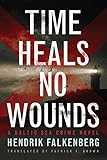
  • Time Heals No Wounds: a Baltic Sea crime novel by Hendrick Falkenberg. This is one of the free books for Amazon Prime members in May. German author Hendrik Falkenberg studied sports management and works in sports broadcasting. The magical allure that the sea holds for him comes alive in his stories, which are set on the north German coast. His first book, Die Zeit heilt keine Wunden (Time Heals No Wounds), was a #1 Kindle bestseller in Germany and has been translated for the first time into English.
  • And lastly, HeavenAli held a draw to give away some of Virginia Woolf’s books and I’m delighted that I won Orlando in the giveaway.

Orlando tells the tale of an extraordinary individual who lives through centuries of English history, first as a man, then as a woman; of his/her encounters with queens, kings, novelists, playwrights, and poets, and of his/her struggle to find fame and immortality not through actions, but through the written word. At its heart are the life and works of Woolf’s friend and lover, Vita Sackville-West, and Knole, the historic home of the Sackvilles. But as well as being a love letter to Vita, Orlando mocks the conventions of biography and history, teases the pretensions of contemporary men of letters, and wryly examines sexual double standards.

I’m looking forward to reading these books in the coming months!

First Chapter, First Paragraph: The Silver Pigs

Every Tuesday Diane at Bibliophile by the Sea hosts First Chapter First Paragraph Tuesday Intros, where you can share the first paragraph, or a few, of a book you are reading or thinking about reading soon.

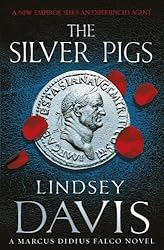
This week I’m featuring The Silver Pigs by Lindsay Davis, a book that I started reading last night. Whilst this is a new-to-me series, The Silver Pigs was first published in 1989 and there are now 20 books in the series. Lindsey Davis also writes the Favia Alba Mystery series. She has won many literary awards, and was honorary president of the Classical Association from 1997 to 1998.

It begins:

When the girl came rushing up the steps, I decided she was wearing far too many clothes.

It was late summer. Rome frizzled like a pancake on a griddleplate. People unlaced their shoes but had to keep them on; not even an elephant could cross the street unshod. People flopped on stools in shadowed doorways, bare knees apart, naked to the waist – and in the backstreets of Aventine Sector where I lived, that was just the women.

This is historical crime fiction, the first of the Marcus Didius Falco novels. Set in Rome in 70AD, Vespasian is the new Roman emperor and Falco is a private informer, or private eye. In this first book he and his partner Helena Justina rescue a young girl in trouble. He is then catapulted into a dangerous game involving stolen imperial ingots, a dark political plot and, most hazardous of all, a senator’s daughter connected to the traitors Falco has sworn to expose.

My copy has an introduction by Lindsey Davis in which she tells of how she began to write historical fiction, setting a typical private eye figure in Rome two thousand years ago. It has maps and a Dramatis Personae.

And I do like the cover.


The Mill on the Floss by George Eliot

I was pleased when the Classics Club Spin number came up as 8, because for me that was The Mill on the Floss, a book I’ve had for years, so it was time I read it. I think one of the reasons I hadn’t read it is the size of the font – it’s small. But then I realised that there is a free e-book, so I read it on my Kindle as I could increase the font size.

Description (from my paperback copy of the Penguin Popular Classics 1994 edition, shown above):

George Eliot drew on her own anguished childhood when she depicted the stormy relationship between Maggie and Tom Tulliver. Maggie’s often tormented battle to do her duty and belong on the one hand, and to be  herself, wild and natural, on the other, propels her from one crisis to another. As the Tulliver fortunes decline and fall, the rift between Maggie and her family becomes almost irreconcilable. But Maggie’s biggest mistake of all is to fall in love with Stephen Guest who is engaged to another woman.

Both a sharp and observant picture of English rural life and a profoundly convincing analysis of a woman’s psychology, The Mill on the Floss is a novel that tackles the complexities of morality versus desire.

My thoughts:

The Mill on the Floss was first published in 1860. The story begins in the late 1820s, when Maggie, who is ‘big for her age, gone nine‘ and her brother, Tom aged about twelve are living at Dorlcote Mill on the banks of the river Floss near the town of St Oggs. Their father is anxious that Tom should have a good education so that he can go into business – he does not want him to be a miller. But it is Maggie who is the keen reader, enjoying books like The History of the Devil by Daniel Defoe, Aesop’s Fables and the Pilgrim’s Progress.

I enjoyed parts of the book more than other parts. The first part of this book, covering Maggie and Tom’s childhood for example is fascinating and a study of early 19th century rural life and education. Tom goes away from home to study under a tutor, Mr Stelling and meets Philip Wakem, whose father is a lawyer, Mr Tulliver’s opponent in a lawsuit. Maggie and Tom’s relationship is difficult, although she professes she ‘loves him better than anyone else in the world’, even when he rebukes her. Meanwhile Maggie becomes more friendly with Philip than Tom and her family like.

There are some lovely scenes, for example Maggie’s escapade when she leaves home to live with the gypsies. And I liked all the scenes with Mrs Tulliver’s sisters, who look down on her for marrying a miller and criticise Maggie’s appearance and behaviour, for Maggie is full of high spirits and energy. The sisters also provide comic relief, at times being miserly and self-centred, with a strong sense of their own importance. But things go from bad to worse for the Tullivers, when Mr Tulliver loses the lawsuit and eventually loses the mill.

In other places, between scenes there are long, rambling passages, that I found too wordy and philosophical and I waited impatiently to get back to the story. But overall I liked the book, more than I liked Adam Bede, but not as much as I remember liking Middlemarch, which I read long before I began this blog.

The Mill on the Floss is an epic novel encompassing various themes such as love, marriage, family loyalty, the social conventions of the times, and the struggle to survive. Feminism, education, and the role of women in society are to the fore, as Maggie is torn between two men who love her and is judged harshly for her behaviour.

It is a character driven plot; the river Floss plays a major part in the story, running through a wide plain, hurrying on to the sea, laden with ships. It’s a noisy place with Dorlcote Mill is on its banks near a stone bridge and the rush of the water is deafening, along with the ‘thunder of the huge covered wagon coming home with sacks of grain‘.

And it is the Floss that provides the huge climax which took me by surprise. It’s a dramatic ending and yet I found it rather unsatisfactory, not sure that I could believe what I had read, and shocked by such a sad ending. Looking back after I finished the book I realised that it had been foreshadowed almost from the start and I had missed it.

Reading Challenges: Mount TBR 2016 and The Classics Club.

The Bean Trees by Barbara Kingsolver

If I don’t write about a book as soon as I’ve finished it the details begin to fade. I finished reading  Barbara Kingsolver’s first novel, The Bean Trees a few weeks ago. So this is a short post on the book, which doesn’t really do justice to it!

My thoughts:

I loved this book. Barbara Kingsolver writes in such a way that I can easily visualise the scenes, beginning with the opening paragraph in which she describes a tractor tire blowing up, flinging a man up in the air and throwing him over the top of a Standard Oil sign. Taylor (originally called Marietta/Missy) grew up in rural Kentucky. She left home when she had saved enough to buy a car, an old VW. She changed her name to Taylor after the first place where she ran out of petrol, which just happened to be Taylorville. She drove on until the car broke down in the middle of nowhere, on land owned by the Cherokee tribe. And it was there at a garage that an Indian woman abandoned a baby girl in Taylor’s car – she called the baby, Turtle.

They travel on to Tucson, where she settled for a while, living with Lou Ann, a mother whose husband, Angel Ruiz left before their son was born, and working for Mattie at ‘Jesus Is Lord Used Tires’. Mattie, however, is also involved in an underground railway moving illegal Guatemalan and Salvadoran immigrants to safe houses. She talks of the obligation under the United Nations ‘something or other’ ‘to take in people whose lives are in danger’. And Taylor becomes involved in helping her.

There are several themes running throughout this short, but well written book – both political and social including family relationships, particularly mother/child, sexual and physical abuse of small children, the integration of cultures, as well as the always current issue of refugees and illegal immigrants. I thought it was all thought-provoking as well as fascinating reading.

I have read some of Barbara Kingsolver’s later books, including The Poisonwood Bible, a longer and much more complex book, which I’ve read twice and loved. There is a sequel to The Bean Trees that I really want to read now – Pigs In Heaven.

Reading Challenges: What’s In a Name? in the category of a book with the word ‘tree’ in the title.

The Sea Detective by Mark Douglas-Home

Lovereading.co.uk  sent me a copy of  The Sea Detective by Mark Douglas-Home for review in advance of the publication of the third title in the series The Malice of Waves on 19 May and I’m glad to say that I thoroughly enjoyed it.

It’s one of those books that grabbed my attention right from the start when two young teenage girls from India are sold into the sex trafficking trade, completely unaware of the dangers and terror that awaits them. Then, Edinburgh-based oceanographer, Cal McGill is caught on camera planting a rare wild flower in the garden of the Scottish Environment Minister in a campaign to make politicians aware of the dangers of climate change. Detective Inspector Ryan wants to charge him with vandalism but the minister’s wife wants to keep the plant!

From then on the story gets complicated. It’s more of an investigative story than crime fiction, with several strands to the story, but it’s so well told that I had no difficulty in following all of them: a story of unsolved mysteries both from the present day and from the Second World War, and of two Indian girls, sold into the sex trafficking trade. It’s set mainly in Scotland with a strong sense of place throughout.

The main characters are all fully rounded and complex – Cal McGill works for environmental organisations tracking oil spills using wind speeds and data on ocean currents; DI David Ryan and DC Helen Jamieson are investigating the appearance of severed feet in trainers that had been washed on shore on islands miles apart – tests had revealed that they belonged to the same body; and Basanti, one of the Indian girls, whose resourcefulness saved her life. I especially liked Helen Jamieson, the overweight policewoman, whose boss, Ryan mistakenly thinks is stupid, and the way she deals with him.

The strand that interested me most concerns Cal’s grandfather, from the (fictional) island of Eilean Iasgaich. He had died during the Second World War, washed overboard during a storm, whilst their trawler was patrolling the sea around Norway, one of seven men who had died ‘“ and yet his name had not been included in the island’s war memorial. Cal eventually discovers the truth about what actually happened and how his grandfather met his death.

It’s a gripping and emotional story. I loved it.

The Sea Detective is Mark Douglas-Home’s first book. Before writing books he was the editor of Scotland’s leading daily newspaper, The Herald, and The Sunday Times Scotland. He is the nephew of the late Sir Alec Douglas-Home who was Prime Minister of the UK from October 1963 to October 1964. He lives in Edinburgh.

I’m looking forward to reading his second book, The Woman who Walked into the Sea as well as his third, The Malice of Waves.

Reading Challenges: Read Scotland 2016 – by a Scottish author and set in Scotland.