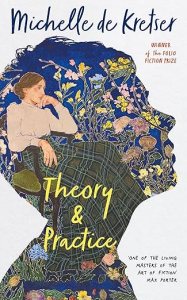
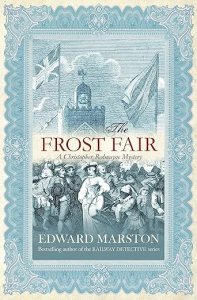
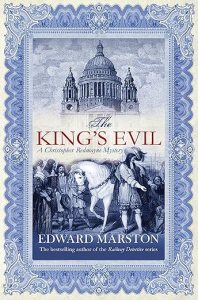
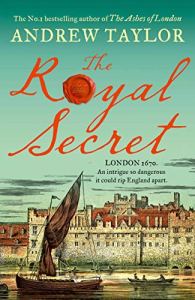
Top 5 Tuesday:top 5 books with stars on the cover

Top 5 Tuesday was created by Shanah at Bionic Book Worm, and it is now being hosted by Meeghan at Meeghan Reads. For details of all of the latest prompts for April to June, see Meeghan’s post here.

Today the topic is top 5 books with stars on the cover. One of my favourite paintings is Vincent Van Gogh’s Starry Night, so I’ve chosen books about the painting, Van Gogh’s life, about his time in an asylum, historical fiction, and two children’s books.

Van Gogh. The Complete Paintings by Ingo F. Walther and Rainer Metzger

Vincent van Gogh’s story is one of the most ironic in art history. Today, he is celebrated the world over as one of the most important painters of all time, recognized with sell-out shows, feted museums, and record prices of tens of millions of dollars at auction.

Yet as he was painting the canvases that would subsequently become these sell-out modern masterpieces, van Gogh was battling not only the disinterest of his contemporary audiences but also devastating bouts of mental illness, with episodes of depression and paralyzing anxiety which would eventually claim his life in 1890, when he committed suicide shortly after his 37th birthday. This comprehensive study of Vincent van Gogh (1853–1890) pairs a detailed monograph on his life and art with a complete catalogue of his 871 paintings.

The Curious Case of the Village in the Moonlight by Steve Wiley.

Newly admitted patient Vincent Van Gogh watched as the first stars of what would become The Starry Night blinked to life over the sleepy village of Saint-Rémy.

In that village lived a lamplighter. That notorious starry night would be his last one on the job. The town was scheduled to be wired with a new and innovative technology called ‘electricity’ the following day. The lamplighter began his last night of work at the village tavern during green hour — an absinthe-drenched celebration in his honor. Green hour would transform the night from familiar to fantastical, with the village street lamps mysteriously vanishing. The lamplighter finds himself swept away on a wonderfully strange adventure to find and light the lost lamps, one that will take him from the depths of wish-filled rivers to the heights of the star-filled sky. Along the way, the lamplighter finds help from a curious cast of characters including the Man in the Moon, an ages-old cypress tree, and the wind itself. It will take all of them to find the lost lamps, and a lost love.

Starry Night: Van Gogh at the Asylum by Martin Bailey

Starry Night is a fascinating, fully illustrated account of Van Gogh’s time at the asylum in Saint-Remy, during which he created some of his most iconic pieces of art.

Despite the challenges of ill health and asylum life, Van Gogh continued to produce a series of masterpieces – cypresses, wheatfields, olive groves and sunsets during his time there. This fascinating and insightful work from arts journalist and Van Gogh specialist Martin Bailey examines his time there, from the struggles that sent him to the asylum, to the brilliant creative inspiration that he found during his time here.

He wrote very little about the asylum in letters to his brother Theo, so this book sets out to give an impression of daily life behind the walls of the asylum of Saint-Paul-de-Mausole and looks at Van Gogh through fresh eyes, with newly discovered material.

An essential insight into the mind of a flawed genius, Starry Night is indispensable for those who wish to understand the life of one of the most talented and brilliant artists to have put paintbrush to canvas.

Vincent’s Starry Night and Other Stories: A Children’s History of Art by Michael Bird

An enthralling journey through 40,000 years of art, from prehistoric cave paintings right up to the present day. Discover artists and their art around the world, in exciting and imaginative tales about artists and the way they created their work.
Written by educator and art historian Michael Bird, and illustrated by Kate Evans, the book also features reproductions of the famous artworks discussed, a comprehensive timeline of events, and extra feature spreads on places connected with art.
This is a beautiful and engaging introduction to art for any home or school library.

Katie and the Starry Night by James Mayhew

Join Katie as she steps into some of the most famous paintings in the world for an exciting art adventure!

The stars in Vincent van Gogh’s painting are so beautiful that Katie can’t resist reaching in and taking one. But what will she do when all the other stars come tumbling out of the painting, too? Will Katie be able to catch the stars before the gallery guard notices they’ve floated away?

Nicholas Nickleby by Charles Dickens: Book Beginnings on Friday & The Friday 56

Every Friday Book Beginnings on Friday is hosted by Gillion at Rose City Reader where you can share the first sentence (or so) of the book you are reading. You can also share from a book you want to highlight just because it caught your fancy.

I’m getting to the end of reading Bleak House by Charles Dickens, so I’m looking around to find a book to read to replace it. One of the books I might read is Nicholas Nickleby by Charles Dickens.

Nicholas Nickleby is the third novel by Charles Dickens, originally published as a serial from 1838 to 1839 and published in book form in 1839. I know very little about and don’t remember watching any of the adaptations on TV or film.

The book begins:

There once lived, in a sequestered part of the county of Devonshire, one Godfrey Nickleby: a worthy gentleman, who, taking it into his head rather late in life that he must get married, and not being young enough or rich enough to aspire to the hand of a lady of fortune, had wedded an old flame out of mere attachment, who in her turn had taken him for the same reason. Thus two people who cannot afford to play cards for money, sometimes sit down to a quiet game for love.

Also every Friday there is The Friday 56, hosted by Freda at Freda’s Voice, but she is taking a break and Anne at My Head is Full of Books has taken on hosting duties in her absence. You grab a book and turn to page 56 (or 56% of an eBook), find one or more interesting sentences (no spoilers), and post them.

On page 56

‘Stop,’ cried Nicholas hurriedly; pray hear me. This is the grossest and wildest delusion, the completest and most signal mistake, that ever human being laboured under, or committed. I have scarcely seen the young lady half-a-dozen times, but if I had seen her sixty times, or am destined to see her sixty thousand thousand, it would be, and will be, precisely the same.

Description from Goodreads:

When Nicholas Nickleby is left penniless after his father’s death, he appeals to his wealthy uncle to help him find work and to protect his mother and sister. But Ralph Nickleby proves both hard-hearted and unscrupulous, and Nicholas finds himself forced to make his own way in the world. His adventures gave Dickens the opportunity to portray an extraordinary gallery of rogues and eccentrics, such as Wackford Squeers, the tyrannical headmaster of Dotheboys Hall, a school for unwanted boys; the slow-witted orphan Smike, rescued by Nicholas; and the gloriously theatrical Mr. and Mrs. Crummles and their daughter, the ‘infant phenomenon’. Like many of Dickens’s novels, Nicholas Nickleby is characterised by his outrage at cruelty and social injustice, but it is also a flamboyantly exuberant work, revealing his comic genius at its most unerring.

Spell the Month in Books May 2025

Spell the Month in Books is a linkup hosted by Jana on Reviews From the Stacks on the first Saturday of each month. The goal is to spell the current month with the first letter of book titles, excluding articles such as ‘the’ and ‘a’ as needed. That’s all there is to it! Some months there are optional theme challenges, such as “books with an orange cover” or books of a particular genre, but for the most part, any book you want to use is fair game!

This month’s there isn’t a theme. I’ve read the first two of these three books and the third is one of my TBRs.

M is for The Madonna of the Almonds by Marina Fiorato, which I read soon after it was first published in 2009. It is a love story above all, but there is so much more as well. It’s set in Italy in the 16th century, about a young widow, Simonetta di Saronno, struggling to save her home, who meets the artist Bernadino, a protege of Leonardo da Vinci. 

Bernardino Luini, favoured apprentice of Leonardo da Vinci, is commissioned to paint a religious fresco in the hills of Lombardy. His eye is caught by the beautiful Simonetta di Saronno, a young noblewoman who has lost her husband to battle, and whose fortune is gone. Captivated by her beauty and sadness, Bernardino paints Simonetta’s likeness, immortalizing her as the Madonna in his miraculous frescoes in Saronno’s church. As the sittings progress, they fall in love, and Simonetta reciprocates Luini’s genius, with the help of a Jew, known as Manodorata (because of the golden hand replacing his own hand that had been chopped off by the Spanish Inquisition) by creating a drink for her lover a delicious liqueur, Amaretto, from the almond trees, the only crop growing on her estate.

I love the story-telling aspects of this book, its rich descriptions of art and the detailed history of the period. I love Italy, history, art history and almonds, especially Amaretto, so this book just could not fail to delight me.

A is for After the Funeral by Agatha Christie, one of her Hercule Poirot murder mysteries. I read this in 2012 and loved it.

When Cora is savagely murdered, the extraordinary remark she made the previous day at her brother’s funeral takes on a chilling significance. At the reading of Richard’s will, Cora was clearly heard to say, “It’s been hushed up very nicely, hasn’t it…But he was murdered, wasn’t he?”  In desperation, the family solicitor turns to Hercule Poirot to unravel what happened next …

I read it quickly and consequently had little idea who had killed Cora. I did spend some time looking at the family tree at the beginning of the book, working out the family relationships and who was present at Richard Abernethie’s funeral and their reaction to Cora’s question. It seemed to me that any of the family could have done it – Agatha Christie goes through the actions and thoughts of each character and there’s cause for suspicion for each one.

Apart from trying to solve the mystery I was interested in the glimpses into life in post-war Britain, where jobs are scarce, servants even more scarce and there are complaints about the economic situation, with high taxation and the prospect of properties such as the Abernethie house being turned into a hotel, or institute, or even worse being pulled down and the whole estate built over.

Y is for Yellowface by Rebecca F Yuang, one of my TBRs, which I bought because I’d read positive reviews from other bloggers.

THIS IS ONE HELL OF A STORY.

IT’S JUST NOT HERS TO TELL.

When failed writer June Hayward witnesses her rival Athena Liu die in a freak accident, she sees her opportunity… and takes it.

So what if it means stealing Athena’s final manuscript?

So what if it means ‘borrowing’ her identity?

And so what if the first lie is only the beginning…

Finally, June has the fame she always deserved. But someone is about to expose her…

What happens next is entirely everyone else’s fault.

Next month June 7: reflects the beginning of the library’s Summer Reading program: books that you found or currently see at the library.

The Summer Reading Challenge, delivered in partnership with public libraries across the UK, is back for 2025! Launching in June in Scotland and July in England and Wales, the Challenge invites children to embark on an exciting reading journey, either through their local library or online. This year’s theme, Story Garden, encourages young readers to explore nature and the great outdoors through reading. 

Top Ten Tuesday: Authors (or books by authors) Who Live In My State/Country

Top Ten Tuesday is a weekly meme created by The Broke and the Bookish and now hosted by Jana at That Artsy Reader Girl. For the rules see her blog.

The topic this week is Authors (or books by authors) Who Live In My State/Country. I live in the UK. I’ve chosen authors who live/have lived in two Counties of the UK – Northumberland, where I now live and Buckinghamshire, where I used to live. The titles marked with * are linked to my reviews and the rest to Goodreads.

Northumberland:

  • L J Ross — Holy Island – crime fiction (DCI Ryan)
  • Tricia Cresswell – The Midwife – historical fiction
  • Karen Charlton – Catching the Eagle – historical fiction*
  • Ann Cleeves – The Glass Room – crime fiction (Vera Stanhope)*
  • Mari Hannah – The Lost – crime fiction (DS Frankie Oliver and DI David Stone)

Buckinghamshire

Have you read any of them?

Six Degrees of Separation from Rapture to Persuasion

It’s time again for Six Degrees of Separation, a monthly link-up hosted by Kate at Books Are My Favourite and Best. Each month a book is chosen as a starting point and linked to six other books to form a chain. A book doesn’t need to be connected to all the other books on the list, only to the one next to it in the chain.

This month we start with Rapture by Emily Maguire. The motherless child of an English priest living in ninth-century Mainz, Agnes is a wild and brilliant girl with a deep, visceral love of God. At eighteen, to avoid a future as a wife or nun, Agnes enlists the help of a lovesick Benedictine monk to disguise herself as a man and secure a place at the revered Fulda monastery.

I haven’t read it and hadn’t heard of the author. According to a review in The Guardian she writes fiction and nonfiction and was shortlisted for the Stella prize, the Miles Franklin and book of the year at the Australian Book Industry awards for An Isolated Incident her 2016 novel. ‘In Rapture, her seventh novel, she turns her hand to historical fiction. Drawing inspiration from the life of Pope Joan, the woman who (according to legend) disguised herself as a man and served as pope for two years during the middle ages, Maguire examines questions of faith using the language of the body.’

I’ve had several false starts with this month’s chain, none of which I could complete. In the end I decided to start with another book about a pope, especially as the Roman Catholic Cardinals will start the procedure to elect a new pope on May 7.

It’s Conclave by Robert Harris. I always learn a lot from reading Harris’s books. In this one he describes the procedure to elect a new pope. Cardinal Lomeli, the Dean of the College of Cardinals leads the 118 Cardinals through the voting stages. I felt as though I was a fly on the wall watching it throughout as the Cardinals are locked inside the Sistine Chapel, isolated from contact with the outside world. Harris has thoroughly researched the subject and seamlessly woven the facts into the novel. He visited the locations used during a Conclave that are permanently closed to the public and interviewed a number of prominent Catholics including a cardinal who had taken part in a Conclave, as well as consulting many reports and books.

The next book is another one by Robert Harris The Fear Index , a fast-paced story set in the world of high finance and computer technology, which is way out of my comfort zone. It’s about scientist Dr Alex Hoffman, who together with his partner Hugo Quarry, an investment banker, runs a hedge fund based in Geneva, that makes billions. Alex has developed a revolutionary form of artificial intelligence that tracks human emotions, enabling it to predict movements in the financial markets. It’s built around the standard measure of market volatility: the VIX or ‘Fear Index’. But I learnt a bit about hedge funds and how they operate, although I got lost in the computer technology details. 

My third link is A Climate of Fear by Fred Vargas, 9th Commissaire Adamsberg book. I like Adamsberg; he’s original, a thinker, who doesn’t like to express his feelings, but mulls things over. He’s an expert at untangling mysteries, an invaluable skill in this, one of the most complicated and intricate mysteries I’ve read, involving a woman found bleeding to death in her bath, having apparently committed suicide, a strange symbol that appears at subsequent death scenes, and a secretive society studying and re-enacting scenes from the French Revolution.

My fourth link is The Potter’s Hand by A N Wilson. it begins in 1768 and roughly follows the fortunes of the Wedgwood family until 1805, 10 years after the death of Josiah Wedgwood, an English potter and the founder of the Wedgwood company. For me it really did convey what it must have been like to live in that period – whilst the American War of Independence, and the French Revolution, were taking place. It’s full of ideas about colonialism, the abolition of slavery, working conditions, and women’s rights. There are many characters who come in and out of the narrative along the way, both fictional and historical, including Voltaire, George Stubbs (who painted the Wedgwood family portrait) and Samuel Taylor Coleridge.

My fifth link is Voltaire’s Candide or Optimism, a small book I read many years ago. Candide was the most brilliant challenge to the idea endemic in Voltaire’s day, that ‘all is for the best in the best possible worlds‘.In Candide he whisks his young hero and friends through a ludicrious variety of tortures, tragedies and reversals of fortune, in the company of Pangloss, a ‘matapysico-theologo-cosmolo-nigologist’ of unflinching optimism. The result is one of the glories of the eighteenth-century satire. (Taken from the description on the back cover.)

And my final link is Persuasion by Jane Austen. I read this first at school, when I was 17 for A Level GCE. It’s her last novel of missed opportunities and second chances centred on Anne Elliot, no longer young and with few romantic prospects. Eight years earlier, she was persuaded by others to break off her engagement to poor, handsome naval Captain Frederick Wentworth. ‘Set in the fashionable societies of Lyme Regis and Bath, Persuasion is a brilliant satire of vanity and pretension, and a mature, tender love story tinged with heartache.’ (Amazon) I’ll be re-reading it later in the year taking part with Brona at This Reading Life in her Austen 2025 project to reread her books, along with the Classics Club’s Sync Read (or readalong).

I certainly never thought I’d end my chain with Persuasion – but here it is! From Rapture to Persuasion in six moves. The links are the pope, books by Robert Harris, fear, the French Revolution, Voltaire and satire.

What is in your chain, I wonder?

Next month (June 7, 2025), we’ll start with Kate’s pick the 2025 Women’s Prize for Fiction All Fours by Miranda July.

The Boy With No Shoes by William Horwood: Book Beginnings on Friday & The Friday 56

Every Friday Book Beginnings on Friday is hosted by Gillion at Rose City Reader where you can share the first sentence (or so) of the book you are reading. You can also share from a book you want to highlight just because it caught your fancy.

I’m featuring The Boy With No Shoes by William Horwood, a memoir I started to read today. William Horwood is an English novelist. His first novel, Duncton Wood, an allegorical tale about a community of moles, was published in 1980. It was followed by two sequels, forming The Duncton Chronicles, and also a second trilogy, The Book of Silence. William Horwood has also written two stand-alone novels intertwining the lives of humans and of eagles, The Stonor Eagles and Callanish , and The Wolves of Time duology. Skallagrigg, his 1987 novel about disability, love, and trust, was made into a BBC film in 1994. In addition, he has written a number of sequels to The Wind in the Willows by Kenneth Grahame.

In 2007, he collaborated with historian Helen Rappaport to produce Dark Hearts of Chicago, a historical mystery and thriller set in nineteenth-century Chicago. It was republished in 2008 as City of Dark Hearts with some significant revisions and cuts under the pen name James Conan.

The book begins with the Author’s Note:

When I was thirty-four and had been iller than I knew for two long years, my recovery began in the strangest and most magical of ways. I woke one day from dreaming and saw myself when very young, as clearly as in a black -and-white Kodak photograph. I saw how desperately the little boy I once was had needed someone to talk to in a world where no one wanted to listen.

From the Prologue:

My name is Jimmy and there was a man in my time long ago, before the Boy and the Girl, before my Darktime, before Granny came to help me; and the man held my hand and took me out of our cold house into the sun and then along a street to a great big place with a sign outside

From Chapter 1 Running:

The park keeper in his uniform and hat shouted at me and grabbed one of my ears and pulled me towards him.

‘KEEP OFF THE GRASS!’ he yelled, so close it made my eardrums ache.

Also every Friday there is The Friday 56, hosted by Freda at Freda’s Voice, but she is taking a break and Anne at My Head is Full of Books has taken on hosting duties in her absence. You grab a book and turn to page 56 (or 56% of an eBook), find one or more interesting sentences (no spoilers), and post them.

On page 56 the characters are talking about the day that Edmund Hillary from New Zealand and Sherpa Tensing from Tibet had climbed the highest mountain in the world. No one in the whole history of the world had stood on top of it before.

Uncle Max said, ‘This is a great day for England and the monarchy.’

Granny said, ‘It seems to me that it is a great day for New Zealand and for Tibet, and a bad day for Mount Everest. It is nothing to do with England at all, let alone the Queen.

Description from Goodreads:

Five-year-old Jimmy Rova is the unwanted child of a mother who rejects him, and whose other children bully him. The one thing he can call his own is a pair of shoes, a present from the only person he feels has ever loved him. When they are cruelly taken away, Jimmy spirals down into a state of loneliness and terrible loss from which there seems no recovery. This triumphant story of a boy’s struggle with early trauma and his remarkable journey into adulthood is based on William Horwood’s own remarkable childhood in south-east England after the Second World War. Using all the skills that went into the creation of his modern classics, Horwood has written an inspiring story of a journey from a past too painful to imagine to the future every child deserves.