Bats in the Belfry: A London Mystery (British Library Crime Classics ) by E C R Lorac

Poisoned Pen Press  2018 |233 pages|e-book |Review copy|4*

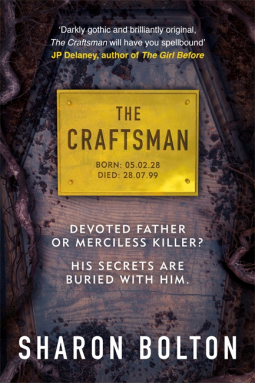
First Chapter First Paragraph: The Craftsman by Sharon Bolton

Every Tuesday First Chapter, First Paragraph/Intros is hosted by Vicky of I’d Rather Be at the Beach sharing the first paragraph or two of a book she’s reading or plans to read soon.

On Sunday I thought I’d just have a quick look at Sharon Bolton’s latest book, The Craftsman and was immediately hooked and had read 20%. I’ve had to put the other books I’m reading on hold as I just have to know what happens next.


The book opens with a letter from Sharon Bolton:

Dear Reader,

On a spring day in 1612, a mill owner called Richard Baldwin, in the Pendle forest of Lancashire chased two local women off his land, calling them ‘witches and whores’, threatening to ‘burn one and hang the other’, and in so doing, set in motion events that led to the imprisonment, trial and execution of nine women on the charge of murder by witchcraft: the infamous Pendle Witch Trials.

Like Sharon Bolton the north of England is my homeland and just as she has always wanted to write a book about witches, I have always been fascinated by such books. So it’s no wonder that I am now immersed in her book. It’s not about the Pendle Witch Trials as such, but is set in the shadow of Pendle Hill and moves between the events of 1969 and 1999.

Chapter One

Tuesday, 10 August 1999

On the hottest day of the year, Larry Glassbrook has come home to his native Lancashire for the last time, and the townsfolk have turned out to say goodbye.

Not in a friendly way.

Blurb (Amazon):

Devoted father or merciless killer?

His secrets are buried with him.

Florence Lovelady’s career was made when she convicted coffin-maker Larry Glassbrook of a series of child murders 30 years ago. Like something from our worst nightmares the victims were buried…ALIVE.

Larry confessed to the crimes; it was an open and shut case. But now he’s dead, and events from the past start to repeat themselves.““

Did she get it wrong all those years ago?
Or is there something much darker at play?

What do you think – would you read on?

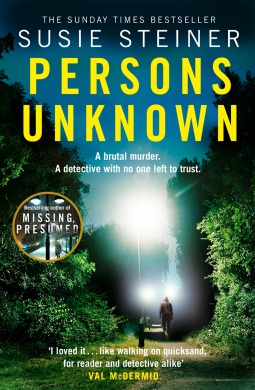
Persons Unknown by Susie Steiner

The Borough Press Harper Collins UK| 2018|384 pages|e-book |Review copy|4.5*

Six Degrees of Separation from The Tipping Point to Five Red Herrings

I love doing Six Degrees of Separation, a monthly link-up hosted by Kate at Books Are My Favourite and Best. Each month a book is chosen as a starting point and linked to six other books to form a chain. A book doesn’t need to be connected to all the other books on the list, only to the one next to it in the chain.

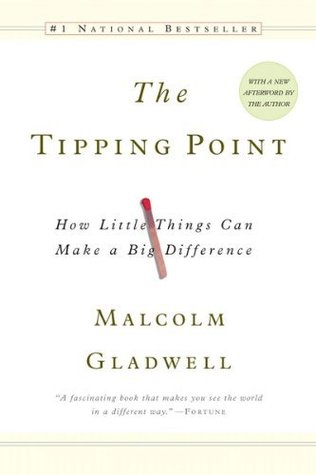
This month the chain begins with The Tipping Point: How Little Things Can Make a Big Difference by Malcolm Gladwell, a book I haven’t read. The tipping point is that magic moment when an idea, trend, or social behaviour crosses a threshold, tips, and spreads like wildfire. 

The Tipping Point: How Little Things Can Make a Big Difference

My chain is made up of a mixture of books that I’ve read or are on my TBR shelves and they are all crime fiction.

The Secret Place: Dublin Murder Squad:  5 (Dublin Murder Squad series) by [French, Tana]A Lesson in Secrets (Maisie Dobbs Mysteries Series Book 8) by [Winspear, Jacqueline]Dead Scared: Lacey Flint Series, Book 2 by [Bolton, Sharon]Time is a Killer: From the bestselling author of After the Crash by [Bussi, Michel]Five Red Herrings: Lord Peter Wimsey Book 7 (Lord Peter Wimsey Series) by [Sayers, Dorothy L.]

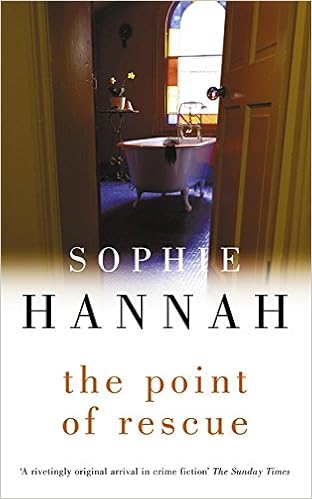
My first link in the chain is to the word ‘point’ in the book title – The Point of Rescue by Sophie Hannah, also a book I haven’t read. It’s a psychological thriller in which Sally Thorning has a secret affair.

The Secret Place by Tana French is another book about secrets that bind  a group of adolescent girls together in a girls’ boarding school when they become involved in a murder investigation. It’s the 5th book in the Dublin Murder Squad Series. Another book I haven’t read yet.

A Lesson in Secrets by Jacqueline Winspear – historical crime fiction set in 1932. Maisie Dobbs directed by Scotland Yard’s Special Branch and the Secret Service goes undercover as a lecturer at Cambridge University to monitor any activities ‘not in the interests of the Crown.’ Yet another TBR book.

Another crime fiction book set in Cambridge University is Sharon Bolton’s Dead Scared in which DC Lacey Flint is posted at the University, after  a spate of student suicides, with a brief to work undercover, posing as a vulnerable, depression-prone student.

Sticking with the theme of crime fiction takes me to my next link – Time is a Killer by Michel Bussi, a murder mystery set in Corsica. Clotilde is determined to find out what  happened in a car crash that killed her parents and brother 27 years earlier. There is a plan showing the Revellata Peninsula, a wild and beautiful coastline, where Clotilde’s grandparents lived, and all the key locations.

I think maps and plans are really useful in crime fiction. Another book that has a map is Five Red Herrings by Dorothy L Sayers. Lord Peter is on holiday in Scotland, in a fishing and painting community when Campbell, a local landscape painter and fisherman is found dead in a burn. The map at the beginning of the book helped me follow the action – I needed the map!

 ~~~

My chain this month is linked by: crime fiction, books about secrets, books set in Cambridge and books with helpful maps. And in a way the books all link back to The Tipping Point as they all demonstrate how the little, minute things in the details of each case add up to help solve the crimes.

Next month (July 7, 2018), we’ll begin with Tales of the City, the first in the much-loved series by Armistead Maupin – yet another book I haven’t read or even heard of before!

First Chapter First Paragraph: Cécile is Dead by Georges Simenon

Every Tuesday First Chapter, First Paragraph/Intros is hosted by Vicky of I’d Rather Be at the Beach sharing the first paragraph or two of a book she’s reading or plans to read soon.

This week I’m featuring Cécile is Dead by Georges Simenon, one of the books I think I’ll include in Cathy’s annual challenge, 20 Books of Summer.

Cécile is Dead (Maigret, #22)

It begins with a foggy scene.

The pipe that Detective Chief Inspector Maigret lit on coming out of his door in Boulevard Richard-Lenoir was even more delicious than usual. The first fog of the season was as pleasant a surprise as the first snow for children, especially when it was not that nasty yellowish fog you see on certain winter days, but a misty, milky vapour with halos of light in it. The air was fresh. The ends of your fingers and your nose tingled on a day like this and the soles of your shoes clicked smartly on the road.

Blurb (Amazon):

A new translation of this moving novel about the destructive power of greed, book twenty in the new Penguin Maigret series.

‘Poor Cécile! And yet she was still young. Maigret had seen her papers: barely twenty-eight years old. But it would be difficult to look more like an old maid, to move less gracefully, in spite of the care she took to be friendly and pleasant. Those black dresses that she must make for herself from bad paper patterns, that ridiculous green hat!’

In the dreary suburbs of Paris, the merciless greed of a seemingly respectable woman is unearthed by her long suffering niece, and Maigret discovers the far-reaching consequences of their actions.

Penguin is publishing the entire series of Maigret novels in new translations. This novel has been published in a previous translation as Maigret and the Spinster.

What do you think – would you read on?

Catching Up

It’s that time of year – the grass is growing at a rate of knots, the weeds are shooting up all over the place, the garden is crying out for attention and my time for writing is disappearing.

So here are two quick reviews of books I’ve read this month:

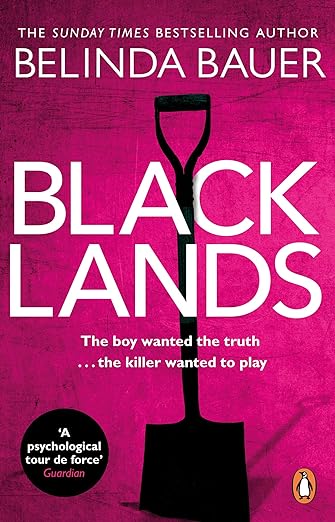
Blacklands by Belinda Bauer – her debut novel. I loved this book, so different from other crime fiction books I’ve read. It’s told mainly from Stephen Lamb’s perspective. Stephen is twelve years old. Nineteen years earlier Billy, Stephen’s uncle then aged eleven had disappeared. It was assumed that he had fallen victim to the notorious serial killer Arnold Avery, but his body had never been found. Stephen is determined to find where Arnold had buried his body and writes to him in prison.

What follows is an absolutely gripping battle of wits between Stephen and Arnold as they exchange letters. This is a dark and chilling story that took me inside the minds of both Stephen and Arnold, making this a disturbing experience and also a very moving and heartbreaking story. Since reading this book I’ve also read Snap, which although I enjoyed it I don’t think it is as good as Blacklands. I shall certainly be reading more of her books!

A Life in Questions

A Life in Questions by Jeremy Paxman (one of my TBRS). This is an interesting and entertaining autobiography, which is mainly about his career with little about his personal life, written in a very readable style. His sardonic wit and sense of humour come across, often aimed at himself. He tells of his childhood and his career first with the BBC in Northern Ireland and then in various war zones and trouble spots before becoming a presenter on Newsnight, where his interviews with politicians both infuriated and delighted me, and quizmaster on University Challenge. He has also done documentary programmes including an enlightening one on the EU, on art, and on history and has written several books on a variety of subjects. The only one I’ve read is The English: A Portrait of a People.

As I would expect from such a forthright person Paxman’s book is full of his opinions, but I couldn’t help wondering how much of  his grumpiness is a facade and what the real man behind it is really like. Maybe his reflections on his love for fly fishing and for nature, give us a glimpse of the real person. I liked these passages very much. Extending to 6 pages he describes how fishing is

essentially about trying to inserting yourself into an environment where you don’t belong, without being noticed. If you blunder about you won’t catch anything – on a sunny day you will be able to see the trout darting off in all directions when they sense your footfall on the bank, their flicking tails a snub to your clumsiness. Be quiet. And then, when you’re stalking a fish, things happen around you. A grass snake swims sinuously across the river. A water vole plops into a stream. Wagtails and oystercatchers dance at the water’s edge. Swallows and martins swoop low over the water, snatching flies. A kingfisher flashes that spectacular iridescent blue above the river; it is gone in an instant.

… To become absorbed in the natural world frees your mind: fish cannot survive in our element, and only imagination will allow us to live in theirs. …

In essence it is a solitary occupation. But the best fishing days are those spent with friends, meeting for a picnic lunch on the riverbank, united in the awareness that we are doing something which defies rational explanation. (extracts from pages 254-255)


Although I don’t fish I think I’d like to read his book on fishing: Fish, Fishing and the Meaning of Life.