The Murder of My Aunt by Richard Hull

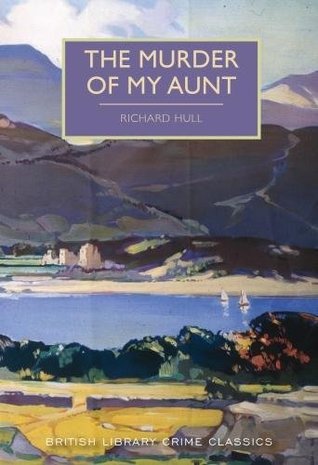
The Murder of My Aunt Poisoned Pen Press|4 September 2018 |227 pages|e-book |Review copy|5* This edition, published in association with the British Library, has an introduction by Martin Edwards. It was first published in 1934 by Hamish Hamilton. It was Richard Hull’s first novel. His real name was Richard Henry Sampson (1896 – 1973) and up until 1934 he had worked as a chartered accountant. With the success of The Murder of My Aunt he devoted himself to writing. The Murder of My Aunt is one of the best of the classic crime fiction novels from the Golden Age that I’ve read. On the face of it has a straightforward plot as Edward Powell, the narrator for most of the book, plots to murder his Aunt Mildred. They live in a house called Brynmawr on the outskirts of the Welsh town of Llwll. Mildred is his guardian, his parents having died in mysterious circumstances when Edward was very young. He detests living in Lwll and he also detests his aunt. It’s a contest of wills as Mildred finds Edward a great trial, she sees all his faults – he is selfish, self-centred, vain and lazy and foppishly effeminate – and she constantly nags him to change his ways, or she will ‘have to take action’. Edward, though decides that he will take action, thinking his life would be so much better without Mildred and he sets out to find a way to arrange her death so that no suspicion will fall on him. He makes copious notes of various methods and the steps he plans to take and that’s more difficult than he expected as his attempts keep failing. But it’s the writing that lifts this book from the ordinary to an original and funny murder mystery and, whilst not laugh-out-loud funny, I thought it was brilliant. It’s witty and ironic from the start as Edward pontificates on the pronunciation of the word ‘Lwll’.  Neither Edward nor Mildred come across as caricatures, but as real people, both of them with their own faults. Edward is just so insufferably awful that I felt on Mildred’s side in their battle of wits, even though she shows him up in front of the whole village – and after all she had brought him up. Once I started to read The Murder of My Aunt I was captivated and I had to read it quickly, anxious to find out if Edward did manage to kill his aunt. It makes very entertaining reading and I loved the ending, which took me by surprise and I thought was so clever – definitely a 5* read for me! Now I’m looking forward to reading more of  Richard Hull’s books and have Excellent Intentions lined up to read soon. My thanks to the publishers, Poisoned Pen Press, for my review copy via NetGalley. This is qualifies for the Mount TBR Challenge and for the Calendar of Crime Challenge for March in the category of a book in which money/fortune/inheritance has a major role.
Six Degrees of Separation: from Fight Club to The Word is Murder

I love doing Six Degrees of Separation, a monthly link-up hosted by Kate at Books Are My Favourite and Best. Each month a book is chosen as a starting point and linked to six other books to form a chain. A book doesn’t need to be connected to all the other books on the list, only to the one next to it in the chain.

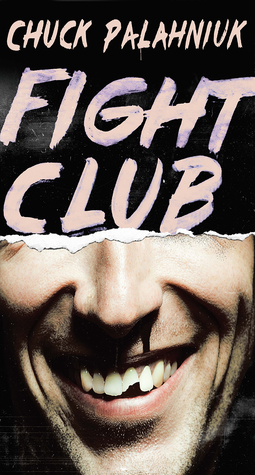
Fight Club

This month the chain begins with Fight Club by Chuck Palahniuk, a book I haven’t read but it’s about a club where men meet in the basement of bars and can fight ‘as long as they have to’.

The Friday Night Knitting Club

So I’m moving away from a club where men meet and fight to a club where women meet to exchange knitting tips, jokes, and their deepest secrets. It’s The Friday Night Knitting Club by Kate Jacobs. I haven’t read this book either. It seems as though they didn’t do much knitting so maybe there was more ‘natter’ than ‘knitting’. It sounds a bit too angst ridden for me and probably no more appealing than a fight club.

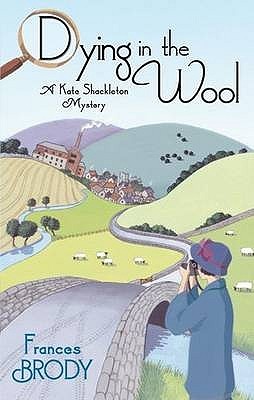
Dying In the Wool (Kate Shackleton, #1)

So, in a complete change of genre I’m moving on to crime fiction and my next link is to another use of wool in Dying in the Wool the first of Frances Brody’s Kate Shackleton Mysteries, crime fiction set in Yorkshire in 1922, with flashbacks to 1916.  It’s a post World War 1 crime novel, along the lines of Jacqueline Winspear’s Maisie Dobbs and Carola Dunn’s Daisy Dalrymple books, with an independent female amateur detective. Kate investigates the disappearance of mill owner Joshua Braithwaite who went missing after apparently trying to commit suicide.

Gallows View, the first Inspector Banks book by Peter Robinson, is also set in Yorkshire, where Alice Matlock, an old woman, living on her own, is found dead in her ransacked house in Gallows View, a row of old terraced  cottages. One of the suspects for her murder is a Peeping Tom who is targeting young, blonde women, following them as they leave the pub and then watching as they undress for bed.

A Good Hanging

There is also a Peeping Tom in Tit for Tat, one of the stories in Ian Rankin’s collection of short stories, A Good Hanging. Rebus investigates a fire in a tenement in Edinburgh where John Brodie lives after a woman in a tenement opposite reported a Peeping Tom had been spying on her, aiming his binoculars towards her flat. He claims he was ‘bird-watching’.

When Will There Be Good News? (Jackson Brodie, #3)

KateAtkinson has written four books about another character called Brodie – Jackson Brodie. My favourite of these books is the third one – When Will There Be Good News? It’s set mainly in Edinburgh where Brodie, along with Detective Chief Inspector Louise Monroe, is involved in the search for a missing woman. It has the most complicated plot, with many twists and interlinking sub-plots (some with convenient coincidences) and I loved it.

The Word Is Murder

Brodie is an ex-policeman and now a private investigator, as is  Daniel Hawthorne in The Word is Murder by Anthony Horowitz. This is a very clever and different type of murder mystery in which the author plays the part of himself helping Hawthorne to solve the murder of Diana Cowper who was killed on the same day that she had made arrangements for her funeral. I was totally unable to solve the mystery, the clues were all there, but I was so involved in sorting out what was real and what wasn’t and enjoying the puzzle that I completely missed them.

This month my chain has travelled from America to the United Kingdom, connected by clubs, wool, settings in Yorkshire, Peeping Toms, characters called Brodie and ex-policemen turned private investigators.

Next month (2 March) the chain will start with The Arsonist by Chloe Hooper.

My Friday Post: The Murder of My Aunt by Richard Hull

Book Beginnings Button

Every Friday Book Beginnings on Friday is hosted by Gillion at Rose City Reader where you can share the first sentence (or so) of the book you are reading, along with your initial thoughts about the sentence, impressions of the book, or anything else the opener inspires.

I have just started to read The Murder of My Aunt by Richard Hull, a Crime Classic first published in 1934.

The Murder of My Aunt

It begins:

My aunt lives just outside the small (and entirely frightful) town of Llwll. That is exactly the trouble.

Also every Friday there is The Friday 56, hosted by Freda at Freda’s Voice.

30879-friday2b56These are the rules:

  1. Grab a book, any book.
  2. Turn to page 56, or 56% on your eReader. If you have to improvise, that is okay.
  3. Find any sentence (or a few, just don’t spoil it) that grabs you.
  4. Post it.
  5. Add the URL to your post in the link on Freda’s most recent Friday 56 post.

Pages 55-56:

Blood is so repellent. In fact the very thought is so disturbing that I had to stop writing and read a story of de Maupassant’s to calm my nerves, before I could continue to write these notes.

~~~

Blurb

Edward Powell lives with his Aunt Mildred in the Welsh town of Llwll. His aunt thinks Llwll an idyllic place to live, but Edward loathes the countryside and thinks the company even worse. In fact, Edward has decided to murder his aunt. A darkly humorous depiction of fraught family ties, The Murder of My Aunt was first published in 1934.

This tempts me in different ways – I like the title, I like murder mysteries and I like the promise of humour. And I like the cover too.

 
What do you think? Does it tempt you or would you stop reading? 

The Glass Woman by Caroline Lea

The Glass Woman

Penguin UK Michael Joseph|7 February 2019 |400 pages|e-book |Review copy|3*

Top Ten Tuesday: The Ten Most Recent Additions to My To-Read List

top-ten-tuesday-new

Top Ten Tuesday is a weekly meme created by The Broke and the Bookish and now hosted by Jana at That Artsy Reader Girl. For the rules see her blog.

This week’s topic is The Ten Most Recent Additions to My To-Read List. These are in no particular order, except for the first three which are books to be released later this year. I’m looking forward to reading each one of them!

The Silence of the GirlsThe Bear Pit: The Seeker 4This Poison Will Remain

The Silence of the Girls by Pat Barker, out in paperback in June 2019, a retelling of the Trojan War.

The Bear Pit by S G MacLean, the 4th Damian Seeker novel, out in July 2019, set in the 17th century England under the rule of Cromwell, the Lord Protector.

This Poison Will Remain by Fred Vargas out in paperback in August 2019, a Commissaire Adamsberg mystery investigating the death of three men, all killed by the venom of the recluse spider.

TranscriptionThe Wych ElmDear Mrs BirdThe Sealwoman's Gift

Transcription by Kate Atkinson – a standalone novel set in London in the world of espionage in the 1940s and 50s.

The Wych Elm by Tana French, a standalone psychological thriller.

Dear Mrs Bird by A J Pearce, historical fiction set in London in 1941.

The Seal Woman’s Gift by Sally Magnusson, set in 1627 as pirates raided the coast of Iceland and abducted 400 people into slavery in Algiers.

TemplarsThe Song of AchillesBlood & Sugar

The Templars by Dan Jones, non fiction about the Knights Templars and the Crusades

The Song of Achilles by Madeleine Miller, more historical fiction about the Trojan War and its heroes.

Blood and Sugar by Laura Shepherd-Robinson, historical crime fiction set in June, 1781 about the slave trade.

Destroying Angel by S G MacLean

Destroying Angel (Damian Seeker #3)

Destroying Angel is S G MacLean’s third book in her Damian Seeker series, historical crime fiction set during the Interregnum under Oliver Cromwell, the Lord Protector. Damian Seeker, Captain of Cromwell’s Guard, works for Thurloe, Cromwell’s Chief Secretary and spy master, in charge of the security of the regime. I have read The Black Friar, the second book in the series, but I have still to read first one, The Seeker – I have reserved this at the library, so hope to read it soon.

This third book is set in 1655 when Seeker is sent north by Colonel Robert Lilburne to the village of Faithly, on the Yorkshire moors. The Rule of the Major-Generals has begun in which England and Wales were divided into ten regions, each governed by a major-general who answered to the Lord Protector. Seeker is to brief the local commissioner, Matthew Pullan, on the latest anti-Royalist laws and the new  measures  and taxes to be imposed on Royalists, to prepare the way for the rule of the major-generals. As the vicar, Septimus Jenkins complains:

This England that Cromwell is making is not the England of free men. … Local officers – village constables – to be encouraged to inform on magistrates, justices of the peace, even, that they don’t consider well enough affected to the new ways. No race meetings nor cockfights nor bear-baitings to be held, no gatherings of Royalists in men’s private houses nor in public places even, for fear that should  a handful of themselves in one place they will have nothing to do but plot to overthrow Cromwell. Answer for your movements, don’t gather with your friends. (page 50)

These are hard times and Faithly is a place full of resentment and fear, brought to crisis point when Caleb Turner, a Trier appointed by the government to enforce Puritan morality arrives in the village. In particular he has come to try the vicar for ‘ungodly acts’. Added to that people have been whipped up into a frenzy of superstition at the suspicion of witchcraft. And that is made much worse when Gwendolen, Matthew’s young ward, who some suspect was a witch, dies from eating poisoned mushrooms – the deadly destroying angel fungus.

Faithly Manor, on Faithly Moor, is the home of Sir Edward Faithly, the local JP, whose father Sir Anthony and younger brother, Thomas had fought for the Stuarts. Sir Anthony was killed during the Civil War and Thomas had fled the country, whilst Edward had stayed on to run their estate. There are rumours that Thomas has now returned to England and Seeker had been sent to discover his whereabouts.

As well as searching for Thomas, Seeker has to find out how Gwendolen died – was it an accident or had the poison been intended for someone else and if so who and why? A large part of the book is set in York and, helped by the street plan showing the key areas and buildings, I enjoyed following Seeker’s walks around the City. Seeker is my favourite character in the book; an enigmatic character, a man both respected and feared, and a man to trust. I felt I knew very little, though, about his background so was pleased that as the story progressed more details of his personal history are revealed with the appearance of people from his past.

One reason I like S G MacLean’s books (her earlier books were written under the name of Shona MacLean) is that she has based them on solid historical research (she has an M.A. and Ph.D. in History from the University of Aberdeen). Another reason is that her style of writing suits me perfectly, the characters are just right, credible well-rounded people, and the plot moves along swiftly, full of atmosphere and tension.

The Bear Pit, the fourth Seeker book is due out this July, taking him back to London to investigate illegal gambling dens. And so I hope to find out yet more about Damian Seeker.

  • Paperback: 416 pages
  • Publisher: Quercus (12 July 2018)
  • Language: English
  • ISBN: 978-1-78648-4178
  • Source: Library book
  • My Rating: 4*

Destroying Angel qualifies for the When Are You Reading? challenge, the Calendar of Crime challenge in the category of a book originally published in July, and as it is a library book it also qualifies for the The Virtual Mount TBR challenge.