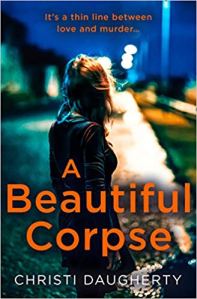
A Beautiful Corpse by Christi Daugherty

a beautiful corpse

Harper Collins|March 2019|384 pages|e-book via NetGalley|Review copy|5*

I saw A Beautiful Corpse by Christi Daugherty on NetGalley and thought I would like it from the description, but not expecting to enjoy it as much as I did. I didn’t realise that it’s the 2nd in the Harper McClain series but I think it works very well as a standalone.

I liked a lot about it – it is well written, has a fast-paced plot, but not at the expense of the characters, and it’s set in Savannah, with its historic buildings, parks and ancient oak trees covered in Spanish moss.

Harper McLain is a crime reporter with the Savannah Daily News. The book begins late one evening as she is playing pool in the Library Bar with her friend and bartender, Bonnie. The crime photographer rings her, telling her about a murder on downtown River Street, a narrow cobblestoned lane between the old wharves and warehouses and the Savannah River. And she is shocked to discover that the young woman sprawled on the uneven cobbles is Naomi, a law student, who had worked with Bonnie at the Library Bar. She had been shot dead.

There are three men who are all suspects, but her current boyfriend Wilson Shepherd is the prime suspect. The Library Bar owner, Fitz, is also a suspect especially as no one has seen him after the shooting. And then there is her ex-boyfriend Peyton Anderson, the powerful DA’s son. The police are convinced that Wilson is the killer, but after Harper talked to him, she just can’t believe that it was him. There were no witnesses to the shooting and when Harper talks to Jerrod, Naomi’s father, she realises that Peyton’s alibi may not be as solid as the police maintain it to be. 

This a story of obsession and jealousy and the tension rises as the killer’s focus shifts on to Harper herself. She is a strong determined character, determined to find out the truth. But as well as the murder investigation Harper has her own personal problems to contend with. Her job as a reporter is under threat, someone is breaking into her apartment and her personal relationship with Detective Luke Walker seems about to be revived, but she is wary where it will end. On top of all that she is desperate to find out who had killed her mother twelve years earlier. 

I loved it and it has made me eager to read the first book, The Echo Killing, to find out more about Harper and her background and also to read the next book in the series – Revolver Road due to be published in March next year – to find out what happens next.

WWW Wednesday: 27 November 2019

IMG_1384-0

WWW Wednesday is run by Taking on a World of Words.

The Three Ws are:

What are you currently reading?
What did you recently finish reading?
What do you think you’ll read next?

a beautiful corpse

Currently I’m reading A Beautiful Corpse, crime fiction by Christi Daugherty, set in Savannah, Georgia. A beautiful law student has been killed and three men close to the victim are questioned. All of them claim to love her. All of them say they are innocent of her murder.  As journalist Harper McClain unravels a tangled story of obsession and jealousy, the killer turns his focus onto her. I’ve read over half the book and it is growing on me – I’m enjoying it more and more as I read on.

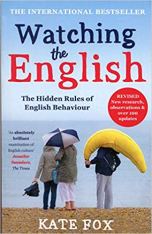
Watching the EnglishI’m also reading Watching the English by Kate Fox, a nonfiction book about the ‘Hidden Rules of English Behaviour’. I’ve only just started reading and so far it is really interesting as the author sets out her parameters and defines what she considers to be  ‘Englishness’ and why it is different from ‘Britishness’, which I think is a very tricky question and one that I have been puzzling over for years.

She refers in some instances to Jeremy Paxman (and I see from the index there are several references to him in this book) and she lists his book The English: A Portrait of a People, which I read about 5 years ago. I decided from reading his book that I didn’t really feel any clearer about what is is to be ‘English’ and it seemed there really is no such thing as ‘the English’ – we’re a mixture of all sorts, or as Paxman puts it, The English are a mongrel race‘. (page 59)

Furious hours

I’ve recently finished Furious Hours: Murder, Fraud, and the Last Trial of Harper Lee by Casey Cep, a nonfiction book about Willie Maxwell, an Alabama serial killer and the true-crime book that Harper Lee worked on obsessively in the years after To Kill a Mockingbird. I found this a fascinating book and posted my review yesterday

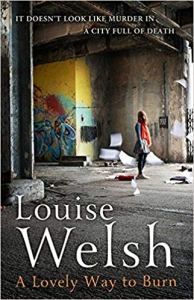
As for my next book I don’t know right now. I’m torn between wanting to read several, including A Pinch of Snuff by Reginald Hill, the 5th Dalziel and Pascoe novel, A Lovely Way to Burn by Louise Welsh, the 1st in her Plague Trilogy, Go Set A Watchman by Harper Lee and In Cold Blood by Truman Capote (the last two as I’ve just finished reading Furious Hours).

Have you read any of these books?  Do any of them tempt you? 

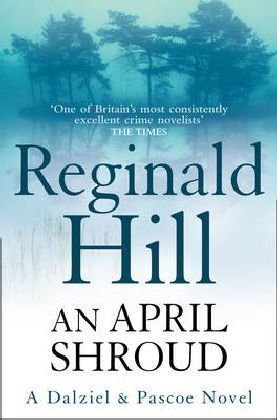
An April Shroud by Reginald Hill

April Shroud

HarperCollins|2011|326 pages|Paperback|my own copy| 3* 

An April Shroud is Reginald Hill’s fourth Dalziel and Pascoe novel, first published in 1975, in which Dalziel is on holiday and Pascoe is on his honeymoon.

From the back cover:

Inspector Pascoe may take holidays but Death never does – and neither, it seems, does Superintendent Dalziel. A watery accident on a solitary country holiday leads to the Fat Man drying off in Lake House, a nearby mansion well past its prime.

The same cannot be said for its owner, the fulsome Mrs Fielding. She has only recently buried her husband, but seems more concerned with her future. Dalziel’s curiosity is aroused – purely professionally of course – and by the time Pascoe’s honeymoon is over, there have been several more deaths and Dalziel might have compromised himself beyond redemption …

Whereas in the previous book, Ruling Passion Dalziel’s character was more of a caricature, on An April Shroud Hill develops his character more fully, in fact I think the book is primarily a superb character study of Dalziel.  He is rude, coarse and insensitive, but his capacity for getting to the bottom of a mystery is shown to be immense.

Although on holiday he cannot help but ferret out what really happened to Conrad Fielding, when he meets the Fielding family on their way back home after Conrad’s funeral. He was rescued by them when his journey south was brought to an abrupt end by floods. The police had decided that Conrad’s death had been an accident – he had fallen off a ladder onto the drill he had been using and it had pierced his heart. Mrs Fielding invites Dalziel to stay at their home, Lake House, where it soon becomes apparent to him that the family have plenty of secrets they would rather he didn’t discover.

I couldn’t easily distinguish who was who in the family, except to realise that they were all rather odd. The plot seemed over complicated and in parts I thought I was reading a farce as more bodies turned up dead. I had little idea who was guilty and the identity of the culprits took me by surprise. Dalziel’s ‘interlude’ with the widow, Bonny Fielding, was entertaining as well as revealing about Dalziel’s personal life – he is sensitive and vulnerable beneath his boorish exterior. 

Overall, I enjoyed the book, although for me it was far from Hill’s best Dalziel and Pascoe book and I’m looking forward to reading book 5, A Pinch of Snuff, as I know that the later books are much better. Reginald Hill wrote 24 Dalziel and Pascoe novels. I’ve read some of them and currently I’m reading my way through the rest.

These are the Dalziel and Pascoe books I’ve read so far:

1. A Clubbable Woman (1970) 
2. An Advancement of Learning (1971)
3. Ruling Passion (1973)
4. An April Shroud (1975) 
8. Exit Lines (1984)
11. Bones and Silence (1990) 
14. Pictures of Perfection (1993) – read, no post
17.On Beulah Height (1998) 
20. Death’s Jest Book (2002) 
21. The Death of Dalziel (2007)

Reading Challenges: Mount TBR 2019 (a book I’ve owned for four years) and the Calendar of Crime 2019 challenge (for the month of April – a book with the month in the title).

Latest Additions at BooksPlease

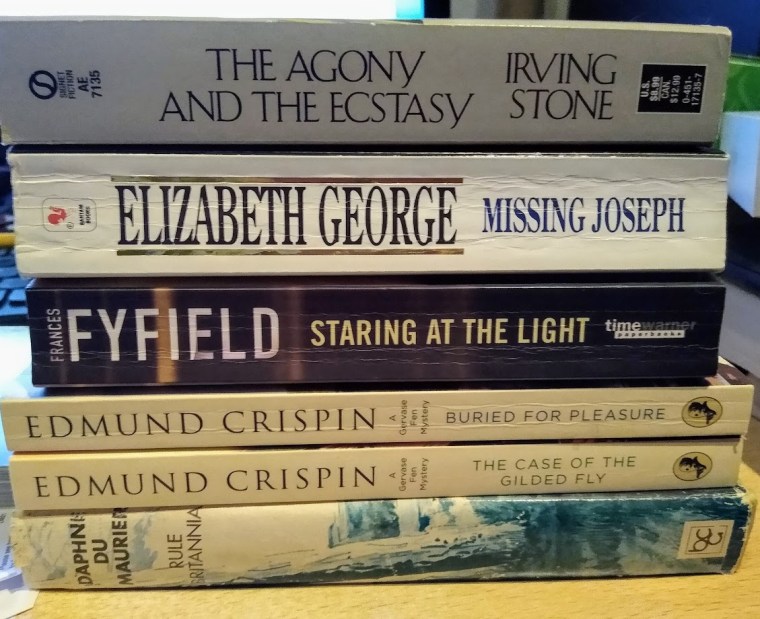
Yesterday I brought this little pile of books home from Barter Books in Alnwick, my favourite bookshop. (This is where you can ‘swap’ books for credit that you can then use to get more books from the Barter Books shelves.)

Barter Bks Nov 2019

From top to bottom they are:

The Agony and the Ecstasy by Irving Stone, a biographical novel of Michelangelo. I was delighted to find this almost pristine copy on the Barter Book shelves to replace my old tatty copy that is falling to pieces (you can see it in this post). There’s not a crease on the spine – I don’t think it’s ever been read!

Missing Joseph: An Inspector Lynley Novel by Elizabeth George. I haven’t read any of the Inspector Lynley novels, although I’ve watched the TV adaptations. This is the sixth in the series. I’m wondering if the book will be as good as the TV version. An Anglican priest is found dead – from accidental poisoning. But his death is far from straight forward.

Staring at the Light by Frances Fyfield. I’ve read just one of her books before, which I enjoyed. John Smith’s twin has disappeared. Cannon, a gifted artist, goes into hiding to avoid John’s destructive behaviour. Attorney Sarah Fortune shields Cannon, and more importantly, his wife, the real target. But is Cannon really telling the truth about John? Val McDermid is quoted on the back cover: ‘I doubt I will read a better book this year.’

Next two books by Edmund Crispin. I’ve read reviews of his books, so when I saw these two I decided to see for myself what they are like. The Case of the Gilded Fly, Crispin’s first novel, contains the first appearance of eccentric amateur detective Gervase Fen, Professor of English Language and Literature in the University of Oxford. It’s a locked-room mystery, written while Crispin was an undergraduate at Oxford and first published in the UK in 1944.

And Buried for Pleasure, in which Gervase Fen is running for parliament and he finds himself ‘in a tangled tale of lost heirs, eccentric psychiatrists, beautiful women and vengeful poisoners.’

And last but not least I found this hardback copy of a Daphne du Maurier novel – Rule Britannia. First published in 1972 in this novel the UK has withdrawn from the Common Market (as it was then called) and has formed an alliance with the United States – supposed to be an equal partnership but it looks to some people like a takeover bid. Rather prescient of Daphne du Maurier, I wonder …

Nonfiction November: Week 2 – Book Pairing

nonficnov 19

I’m taking part in Nonfiction November 2019 again this year. It was one of my favourite events last year – this year it will run from Oct 28 to Nov 30. Each Monday a link-up for the week’s topic will be posted at the host’s blog for you to link your posts throughout the week.

This week’s topic is: 

Week 2: (Nov. 4 to 8) – Book Pairing (host: Sarah @ Sarah’s Book Shelves). This week, pair up a nonfiction book with a fiction title. It can be a ‘If you loved this book, read this!’or just two titles that you think would go well together. Maybe it’s a historical novel and you’d like to get the real history by reading a nonfiction version of the story. 

I’ve recently read a couple of newly published historical novels that I think go well together with nonfiction books about the same subjects:

First, The Vanished Bride by Bella Ellis, a novel I loved, pairing it with  Juliet Barker’s biography of the Brontë family, The Brontës

When I first came across The Vanished Bride I wasn’t at all sure I wanted to read it, as I’m never very keen on books about famous authors solving crimes. However, the Brontë sisters books have been amongst my favourites for years and I was curious find out what this book was all about. ‘Bella Ellis’ is the Brontë inspired pen name for the author Rowan Coleman, who has been a Brontë devotee for most of her life.

It is historical fiction set in 1845 about Charlotte, Emily and Anne and their brother, Branwell and how the sisters became ‘detectors’, or amateur sleuths as they investigate the disappearance of a young woman from Chester Grange, just across the moors from the Brontë Parsonage – which is, of course purely fiction. But it is not all pure fiction – in the Author’s Note Bella Ellis explains that it is based on biological facts or inspired by them.

Reading The Vanished Bride has inspired me to get back to reading the new edition of  The Brontës, Juliet Barker’s biography of the family.  I began reading (and never finished) it a few years ago. It is the result of 11 years’ research in archives throughout the world.  It contains a wealth of information, is illustrated and has copious notes and an index.

Juliet Barker is an internationally recognised expert on the Brontës and from 1983 to 1989 she was curator and librarian of the Brontë Parsonage Museum. Her qualifications are impeccable – she was educated at Bradford Girls’ Grammar School and St Anne’s College, Oxford, where she gained her doctorate in medieval history. In 1999 she was awarded an honorary Doctorate of Letters by the University of Bradford, and in 2001 she was elected a Fellow of the Royal Society of Literature. For more information see her website.

Then I thought of these two books –  A Single Thread by Tracy Chevalier, a novel published this year and Singled Out by Virginia Nicholson published in 2007.

Both are about ‘Surplus Women‘ – nearly three-quarters of a million soldiers were killed during World War One, many of them unmarried young men, leaving a generation of women who had believed marriage to be their birthright without prospective husbands. 

A Single Thread focuses on one young woman, Violet whose fiancé, Laurence was killed in the First World War. Determined to be independent she leaves her mother and moves to Winchester, where she joins the Winchester Cathedral Broderers, a group of women dedicated to embroidering hassocks and cushions for the seats and benches. The difficulties of being independent are brought home to her as she struggles on her wages as a typist to pay for her lodgings, laundry and coal, let alone feed herself. And then her mother is admitted to hospital and she has to decide whether to return home to look after her.

Tracy Chevalier writes novels on a variety of subjects, carrying out meticulous research for each one. In this book she lists a number of the many resources she used, including details of Louisa Pesel’s embroidery work as well as the history of Winchester Cathedral, bell-ringing, 1930s women and life in Britain in the 1930s .

Singled Out, in contrast, is nonfiction, telling individual stories of how these ‘surplus women‘ coped with enforced spinsterhood. Tracing their fates, Virginia Nicholson shows how the single woman of the inter-war years had to depend on herself and, in doing so, helped change society. These women harboured harrowing secret sadness, yearning for the closeness of marriage and children. Beginning in 1919 the book traces their experiences across the next two decades as they faced life alone, looking at how they survived economically, emotionally and sexually. There is a note on the sources she used and a select bibliography, plus photographs and an index.

Virginia Nicholson’s father was the art historian and writer Quentin Bell, acclaimed for his biography of his aunt Virginia Woolf and her mother Anne Olivier Bell edited the five volumes of Virginia Woolf’s Diaries. In June 2019 she was elected a Fellow of the Royal Society of Literature. The citation quoted Carmen Callil: “Virginia Nicholson is the outstanding recorder of British lives in the twentieth century.” For more information about see her website.

I have enjoyed looking at these pairs of books. Which books would you choose to compare?
Six Degrees of Separation: from Alice’s Adventures in Wonderland to Strong Poison

I love doing Six Degrees of Separation, a monthly link-up hosted by Kate at Books Are My Favourite and Best. Each month a book is chosen as a starting point and linked to six other books to form a chain. A book doesn’t need to be connected to all the other books on the list, only to the one next to it in the chain.

Alice Carroll

This month the chain begins with Alice’s Adventures in Wonderland by Lewis Carroll– a book I read as a child and loved. 

I was tempted to make my first link to Through the Looking Glass, Carroll’s follow-up book, or another of the books I loved as a child, but instead I chose:

Malice in wonderland

Malice in Wonderland by Nicholas Blake. In this Golden Age mystery Wonderland is a holiday camp, set on a cliff top overlooking the sea and there are several allusions to Lewis Carroll’s Alice’s Adventures in Wonderland. The train to Wonderland plunges into a tunnel, just as Alice falls down a rabbit hole and finds herself in Wonderland. And there is a prankster in the camp, the self-styled ‘Mad Hatter’, who is playing nasty and cruel practical jokes on the holiday makers. One of the visitors is Paul Perry, a young man who calls himself a scientist, who is there taking notes for the Mass Observation project.

Our Longest days

Mass Observation is my second link.  In August 1939, with war approaching, the Organisation asked its panel to keep diaries to record their daily lives and selections from fifteen of these diaries are included in Our Longest Days: A People’s History of the Second World War edited by Sandra Koa Wing.  

Testament of youth

Diaries provide the next link – Testament of Youth by Vera Brittain is based on her diaries, telling of her life up to 1925, concentrating on the World War One years. Vera was a VAD (Voluntary Aid Detachment) during the war, nursing casualties both in Britain and France.

AC Autobiography

Agatha Christie was also a VAD member during World War One. In 1917 she worked in a hospital dispensary in Torquay and studied to take her Apothecaries Hall examination so she could dispense for a medical officer or a chemist. In her Autobiography she wrote that it was whilst she was working in the dispensary that she first thought of writing a detective story. Surrounded by poisons she decided it should be about a murder by poisoning.

Mysterious Affair at Styles

So my fifth link is to the first detective story she wrote The Mysterious Affair at Styles. It is set during the First World War I at Styles Court, a country house in Essex, owned by the very wealthy Mrs Inglethorp, who dies from strychnine poisoning. Captain Hastings enlists the help of Poirot, who is living in the village of Styles St Mary with other Belgian refugees, to investigate the matter.

Strong Poison

And my final link is Strong Poison by Dorothy L Sayers. Lord Peter Wimsey, the aristocratic amateur detective, and Harriet Vane, a crime fiction writer, first met in this murder mystery. Harriet is on trial for the murder of her former lover, Philip Boyes, who died from arsenic poisoning. Wimsey, attending the trial, is convinced she is innocent and sets out to prove it … and falls in love with her. 

My chain is linked by books about Wonderland, the Mass Observation project, diaries VADs and poison. It passes from fantasy land through the World War One years, and back into the world of fiction. It includes crime fiction and non-fiction.

Next month (December 7, 2019), we’ll begin with Jane Austen’s unfinished manuscript, Sanditon.