Adding to the TBR Shelves

A few days ago I rearranged my bookshelves – and now I’ve got to make space for a few more books, because I went to Barter Books in Alnwick on Tuesday and came home with more books to add to the TBR shelves.

Dead Scared pile I really enjoy going to Barter Books, wandering around the shelves and browsing. But I also take with me lists of books I want to look at including a list of the Agatha Christie books I haven’t read and don’t already own. There is always a good selection of books, the stock regularly changes, so there are always ‘new’ books to look at. (Barter Books is, as its name indicates, a sort of exchange of used books; you take some in and choose others in exchange. You can, of course, just buy the books if you haven’t any credit.)

I’m very pleased with this little pile of books because I’ve been on the look out for some of them for quite a while, although one of them is a book (Talking to the Dead) that I only read about on Tuesday morning on Alex’s blog Thinking in Fragments. They are (from top to bottom):

  • The Floating Admiral – this wasn’t on my list of books to look for, but it was filed with the Agatha Christie books (I always look there first) and I thought it looks good. It’s a collaboration by Agatha Christie, Dorothy L Sayers and ten other crime writers from the Detection Club, with a prologue by G K Chesterton. It was originally published in 1931 and this new edition published in 1911 has an introduction by Simon Brett.
  • The Mysterious Mr Quin by Agatha Christie, featuring Mr Satterthwaite and Mr Quin, the man ‘who appears from nowhere‘ and ‘unravels mysteries that seem incapable of solution’. It is one of the early Christie books, first published in 1930. This edition is one of the Penguin Crime fiction books in green and white reprinted in 1961 for 2/6. This fills a gap in my reading of her earliest books.
  • The Mousetrap and Selected Plays by Agatha Christie. There are three other plays in this collection – And Then There Were None, Appointment with Death and The Hollow, adapted by Agatha Christie from her novels, which, with the exception of Appointment with Death, I have read, so it’ll be interesting to see how they differ from the originals.
  • The Queen of the Tambourine by Jane Gardam. This is the only non crime fiction book in the pile, by the author of Old Filth, which I loved. It’s described on the front cover as ‘Brilliant, wickedly comic … masterly and hugely enjoyable‘. It’s about a do-gooder and promises to be a refreshing change from the crime fiction.
  • Talking to the Dead by Harry Bingham – the book recommended by Alex. It’s the first in the Fiona Griffiths series, a crime thriller in which police woman Fiona Griffiths investigates the death of a woman and her six-year old daughter. It is described on the back cover as ‘a stunner with precision plotting, an unusual setting, and a deeply complex protagonist … breathtaking.’
  • Dead Scared by S J Bolton. I like S J Bolton’s books and I’ve been looking out for this one, the second in her Lacey Flint series ever since I read the first book, Now You See Me. This is another crime thriller featuring a police woman, this one investigating a spate of suicides – all female university students.

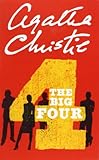
The Big Four by Agatha Christie

I’ve read a lot of Agatha Christie’s books, most of which I’ve really enjoyed, but I’m not too keen on her books that involve spies and gangs of international criminals who are seeking world domination. And The Big Four, first published in 1927, is one of those books.

Basically it’s a collection of short stories (derived from a series of stories that first appeared in The Sketch, a weekly magazine) in which Hercule Poirot and Captain Hastings lock forces with a vast organisation of crime led by four individuals, in the course of which they uncover the identity of the ‘Big Four’. The aim of the Four is ‘to destroy the existing social order, and to replace it with an anarchy in which they would reign as dictators.’  They are a Chinese man, Li Chang Yen, an American multi-millionaire, a French woman and ‘the Destroyer’, an Englishman. Poirot is convinced that they are behind everything:

The world-wide unrest, the labour troubles that beset every nation, and the revolutions that break out in some. There are people, not scaremongers, who know what they are talking about, and they say that there is a force behind the scenes which aims at nothing less than the destruction of civilisation. (page 25)

In the course of their investigations Poirot and Hastings find themselves in many dangerous  situations, all melodramatic and a little far-fetched, from which they miraculously escape certain death. The Big Four is action packed, with Poirot uncharacteristically chasing off after the criminals, still using his ‘little grey cells’ of course, whilst Hastings is knocked out and kidnapped, and Li Chang Yen threatens to abduct and torture Hasting’s wife, whom he had left behind in their ranch in the Argentine.

This is not one of my favourite Agatha Christie books. But perhaps it is not so surprising that The Big Four is far from her best. It was in  December 1926 that Agatha Christie disappeared after her husband, Archie Christie had told her he wanted a divorce and in 1927 she was still recovering from this. It was her brother-in-law’s suggestion that the last Poirot short stories she had published could be re-written to ‘have the appearance of a book‘ as a ‘stop-gap‘ – and the result was The Big Four, which, I think, suffers from being a loosely connected collection of episodes. Agatha explained in her Autobiography that Campbell Christie had helped her with linking the short stories as she was ‘unable to tackle anything of the kind.‘ (Autobiography page 365)

Knavesborough Stories by Dorte Hummelshoj Jakobsen

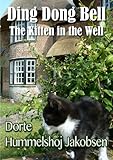
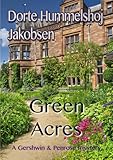
Recently Dorte Hummelshoj Jakobsen kindly made two of her short stories available to me (e-books) for review. They are both about the Gershwin family in Knavesborough, a fictional village in Yorkshire, namely Ding Dong Bell, the Kitten in the Well and Green Acres. I often find short stories lack the necessary depth to be convincing – either weak plots and/or characterisation, but these short stories are both convincing and satisfying. Maybe it helps that they are continuations of other stories, or in the case of Ding Dong Bell, the Kitten in the Well, a prequel.

Ding Dong Bell, the Kitten in the Well goes back in time to Rhapsody Gershwin’s childhood in the early 1990s. Rhapsody is the vicar’s daughter first featured in The Cosy Knave. In this short story Rhapsody and her sisters are worried about the disappearance of the black kitten they have called Black Pete. The last time they had seen him was when they had played in old Ursula Abbot’s garden and they wondered if he had he got locked in her cottage. Ursula had died but as she was nearly ninety it wasn’t entirely an unexpected death … but she had been in good health. Is Ursula’s death connected to Black Pete’s disappearance?Rhapsody helps to solve the mystery.

Green Acres* takes us to the latest in the Gershwin and Penrose Mysteries series. Green Acres, once a country mansion, has been converted into a home for the elderly. Rhapsody visits Rowan Dougal, a farmer who has broken his hip and is currently living at Green Acres. Lavinia Banbury staying in the room next to Rowan dies in her sleep. Nothing unusual in an old people’s home, but is her death really a natural one?

Green Acres* was originally published in the anthology The Red Shoes. This is a new and longer version.

I like these stories. They’re humorous crime fiction, with colourful characters all with quirky names. There’s no blood and gore and each story has an unexpected twist at the end. In other words, they are cosy crimes (if any crime could really be considered as ‘cosy’, that is).

Dorte Hummelshoj Jakobsen is Danish. After many years as a teacher she is now concentrating on a writing career, publishing in both Danish and English. As well as writing her cosy mysteries she has also written a full length psychological murder mystery novel, Anna Marklin’s Family Chronicles, which I thoroughly enjoyed too – see my post here.

Crime Fiction Pick of the Month: April

I read three crime fiction books in April: 

  • The Nine Tailors by Dorothy L Sayers
  • The Cabinetmaker by Alan Jones
  • Burial of Ghosts by Ann Cleeves

I’ve already reviewed The Cabinetmaker -based in Glasgow telling the story of a local cabinetmaker, Francis Hare, father of a murdered son, and John McDaid, a young detective on the investigation. It is an intricately plotted book which had me totally gripped.
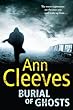
Burial of Ghosts by Ann Cleeves is a standalone book, not part of either her Vera or Shetland series. Lizzie Bartholomew, a social worker is on leave after a particular nasty episode which has left her traumatised. After a brief holiday affair with Philip Sansom in Morocco, she is surprised when he left her £15,000 in his will. But there are certain conditions she is required to fulfil, which plunges her into a terrifying situation. This is largely a psychological study, focussing on Lizzie, as she relives her past in flashbacks.

All three books are good reads, but my Crime Fiction Pick of the Month for April is The Nine Tailors by Dorothy L Sayers, one of the Golden Age crime fiction writers. It’s a Lord Peter Wimsey Mystery, first published in 1934, by far the most complicated book of the three crime fiction books I read in April and the most fascinating for a number of reasons. It had me completely baffled, first the bell-ringing, and then the twists and turns and all the red herrings.
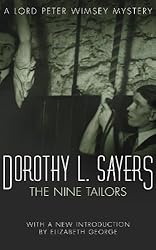
Wimsey driving through a snow storm ends up in a ditch near the village of Fenchurch St Paul in the Fens and is taken in for the night by the vicar. It’s New Year’s Eve (at some period in the early 1930s) and the vicar has arranged that the bell-ringers will ring in the New Year, involving 9 hours of bell-ringing. As one of the ringers is ill with influenza, Wimsey steps in at the last minute to take his place. I had never realised just how complicated bell-ringing is:

The art of ringing is peculiar to the English, and, like most English peculiarities, unintelligible to the rest of the world. To the musical Belgian, for example, it appears the proper thing to do with a carefully tuned ring of bells is to play a tune upon it. By the English campanologist, the playing of tunes is considered to be a childish game, only fit for foreigners; the proper use of bells is to work out mathematical permutations and combinations. (page 21)

A few weeks later Wimsey is asked back to Fenchurch St Paul to help solve the mystery of the dead man found by the sexton whilst he was opening up Lady Thorpe’s grave to bury her husband. The identity of the dead man is unknown, his face was mutilated and his hands had been cut off  – who was he, who killed him and why? And what is the significance of the enigmatic note found in the bell-tower? It’s not an easy crime to solve and involves Wimsey in a trip to France as he tries to identify the victim. An added complication is the mystery of the missing necklace, stolen from the Thorpe family but never recovered.

I think one of the things that makes this such a good read is that it’s not just crime fiction, not just solving a puzzle, but it is also a fascinating portrait of the Fens, of their bleakness and isolation; of society in the 1930s with its rigid class divisions into gentry, clergy and villagers. The last part of the book is dominated by the floods as the sluice gates failed to keep back the water flooding all the low-lying ground, despite the new drainage works. It reminded me of the floods in the Somerset Levels this last winter, with various water authorities disputing responsibility for the disaster.

Above all, it is novel in which everything works well together, the characters are individuals, their behaviour is true to their beliefs and passions, and their conversations are realistic. It begins with a leisurely pace, with lots of detail about bell-ringing, which sometimes seemed a bit unnecessary to me, but as the plot unfolded I realised that I was wrong and I needed to pay more attention to the detail. It is essential to the plot. After this leisurely start the pace picks up as Wimsey and the police try to untangle the mystery.

It’s a book that you have to read with care, paying close attention as it is easy to get swept along with Dorothy Sayers’ beautifully descriptive prose and skilful story-telling. This is the sight that greets Wimsey from the top of the bell-tower:

An enormous stillness surrounded him. The moon had risen, and between the battlements the sullen face of the drowned fen showed like a picture in a shifting frame, like the sea seen through the porthole of a rolling ship, so widely did the tower swing to the relentless battery of the bells.

The whole world was now lost in one vast sheet of water. He hauled himself to his feet and gazed out from horizon to horizon. To the south-west St Stephen’s tower still brooded over a dark platform of land, like a broken mast upon a sinking ship.  Every house in the village was lit up:  St Stephen was riding out the storm.  Westward, the thin line of the railway embankment stretched away to Little Dykesey, unvanquished as yet, but perilously besieged. Due south, Fenchurch St Peter, roofs and spire etched black against the silver, was the centre of a great mere. Close beneath the tower, the village of St Paul lay abandoned, waiting for its fate.  Away to the east, a faint pencilling marked the course of the Potters Lode Bank, and while he watched it, it seemed to waver and vanish beneath the marching tide. (page 294)

The Nine Tailors is the first detective book by Dorothy L Sayers that I have read (previously I’d read The Descent into Hell, extracts from her translation of Dante’s Inferno). It’s her ninth Wimsey novel and I intend to read more.

Books read in April

April was a good reading month – I finished reading 9 books, bringing my total for the year so far to 35:

  1. The Last Enchantment (Arthurian Saga 3) by Mary Stewart
  2. The Potter’s Hand by A N Wilson
  3. The Bell Jar by Sylvia Plath (a re-read for book group)
  4. St Bartholomew’s Man by Mary Delorme
  5. The Nine Tailors by Dorothy L Sayers (to be reviewed)
  6. The Cabinetmaker by Alan Jones
  7. Black Dogs by Ian McEwan
  8. Tantalus by Jane Jazz
  9. Burial of Ghosts by Ann Cleeves (to be reviewed)

They were all good reads, although I wouldn’t have re-read The Bell Jar if it hadn’t been my book group’s choice. I can’t say that I enjoyed that one, it is so depressing, but it is well written. All bar the first one are either library books or books I’ve acquired this year – a reaction, I suppose to finishing three months of reading only books I’ve owned before 1 January 2014!

It’s been difficult this month deciding which book to choose as my Best Book of the Month as they’ve all been enjoyable in different ways.

With so many good books by both established and new authors to choose from, after much thought, my all-round Best Book of the Month for April is The Potter’s Hand by A N Wilson, a remarkable novel about the Wedgwood family, their lives, loves, work, illnesses, depressions, addictions and deaths. I found it fascinating throughout, whether it was set in America during the fight for independence, or in England in Wedgwood’s factories, or his grand new house Etruria Hall, or travelling through England on the new canals.

And I should also flag up Tantalus by Jane Jazz, a love story with a difference, set in the Yorkshire moors and Tuscany. There is so much in this book that I loved €“ the characters, the story, the charged emotions and longing, the setting and the art.

Reading Challenges progress up to 30 April (for details of these challenges see my Challenges page):

  • Mount TBR Reading Challenge €“ 24 of my own unread books. My target is 48.
  • Read Scotland Challenge €“ 6 books. My target 13+.
  • What’s in a Name 7 €“ I’ve completed 5 of the 6 sections – just  a ‘book with a school subject in the title’ to read.
  • Historical Fiction Challenge €“ 6 books. My target is 25 books.
  • Colour Coded Challenge €“ 3 books. The target is to read 9 books in the different colour categories.
  • The Agatha Christie Reading Challenge €“ 2 books. This is an open-ended challenge to read all her books. So far I have read 57.
  • My Kind of Mystery Challenge €“ 10 books. My target is 31+.
  • Once Upon a Time VIII challenge – 2 books, both read this month – The Last Enchantment and Tantalus, both excellent fantasy novels.

Book Beginnings: The Chosen Dead

What to read next is nearly always a difficult question, the problem being that I have so many books I’ve bought/borrowed that I really want to read right now and much as I would like to I can’t read them all at once.

So, this morning here I am nearly ready to start a new book and wondering which one to go for. It could be The Chosen Dead by M R Hall, his fifth novel in the Coroner Jenny Cooper series.

It begins:

Scottsdale Arizona, 12 March 1982

The last thing Roy Emmett Hudson was expecting on the eve of his forty-first birthday was a bullet in the head, but life and death are only a single breath apart, and as a biologist, he appreciated that more than most. Even as he strolled across the company lot to the Mercedes Coupé he had driven all winter without once raising the roof, his killers’ thoughts were already moving on to where they might dump his body so that it might never be found.

I’ve read three of the earlier books in the series, and liked them, so I’m hoping this one will be good. It’s an intriguing beginning because it doesn’t seem likely that Coroner Jenny Cooper could be involved in investigating this death as she is a Bristol coroner …

Synopsis from the back cover:

When Bristol Coroner Jenny Cooper investigates the fatal plunge of a man from a motorway bridge, she little suspects that it has any connection with the sudden death of a friend’s thirteen year old daughter from a deadly strain of meningitis. But as Jenny pieces together the dead man’s last days, she’s drawn into a mystery whose dark ripples stretch across continents and back through decades. In an investigation which will take her into the sinister realms of unbridled human ambition and corrupt scientific endeavour, Jenny is soon forced to risk the love and lives of those closest to her, as a deadly race to uncover the truth begins . . .

Every Friday Book Beginnings on Friday is hosted by Gillion at Rose City Reader where you can share the first sentence (or so) of the book you are reading, along with your initial thoughts about the sentence, impressions of the book, or anything else the opener inspires.