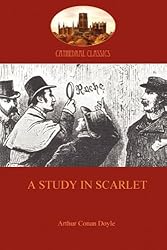
A Study in Scarlet by Sir Arthur Conan Doyle

This is the first Sherlock Holmes and Dr Watson mystery, published in 1887. A Study in Scarlet is a novel in two parts. The first, narrated by Dr John Watson, begins in 1881 with Watson on nine months convalescent leave from the army, having been shot in his shoulder whilst in Afghanistan, followed by an attack of enteric fever. As a result he was weak and emaciated – ‘as thin as a lather and as brown as a nut.‘ He was looking for lodgings when he met a friend who introduced him to an acquaintance who was working in the chemical laboratory at the hospital – Sherlock Holmes, who he described as ‘a little too scientific for my tastes – it approaches to cold-bloodedness. … He appears to have a passion for definite and exact knowledge.’ 

They get on immediately and take a suite of rooms in 221B Baker Street, after Holmes astounded Watson by deducing that Watson had served in Afghanistan. Holmes describes his occupation as a ‘consulting detective‘ solving crimes for both private individuals and the police, using his intuition, observation and the rules of deduction. Tobias Gregson and Lestrade both Scotland Yard detectives regularly ask Holmes for his help.

Very soon they are involved in investigating the murder of Enoch J Drebber, an American found dead in the front room of an empty house at 3 Lauriston Gardens, off the Brixton Road,  with the word “RACHE” scrawled in blood on the wall beside the body.

A Study in Scarlet is a superb story introducing Conan Doyle’s characters – Holmes reminds Watson of

… a pure-blooded well-trained foxhound as it dashes backwards and forwards through the covert, whining in its eagerness, until it comes across the lost scent.

Holmes is his brilliant best, leaving the police officers behind as he discovers the killer. And there then follows a flashback, narrated in the third person, to Part II The Country of the Saints to America in 1847, specifically to a Mormon community, explaining the events that led up to to the murder, where John Ferrier and his adopted daughter Lucy are first rescued from death in the desert and then subjected to the community’s rules, specifically with regard to Lucy’s marriage. At first I just wanted to get back to the murder inquiry and find out how Holmes discovered the murderer’s identity, but soon I was engrossed in the American story. Eventually the two parts come together in Chapter VI as Watson resumes the narrative and  Holmes reveals how he solved the problem by reasoning backwards and from a ‘few very ordinary deductions‘ was able to catch the criminal within three days.

I thoroughly enjoyed this story, written in a straightforward style with enough description to visualise both Victorian London and the American Wild West. I’d watched the TV version A Study in Pink in the Sherlock series, which although very different in some respects is surprisingly faithful to the book in others. I like both versions.

Sir Arthur Conan Doyle was born in Edinburgh in 1859 and died in 1930. He studied medicine at Edinburgh University, becoming the surgeon’s clerk to Professor Joseph Bell said to be the model for Sherlock Holmes’ methods of deduction. He gave up being a doctor with his success as an author and became involved in many causes – including divorce law reform, a channel tunnel, and inflatable life jackets. He was instrumental in the introduction of the Court of Criminal Appeal and was a volunteer physician in the Boer War. Later in life he became a convert to spiritualism.

See Fantastic Fiction for a list of works by Sir Arthur Conan Doyle.

Challenges: Read Scotland 2014, the Colour Coded Challenge, Mount TBR 2014 and My Kind of Mystery.
The Lake District Murder by John Bude

I first came across John Bude’s books nearly a year ago on Martin Edward’s blog Do You Write Under Your Own Name and thought they looked very interesting. His books are amongst those published by the British Library – reprints of unknown and undiscovered murder mysteries written in the thirties.  John Bude, whose real name was Ernest Carpenter Elmore, was writing in the Golden Age of detective fiction in the years between the two world wars. In 1953 he became one  of the founding members of the Crime Writers’ Association.

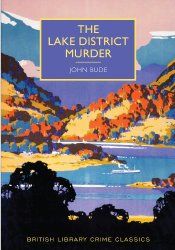
Anyway I made a mental note about the name and it lodged in the back of my mind until this September when I was in the Lake District and came across The Lake District Murder in the tourist information office in Glenridding on the shores of Ullswater. It has a striking cover, reproduced from a London & North Eastern Railway travel poster dating from the 1920s, showing a small steamer boat sailing on Ullswater, surrounded by the hills and mountains of the Lake District.

The LD mystery

The artist was John Littlejohns, who was born in Devon in 1874. He was a painter, illustrator, writer and teacher. As we had just been on a boat trip on Ullswater, in the Lady of the Lake (originally a steamboat), this immediately caught my eye.

The Lake District Murder as Martin Edwards writes in the introduction is ‘a world away from the unreality of bodies in libraries and cunningly derived killings on transcontinental trains.’ It is a police procedural, showing in intricate detail how the detectives investigate a crime. In this case a body is discovered in a car outside a lonely garage on a little used road. At first it appears that Jack Clayton one of the garage owners had committed suicide, but there are a couple of clues pointing to murder and when Inspector Meredith discovers that Clayton was planning to marry and move abroad it turns into a murder investigation. But what is the motive for murder and as everyone seems to have an alibi, who had the opportunity to kill Clayton? 

This book really takes you back in time. It was first published in 1935, which means that police methods of investigations particularly in rural areas was very different. Inspector Meredith uses buses or trains or travels the local roads on a motor cycle with a side car and pops into the local post office to use the telephone. It’s a slow process.

Having recently visited the Northern Lakes, I was fairly familiar with the landscape and could follow the action quite easily, but what I did find difficult was following the calculations Meredith and his colleagues carried out to work out petrol deliveries to the local garages, the lorries’ loads and the petrol storage capacities at the various garages. Inspector Meredith is a likeable character, with a happy home life, although his wife thought the police force made more than enough demands on his time  and tried to discourage their son’s interest in police affairs.

The Lake District Mystery is Bude’s second mystery novel. His first was The Cornish Coast Mystery,  and the third is The Sussex Downs Mystery (due to be released 27 October) both also reprinted by the British Library.

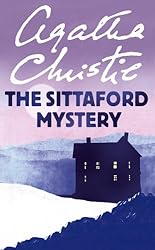
The Sittaford Mystery by Agatha Christie

The Sittaford Mystery is one of the earlier of Agatha Christie’s books, first published in the UK in 1931 and in the US as Murder at Hazelmoor. It’s not one of her Poirot or Miss Marple mysteries, but features Inspector Narracott, ably assisted, if not lead, by Emily Trefusis, a remarkably resourceful and determined young woman. I really liked Emily.

The Sittaford Mystery begins with a seance, or rather a table-turning session at Sittaford House in a tiny moorland village near Dartmoor, not very far from the prison at Princetown. Snow has been falling for four days and now Sittaford is almost completely cut off from the rest of the world. At the seance are the tenants of Sittaford House, Mrs Willett and her daughter Violet, and their neighbours. When the message of Captain Trevelyan’s death is tapped out, followed by the word M-U-R-D-E-R, his friend Major Burnaby immediately decides to see if Trevelyan has indeed been murdered, walking in the snow walking six miles to Exhampton. Of course, when he gets there, he does indeed discover that his friend is dead, probably killed at the precise time that the message was received in the seance.

Inspector Narracott is called in and a young man, James Pearson, Trevelyan’s nephew is arrested for the murder. Emily, his fiancée is convinced of his innocence. She enlists the help of the journalist, Charles Enderby and together they set out to discover the real culprit. Inspector Narracott is a quiet man, a thoughtful and efficient police officer, with a logical mind and attention to detail but Emily is determined and courageous in her search for the truth.

There are two mysteries in this book, who killed Trevelyan and why have the Willetts rented the house from him for the winter? I found it all very interesting, with plenty of clues, red herrings and suspects. Added to that is the escaped prisoner on Dartmoor, reminding me a bit of Dickens’ novel, Great Expectations, and of Conan Doyle’s The Hound of the Baskervilles, emphasised Charles Enderby’s reference to the seance as a ‘queer’ business, and thinking of getting Sir Arthur Conan Doyle’s opinion on the matter.

The setting and the characterisation are good. But although the plotting is good for most of the book, I felt the ending and the motive for the murder are rather inadequate, not least because I don’t think you could actually deduce who the murderer is – I guessed, but it was only a guess – not all of the facts are revealed until the denouement. For this reason I can’t rank The Sittaford Mystery with Agatha Christie’s best mysteries, but it is still a good read.

Note: the TV version in the Agatha Christie Marple series not only changes the identity of the killer but also inserts Miss Marple into the story!

What's In A Name 7: Completed

Whats in a name 7Hosted by  by Charlie at The Worm Hole this challenge runs from January to December 2014. During this time you choose a book to read from six categories.

I’ve now completed the challenge and these are the books I read:

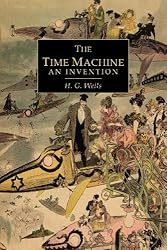
  • A reference to time €“ The Time Machine by H G Wells, first published in 1895, is a work of imagination and an early example of science fiction, but it is also a commentary on late 19th century society and a vehicle for H G Well’s views on socialism and industrialisation.

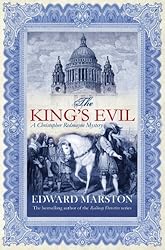
  • A position of royalty €“ The King’s Evil by Edward Marston. This is historical crime fiction set in London in September 1666, just as the Great Fire of London has begun, eventually devastating a large part of the old medieval City of London

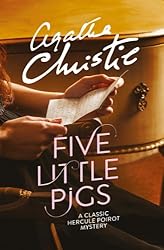
  • number written in letters – Five Little Pigs by Agatha Christie, a Poirot mystery
    first published in 1943. Caroline Crale was convicted of the murder of her husband, Amyas and died in prison. Sixteen years later, her daughter, a child of five at the time of the murder, asks Poirot to clear her mother’s name, convinced that she was innocent.
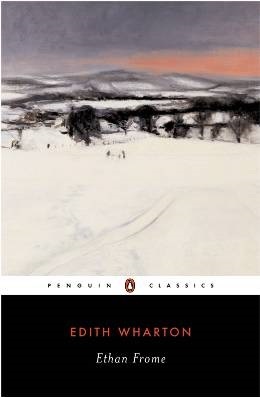
  • forename or names  Ethan Frome by Edith Wharton  a beautifully told tale €“ a tragedy, signalled right from the beginning of the book, when the unnamed narrator first saw Ethan Frome and was told he had been disfigured and crippled in a €˜smash up’, twenty four years earlier. Ethan Frome
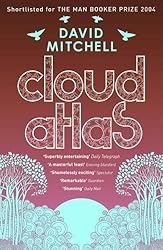
  • type or element of weather – Cloud Atlas by David Mitchell covers a time period from the 19th century to a post apocalyptic future. It’s not a book to read quickly; it requires patience, but on the whole I enjoyed it. I liked the change in style, suited to each time period, moving between straight narrative and letters and journal entries, encompassing historical fiction, thriller and sci-fi.

  • A book with a school subject in the title €“ The Brief History of the Dead by Kevin Brockmeier  fantasy fiction set some time in the future, about a place between heaven and earth, and the people who end up there after they’ve died and what happens to them. 

My favourite of these books is Ethan Frome by Edith Wharton.

Thanks to Charlie for an interesting challenge that helped me reduce my to-be-read piles.

September's Books & Pick of the Month

September was a good month – we had a holiday in the Lake District, the sun shone and it’s been a dry September, according to the Met Office it was the driest September since records began in 1911!

And I read a fair number of books (the links are to my posts on the books), which brings my total for the year so far to 83. Four of the books are TBRs (to-be-reads) and six are crime fiction (marked with *):

  1. The Sunrise by Victoria Hislop – my review will be on the next issue of Shiny New Books (I think!) Set 40+ years ago in Cyprus, I liked this very much – a story of human tragedy in the face of war.
  2. The Goldfinch by Donna Tartt – review to follow.
  3. Wycliffe and the House of Fear* by W J Burley – Wycliffe investigates the disappearance of Roger Kemp’s second wife.  A complex story with sinister undercurrents.
  4. Testament of a Witchby Douglas Watt –MacKenzie investigates the death of Grissell Hay, Lady Lammersheugh accused of witchcraft in a village overwhelmed by superstition, resentment and puritanical religion.
  5. The Moving Finger* by Agatha Christie – anonymous poison-pen letters, an apparent suicide and a murder in a peaceful country backwater in this Miss Marple mystery.
  6. The Yellow Wallpaper by Charlotte Perkins Gilmore – a suspense story of a young woman slowly but surely losing her mind – or is it a case of a woman suffering from post-natal depression. 
  7. Entry Island* by Peter May- set in present day Magdalen Islands, part of the province of Quebec, in the Gulf of St Lawrence, and in the nineteenth century on the Isle of Lewis at the time of the Highland Clearances.  It mixes together two stories and two genres, crime fiction and historical fiction.
  8. The Brimstone Weddingby Barbara Vine €“ one of the best of Barbara Vine’s books that I’ve read. Stella gradually confides in Jenny, telling her things she has never said to her son and daughter €“ things about her life she doesn’t want them to know. Barbara Vine, writes beautifully and powerfully yet in a controlled manner, and the subtle horror of what I was reading gripped me. 
  9. The Shroud Maker* by Kate Ellis €“ a complex, historical mystery intertwined with a modern day murder mystery for D I Wesley Peterson to solve with plenty of characters, red-herrings, twists and turns, and sub-plots.

Pick of the monthI enjoyed all of them. It was a good month for reading crime fiction and my Book of the Month is also my Crime Fiction Pick of the Month. It’s …

Brimstone wedding

The Brimstone Wedding by Barbara Vine.

For more Crime Fiction Pick of the Month books see Kerrie’s Crime Fiction Pick of the Month over at Mysteries in Paradise.

The Brimstone Wedding by Barbara Vine

I’ve had The Brimstone Wedding by Barbara Vine sitting on my unread shelves for a while and when the R.I.P. IX Challenge came up I thought it would be a good book to include in the challenge, because the cover blurbs describe it as a ‘horrifying mystery’, ‘chilling’ and with a ‘horrible climax’.

Brimstone wedding

My copy is a second-hand paperback, which is no longer in print, but The Brimstone Wedding is available as an e-book.

Jenny Warner is a carer at a retirement home, Middleton Hall where she meets Stella Newland, who is dying of lung cancer. At first Stella never mentions her husband or her past life, but gradually she confides in Jenny, telling her things she has never said to her son and daughter – things about her life she doesn’t want them to know. 

Their stories intertwine, some narrated by Jenny and some by Stella as she records events in her life on a tape recorder which she leaves to Jenny.  They have more in common than Jenny initially thought and as Stella slowly reveals her past the tension in the book begins to mount.

The atmosphere is mysterious, a house isolated in the fens, seems to hold the key to the past. The description of the house is superb, set in an overgrown garden, with clothes still hanging in the wardrobe, food and champagne still sitting in the fridge and a red Ford Anglia locked in the garage. It’s all very subtle at first with tantalising hints about what had really happened in Stella’s past, but the full horror is left to the end, which by that time I was itching to find out if it was what I suspected it was. I was not disappointed; it’s not horrific in the overblown graphic sense, but in a sinister, psychological way that really is ‘chilling’ and inexpressibly sad.

Ruth Rendell, writing as Barbara Vine, writes beautifully and powerfully yet in a controlled manner, nothing is left out but there are no superfluous characters or sub-plots. Everything ties in well and the subtle horror of what I was reading gripped me. It is indeed a ‘chilling’ book. It’s about love, hate and indifference, about relationships between couples and families, and about obsession, deceit and betrayal.

Here are just a few quotations that I noted as I read. The opening sentences, set the scene and illustrate Jenny’s superstitious nature. Throughout the book there are numerous examples of her beliefs:

The clothes of the dead don’t wear long. They fret for the person who owned them. Stella laughed when I said that. She threw back her head and laughed in the surprisingly girlish way she had. I was telling her Edith Webster had died in the night and left cupboards full of clothes behind her, and she laughed and said she’d never known anyone as superstitious as me. (page 3)

and

When you deceive people you make fools of them. You make them act stupidly, act as if things which are aren’t and things which aren’t are. And that’s what fools do or people who are mentally disturbed and we look down on them for it or if we’re unkind we laugh at them. (page 17)

She is also aware of ill omens – a bird dying in your hand means your hands will shake for ever, it also means a death in the family and red and white flowers mixed are the worst possible omen at a funeral meaning there will be another death. I was wondering what significance the title has: Jenny has been married for thirteen years, which according to her mother is a ‘Brimstone Wedding’ anniversary. Jenny thinks:

Maybe because it’s explosive or because it’s hard and dark like a burning stone, which is what brimstone means. (page 231)

I think The Brimstone Wedding is one of the best of Barbara Vine’s books that I’ve read – nearly as good as A Dark-Adapted Eye and writing under her real name, Ruth Rendell, A Judgement in Stone. It certainly qualifies not only for the R.I.P. Challenge, but also for the Mount TBR Challenge 2014 and the My Kind of Mystery Challenge.