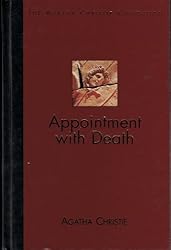
First Chapter First Paragraph: Appointment with Death

First chapterEvery Tuesday Diane at Bibliophile by the Sea hosts First Chapter First Paragraph Tuesday Intros, where you can share the first paragraph, or a few, of a book you are reading or thinking about reading soon.

My choice this week is Appointment with Death by Agatha Christie, one of the few novels of hers that I haven’t read. It’s one of the earlier Poirot books, first published in 1938. It begins:

‘You do see, don’t you, that she’s got to be killed?’

The question floated out into the still night air, seemed to hang there a moment and then drift away down into  the darkness towards the Dead Sea.

Hercule Poirot paused a minute with his hand on the window catch. Frowning, he shut it decisively, thereby excluding any injurious night air! Hercule Poirot had been brought up to believe that all outside air was best left outside, and that night air was especially dangerous to the health.

Of course, this has me wondering who ‘she’ is, why she has to be killed and who is talking.

I don’t remember reading before about Poirot’s upbringing – intriguing to think of him as a child!


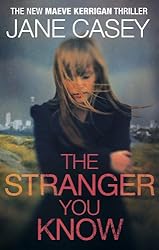
The Stranger You Know by Jane Casey

For once I’m reading a series in the order it was published -Jane Casey’s Maeve Kerrigan books – which is just as well as each one reveals facts from the earlier books. it also means that I can follow the characters as they develop and their changing relationships instead of trying to work out what had happened before.

The Stranger You Know is the fourth Maeve Kerrigan book and it’s just as fast-paced and compelling reading as the earlier books – so tightly plotted that I just had to keep on reading to get to the end of the book.

Three women have been murdered in their own homes – strangled and mutilated. There were no signs of a break-in – the women had obviously known and trusted their killer. One of the officers investigating the case voices the unthinkable – there are no leads, no DNA, no CCTV, no parking tickets, ‘it’s like he’s one of us‘. Suspicion lands on Maeve’s boss, DI Josh Derwent, who it turns out had been accused of murder as a teenager. His girlfriend, Angela Poole had been murdered in much the same way as the current victims and he had been the prime suspect.

The focus is squarely on Derwent in this book and he is kept off the investigating team, leaving Maeve to work closely with Chief Superintendent Charles Godley and DCI Una Burt – who hates Derwent. But Maeve cannot believe he could be a killer and disobeys orders not to let him see the evidence. And as Maeve’s boyfriend, Rob is away in America, training with the FBI, the focus is also on the relationship between Josh and Maeve – her loyalty to him as she interviews the people involved in Angela’s murder – Josh’s friends and the police inspector in charge of the case.

It is such a complicated plot and I kept changing my mind about the killer – was it Josh (surely not), was it Angela’s brother or one of the other teenage friends, or were the current murders the result of a copy cat  killer?

I like Maeve, although I do wonder why she is still a DC as she is so good at her job, ferreting out information from the slenderest of clues.  I like Derwent, despite his difficult personality – the spiky relationship between the two of them provides such much needed comic relief in the book. There is a secret in his background that we, the readers, now know along with Maeve – and I’m wondering how long it will be until she tells him, although if he looks on Facebook as she did he’d soon find out. I hope he does – I’d love to see his reaction.

It all comes to a dramatic and thrilling climax as Maeve, once again, comes face to face with the killer – and I’d had a sneaking feeling quite early one who it was, but had dismissed the possibility.

  • Paperback: 464 pages
  • Publisher: Ebury Press (Fiction) (7 Nov. 2013)
  • Language: English
  • ISBN-10: 0091948363
  • ISBN-13: 978-0091948368
  • Source: library book

I’m currently reading the next book, The Kill and the sixth book, After the Fire is due to be published on the 18 June.

My Friday Post

Book Beginnings ButtonEvery Friday Book Beginnings on Friday is hosted by Gillion at Rose City Reader where you can share the first sentence (or so) of the book you are reading, along with your initial thoughts about the sentence, impressions of the book, or anything else the opener inspires.

Today I began reading Sad Cypress by Agatha Christie. It’s a Poirot mystery first published in 1940.

Sad cypress

It begins:

Prologue

Elinor Katharine Carlisle. You have been charged upon this indictment with the murder of Mary Gerrard upon the 27th of July last. Are you guilty or not guilty?

Elinor Carlisle stood very straight, her head raised. It was a graceful head, the modelling of the bones sharp and well defined. The eyes were a deep vivid blue, the hair black. The brows had been plucked to a faint thin line.

There was a silence – quite a noticeable silence.

Friday 56Also every Friday there is The Friday 56, hosted by Freda at Freda’s Voice.

These are the rules:

  1. Grab a book, any book.
  2. Turn to page 56, or 56% on your eReader.
  3. Find any sentence (or a few, just don’t spoil it) that grabs you.
  4. Post it.
  5. Add the URL to your post in the link on Freda’s most recent Friday 56 post.

Page 56:

Mrs Wellman may have thought she wanted to die; but side by side with that feeling there ran the hope that she would recover absolutely. And because of that hope, I think she felt that to make a will would be unlucky.

I’ve read up to page 75 and so far Poirot hasn’t appeared, except in the Prologue during Elinor’s trial: Hercule Poirot, his head a little on one side, his eyes thoughtful, was watching her.

Books Read in May 2015

I’m pleased that I’ve read 8 books in May as my reading and blogging was interrupted by gardening. The grass is now growing at a rate of knots and the weeds, especially the ground elder, are rampant, threatening to take over the borders. So I’ve spent a lot of time this month mowing, weeding and strimming.

But I’ve also read these books and written about all of them, except H is for Hawk – post to follow some time soon (I hope). Three of the books are non fiction, one is a book from Lovereading for review and six are library books – no TBR books (books acquired before 1 January 2015) this month! I must get back to reading from those books I’ve had for years very soon!

These are the books I read:

Bks May 2015

Gray Mountain by John Grisham (Library book) – this book is just as much a campaign against injustice and the misuse of power, about the good little guys against the big bad guys as his earlier books are. In this case it’s the big coal companies that come under the microscope, companies that are  ruining the environment by strip-mining in the Appalachian mountains. I liked the view of the small town community, the mountain scenery, the legal cases large and small and the tension created by the danger of opposing the big coal companies.

The Lost Garden by Katharine Swartz (Review book) – an emotionally intense novel of love, loss and grief, set in both the past and the present day, in a small village on the Cumbrian coast, a gentle story, well told and an enjoyable read. In 1919 Eleanor, the daughter of the vicar of Goswell, is struggling to adjust to the loss of her brother, Walter who died just before the Armistice was declared and in the present day half-sisters Marin and Rebecca are coming to terms with the death of their father and his wife.

Gently North West by Alan Hunter (Library book) – set in the fictitious village of Strathtudlem in Scotland in 1967 where Gently is on holiday with his friend, Barbara Merryn and his sister, Bridget and her husband. Gently gets involved in the investigations into the murder of Donnie Dunglass,  found, stabbed in the back, face down on the heather. I thought it was an enjoyable book although I thought the murder mystery was rather far-fetched.

Nothing To Be Frightened Of by Julian Barnes (Library book, Non Fiction) – a collection of thoughts centred around Barnes’s fear of death and so inevitably he considers the question of religion and especially God. Interwoven with his thoughts about his agnosticism and death are anecdotes about his family and himself, thoughts on literature (particularly French literature) and it’s relationship to life. I found it all fascinating.

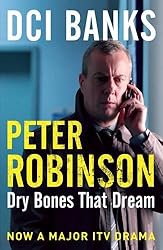
Dry Bones That Dream by Peter Robinson (Library book) – Banks investigates the murder of Keith Rothwell, an accountant, a  mild-mannered, dull sort of person it seems. But is that all there is to Rothwell? Banks unearths the secrets the characters have kept hidden from their family and friends. There’s also money-laundering and international and political shenanigans involved. Maybe not the best Banks book I’ve read.

H is for Hawk by Helen Macdonald (KindleNon Fiction) – no post yet. In some ways a difficult book to read – about training a goshawk and the author’s struggle with grief, mourning the death of her father.

Harbour Street by Ann Cleeves (Library book) This is the fifth Vera book and I loved it. It’s so good I read it twice because I watched the TV version after I finished reading the book – and it confused me as it’s different from the book! So I went back and re-read it. It is so much better than the TV adaptation, which I think suffered from being condensed into just one hour and a half length programme.

Poirot and Me by David Suchet (Library book, Non Fiction) – this consists largely of Suchet’s summaries of the stories and how he went about analysing Poirot’s character and how he played the part. This is a fascinating account of both the Poirot series and of David Suchet’s career.

I have no difficulty this month with naming my favourite book of the month. All the time I was reading it I was thoroughly absorbed and intrigued by Harbour Street by Ann Cleeves.
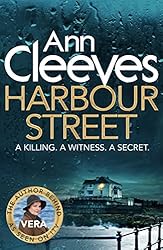
Harbour Street by Ann Cleeves

I first ‘met’ Vera Stanhope in the TV dramatisations of Ann Cleeves’ novels, which I enjoyed. But once I began reading Ann Cleeves’ books I discovered that they are even better than the TV versions! The latest one I’ve read is Harbour Street, the sixth book in the Vera series – it’s fantastic. If you’ve watched On Harbour Street, the TV adaptation broadcast last year, you’ll find that it didn’t strictly follow the book much at all – and you won’t know who the murderer is – it’s a different person in the book!

Harbour Street (Vera Stanhope, #6)


This is what I wrote last year about The Glass Room, the fifth Vera book and my thoughts about Harbour Street are just the same:

It’s going to be a contender for my best book of the year, because I loved it. It has everything I like in a crime fiction novel – setting, characters and a cleverly constructed plot. I didn’t guess who the murderer was but realised afterwards that all the clues had been there, skilfully woven into the narrative, hidden among the dead-ends and red herrings, so that I’d read on without realising their significance.

It’s ten days before Christmas, the Newcastle Metro is packed with shoppers, babies screaming, office workers merry after pre-Christmas parties, teenagers kissing. But when the  train has to stop because of the snow they all pile off the train – except for one old lady, Margaret Krukowski, who was fatally stabbed. No one saw the murder take place even though, or maybe because the train was packed with people, including Detective Joe Ashworth travelling home with his daughter, Jessie, from carol singing in Newcastle Cathedral.

Margaret had lived in a guest house on Harbour Street in Mardle, a coastal town in South Northumberland and it is here that Vera concentrates their investigation with the occupants of the guest house, the Coble, the pub opposite and the Haven, a hostel for homeless women, where Margaret had been a volunteer. It soon becomes obvious that Margaret was a woman with many secrets in her past – stemming from 1970 when her Polish husband Pawel Krukowski had left her.  Then a second murder occurs and an earlier crime comes to light – but who is the killer?

Ann Cleeves is a superb storyteller. Her descriptions get right inside my brain; she has the skill to make the scenes materialise,  in front of my eyes, and not because I’ve seen the TV adaptation which was filmed at a different time of year and in a different place from the location of Mardle in the book. Her characters are fully formed with emotions and feelings, backgrounds and complicated relationships, just as in real life, with all the sights, sounds, sensations and smells. Her dialogue is authentic, never awkward and you are never left wondering who is talking. Her books are deceptively easy to read,  moving swiftly along as the tension rises. They are layered, cleverly plotted and above all convincing. As in her other books I had several suspects in mind but hadn’t realised just how much wool had been pulled over my eyes until Margaret’s killer was revealed.

  • Paperback: 384 pages
  • Publisher: Pan; Reprints edition (31 July 2014)
  • Language: English
  • ISBN-10: 1447202090
  • ISBN-13: 978-1447202097
  • Source: my local library

This Week in Books: 20 May 2015

My week in books

This Week in Books is a weekly round-up hosted by Lypsyy Lost & Found, about what I’ve been reading Now, Then & Next. A similar meme is run by Taking on a World of Words.

Now:

I’m currently  reading three books.

Golden Age etc

The Golden Age of Murder by Martin Edwards – the story of detective fiction written by the authors in the Detection Club between the two World Wars.  I’m reading this slowly, enjoying all the details about authors whose books I’ve read such as Agatha Christie and authors I’ve only heard of. I can see I’m going to have a long list of books to read by the end of this book.

Harbour Streetthe sixth Vera Stanhope murder mystery by Ann Cleeves. In Newcastle, Detective Joe Ashworth and his daughter Jessie travel home on the busy Metro. The train is stopped unexpectedly, and Jessie sees that one woman doesn’t leave with the other passengers: Margaret Krukowski has been fatally stabbed. This was adapted for television and I watched it when it was first broadcast last year but can’t remember the identity of the murderer!

Poirot and Me by David Suchet – his account of how he came to play Hercule Poirot in TV’s Agatha Christie’s Poirot in 1988 until the final episode in 2013. I think I must have watched all the episodes, some more than once and it’s interesting to get David Suchet’s perspective.

Then:

A few days ago I finished reading Dry Bones That Dream by Peter Robinson, a DCI Banks Mystery. I wrote about it earlier this week in this post.

Next:

As usual I’m not sure what I’ll read next. I’m very tempted to read one of the books I added to the TBR piles yesterday when I went to Barter Books in Alnwick. Yesterday was also the fortnightly visit of the library van and I collected three books I’d reserved- I’ll do a separate post about all these books.

The one that is calling to me right now is The Stranger You Know by Jane Casey. This is the fourth Maeve Kerrigan book and I’ve read the first three.

Maeve is investigating the murders of three women who have been strangled in their homes by the same killer. It appears that they knew their killer and had let him in.