The Day of the Lie by William Brodrick

William Brodrick’s books are meaty, books that make me think. Nothing is straight forward, they’re layered books, delving into the past, uncovering secrets and revealing crimes. They are well researched, bringing the past to life.
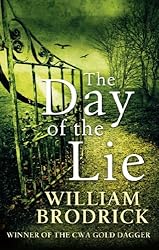
In The Day of the Lie (the 4th Father Anselm book) the past in question is post Second World War Poland, covering  the early 1950s, the early 1980s and the present day.

Blurb from the back cover of my paperback copy:

In present day Cambridge, Father Anselm receives a visit from an old friend with a dangerous story to tell – the story of a woman in Eastern Europe in the icy grip of the Cold War. She was brave, brilliant … and betrayed by someone close to her – someone still unknown. What became of this woman and the dark secret she kept?

No one can be trusted. Nothing is as it seems. Before more blood is spilt, Anselm must peel back years of history, decades of secrets and a half-century of lies in order to expose a secret so shocking that some would rather die than see it revealed.

Father Anselm’s old friend John has asked him to investigate who had betrayed  Roza Mojeska. She had been part of an underground resistance movement, had been arrested and tortured by the secret police, in particular by Otto Brack, in order to uncover the identity of the Shoemaker, the author of a dissident newspaper, Freedom and Independence.

Never explicitly graphic, Brodrick conveys the horror of the torture chamber and as Anselm’s Prior warns him he had to enter ‘the world of Otto Brack, this frightening man who learned how to bring about evil by exploiting someone who is good, laying – in part – the evil at their door.‘ (page 75-6) It’s a world where ‘twisted people lead twisted lives and the roads they build around them are never straight and true.’

My knowledge of the period is limited, so I found the historical setting quite difficult to follow, as the narrative switches between the time periods, but once I had sorted out the relationships between the characters (or I thought I had) it became clearer. But there is also the problem of working out who is ‘good’ and who is ‘bad’, just who is telling the truth, whose recollection of the past is ‘correct’? I thought I knew, but then there was a shift and I wasn’t sure right up to the end of the book.

Looking back on the book now (I finished reading it over a week ago) I can say I did enjoy it, but it was hard work in parts.

William Brodrick became a barrister, having been an Augustinian monk for six years (the other way round from his fictional character, Father Anselm). After 10 years at the Bar, his interest in writing led him to writing the Father Anselm books.

The Father Anselm books (with links to my posts) are:

  1. The Sixth Lamentation (2003)
  2. The Gardens of the Dead (2006)
  3. A Whispered Name (2008) – the best one in my opinion
  4. The Day of the Lie (2012)
  5. The Discourtesy of Death (2013)

And the latest book has just been published:
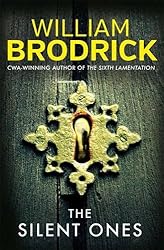
The Silent Ones by William Brodrick published 2 July 2015.

The Day of the Lie fits into the Mount TBR Challenge and is also a book I identified as one for the 10 Books of Summer Challenge.
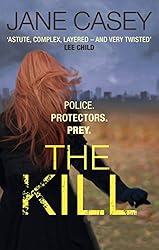
The Kill by Jane Casey: Book Notes

Yet again I’m reading faster than I’m reviewing, so this post is not a full review but a few thoughts on The Kill by Jane Casey. Unless I write about a book straight after I finish reading it gets pushed to the back of my mind and sadly that is what has happened in this case, which is a shame as it’s a brilliant book, the fifth in her DC Maeve Kerrigan series and I fully agree with the quotation from the Sunday Times that ‘Jane Casey’s police procedurals go from strength to strength.’

The book begins in Richmond Park in London at 00.43 where a couple are badger-watching but to their horror are witnesses, albeit at a distance, to a murder.

The victim is a police officer. But this is just the first murder and yet more police officers are killed. Maeve and her boss, DI Josh Derwent are part of the Met’s team assigned to investigate. They have no idea about the motive for the murders as the attacks seem to be random, from the first victim alone in his car (why was he there at that time anyway?), to the officers of the Territorial Support Unit killed as they patrolled the Maudling Estate – is it a reaction to the police killing a young and innocent black teenager? The MP, Geoff Armstrong thinks so.

This is a fast-paced novel, with an intriguing and complex plot and featuring characters that have appeared in the earlier books, developing their relationships. Some issues look as though they have been resolved, such as Superintendent Godley’s guilty secret, and others such as Maeve’s relationship with her boyfriend Rob, also a police officer come to a head, whereas Derwent and Maeve continue to have a confrontational working relationship and the interaction between them and DCI Una Burt gets even worse. I suppose it’s possible to read this as a standalone, but because of the back stories I think it is better to read them in order.

I found it absolutely compelling reading.

First Chapter ˆ¼ First Paragraph Intros

First chapterEvery Tuesday Diane at Bibliophile by the Sea hosts First Chapter ˆ¼ First Paragraph Tuesday Intros, where you can share the first paragraph, or a few, of a book you are reading or thinking about reading soon.

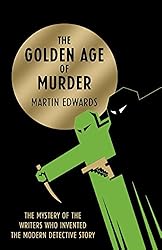
I’m currently reading The Golden Age of Murder by Martin Edwards, described on the back cover as

‘the extraordinary story of British detective fiction between the two World Wars, and the fascinating people who wrote it. A gripping real-life detective story, this book investigates how Agatha Christie and her colleagues in the mysterious Detection Club transformed crime fiction. Their work cast new light on unsolved murders, whilst hiding clues to their authors’ darkest secrets, and their complex and sometimes bizarre private lives.

First Chapter:

Chapter I, The Ritual in the Dark

On a summer evening in 1937, a group of men and women gathered in the darkness to perform a macabre ceremony. They had invited a special guest to witness their ceremony. She was visiting London from New Zealand and a thrill of excitement ran through her as the appointed time drew near. She loved drama, and at home she worked in the theatre. Now she felt as tense as when the curtain was about to rise. To be a guest at this dinner was a special honour. What would happen next she could not imagine.

Many congratulations to Martin Edwards who is to be the next President of  the Detection Club when Simon Brett, the current President retires in November. I really cannot think of a better choice than Martin, a well-deserved honour indeed!

A Game For All the Family by Sophie Hannah

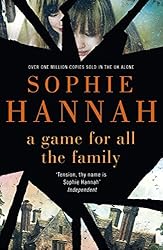
I’ve recently finished reading A Game For All the Family by Sophie Hannah, a standalone book, described as ‘ a literary puzzle to unlock the dark side of the mind.’

Publishers’ blurb:

Justine thought she knew who she was, until an anonymous caller seemed to know better…

After escaping London and a career that nearly destroyed her, Justine plans to spend her days doing as little as possible in her beautiful home in Devon.

But soon after the move, her daughter Ellen starts to withdraw when her new best friend, George, is unfairly expelled from school. Justine begs the head teacher to reconsider, only to be told that nobody’s been expelled – there is, and was, no George.

Then the anonymous calls start: a stranger, making threats that suggest she and Justine share a traumatic past and a guilty secret – yet Justine doesn’t recognise her voice. When the caller starts to talk about three graves – two big and one small, to fit a child – Justine fears for her family’s safety.

If the police can’t help, she’ll have to eliminate the danger herself, but first she must work out who she’s supposed to be…

Practically from the start I had my doubts about Justine. Was she an unreliable narrator? Could I believe her story, told in the third person but revealing what was going through her mind? Or was her daughter Ellen right when she told her mother that she was a ‘nutter‘? That sense of distrust pervaded my reading. Obviously something had happened to make Justine give up her job in TV drama production and want to ‘do Nothing’, something traumatic and life-changing – had it affected her mental stability or had it happened because she was mentally unstable? I couldn’t decide.

What I can say is that it’s a book about the truth – just who is telling the truth, just who is who they purport to be, and most of all about identity. Who is real, who is making it all up (well Sophie Hannah, obviously).

It is described as a ‘chilling ‘ novel, but I didn’t find it spine tingling, or scary, because it came over to me as artificial, and contrived. It’s also long-winded and mostly completely unbelievable, which made it lose any sense of tension or suspense. But it is a cleverly complicated plot, with stories within stories, – it’s just not chilling.

As well as the anonymous threatening phone calls, and the head teacher’s denial that George had not been expelled and indeed her insistence that he had never even been at the school, Justine is also puzzled by the story that Ellen is writing for her creative writing homework – a story set in their house about a strange family who had lived there in the past and a murder that had taken place there. Where did Ellen get this story, is it based on fact? Ellen simply won’t tell her. Are the phone calls connected to this story and to George?

Maybe it’s too complicated, because at times I just wished the endless questions that went through Justine’s mind would come to an end. They did of course and by the time I did get to the end I still couldn’t decide whether Ellen was right – is Justine a nutter and as I suspect an unreliable narrator, or not?

I didn’t love this book, but it certainly filled my mind and made me think both whilst I was reading it and for days afterwards – and I like that about a book. If Justine is a reliable narrator and was telling the truth all along then she is still a nutter, because if what she described actually happened at the end of the story it was terrible and she was mentally ill and in that case, definitely a chilling ending. I just can’t decide! It is an extraordinary and weird book.

My thanks to Lovereading for sending me an uncorrected proof copy of this book that has had me puzzling for days. A Game For All the Family is due to be published on 13 August 2015 by Hodder & Stoughton.

First Chapter, First Paragraph Tuesday: Parker Pyne

Every Tuesday Diane at Bibliophile by the Sea hosts First Chapter, First Paragraph Tuesday Intros, where you can share the first paragraph, or a few, of a book you are reading or thinking about reading soon.

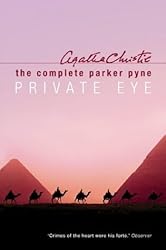
I’ve been looking at some of Agatha Christie’s short stories and wondering which to read first. One of the collections I own is The Complete Parker Pyne: Private Eye. It looks a good place to start.

In the Author’s Foreword Agatha Christie tells how she came to write these stories:

One day, having lunch at a Corner House, I was enraptured by a conversation on statistics going on at a table behind me. I turned my head and caught a vague glimpse of a bald head, glasses and a beaming smile – I caught sight that is, of Mr Parker Pyne. I had never thought about statistics before (and indeed seldom think about them now!) but the enthusiasm with which they were being discussed awakened my interest. I was just considering a new series of short stories and then and there I decided on the general treatment and scope, and in due course enjoyed writing them.

I like the details she gives – the Corner Houses, smarter and grander than tea shops and noted for their art deco style first appeared in 1909 and  remained until 1977. And I love the fact that she was eavesdropping on the conversation going on behind her and the insight this gives into how she got ideas for her stories.

The stories were all written in the 1930s and first appeared in various UK and US magazines. The first story in this collection is The Case of the Middle-Aged Wife and it begins:

Four grunts, an indignant voice asking why nobody could leave a hat alone, a slammed door, and Mr Packington had departed to catch the eight forty-five to the city. Mrs Packington sat on at the breakfast table. Her face was flushed, her lips were pursed, and the only reason she was not crying was that at the last minute anger had taken the place of grief, ‘I won’t stand it,’ said Mrs Packington. ‘I won’t stand it!’ She remained for some moments brooding , and then murmured: ‘The minx. Nasty sly little cat! How can George be such a fool!’

Sad Cypress by Agatha Christie

Sad Cypress, first published in 1940, is a most satisfying mystery, in which Hercule Poirot discovers that almost everyone he talks to is lying. Only the doctor, Peter Lord, believes that Elinor Carlisle did not kill Mary Gerrard, her rival in love, despite the fact that it seems that only Elinor had the motive, the opportunity and the means to poison Mary with morphine hydrochloride. Peter, who is in love with Elinor, appeals to Poirot to prove that she is innocent.

Sad Cypress has a clever and most complicated plot, as is usual in an Agatha Christie book, and it kept me guessing right to the end. Her portrayal of Elinor is excellent – on the surface a calm, almost detached character underneath she is in turmoil, full of repressed passion and unrequited love as it becomes obvious to her that Roddy, her fiancé does not in fact love her and this leads her into actions that seem to point to her guilt.

Then there are the social and cultural themes that always interest me in Agatha Christie’s books. There is the clear distinction between the classes, knowing one’s place in society shown in the relationships between Elinor and Mary, and the almost comic depiction of the two nurses, Nurse O’Brien and Nurse Hopkins, with their gossip over cups of tea. Other themes are the nature of love, and the basis for a happy marriage, the damage caused by family secrets, the ethics of euthanasia, and the difference between thinking about murder and actually committing murder.

This book, if not the best of Agatha Christie’s books, is easily one of my favourites.  I quoted the opening paragraph of Sad Cypress in My Friday Post earlier this month.

The cover photo shown above is my own copy. Details of the latest edition are:

  • Paperback: 288 pages
  • Publisher: HarperCollins (21 May 2015)
  • Language: English
  • ISBN-10: 0008129576
  • ISBN-13: 978-0008129576

This is the first of my books for the 10 Books of Summer 2015 Challenge.