Five of the Best: September 2011-2015

This was originally Cleo’s idea (Cleopatra Loves Books). It’s to look back over your reviews of the past five years and pick out your favourite books for each month from 2011 ‘“ 2015. I like it so much it inspired me to do the same.

I really enjoy looking back over the books I’ve loved reading. These are some of my favourite books for each September from 2011 to 2015 (click on the titles/covers to see my original reviews). These are all crime fiction, mostly dark scary books, because each September and October I take part in the R.I.P. Challenge, that is hosted this year by The Estella Society.

2011
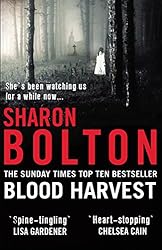
Blood Harvest by Sharon Bolton.  I can’t quite believe that it’s four years ago that I read this book as I can still remember the tension, terror and suspense within its pages.  It’s a dark, scary book, set in the fictional town of Heptonclough in Lancashire.There are two churches, the ancient ruined Abbey Church and standing next to it the ‘˜new’ church of St Barnabas. The Fletchers have just moved into a new house built on the land right next to the boundary wall of the churchyard. But this is not a safe place for children, three little girls have died over the past ten years, and when the Fletcher children start to hear voices in the graveyard more disturbing events unfold.

2012
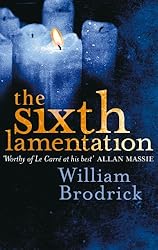
The Sixth Lamentation by William Brodrick, the first Father Anselm book. This is historical fiction and it’s also a mystery. It looks back  to the Second World War in occupied France, telling a dramatic tale of love and betrayal, full of suspense, and interwoven stories, with accurate details of life in Paris during the Occupation and the subsequent war trials. William Brodrick has also drawn on his own personal experience. He was formerly in religious life but left before his final vows.

2013
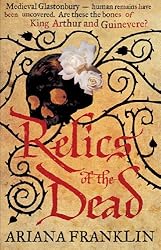
Relics of the Dead by Ariana Franklin, the third book in her Mistress of the Art of Death series. The date is 1176, the setting is Glastonbury where the monks, after a fire had destroyed their monastery, discovered two skeletons buried in their graveyard. The question is  ‘“ are these the remains of King Arthur and Queen Guinevere? Henry II needs evidence that they are not and sends Adelia Aguilar, the anatomist, to examine the bones for evidence. I’ve always liked the stories about King Arthur, about his life and death, about Excalibur (which does feature in this book), about Guinevere’s affair with Lancelot,  and the Holy Grail (which do not).

2014

The Brimstone WeddingBrimstone wedding by Barbara Vine. This is one of the best of Barbara Vine’s books that I’ve read ‘“ nearly as good as A Dark-Adapted Eye and writing under her real name, Ruth Rendell, A Judgement in Stone. it’s not horrific in the overblown graphic sense, but in a sinister, psychological way that really is ‘˜chilling’ and inexpressibly sad. The atmosphere is mysterious, a house isolated in the fens, seems to hold the key to the past. Stella, who is dying of lung cancer,  never mentions her husband or her past life, but gradually she confides in Jenny, a carer at the retirement home where Stella lives, telling her things she has never said to her son and daughter ‘“ things about her life she doesn’t want them to know.

2015

This September I’m spoilt for choice as I read several excellent books – The Ghosts of Altona by Craig Russell is just one of them. This is his 7th book featuring Jan Fabel, the head of Hamburg’s Murder Commission, a very cleverly plotted book, multi-layered and complex and I loved it.

A murder mystery combining a cold case and present day murders combined with great storytelling, rich descriptions, interwoven with details of near-death experiences, the Gothic, mental and personality disorders makes this most definitely one of the best books I’ve read this year.

I must also mention three of Sharon Bolton’s Lacey Flint books that I read this September – all excellent books.

The Ghosts of Altona by Craig Russell

Last week I quoted the opening paragraphs and the description of The Ghosts of Altona by Craig Russell, a novel, which won this year’s Bloody Scotland Crime Novel of the YearIt’s an outstanding book, one of the best I’ve read this year. I suppose it can be called a modern Gothic tale as well as being a crime thriller. Russell is a new author to me, but by no means is he a new author, The Ghosts of Altona being his 7th book featuring Jan Fabel, the head of Hamburg’s Murder Commission. However, it didn’t spoil my enjoyment that I’d jumped into the series right at the end. And in a way it didn’t matter at all as in the first chapter Jan has a near-death experience when he is shot by a suspected child killer, which has a profound effect on his life and the way he views death.

Two years later his first case as a detective is resurrected when the body of Monika Krone is found under a car park, fifteen years after she disappeared. The prime suspect at that time was Jochen Hubner, a serial rapist, christened ‘Frankenstein’ by the press because of his monstrous appearance, but there was no conclusive evidence to connect him to her disappearance. Monika, beautiful, intelligent and cruel had been the centre of a group of students obsessed with the Gothic. Then ‘Frankenstein’ escapes from prison and there are more murders which Fabel thinks are linked to the discovery of Monika’s remains, all of men who were in the same Gothic set at university.

There are many allusions to the Gothic tradition and symbolism, the killings being reminiscent of Edgar Allan Poe’s macabre tales, as well as philosophising on the nature of near-death experiences, Schrödinger’s cat, Cotard’s Delusion (in which sufferers believe themselves to be dead), and the intertwining of the hallucinogenic, the psychedelic, the spiritual and the macabre. All absolutely fascinating and incorporated seamlessly into the crime investigation so that I was turning the pages as fast as possible to get to the solution. It’s all very cleverly plotted, multi-layered and complex and I loved it.

As well as the story and the characters I loved the setting – Hamburg, a city I knew very little about before reading The Ghosts of Altona, the second largest city in Germany, a member of the medieval Hanseatic League. It’s a city of water with two lakes and the river Elbe running through it and it has more canals than Amsterdam and Venice combined. Altona, one of the city boroughs had been under Danish administration for over two centuries.

The Author

Craig Russell is an award-winning, best-selling and critically-acclaimed author, published in twenty-five languages around the world. The Devil Aspect was acquired by Jason Kaufman, Dan Brown’s editor at Doubleday. The movie rights to the Devil Aspect have been bought by Columbia Pictures. Five Jan Fabel novels have been made into movies (in one of which Craig Russell makes a cameo appearance as a detective) for ARD, the German national broadcaster, and the Lennox series has been optioned for TV development. See his website for more information.

First Chapter, First Paragraph: The Ghosts of Altona

First chapterEvery Tuesday Diane at Bibliophile by the Sea hosts First Chapter First Paragraph Tuesday Intros, where you can share the first paragraph, or a few, of a book you are reading or thinking about reading soon.

I started reading The Ghosts of Altona by Craig Russell yesterday.

It begins:

The sky that day, he would later remember, had been the colour of pewter. When he thought back on it, that was what he would remember, the lack of colour in the sky, the lack of colour in everything. And he hadn’t noticed at the time.

Winter had been half-hearted that day.

‘So why, exactly, are we talking to this guy more than any other neighbours?’ asked Anna Wolff as she and Fabel got out of the unmarked police BMW. ‘Schalthoff has no record … never been so much as a suspect for anything and has no dodgy connections that we can find. I just don’t get why you get a vibe from him. What is it – some kind of hunch?

This book won the 2015 Bloody Scotland Crime Novel of the Year. It’s the first book by Craig Russell’s that I’ve noticed. How could I have missed the others? This is his seventh Jan Fabel book!

Blurb:

Jan Fabel is a changed man. Head of the Polizei Hamburg’s Murder Commission, Fabel has dealt with the dead for nearly two decades, but when a routine enquiry becomes a life-threatening – and life-altering – experience, he finds himself on much closer terms with death than ever before.

Fabel’s first case at the Murder Commission comes back to haunt him: Monika Krone’s body is found at last, fifteen years after she went missing. Monika – ethereally beautiful, intelligent, cruel – was the centre of a group of students obsessed with the gothic. Fabel re-opens the case. What happened that night, when Monika left a party and disappeared into thin air?

Meanwhile, Hamburg’s most dangerous serial rapist has escaped from high-security prison. Fabel is convinced he had outside help, but from whom? His suspicions that the escape is connected to the discovery of Monika’s body seem to lead to nothing when there are no sightings of the fugitive, but little can he imagine the real purpose for which this monster has been unleashed.

When men involved with Monika start turning up dead, the crime scenes full of gothic symbolism, Fabel realizes he is looking for a killer with both a hunger for vengeance and a terrifying taste for the macabre. A true gothic demon is stalking the streets of Hamburg…

I’m enjoying what I’ve read so far. What do you think – have you read any of Craig Russell’s books? Would you read on?

Two Lacey Flint books by Sharon Bolton

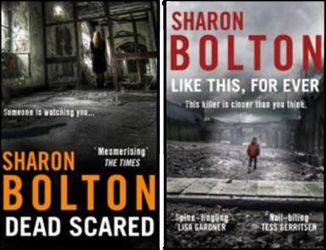
I’ve recently read Dead Scared, Sharon Bolton’s  second Lacey Flint book and Like This, For Ever, the third book in the series:

Bolton bks

Synopses from Sharon Bolton’s website:

Dead Scared

Someone is watching you…

When a Cambridge university student dramatically attempts to take her own life, DI Mark Joesbury realizes that the university has developed an unhealthy record of young people committing suicide in extraordinary ways.

Despite huge personal misgivings, Joesbury sends young policewoman DC Lacey Flint to Cambridge with a brief to work undercover, posing as a vulnerable, depression-prone student.

Psychiatrist Evi Oliver is the only person in Cambridge who knows who Lacey really is – or so they both hope. But as the two women dig deeper into the darker side of university life, they discover a terrifying trend…

And when Lacey starts experiencing the same disturbing nightmares reported by the dead girls, she knows that she is next.

Like This, For Ever (published as Lost in the US)

Twelve-year-old Barney Roberts is obsessed with a series of murders. He knows the victims are all boys, just like him. He knows the bodies were found on river banks nearby. And he’s sure the killer will strike again soon. But there’s something else, a secret he’d rather not know, a secret he is too scared to share . . .  And who would believe a twelve-year-old boy anyway?

Like This, For Ever is a twisty, addictive, up-all-night thriller from a writer who loves nothing more than to play with your mind.

Two perfect books for the RIP Challenge. they are both totally absorbing murder mysteries – maybe Like This, for Ever is even better than Dead Scared. I did have an inkling quite early on who was pulling Lacey’s strings in Dead Scared, but I just didn’t know how it was being done – nightmares, hallucinations, bizarre suicides and vulnerable students. It is terrifying in parts.

With Like This, For Ever I had no idea until very near the end who the killer was. It’s so full of red herrings and twists (more than in Dead Secret) that I swung from believing it could be this person to that, or thinking it can’t possibly be that person, or I do hope it’s not that one. It was one of the people I thought maybe it’s that one, but I quickly dismissed that idea.

Both books are full of believable and individual characters, plus there is the ongoing story of Lacey, her boss Mark Joesbury and psychiatrist Evi Oliver. I’d love to read the next book in the series soon – A Dark and Twisted Tide.

I first read Sharon Bolton’s books when she was writing under the name SJ Bolton, and I wondered why the name change.  The answer is here in this post on her blog . It’s long, so I’ll summarise – ‘SJ Bolton’ was the name her publishers suggested in 2006 in the manner of PD James and JK Rowling and she went along with it, the thinking being that men don’t buy books by a woman author. But she doesn’t have a middle name and chose ‘J’, confusing for people who knew her personally , and then more SJs appeared on the book shelves and she felt lost in the crowd. There was also the issue around the name ‘Sharon’, a name that can conjure up images of Pauline Quirke slouching around Chigwell in a shell suit. So  she now writes as Sharon Bolton and I for one am glad she does – it’s less anonymous as well as being a much more memorable name.

As well as being perfect for the RIP challenge, Dead Scared is a book I’ve owned for a while and so qualifies for the Mount To Be Read Challenge.

Appointment with Death by Agatha Christie

Agatha Christie’s Appointment with Death, set in the Middle East was first published in 1938 after her final pre-war visit to the area. It seemed right to read this book straight after I’d finished reading Come, Tell Me How You Live in which Agatha Christie wrote about her life on archaeological expeditions in Syria with her husband Max Mallowan.
The novel begins in Jerusalem where the Boyton family are sightseeing. There are two stepsons, one is married, a daughter and a step daughter. Mrs Boynton is a malignant and malicious tyrant who enjoyed exercising her power over her family, who all hated and yet obeyed her. Dr Gerard, a French psychologist, also a tourist remarks that

… she rejoices in the infliction of pain – mental pain, mind you, not physical. That is very much rarer and very much more difficult to deal with. She likes to have control of other human beings and she likes to make them suffer.

The Boyntons and Dr Gerard travel on through the Judean desert to Petra. Also in the group are Jonathan Cope, a family friend, Sarah King, a newly qualified doctor, Lady Westholme, a member of Parliament and Miss Annabel Pierce, a former nursery governess. The beginning of the book is taken up with relating their journey to Petra and the complicated relationships between the characters. It comes to a climax when Mrs Boynton is found dead.

The remainder of the book covers the investigation into her death. Colonel Carbury is in charge and although it appears that Mrs Boynton, who suffered from heart trouble had died overcome by the heat and strain of travelling, he is not satisfied and he has an idea that the family killed her. He enlists the help of Hercule Poirot, who was also in Jerusalem at the same time as the Boyntons and had overheard part of a conversation, ‘You do see, don’t you, that she’s got to be killed.’ He was sure he would recognise that voice again – and he did.

Poirot is his usual confident (arrogant) self, convinced he can solve the mystery and he does through questions, analysis and psychological reasoning. I didn’t work it out myself though.

This is a quick, easy read, with a lot of dialogue in a relatively short book (less than 200 pages). I enjoyed it, although it’s not one of my favourite Agatha Christie books.

I’m including it in Bev’s Color Coded Challenge as the main colour of the cover of my copy is brown. It’s one of the remaining few novels I have left to read for Kerrie’s Agatha Christie Reading Challenge.

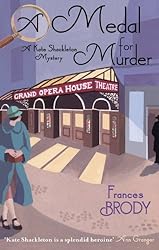
A Medal for Murder by Frances Brody

Last year I read and enjoyed Dying in the Wool, the first of Frances Brody’s series of historical crime fiction books set in 1920s Yorkshire and featuring Kate Shackleton. The second book, A Medal for Murder is even better and I was thoroughly immersed in the mystery.

A pawn shop robbery brings Kate and her assistant Jim Sykes, an ex-policeman,  their second case. It leads on to her discovery of a dead body, that of Lawrence Milner, outside a Harrogate theatre where Kate had been watching a production of a dramatisation of Arnold Bennett’s novel, Anna of the Five Towns. Then Captain Wolfendale, a Boer War veteran asks Kate to find his granddaughter, Lucy, who had starred in the play, as she has disappeared and he had received a ransom note. The murder  brings Kate into contact again with Inspector Marcus Charles of Scotland Yard (she had first met him in Dying in the Wool).

The book is told from the different characters’ perspective, but mainly from Kate’s, with flashbacks to the Boer War at the turn of the century. This is a detailed, complex plot which kept me guessing almost to the end about the identity of the murderer.  What is Captain Wolfendale hiding in his attic that he doesn’t want Kate to see? Just what is his relationship with Lawrence Milner who had also fought in the Boer War? How/is the pawn shop robbery connected to the murder? Will Lucy be rescued? And why doesn’t Dan Root, a watch maker, who also rents a room in the Captain’s house want to Kate to see inside his workroom?

There is so much going on in this book, and yet it was easy to read and each sub-plot fitted in so well with the main mystery that I didn’t get confused – I just couldn’t see who could have killed Milner. I had several suspects, all of whom turned out to be innocent of the crime. I liked the historical setting and the characters rang true. I’m left wondering whether Kate’s relationship with Inspector Charles will develop further, and whether she will ever hear what happened to her husband, reported missing in the 1914-18 War.

These are the books in the Kate Shackleton Mystery series:

1. Dying in the Wool (2009)
2. A Medal For Murder (2010)
3. Murder in the Afternoon (2011)
4. A Woman Unknown (2012)
5. Murder on a Summer’s Day (2013)
6. Death of an Avid Reader (2014)
7. A Death in the Dales (2015) to be published 1 October 2015

For more information about the author and her books see Frances Brody’s blog and website.

Reading Challenges: Mount TBR Reading Challenge, 10 Books of Summer, Historical Fiction Reading Challenge.