Classics Club II

The Classics Club

The Classics Club is a club created to inspire people to read and blog about classic books. There’s no time limit to join. You simply sign up to read and write on your blog about at least 50 classic books in at most five years

This is my second list of books to read for the Classics Club. I’ve been hesitating about making a second list as it has taken me almost 10 years to read through my first list! So I hope this second list won’t take me that long. It doesn’t have to be a fixed list as you can alter it at any time. I’ll be using this list once I’ve finished reading the last book on my first list.

I’ve listed the books in a-z author order. 

  1. Sense and Sensibility by Jane Austen – I’m not sure that I’ve read this before, so it may turn out to be a re-read.
  2. Another Part of the Wood by Beryl Bainbridge
  3. Death in the Tunnel by Miles Burton
  4. In Cold Blood by Truman Capote
  5. The Awakening by Kate Chopin
  6. The Mousetrap and Selected Plays by Agatha Christie
  7. Heart of Darkness by Joseph Conrad
  8. Lord Jim by Joseph Conrad
  9. The Case of the Gilded Fly by Edmund Crispin
  10.  Buried for Pleasure by Edmund Crispin
  11. The Stars Look Down by A J Cronin
  12. Moll Flanders by Daniel Defoe
  13. David Copperfield by Charles Dickens
  14. Dickens at Christmas by Charles Dickens
  15. Dombey and Son by Charles Dickens
  16. Nicholas Nickleby by Charles Dickens
  17. The Lost World by Arthur Conan Doyle
  18. The Black Tulip by Alexandre Dumas
  19. Parade’s End by Ford Madox Ford
  20. A Room with a View by E M Forster
  21. The Man of Property by John Galsworthy Forsyte Saga (1)
  22. North and South by Elizabeth Gaskell
  23. Brighton Rock by Graham Greene
  24. Daisy Miller by Henry James
  25. Catch 22 by Joseph Heller
  26. Strangers on a Train by Patricia Highsmith
  27. The Hunchback of Notre Dame by Victor Hugo
  28. Brave New World by Aldous Huxley
  29. The Night Manager by John le Carre
  30. Go Set a Watchman by Harper Lee
  31. Picnic at Hanging Rock by Joan Lindsay – read
  32. How Green was My Valley by Richard Llewellyn
  33. Lady Chatterley’s Lover by D H Lawrence
  34. Friends and Heroes by Olivia Manning
  35. Of Human Bondage by Somerset Maugham
  36. The Birds and other short stories by Daphne du Maurier
  37. I’ll Never Be Young Again by Daphne du Maurier
  38. The Time of Angels by Iris Murdoch
  39. Fire from Heaven by Mary Renault
  40. Waverley by Walter Scott
  41. A Town Like Alice by Neville Shute
  42. On the Beach by Nevil Shute
  43. Tortilla Flat by John Steinbeck
  44. Travels with Charley by John Steinbeck
  45. The Small House at Allington by Anthony Trollope
  46. The Last Chronicle of Barset by Anthony Trollope
  47. Around the World in 80 Days by Jules Verne
  48. Brideshead Revisited by Evelyn Waugh
  49. The Invisible Man by H G Wells
  50. Between the Acts by Virginia Woolf
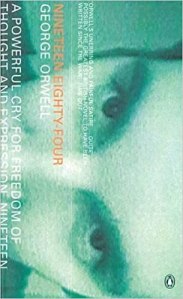
Book Beginnings & The Friday 56: 1984 by George Orwell

Every Friday Book Beginnings on Friday is hosted by Gillion at Rose City Reader where you can share the first sentence (or so) of the book you are reading. You can also share from a book you want to highlight just because it caught your fancy.

1984 is one of the books I’m currently reading. It’s one of those books I’ve had for years and never read.

The Book Begins:

It was a bright cold day in April, and the clocks were striking thirteen,

Also every Friday there is The Friday 56, hosted by Freda at Freda’s Voice. *Grab a book, any book. *Turn to Page 56 or 56% on your  ereader . If you have to improvise, that is okay. *Find a snippet, short and sweet, but no spoilers!

These are the rules:

  1. Grab a book, any book.
  2. Turn to page 56, or 56% on your eReader. If you have to improvise, that is okay.
  3. Find any sentence (or a few, just don’t spoil it) that grabs you.
  4. Post it.
  5. Add the URL to your post in the link on Freda’s most recent Friday 56 post.

Page 56:

‘By 2050 – earlier, probably – all real knowledge of Oldspeak will have disappeared. The whole literature of the past will have been destroyed. Chaucer, Shakespeare, Milton, Byron – they’ll exist only in Newspwak versions, not merely changed into something different, but actually changed into something contradictory of what they used to be.

Summary:

The year 1984 has come and gone, but George Orwell’s prophetic, nightmarish vision in 1949 of the world we were becoming is timelier than ever. 1984 is still the great modern classic of “negative utopia”—a startlingly original and haunting novel that creates an imaginary world that is completely convincing, from the first sentence to the last four words. No one can deny the novel’s hold on the imaginations of whole generations, or the power of its admonitions—a power that seems to grow, not lessen, with the passage of time. (Goodreads)

~~~

What have you been reading lately?

Back to the Classics Challenge 2022

It’s back! This is the 9th year that Karen at Books and Chocolate has hosted the Back to the Classics Challenge and this is the second time I’ll be joining in. Last year I completed 6 of the categories and this year I’m hoping to do more,

See Karen’s sign-up post on Books and Chocolate for more details about the challenge.

There are twelve categories and these are the books I’ve initially chosen for some of the categories – but there are others I could choose, so this list may/probably will change.

  1. A 19th century classic. Any book first published from 1800 to 1899 – David Copperfield by Charles Dickens
  2. A 20th century classic. Any book first published from 1900 to 1972. All books must have been published at least 50 years ago; the only exceptions are books which were written by 1972 and posthumously published. Another Part of the Wood by Beryl Bainbridge
  3. A classic by a woman author. Strangers on a Train by Patricia Highsmith
  4. A classic in translation.  Any book first published in a language that is not your primary language. You may read it in translation or in its original language, if you prefer. 
  5. A classic by BIPOC author. Any book published by a non-white author. The Black Tulip by Alexandre Dumas
  6. Mystery/Detective/Crime Classic. It can be fiction or non-fiction (true crime). The Mousetrap by Agatha Christie
  7. A Classic Short Story Collection. Any single volume that contains at least six short stories. The book can have a single author or can be an anthology of multiple authors. The Birds and Other Stories by Daphne du Maurier
  8. A Pre-1800 Classic. Anything written before 1800. Plays and epic poems, such as the Odyssey, are acceptable in this category. 
  9. A Nonfiction Classic. Travel, memoirs, and biographies are great choices for this category. In Cold Blood. by Truman Capote
  10. A Classic That’s Been on Your TBR List the Longest. Find the classic book that’s been hanging around unread the longest, and finally cross it off your list!  
  11. A Classic Set in a Place You’d Like to Visit. Can be real or imaginary — Paris, Tokyo, the moon, Middle Earth, etc. It can be someplace you’ve never been, or someplace you’d like to visit again.
  12. A Wild Card Classic. Any classic you like, any category, as long as it’s at least 50 years old!

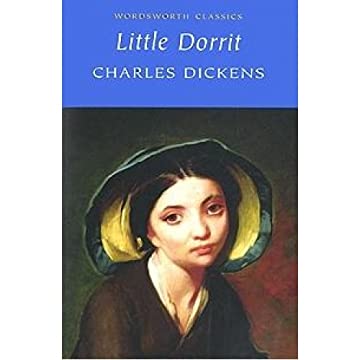
Little Dorrit by Charles Dickens

I read the Wordsworth Classic edition of Little Dorrit with Illustrations by Hablot K. Browne (Phiz) and an Introduction and Notes by Peter Preston, University of Nottingham. As always, I read the Introduction after I’d read the novel. I finished reading it in June and started writing this review. But it is only today that I realised I hadn’t finished it, so, this post is not as detailed as I would like it to be.

Summary from the back cover:

Little Dorrit is a classic tale of imprisonment, both literal and metaphorical, while Dickens’ working title for the novel, Nobody’s Fault, highlights its concern with personal responsibility in private and public life. Dickens’ childhood experiences inform the vivid scenes in Marshalsea debtor’s prison, while his adult perceptions of governmental failures shape his satirical picture of the Circumlocution Office. The novel’s range of characters – the honest, the crooked, the selfish and the self-denying – offers a portrait of society about whose values Dickens had profound doubts.

Little Dorrit, Charles Dickens’ eleventh book, was published serially from 1855 to 1857 and in book form in 1857. The novel attacks the injustices of the contemporary English legal system, particularly the institution of debtors’ prison. I found it hard going in parts, ponderous, sombre and serious. But as it’s a long book other parts are more lively, comic and far more enjoyable. That said it is also long-winded, far too wordy, melodramatic with a multitude of characters and a long-drawn out and convoluted plot. It is a great sprawling epic of a novel.

It is satire and Dickens spares no one, but it is those sections that hold up the flow of the novel. I found the first rant at the corruption and workings of the government Circumlocution Office, explaining that its purpose is ‘How Not to Get Things Done’, entertaining at first, but eventually repetitive and increasingly incredible. The account of the Barnacle family going round and round in circles, producing nothing but red tape, became excruciatingly boring.

I can’t say that I particularly liked any of the characters, and some of them are merely caricatures. rather than characters. Little Dorrit is so meek and self-effacing and far too good for her own good. Her father, known as the Father of the Marshalsea, is a most annoying character. He is the prison’s longest inhabitant, the longest debtor, the one to whom the other prisoners pay homage which makes him pompous and full of his self-importance. So much so that he fails to realise he is exploiting Little Dorrit.

But it is Dickens’ description of life in the Marshalsea, a debtors’ prison, that fascinated me, based on Dickens own father’s imprisonment there. The families could live with the debtors and were free to come and go, until the prison gates were locked at night. It was a separate society that worked on a system of hierarchy, run by the prisoners who had access to a pub, The Snuggery, and a shop, for those who had money. But it carried a terrible stigma of shame and corrupted them all – even Little Dorrit lied to herself about her father’s true situation. Once you were imprisoned there was practically no way you could be freed, unless your debts were paid and that was impossible when you couldn’t earn any money.

There are so many characters and so many sub-plots that I’m not going to attempt to write about them, other than to say at times I was amused and bemused, caught up in the stories, and dismayed at its length and complexity. Although I’ve been critical of some of the novel in this post and I think it could be my least favourite of all of Dickens’ books that I’ve read, overall I did enjoy it enough to give it 3.5 stars on Goodreads.

The Quiet American by Graham Greene

Vintage Digital| Oct 2010| 210 pages| my own copy| 4*

I heard of Graham Greene’s The Quiet American years ago. So when it was on offer for 99p at Amazon three years ago I bought the e-book version, with an Introduction by Zadie Smith. It’s one of the BBC’s 100 Novels That Shaped Our World. The nudge to read it now came from FictionFan’s Wanderlust Bingo as it fits nicely into the Southeast Asia Square as it is set in Vietnam * (see below). I don’t think I’ve read anything set in Vietnam before so I enjoyed it for its setting in Saigon and a glimpse of the situation in Vietnam under French colonialism in the early 1950s.

There are many natural storytellers in English literature, but what was rare about Greene was the control he wielded over his abundant material. Certainly one can imagine nobody who could better weave the complicated threads of war-torn Indochina into a novel as linear, as thematically compact and as enjoyable as The Quiet American. (Extract from Zadie Smith’s Introduction)

The Quiet American was first published in 1955 and is about America’s early involvement in Vietnam. It’s only the second book of Greene’s that I’ve read. The main characters are a cynical British journalist, Thomas Fowler, Phuong, a beautiful, young Vietnamese woman who lives with him, and Alden Pyle, a young and idealistic American – the ‘Quiet American,’ of the title. Phuong’s sister is keen for her and Fowler to marry, but he has a wife in England, who won’t agree to a divorce. Matters between all three characters come to a head when Pyle falls in love with Phuong and wants to marry her.

The book begins with a death and then goes back to the events that led up to that death. Although there is plenty of action the book revolves around these three characters and their relationships. Fowler is tired and jaded, addicted to opium and the thought of losing Phuong forces him to face the possibility of a lonely and bleak future. She meets his needs and prepares his opium pipes for him. Pyle, on the other hand is bright, confident and optimistic, certain that he can offer Phuong a better future.

The Americans at this time were not actively involved in the war against the Vietminh and Pyle has been sent to promote democracy and combat communism through a mysterious ‘Third Force’. However he is naive and gets involved in violent action causing injury and death to many innocent people. At that point Fowler realises he has to intervene.

*I know very little about Vietnam and its history, before the Vietnam War in the 1960s and 1970s and was a little confused about what was happening during the period in which this book is set and the references to the Vietminh. So, I had to look it up – In the late 19th century Vietnam was controlled by the French. In September 1945 the Nationalist leader Ho Chi Minh proclaimed its independence. From 1946 to 1954, the French opposed independence, and Ho Chi Minh led guerrilla warfare against them in the first Indochina War that ended in the Vietnamese victory at Dien Bien Phu on May 7, 1954. (see Britannica)

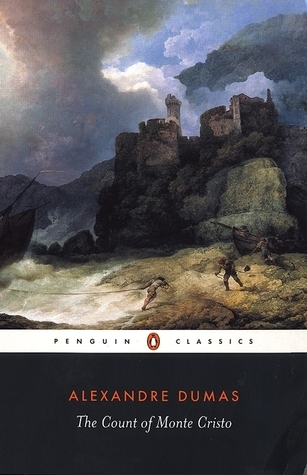
The Count of Monte Cristo by Alexandre Dumas

Penguin| Revised edition 2003| 1313 pages| 4*

I have had a paperback copy of The Count of Monte Cristo for many years. This year I joined in Karen’s Back to the Classics 2021 Reading Challenge, which gave me the incentive to read it now, as it meets the criteria for category five: a classic by a non-white author. It’s also a book on my Classics Club list. Dumas was born in 1802. His father was the illegitimate son of the Marquis de La Pailleterie and Marie Cessette Dumas, a black slave from Haiti. He was a prolific writer, producing 41 novels, 23 plays, 7 historical works and 6 travel books.

The Count of Monte Cristo was first serialised in a French newspaper in 18 parts in 1844 and later translated into English. There have been several translations, editions and abridged versions since then. I really had very little idea of the plot and had not watched any of the film or TV adaptations. As I found it hard to read my paperback version I read an e-book version, so much easier to see!

It begins in 1815 when Edmond Dantès, a sailor, having returned to Marseilles, and celebrating his betrothal to Mercedes is wrongly accused of being a Bonapartist and imprisoned in the Chateau d’If on the Isle of Monte Cristo, for fourteen years. His accusers were Fernand, who was also in love with Mercedes, assisted by Danglars, one of Dantès’ shipmates and Caderousse, a drunkard who went along with the others’ plot to get rid of him. The King’s Attorney, Villefort has his own reasons for condemning Dantès to conceal his father’s involvement with the Bonapartists.

I was quickly drawn into the story with the account of how Dantès survived his imprisonment after meeting the Abbé Faria, who tells him of a great hoard of treasure and offers to share it with him. He educates Dantès in languages, culture, mathematics, chemistry, medicine, and science and together they plan to escape. But the Abbé dies and Dantès ingeniously uses his death to make his own miraculous escape. Whilst in prison Dantès had vowed to get his revenge on the four men responsible for his imprisonment and the rest of the books tells how he went about it. It’s a complicated and elaborate plan that he carries out remorselessly, one that takes him several years to achieve.

It’s a great story, action-packed, and full of high drama and emotion. It’s a love story, a story of revenge and retribution, about justice, intrigue and betrayal. There’s imprisonment and a daring escape, bandits, murder, madness, and suicide. In addition there’s a female poisoner, a scene of torture, an execution, drug-induced sexual fantasies and above all a conflict between good and evil.

But it is very long (Dumas was paid by the line) and a difficult book to review as there is so much in it.There’s a wealth of characters, but the absolute star of the book is the Count of Monte Cristo himself, in his several guises. It’s a theatrical drama, melodramatic in parts, a book I found difficult to put down and it had me turning page after page as I just had to find out what would happen next. There are episodes that really beggar belief, and it has its slow moments where I just wanted Dumas to get on with the story and for Monte Cristo to get his revenge, but it all wove together to make a spectacular whole.

I loved it!