Adding to the TBRs

As usual I am behind with writing about the books I’ve read, with four to do. I’m in the middle of writing about The Voyage Out by Virginia Woolf, but it is taking me longer than I’d hoped and I haven’t finished my post yet.

So, here’s a post about the four books I’ve added to my TBRs this week:

STSmall

Stacking The Shelves is all about sharing the books you are adding to your shelves. This means you can include ‘˜real’ and ‘˜virtual’ books (ie physical and ebooks) you’ve bought, books you’ve borrowed from friends or the library, review books, and gifts.

I’ve added one paperback and three e-books:

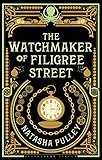
  • The Watchmaker of Filigree Street by Natasha Pulley. A friend recommended this book to me and I was delighted to see that it is one of the Kindle Daily Deals this morning. It’s steam-punk, a genre completely new to me! It is described as:

Utterly beguiling, The Watchmaker of Filigree Street blends historical events with dazzling flights of fancy to plunge readers into a strange and magical past, where time, destiny, genius ? and a clockwork octopus ? collide.

I hope I’ll like it as much as my friend did!

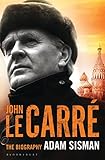
  • John Le Carré: the Biography by Adam Sisman, because I want to know more about the author of Tinker, Tailor, Soldier, Spy; The Night Manager and his other espionage books. During the 1950s and the 1960s, he worked for the Security Service and the Secret Intelligence Service, and began writing novels under a pen name. This is the definitive biography of a major writer, described by Ian McEwan as ‘perhaps the most significant novelist of the second half of the twentieth century in Britain’.
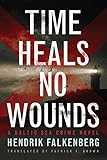
  • Time Heals No Wounds: a Baltic Sea crime novel by Hendrick Falkenberg. This is one of the free books for Amazon Prime members in May. German author Hendrik Falkenberg studied sports management and works in sports broadcasting. The magical allure that the sea holds for him comes alive in his stories, which are set on the north German coast. His first book, Die Zeit heilt keine Wunden (Time Heals No Wounds), was a #1 Kindle bestseller in Germany and has been translated for the first time into English.
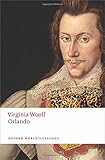
  • And lastly, HeavenAli held a draw to give away some of Virginia Woolf’s books and I’m delighted that I won Orlando in the giveaway.

Orlando tells the tale of an extraordinary individual who lives through centuries of English history, first as a man, then as a woman; of his/her encounters with queens, kings, novelists, playwrights, and poets, and of his/her struggle to find fame and immortality not through actions, but through the written word. At its heart are the life and works of Woolf’s friend and lover, Vita Sackville-West, and Knole, the historic home of the Sackvilles. But as well as being a love letter to Vita, Orlando mocks the conventions of biography and history, teases the pretensions of contemporary men of letters, and wryly examines sexual double standards.

I’m looking forward to reading these books in the coming months!

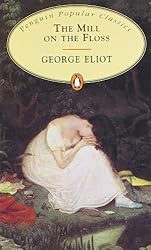
The Mill on the Floss by George Eliot

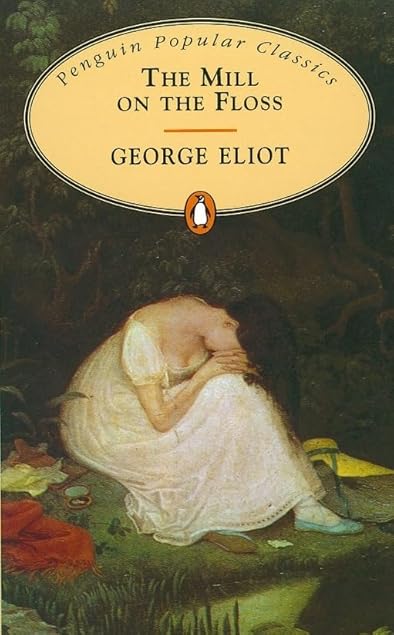
I was pleased when the Classics Club Spin number came up as 8, because for me that was The Mill on the Floss, a book I’ve had for years, so it was time I read it. I think one of the reasons I hadn’t read it is the size of the font – it’s small. But then I realised that there is a free e-book, so I read it on my Kindle as I could increase the font size.

Description (from my paperback copy of the Penguin Popular Classics 1994 edition, shown above):

George Eliot drew on her own anguished childhood when she depicted the stormy relationship between Maggie and Tom Tulliver. Maggie’s often tormented battle to do her duty and belong on the one hand, and to be  herself, wild and natural, on the other, propels her from one crisis to another. As the Tulliver fortunes decline and fall, the rift between Maggie and her family becomes almost irreconcilable. But Maggie’s biggest mistake of all is to fall in love with Stephen Guest who is engaged to another woman.

Both a sharp and observant picture of English rural life and a profoundly convincing analysis of a woman’s psychology, The Mill on the Floss is a novel that tackles the complexities of morality versus desire.

My thoughts:

The Mill on the Floss was first published in 1860. The story begins in the late 1820s, when Maggie, who is ‘big for her age, gone nine‘ and her brother, Tom aged about twelve are living at Dorlcote Mill on the banks of the river Floss near the town of St Oggs. Their father is anxious that Tom should have a good education so that he can go into business – he does not want him to be a miller. But it is Maggie who is the keen reader, enjoying books like The History of the Devil by Daniel Defoe, Aesop’s Fables and the Pilgrim’s Progress.

I enjoyed parts of the book more than other parts. The first part of this book, covering Maggie and Tom’s childhood for example is fascinating and a study of early 19th century rural life and education. Tom goes away from home to study under a tutor, Mr Stelling and meets Philip Wakem, whose father is a lawyer, Mr Tulliver’s opponent in a lawsuit. Maggie and Tom’s relationship is difficult, although she professes she ‘loves him better than anyone else in the world’, even when he rebukes her. Meanwhile Maggie becomes more friendly with Philip than Tom and her family like.

There are some lovely scenes, for example Maggie’s escapade when she leaves home to live with the gypsies. And I liked all the scenes with Mrs Tulliver’s sisters, who look down on her for marrying a miller and criticise Maggie’s appearance and behaviour, for Maggie is full of high spirits and energy. The sisters also provide comic relief, at times being miserly and self-centred, with a strong sense of their own importance. But things go from bad to worse for the Tullivers, when Mr Tulliver loses the lawsuit and eventually loses the mill.

In other places, between scenes there are long, rambling passages, that I found too wordy and philosophical and I waited impatiently to get back to the story. But overall I liked the book, more than I liked Adam Bede, but not as much as I remember liking Middlemarch, which I read long before I began this blog.

The Mill on the Floss is an epic novel encompassing various themes such as love, marriage, family loyalty, the social conventions of the times, and the struggle to survive. Feminism, education, and the role of women in society are to the fore, as Maggie is torn between two men who love her and is judged harshly for her behaviour.

It is a character driven plot; the river Floss plays a major part in the story, running through a wide plain, hurrying on to the sea, laden with ships. It’s a noisy place with Dorlcote Mill is on its banks near a stone bridge and the rush of the water is deafening, along with the ‘thunder of the huge covered wagon coming home with sacks of grain‘.

And it is the Floss that provides the huge climax which took me by surprise. It’s a dramatic ending and yet I found it rather unsatisfactory, not sure that I could believe what I had read, and shocked by such a sad ending. Looking back after I finished the book I realised that it had been foreshadowed almost from the start and I had missed it.

Reading Challenges: Mount TBR 2016 and The Classics Club.

Classics Club Check-In April 2016

Classics Club check inIt’s time for a Classics Club Check-In. Three years ago (next week) I joined The Classics Club, signing up to read and write about at least 50 classic books in at most five years. This is the first time I’ve taken part in a Check-In, although I have joined in with the Classics Club Spins, which I enjoy.

The list is not a fixed list and I have changed it since I started in 2013.This is my current list. I’ve listed the books in a-z author order. I’ve read 18 books, shown in bold, so I’m behind if I’m going to meet my target in the next two years. Currently I’m reading The Mill on the Floss by George Eliot (my current Spin book).

It’s hard to pick a favourite. These books stand out in my mind – Ethan Frome by Edith Wharton, To Kill a Mockingbird by Harper Lee and The Old Curiosity Shop by Charles Dickens.

  1. Lady Susan, The Watsons, Sanditon by Jane Austen ‘“ finished 24 August 2015
  2. Mansfield Park by Jane Austen ‘“ finished 29 June 2014
  3. The Old Wives Tale by Arnold Bennett
  4. Lorna Doone: A Romance of Exmoor by R D Blackmore
  5. Jane Eyre by Charlotte Bronte (a re-read) ‘“ read in November 2014
  6. The Thirty Nine Steps by John Buchan ‘“ finished 21 February 2014
  7. My Antonia by Willa Cather ‘“ finished 26 September 2013
  8. Don Quixote by Miguel de Cervantes Saavedra
  9. The Dead Secret by Wilkie Collins ‘“ finished 30 September 2015
  10. No Name by Wilkie Collins
  11. Lord Jim by Joseph Conrad
  12. Moll Flanders by Daniel Defoe
  13. Barnaby Rudge by Charles Dickens ‘“ finished 29 June 2013
  14. Nicholas Nickleby by Charles Dickens
  15. Little Dorrit by Charles Dickens
  16. Martin Chuzzlewit by Charles Dickens
  17. The Old Curiosity Shop by Charles Dickens ‘“ finished 10 October 2015
  18. Oliver Twist by Charles Dickens
  19. The Adventures of Sherlock Holmes by Arthur Conan Doyle
  20. The Count of Monte Cristo by Alexandre Dumas
  21. Adam Bede by George Eliot ‘“ finished 18 September 2015
  22. The Mill on the Floss by George Eliot
  23. Romola by George Eliot
  24. Silas Marner by George Eliot
  25. Parade’s End by Ford Maddox Ford
  26. The Forsyte Saga (1-3) by John Galsworthy
  27. Mary Barton by Elizabeth Gaskell
  28. North and South by Elizabeth Gaskell
  29. Wives and Daughters by Elizabeth Gaskell
  30. Far from the Madding Crowd by Thomas Hardy
  31. The Return of the Native by Thomas Hardy
  32. Washington Square by Henry James ‘“ finished 17 December 2013
  33. The Man Who Would Be King by Rudyard Kipling
  34. To Kill a Mockingbird by Harper Lee ‘“ finished 16 July 2013
  35. The Call of the Wild by Jack London ‘“ finished 10 December 2014
  36. Love in the Time of Cholera by Gabriel Garcia Marquez
  37. One Hundred Years of Solitude by Gabriel Garcia Marquez
  38. Gone with the Wind by Margaret Mitchell ‘“ finished 20 November 2013
  39. Of Mice and Men by John Steinbeck ‘“ finished 20 September 2015
  40. Travels with a Donkey in the Cevennes by Robert Louis Stevenson
  41. Gulliver’s Travels by Jonathan Swift
  42. Barchester Towers (Barsetshire Chronicles, #2) by Anthony Trollope ‘“ finished 22 February 2015
  43. Doctor Thorne (Barsetshire Chronicles, #3) by Anthony Trollope ‘“ finished 3 March 2016
  44. Framley Parsonage (Barsetshire Chronicles, #4) by Anthony Trollope
  45.  The Small House at Allington (Barsetshire Chronicles, #5) by Anthony Trollope
  46. The Last Chronicle of Barset (Barsetshire Chronicles, #6) by Anthony Trollope
  47. The Time Machine by H G Wells ‘“ finished 29 March 2014
  48. The Age of Innocence by Edith Wharton
  49. Ethan Frome by Edith Wharton ‘“ finished 22 February 2014
  50. The Voyage Out by Virginia Woolf

My Week in Books: 13 April 2016

This Week in Books is a weekly round-up hosted by Lypsyy Lost & Found, about what I’ve been reading Now, Then & Next.

IMG_1384-0

A similar meme,  WWW Wednesday is run by Taking on a World of Words.

Now: Currently I’m reading three books, because I like to vary my reading. So, I have a classic, a crime fiction and a non-fiction book on the go:

Blurb:

George Eliot drew on her own anguished childhood when she depicted the stormy relationship between Maggie and Tom Tulliver. Maggie’s often tormented battle to do her duty and belong on the one hand, and to be  herself, wild and natural, on the other, propels her from one crisis to another. As the Tulliver fortunes decline and fall, the rift between Maggie and her family becomes almost irreconcilable. But Maggie’s biggest mistake of all is to fall in love with Stephen Guest who is engaged to another woman.

Both a sharp and observant picture of English rural life and a profoundly convincing analysis of a woman’s psychology, The Mill on the Floss is a novel that tackles the complexities of morality versus desire.

  • Bones and Silence by Reginald Hill – a Dalziel and Pascoe crime fiction novel. It’s book 11 in the series, which I’m reading totally out of order (there are over 20 in the series) and it is really good.

Blurb:

When Detective Superintendent Andy Dalziel witnesses a bizarre murder across the street from his own back garden, he is quite sure who the culprit is. After all, he’s got to believe what he sees with his own eyes. But what exactly does he see? And is he mistaken? Peter Pascoe thinks so.

Dalziel senses the doubters around him, which only strengthens his resolve. To make matters worse, he’s being pestered by an anonymous letter-writer, threatening suicide. Worse still, Pascoe seems intent on reminding him of the fact.

Meanwhile, the effervescent Eileen Chung is directing the Mystery Plays. And who does she have in mind for God? Daziel, of course. He shouldn’t have too much difficulty acting the part’¦

  • L S Lowry: A Life by Shelley Rohde. Lowry is one of my favourite artists, well known for his urban paintings of industrial towns but his work covers a wide range of themes and subjects, from landscapes and seascapes to portraits. This biography is based on collections of private papers held in The Lowry, Salford Quays.
  • Then: I’ve recently finished The Bean Trees by Barbara Kingsolver, her first novel. I’ve read some of her other books –  loved The Poisonwood Bible which I’ve read a few times, and Homeland, a book of short stories, but wasn’t so taken with The Lacuna. I thoroughly enjoyed The Bean Trees – my review will follow shortly:

Blurb:

Plucky Taylor Greer grows up poor in rural Kentucky with two goals: to avoid pregnancy and to get away. She succeeds on both counts when she buys an old car and heads west. But midway across the country motherhood catches up with her when she becomes the guardian of an abandoned baby girl she calls Turtle. In Tuscon they encounter an extraordinary array of people, and with their help, Taylor builds herself and her sweet, stunned child a life.

Next: I really don’t know.

What about you? What are you reading this week?

Doctor Thorne by Anthony Trollope

I’ve recently read Anthony Trollope’s Doctor Thorne, which I’d meant to read about a year ago after I finished Barchester Towers! I enjoyed it, although I think it’s a bit too drawn out – I could see where the plot was going very early in the book. The conclusion is predictable.

But that didn’t matter as it’s a book about mid nineteenth-century prosperous country life and the traditional attitudes towards the accepted codes of conduct, of the importance of birth, of wealth and above all about money, class and power. It’s about human relationships and the strength of the novel is in the portraits of its characters and their responses to matters of principle in the face of upper class idiocy and snobbishness. Trollope uses gentle satire in this novel, emphasising the absurdities of the class divisions in society and poking fun at the professions, with the names of doctors, such as Dr Fillgrave, whose name wouldn’t inspire me with confidence, parliamentary agents such as Mr Nearthewind and Mr Closerstil and lawyers called Messrs Slow and Bideawhile.

Doctor Thorne is the third in Trollope’s Barchester Towers books – the first one not set in Barchester, but in Greshambury in East Barsetshire, where the Gresham family and Doctor Thorne and his niece Mary live. As the novel opens nothing is going well for the Gresham family, they are in financial difficulties, the estate is mortgaged and they are heavily in debt. It is imperative that Frank, the son and heir to Greshambury Park and its estate, should marry money – indeed, his mother, Lady Arabella, the sister of the Earl de Courcy insists ‘He must marry money‘, a refrain that is repeated throughout the novel. But Frank has fallen in love with Mary, who has neither money or rank, and is illegitimate and as the story proceeds she is increasingly ostracised by the Gresham family, egged on by their rich relations the De Courcys.

Although the book is called Doctor Thorne, the main character to my mind is Mary Thorne, who shows great strength of character throughout. Mary had been adopted by Doctor Thorne, after her father, his brother had been murdered by her mother’s brother. Her mother had left England for America, where she had married and had a family. The brother, meanwhile had done well for himself after he left prison and made a fortune. Mary knows nothing of her background.

I particularly liked Miss Dunstable, the daughter of ‘the ointment of Lebanon man‘, who had inherited £200,000 when he had died recently. The Gresham family, or rather Lady Arabella, instruct Frank that he is to ask her to marry him – her wealth over-riding the fact that her father was a tradesman.

My only criticism of this book is that the discussions about whether Frank and Mary should or should not be allowed to marry are too drawn out and slowed down the plot too much for my liking. Apart from that I thought it was good, Trollope’s authorial comments were interesting, the dialogue was realistic and lively and the main characters came over as real people. An entertaining novel and now I’m keen to read the next Barchester Towers book, Framley Parsonage; Doctor Thorne also appears in this book!

In his Autobiography Trollope wrote that he had been trying to think up a new plot and he asked his brother to sketch one for him, which he did! He thought it was a good plot and the book was, he believed, the most popular book he had written. He was surprised by its success.

After I finished reading Doctor Thorne I realised that it was a perfect choice for the What’s in a Name? Challenge in the category of a book with a profession in the title. It’s a book I’ve had since before 1 January 2016 and fits into the Mount TRB Reading Challenge too and it’s also a book I identified for the Classics Club Challenge.

I wanted to read Doctor Thorne before the three-part adaptation of the book that starts tonight on ITV at 9 pm, so that my reaction to it wouldn’t be influenced. Now that I have read it I’m not at all sure I’ll watch the adaptation. If there are too many changes I know it will irritate me.

The Old Curiosity Shop by Charles Dickens

Note: I’ve found this hard to write about without giving away some spoilers.

I’d listed The Old Curiosity Shop in my Classics Club Spin,  but was really hoping to get one of Thomas Hardy’s books. Without this push from the Classics Club this book would have stayed on my TBR list for a long time because all I knew about it was that it’s the book in which Little Nell suffers a melodramatic death and I feared it would be too sentimental for my liking. And much to my surprise I have finished it in time for the deadline for reading our Spin book this Friday, even though it’s such a long book.

Well, it was and it wasn’t. It’s not just a sentimental, melodramatic story. It’s also full of weird, grotesque and comic characters, a mix of everyday people and characters of fantasy. It has elements of folklore and myth, as Nell and her grandfather, go on an epic journey, fleeing from the terrifying dwarf, Daniel Quilp and travelling through a variety of scenes, meeting different groups of people on their journey. There are numerous allusions to the Bible, Shakespeare and popular songs of the day. There are long passages where Nell doesn’t feature and is hardly mentioned, so it’s by no means a totally sentimental tale.

Several of the characters stand out for me, Quilp is an obvious choice. He takes delight in inflicting pain and suffering on others. He’s scarcely human, grossly wicked, hideous in appearance, full of lust, ferocious, cunning, and malicious. A fiend who

… ate hard eggs, shell and all, devoured gigantic prawns with heads and tails  on, chewed tobacco and water-cresses at the same time and with extraordinary greediness, drank boiling tea without winking, bit his fork and spoon until they bent again, and in short performed so many horrifying and uncommon acts that the women were nearly frightened out of their wits, and began to doubt if he were really a human creature. (page 47)

Other characters who stood out are Dick Swiveller and the Marchioness. Dick at first appears as a profligate friend of Nell’s brother, Fred but takes on a larger role later in the book. Working in a law office for Mr Brass and his sister, Sally Brass, he befriends the small, half-starved girl who is a servant locked in the basement, calling her the Marchioness. He rescues her and also Kit, Nell’s friend, when he is wrongly accused of robbery.

There are many more I could mention, including the people Nell and her grandfather meet on their travels – wonderful scenes  of the travelling Punch and Judy show; Mrs Jarley’s wax-work figures, over a hundred of them that she takes around the countryside in a caravan; the gypsies who take advantage of Nell’s grandfather’s addiction to gambling; the poor schoolteacher who take in Nell and her grandfather; and the Bachelor who they meet at the end of their journey.

I also liked the description of the landscape as Nell leaves London, the change from town to countryside, then later through the industrial Midlands with its factories, furnaces and roaring steam-engines where people worked in terrible conditions. Nell and her grandfather spend a night in one of the furnaces, sleeping on a heap of ashes.

In a large and lofty building, supported by pillars of iron, with great black apertures in the upper walls, open to the external air; echoing to the roof with the beating of hammers and roar of furnaces, mingled with the hissing of red-hot metal plunged in water, and a hundred strange unearthly noises never heard elsewhere; in this gloomy place, moving like demons among the flame and smoke, dimly and fitfully seen, flushed and tormented by the burning fires, and wielding great weapons, a faulty blow from any one of which must have crushed some workman’s skull, a number of men laboured like giants. (pages 334-5)

Nell, herself, is a sweet, self-effacing and innocent character, who is left to look after her grandfather as he fails to overcome his gambling addiction. She goes into a decline and her slow death is, I suppose inevitable, although thankfully it is not described by Dickens. Child death is one of the themes of The Old Curiosity Shop as Nell’s death is not the only one.

The Old Curiosity Shop was written in 1840 – 1841 and serialised weekly in Master Humphrey’s Clock beginning on 4 April 1840 and ending on 6 February 1841. During this period the circulation of the periodical rose to a staggering figure of 100,000. It was Dickens’ fourth novel, influenced by the early death of his sister-in-law, Mary Hogarth, in 1837, which had profoundly shocked him. His work on The Old Curiosity Shop, particularly as he came to writing the end, revived the anguish he had experienced on her death.

The Old Curiosity Shop

I read the Penguin Classics e-book which has the original illustrations by George Cattermole, Hablot K Browne (‘Phiz’), Daniel
Maclise and Samuel Williams.

The furnace

Despite the sentimentality I did enjoy reading The Old Curiosity Shop and it has made me keen to read more of Dickens’ books.

As well as being my Classics Club Spin, this book also qualifies for the Mount To Be Read Challenge and the Victorian Bingo Challenge.