New-To-Me Books

Another visit to  Barter Books in Alnwick means I’ve added 5 more books to my TBRs.

img_20181011_073308703

From top to bottom they are:

Fair Stood the Wind for France by H E Bates – a Penguin modern classic. It was first published in 1944 and is about a British pilot, John Franklin, whose plane was shot down in occupied France, and Francoise, the daughter of a French farmer who hid Franklin and his crew from the Germans. I haven’t read any other books by Bates (1905 – 1974) – he was a prolific writer.

Recalled to Life by Reginald Hill, the 13th Dalziel and Pascoe book.  Dalziel reopens the investigation into a murder that took place in 1963 – the year of the Profumo Scandal, the Great Train Robbery and the Kennedy Assassination. I should be on safe ground with this book as I’ve enjoyed all the other Dalziel and Pascoe books I’ve read.

Mystic River by Dennis Lehane. Three boys’ lives were changed for ever when one of them got into a stranger’s car and something terrible happened. Twenty five years later they have to face the nightmares of their past. I’m not sure what to expect from this book, not having read any of Lehane’s books before, but a reviewer in the Guardian described it as one of the finest novels he’d read in ages.

The Hog’s Back Mystery by Freeman Willis Crofts, first published in 1933 during the Golden Age of detective fiction between the two world wars. It’s an Inspector French murder mystery set in Surrey, where first one person then others disappear. Have they been murdered? I’ve read just one of Crofts’ books before, Mystery in the Channel, which completely baffled me – will this be just as complicated?

The Virgin Blue by Tracy Chevalier, the story of two women, born centuries apart and the ancestral legacy that binds them. This was Tracy Chevalier’s first novel. I’ve read and enjoyed some of her later books, including The Girl with a Pearl Earring and Falling Angels, so I’m looking forward to reading this book.

Please let me know if you’ve read any of these books and whether you enjoyed them – or not.

A Perfectly Good Man by Patrick Gale

A Perfectly Good Man

5*

Having read Notes from an Exhibition earlier this year I expected to like Patrick Gale’s A Perfectly Good Man, so I’m delighted to say that I loved it.

I have read plenty of books that move backwards and forwards in time and move from one character to another, but not one like A Perfectly Good Man, that does it so successfully that you don’t experience any confusion or struggle to remember who is who – at least that was my experience with this book. It’s set in Cornwall, in particular in Pendeen and Morvah, north-west of Penzance, the setting for Notes from an Exhibition.

The ‘perfectly good man‘ is Barnaby Johnson, a parish priest, a man who always tries to do the right thing; needless to say he doesn’t always manage it. There’s his wife, Dorothy, who becomes known, not appropriately as ‘Dot’, his daughter, Carrie, his adopted Vietnamese son ‘Jim’, who, in the course of the book, reverts to his native name ‘Phuc’, pronounced to rhyme with ‘foot’ and not ‘luck’, and a particularly nasty character who calls himself ‘Modest Carlsson’.

But the novel begins with Lenny, aged 20, who is paralysed after an accident playing rugby and is in a wheelchair. He is unable to cope with the prospect of a life never being able to run or  walk again, a life of people making allowances for him, of charity; he had lived for nights out with his girlfriend,and for rugby. He asks Barnaby to be with him as a witness to his suicide and to pray for him.

I got to know these people very well over the course of the book and eventually understand their individual stories and how their lives interconnect. The significance of their actions not only on themselves but on the others around them became so real as I read on – for example, Dot’s anguish over her miscarriages and the consequences, not just on her and the boy, but on the whole family and community, of adopting a Vietnamese orphan is agonisingly plain. I was pleased to see glimpses of some characters from Notes from an Exhibition as they made fleeting appearances, and a return of Morwenna Middleton to the area, which explained what had happened to her after the events of Notes from an Exhibition. Modest Carlsson is the antithesis of Father Barnaby in his cruel and heartless behaviour in destroying what is a treasured possession and in revealing a devastating secret that he should have kept to himself.

A Perfectly Good Man is a beautifully written book about faith and the loss of faith, about love and cruelty and deception, about ordinary life and about everyday tragedies, and also sublime moments. It’s a quiet novel that left me feeling I must read more of Patrick Gale’s books. Fortunately I already have one more on my shelves, A Place Called Winter historical fiction described as a novel of forbidden love, secrets and escape and in The Times as a novel ‘written with intelligence and warmth’.

My copy:

  • Paperback: 406 pages
  • Publisher: Fourth Estate 2012
  • ISBN-13: 9780007465088
  • Source: Library book
  • My rating: 5*


Top Ten Tuesday: Ten of the Longest Books I’ve Read

Top Ten Tuesday new

Top Ten Tuesday is a weekly meme created by The Broke and the Bookish and now hosted by Jana at That Artsy Reader Girl.

The rules are simple:

  • Each Tuesday, Jana assigns a new topic. Create your own Top Ten list that fits that topic – putting your unique spin on it if you want.
  • Everyone is welcome to join but please link back to The Artsy Reader Girl in your own Top Ten Tuesday post.
  • Add your name to the Linky widget on that day’s post so that everyone can check out other bloggers’ lists.
  • Or if you don’t have a blog, just post your answers as a comment.

This week’s topic is Ten of the Longest Books I’ve Read.

In the past I used to prefer reading long books, so most of the ones listed below are ones I read years ago. These days I tend to shy away from really long books, unless they’re e-books, as they’re usually heavy to hold or in such a small font that I find them difficult to read, or both.

In page number order(which vary according to different editions) they are:

Les Misérables

Les Misérables by Victor Hugo, 1,231 pages.

The October Horse (Masters of Rome)

The October Horse by Colleen McCullough, 1,124 pages

The Pillars of the Earth (The Pillars of the Earth, #1)

The Pillars of the Earth by Ken Follett, 1,088 pages

The Grass Crown

The Grass Crown by Colleen McCullough, 1,043 pages

The Mists of Avalon

The Mists of Avalon by Marion Bradley, 1,009 pages

Jonathan Strange & Mr Norrell

Jonathan Strange & Mr Norrell by Susanna Clarke, 1,006 pages

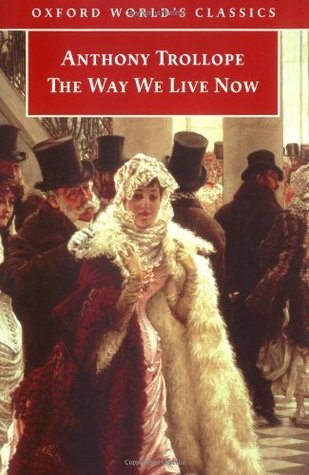
The Way We Live Now

The Way We Live Now by Anthony Trollope, 976 pages.

War and Peace

War and Peace by Leo Tolstoy, 975 pages.

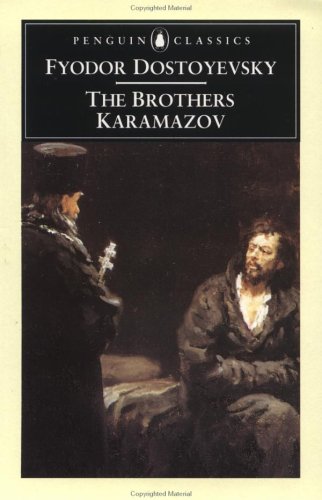
The Brothers Karamazov by Fyodor Dostoyevsky

The Brothers Karamazov by Fyodor Dostoyevsky, 960 pages.

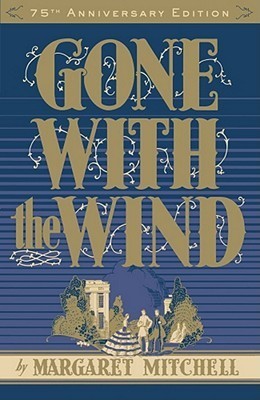
Gone With the Wind

Gone with the Wind by Margaret Mitchell, 959 pages.

My favourites of these books are Gone with the Wind and War and Peace – both of these surprised me at how much I enjoyed them.

Six Degrees of Separation: from The Outsiders to the Mill on the Floss

I love doing Six Degrees of Separation, a monthly link-up hosted by Kate at Books Are My Favourite and Best. Each month a book is chosen as a starting point and linked to six other books to form a chain. A book doesn’t need to be connected to all the other books on the list, only to the one next to it in the chain.

This month the chain begins with with The Outsiders by S E Hinton.

The Outsiders

Kate describes it as a teen classic, but it’s a book I haven’t come across before. According to Amazon it is ‘an outstanding story of teenage rebellion, written when the author was only 17 years old.’ 

The Outsider

I immediately thought my first link had to be to The Outsider (L’Etranger) by Albert Camus. Set in Algiers this is a book about Mersault, an individual who refused to conform to society, a reserved man without any sense of God, and who doesn’t show emotion but faces the world with indifference.

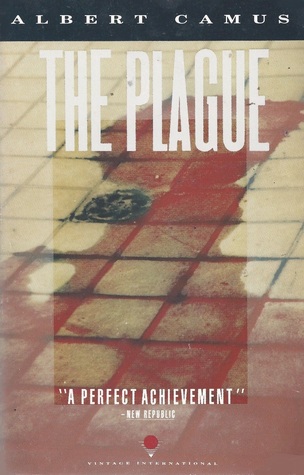
The Plague

My second link followed on naturally to another book by Albert Camus –  The Plague a book that can be read on two levels – either as a straightforward narrative about a plague in Oran in the 1940s or centred on the idea of plague as a symbol – the symbol being that of the German occupation of France (Camus was in the Resistance during the Occupation) during the Second World War.

A Journal of the Plague Year

Thinking about plague takes me to my next link – A Journal of the Plague Year by Daniel Defoe, about the Great Plague of 1664-5. Written in 1772 this is an account of the epidemic of bubonic plague, known as the Black Death, that ravaged England in 1664–1665.

The Plague Charmer

Still on the subject of plague my mind jumped to The Plague Charmer by Karen Maitland, a fascinating medieval tale full of atmosphere and superstition set  in 1361, at Porlock Weir in Somerset where a village is isolated when the Black Death spread across England.

The Western Wind

Another book about an isolated village is The Western Wind by Samantha Harvey. In this book the village is Oakham also in Somerset that was  cut off in the 15th century from the surrounding villages when the river flooded. It’s also a book full of superstitions.

The Mill on the Floss

And finally, the last link – The Mill on the Floss by George Eliot, in which the river plays a major role. Set in the early 19th century, Dorlcote Mill stands on the banks of the River Floss near a stone bridge – a noisy place as the deafening rush of water speeds on its way to the sea.

All my links apart from the first one are to historical fiction, moving from America through Algiers to England and travelling through the 14th, 15th, 17th  and 19th centuries (not in that order though). The plague and natural disasters feature strongly.

Rebus Returns! In My Friday Post

Book Beginnings Button

Every Friday Book Beginnings on Friday is hosted by Gillion at Rose City Reader where you can share the first sentence (or so) of the book you are reading, along with your initial thoughts about the sentence, impressions of the book, or anything else the opener inspires.

In a House of Lies by Ian Rankin was published yesterday. It’s the 22nd book in Rankin’s Inspector Rebus series. 

In a House of Lies (Inspector Rebus #22)

It begins:

The car was found because Ginger was jealous of his friend Jimmy.

Description (Ian Rankin’s website)

IN A HOUSE OF LIES

Everyone has something to hide
A missing private investigator is found, locked in a car hidden deep in the woods. Worse still – both for his family and the police – is that his body was in an area that had already been searched.

Everyone has secrets
Detective Inspector Siobhan Clarke is part of a new inquiry, combing through the mistakes of the original case. There were always suspicions over how the investigation was handled and now – after a decade without answers – it’s time for the truth.

Nobody is innocent
Every officer involved must be questioned, and it seems everyone on the case has something to hide, and everything to lose. But there is one man who knows where the trail may lead – and that it could be the end of him: John Rebus.

~~~

Also every Friday there is The Friday 56, hosted by Freda at Freda’s Voice.

30879-friday2b56These are the rules:

  1. Grab a book, any book.
  2. Turn to page 56, or 56% on your eReader. If you have to improvise, that is okay.
  3. Find any sentence (or a few, just don’t spoil it) that grabs you.
  4. Post it.
  5. Add the URL to your post in the link on Freda’s most recent Friday 56 post.

I ‘m not up to 56% yet and my e-book doesn’t have page numbers, but by my reckoning page 56 is between 14-15% –  here DI Fox is talking about Rebus:

‘Rebus retired at the end of 2006. Well sort of.’

‘Sounds like you have come across him, though?’

‘John Rebus has a way of turning up. Anything in particular blot his copybook on the Bloom case?

‘He was mates with the boyfriend’s dad, a cop from Glasgow. Word was they kept meeting for a quiet drink.’ (14%)

~~~

I’ve been looking forward to reading this book as I’ve read all the previous 21 books. So, I had to start reading this as soon as it appeared on my Kindle yesterday even though I have plenty of books lined up to read next!

What about you? Does it tempt you or would you stop reading? 


WWW Wednesday: 3 October 2018

IMG_1384-0

WWW Wednesday is run by Taking on a World of Words.

The Three Ws are:

What are you currently reading?
What did you recently finish reading?
What do you think you’ll read next?

I’m currently reading:

A Perfectly Good Man by Patrick Gale. It’s not a sequel to Notes from an Exhibition, which I loved, but is set in the same area of Cornwall. I’m well into this book now and loving how the story is developing. It’s not a straightforward narrative but moves between the characters showing them at different ages in their lives.

A Perfectly Good Man

Synopsis from Goodreads:

When 20-year-old Lenny Barnes, paralysed in a rugby accident, commits suicide in the presence of Barnaby Johnson, the much-loved priest of a West Cornwall parish, the tragedy’s reverberations open up the fault-lines between Barnaby and his nearest and dearest – the gulfs of unspoken sadness that separate them all. Across this web of relations scuttles Barnaby’s repellent nemesis – a man as wicked as his prey is virtuous. Returning us to the rugged Cornish landscape of ‘Notes from an Exhibition,, Patrick Gale lays bare the lives and the thoughts of a whole community and asks us: what does it mean to be good?

I’m also reading A Discovery of Witches by Deborah Harkness – see yesterday’s post for the opening paragraph and synopsis. And I’ve also started to read 21 Lessons for the 21st Century by Yuval Noah Harari, a collection of essays. It’s a new publication (August 2018) one of a few review copies from NetGalley, that I’m behind in reading.

I’ve recently finished:  

Down to the Woods (Helen Grace #8)

Down to the Woods, the 8th DI Helen Grace thriller by M J Arlidge, crime fiction about gruesome murders in the New Forest. See this post for my review – I did want to know the outcome, but I got rather tired of all the violence and chase scenes throughout the book and was relieved to finish it.

My next book could be:

Assassin's Apprentice (Farseer Trilogy, #1)In a Dark, Dark Wood

I have all sorts of ideas about which book to read next and as usual am undecided. It could be one of my NetGalley review books such as Now We Shall Be Entirely Free by Andrew Miller, historical fiction set in 1809 in England, Scotland and Spain. It  looks very good.

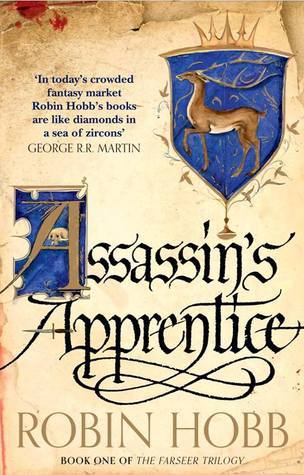
Or it could be one of my TBRs that I featured in my Monday post. I’m leaning towards Assassin’s Apprentice by Robin Hobb, Book One of the Farseer Trilogy – several people commented on how much they enjoyed it.

Or one of the books I’ve borrowed from the library – In a Dark, Dark Wood by Ruth Ware. I’ve renewed this book a few times and will have to return it soon. It’s crime fiction – a weekend hen party in a remote cottage (actually a glass house) that goes from bad to worse and someone is killed.

Have you read any of these books?  Do any of them tempt you?