Historical Fiction Challenge 2013

Historical FictionAt this time of year numerous challenges are being announced and I’m tempted to join them. It’s a bit like making New Year resolutions, full of enthusiasm at first … But there are some challenges that interest me because they fit in with my reading, such as the Agatha Christie Reading Challenge (more about that in another post to come), which I’ve been doing for the last three years. I don’t think of them as ‘challenges’ – they’re really ‘projects’.

As historical fiction is one of my favourite genres and I read a fair amount of it I’ve decided to join the Historical Fiction Challenge for 2013.

This Challenge is being hosted by Historical Tapestry and runs from 1 January to 31 December 2013. There are five different levels of participation to choose from:

20th century reader ‘“ 2 books
Victorian reader ‘“ 5 books
Renaissance Reader ‘“ 10 books
Medieval ‘“ 15 books
Ancient History ‘“ 25+ books

I shall be aiming for the Medieval level (but really hoping to make it to the Ancient History level).

If you’re interested in joining too, see this post at Historical Tapestry.

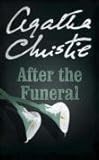
After the Funeral by Agatha Christie

I thoroughly enjoyed Agatha Christie’s After the Funeral, first published in 1953.

Synopsis (from the official Agatha Christie website):

‘When Cora is savagely murdered, the extraordinary remark she made the previous day at her brother’s funeral takes on a chilling significance. At the reading of Richard’s will, Cora was clearly heard to say, “It’s been hushed up very nicely, hasn’t it…But he was murdered, wasn’t he?”  In desperation, the family solicitor turns to Hercule Poirot to unravel what happened next …

Published in 1953, and appearing in the United States under the title Funerals are Fatal, Christie dedicated the novel to her nephew, James Watt III “in memory of happy days at Abney”, her sister’s family home. The novel  formed the basis for MGM’˜s Murder at the Gallop, although they chose to swap Poirot for Margaret Rutherford’s Miss Marple and took ‘˜artistic licence’ with the book’s plot!  It was broadcast in 2006 with David Suchet as Poirot.’

My view:

I read it quickly and consequently had little idea who had killed Cora. I did spend some time looking at the family tree at the beginning of the book, working out the family relationships and who was present at Richard Abernethie’s funeral and their reaction to Cora’s question. It seemed to me that any of the family could have done it – Agatha Christie goes through the actions and thoughts of each character and there’s cause for suspicion for each one.

None of them had had any close ties and consequently they didn’t feel any deep grief. His brother expected he would inherit as Richard’s only son had died six months before his father. Instead Richard had distributed his property equably between his brother and his nephews and nieces – everyone is disappointed.

Apart from trying to solve the mystery I was interested in the glimpses into life in post-war Britain, where jobs are scarce, servants even more scarce and there are complaints about the economic situation, with high taxation and the prospect of properties such as the Abernethie house being turned into a hotel, or institute, or even worse being pulled down and the whole estate built over.

  • Paperback: 378 pages
  • Publisher: HarperCollins; Masterpiece edition edition (6 May 2008)
  • Language: English
  • ISBN-10: 0007119364
  • ISBN-13: 978-0007119363
  • Source: I bought the book
  • Rating: 5/5

Silent Voices by Ann Cleeves

Ann Cleeves has become one of my favourite writers this year and Silent Voices is one of the best crime fiction books I’ve read recently. Although it’s the fourth in her Vera Stanhope series it’s the first that I’ve read. I did watch some of the TV versions of Vera earlier this year but I missed this one, so the plot was completely new to me.

Synopsis (taken from the back cover):

When DI Vera Stanhope finds the body of a woman in the sauna room of her local gym, she wonders briefly if, for once in her life, it’s a death from natural causes. But closer inspection reveals ligature marks around the victim’s throat…

Doing what she does best, Vera pulls her team together and sets them interviewing staff and those connected to the victim, while she and colleague Sergeant Joe Ashworth work to find a motive. While Joe struggles to reconcile his home life with the demands of the job, Vera revels being back in charge of an investigation. Death has never made her feel so alive.

And when they discover that the victim had worked in social services – and was involved in a shocking case involving a young child – it seems the two are somehow connected.

But things are rarely as they seem . . .

My view:

When I began reading I could visualise and hear Brenda Blethyn as Vera, but gradually that impression faded away and the character of Vera began to take shape in my mind from the words in this book alone. Vera is a truly eccentric individual, intelligent, single minded and dedicated to her job, single and with no family responsibilities. She finds it difficult to delegate and is exhilarated by her job. In the following extract she has phoned Joe late at night:

Her voice was loud. She’d never really got the hang of mobiles, yelled into them. She sounded as if she’d just woken up after a good night’s sleep. Murders took her that way, invigorated her as much as they excited the pensioners he’d spent all afternoon interviewing. Once, after too many glasses of Famous Grouse, she’d said that was what she’d been put on the Earth for. (page 67)

The other characters are equally as well- defined. As well as creating memorable and individual characters Ann Cleeves conveys a strong sense of place bringing the Northumbrian countryside, towns and villages to life as I read. The plot is nicely complicated and although I had an inkling about the killer I was wrong, but looking back I could see where I’d been misled. Silent Voices is an excellent book, one that kept me turning the pages and exercising my brain.

  • Paperback: 400 pages
  • Publisher: Pan (16 Sep 2011)
  • Language: English
  • ISBN-10: 0330512692
  • ISBN-13: 978-0330512695
  • Source: Library book
  • My Rating: 5/5

Tea and Books Reading Challenge 2013

Tea & Books challenge 2013

Birgit at The Book Garden is hosting the second edition of the TEA & BOOKS Reading Challenge! This challenge was inspired by C.S. Lewis’ famous words, “You can never get a cup of tea large enough or a book long enough to suit me.”
In this challenge you will only get to read … books with more than 650 pages!

  • You may pick both fiction and non fiction books!
  • Contrary to last year short story collections, anthologies or collected works in one volume are now allowed!
  • Re-reads will now also be ok (though preferably you should read one of those unread tomes that have been collecting dust on your shelves)!
  • Last year you had to read 700+ pages but for 2013 it has reduced to 650+ pages.
  • And as a little incentive – books with more than 1,200 pages will count for two books (so theoretically you can read four such super-chunksters to reach the Sencha Connoisseur level)!
  • Last but not least – no large print editions of a book, please!
There are four levels and I’ll be aiming for the Berry Tea Devotee!
  • 2 Books – Chamomile Lover
  • 4 Books – Berry Tea Devotee
  • 6 Books – Earl Grey Aficionado
  • 8 or more Books – Sencha Connoisseur

I have several books to choose from – some that I listed last year and never got round to reading. I had no idea I had so many books of over 650 pages! Here they are in ascending page number order:

  1. Into Temptation by Penny Vincenzi (654 pages)
  2. The Lacuna by Barbara Kingsolver (670 pages)
  3. Of Human Bondage by Somerset Maugham (704 pages)
  4. Dreams of Innocence by Lisa Appignanesi (712 pages)
  5. This Thing of Darkness by Harry Thompson (750 pages)
  6. Helen of Troy by Margaret George (755 pages)
  7. Mary Queen of Scots by Antonia Fraser (758 pages)
  8. Long Walk to Freedom by Nelson Mandela (769 pages)
  9. No Name by Wilkie Collins (784 pages)
  10. Nicholas Nickleby by Charles Dickens (800 pages)
  11. Martin Chuzzlewit by Charles Dickens (800 pages)
  12. The Mitfords: Letters between Six Sisters edited by Charlotte Mosley (834 pages)
  13. Little Dorrit by Charles Dickens (848 pages)
  14. The Count of Monte Cristo by Alexandre Dumas (894 pages)
  15. Parade’s End by Ford Madox Ford (906 pages)
  16. Ulysses by James Joyce (944 pages)
  17. The Pillars of the Earth by Ken Follett (1088 pages)

I’m just aiming to read four of them (last year I read just 3 books of over 700 pages each). I’d like to think I’ll read more than four of these books next year, but I’m being realistic – I do want to read other books and I can’t see myself reading more than one of them a month! I’m not deciding in which order I’ll be reading them – it has to be a spontaneous decision at the time.

This challenge will also contribute towards the Mount TBR Challenge, as I’ve owned these books for some time (years in some cases).

Full Tilt by Dervla Murphy

Dervla Murphy was born in County Waterford, Ireland. In a Book Beginnings post I wrote about how when she was ten she decided she wanted to cycle to India. And that is what she did 21 years later.
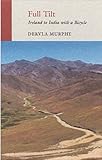
Full Tilt: Dunkirk to Delhi on a Bicycle, first published in 1965  is an account of her journey in 1963, which took her through Europe, Persia (Iran), Afghanistan, over the Himalayas to Pakistan and into India. She travelled on her own, with a revolver in her saddle bag. I’m full of admiration for her courage and determination.

Reading this book made me wonder about the countries she cycled through and how they’ve changed since the early 1960s. It would certainly be a different experience if anyone tried to do the same these days! T

Here are a few quotes to give a taste of the book:

The border between Persia and Afghanistan

The only indication of the Persian-Afghan frontier is a seven-foot stone pillar, conspicuous from far across the desert, which lucidly announces ‘Afghanistan’.  Here I stopped to photograph Roz [her bicycle]. Three miles further on a long branch served as Customs barrier and beside it lay a very young soldier in a very ragged uniform, sound asleep with one hand on his rifle. I quietly raised the barrier for myself and continued towards the Customs and Passport Office two hundred yards ahead.

There, no one took the slightest notice of either my kit or my passport, no uniformed officials appeared and no series of dingy, uncomfortable offices had to be visited. (page 47)

The concept of time:

… people here have no concept of time as we understand it. The majority wear watches as ornaments and I was diverted to discover that they can’t read the time and don’t see why they should learn! Yesterday is over, today is something to be enjoyed without fuss, and tomorrow – well, it’s sinful to plan anything for the future because that’s Allah’s department and humans have no business to meddle with it. (page 58)

Dervla Murphy loved the Afghan way of life and deplored the modernisation of countries:

The more I see of life in these ‘undeveloped countries’ and of the methods adopted to ‘improve’ them, the more depressed I become. It seems criminal that the backwardness of a country like Afghanistan should be used as an excuse for America and Russia to have a tug-of-war for possession. (page 69)

Her thoughts on the attitude of Westerners:

… what an artificial life is led by the foreign colonies in these Asian cities! The sense of their isolation from the world around them is quite stifling. At a dinner party tonight I met a European couple who have been in Kabul for eighteen months without once entering the home of an ordinary Afghan – and they are not exceptions. The attitude is that the ‘natives’ are people to be observed from  a discreet distance and photographed as often as possible, but not lived among. The result is boredom and an obsessional longing for home leave, (page 101)

This was not her attitude as she stayed with local people wherever she could, accepting their food and lodgings which was given freely – they would not let her pay for anything and would have been offended if she had insisted.

Her essentials for a five-month trip – she needed less than I would want!

… the further you travel the less you find you need and I see no sense in frolicking around the Himalayas with a load of inessentials. So, I’m down to two pens, writing paper, Blake’s poems, map, passport, compass, comb, toothbrush, one spare pare of nylon pants and nylon shirt – and there’s plenty of room left over for food as required from day to day. It’s a good life that teaches you how little you need to be healthy and happy, if not particularly clean! (page 105)

Her views on ‘Progress’:

The more I see of unmechanized places and people the more convinced  I become that machines have done incalculable damage by unbalancing the relationship between Man and Nature.

people now use less than half their potential forces because ‘Progress’ has deprived them of the incentive to live fully. (page 149)

… I don’t know what the end result of all this ‘progress’ will be – something pretty dire, I should think. We remain part of Nature, however startling our scientific advances, and the more successfully we forget or ignore this fact, the less we can be proud of being men. (pages 149 – 150)

I enjoyed Full Tilt, as much for her descriptions of the places she visited as for her thoughts along the way. I’m not sure that I would find her easy company though!

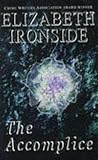
The Accomplice by Elizabeth Ironside: Book Notes

I first came across Elizabeth Ironside on Bev’s blog My Reader’s Block during the Crime Fiction Alphabet meme. I liked the sound of her books, so when I saw The Accomplice in my local library I immediately borrowed it.

Elizabeth Ironside is the pseudonym of Lady Catherine Manning, wife of Sir David Manning the former British Ambassador to the United States (from 2003-2007). Her first novel A Very Private Enterprise won the Crime Writers’ Association (CWA) John Creasey Award for Best First Mystery of 1985, and Death in the Garden was shortlisted for the CWA Gold Dagger for Best Mystery of 1995. The Accomplice is her third novel, published in 1996.

This is one of the most fascinating mysteries I’ve read for a while. It’s historical crime fiction, moving back in time to Latvia before and during the Second World War and present day Russia and Britain.

Summary (from the back cover):

‘Zita Dauncey’s tragic past and difficult present seem firmly under control. Until a child’s skeleton is dug up in her friend Jean’s rose bed, and (Xenia) a mysterious young woman arrives from Russia.

Jean’s English ordinariness hides her original identity as Yevgenia Chornoroukya: a woman whose history includes two lovers, two exiles and all the desperate compromises she makes to escape the horrors of eastern Europe in 1945. And quite possibly, the murder of a child.’

My view:

I liked the way Ironside wove together the past and the present, although at first I thought there was too much about Jean’s background, but it grew on me as I became fascinated with her history and life in Russia during the war years.

This is a complex book, with plenty of interesting characters, all of whom are well-rounded characters who came to life as I read, some with their annoying ways, like Xenia and others, like Zita, who I came to like a lot – for example, Zita’s son, Tom has cerebral palsy and Xenia’s view is that “physical disability shows moral distortion“, quoting Stalin’s withered arm, Richard III, Attila the Hun (club foot) “And Hitler, you only have to look at him to see he was unsafe and insane.“(pages 99 – 100)

Xenia is a scheming, manipulative character. She claimed to be related to Jean but actually she had no idea whether they were or not.  Jean’s reaction to her seemed to indicate she had something to hide or fear – and just what that was gradually surfaces.

Along with that strand of the book there are the questions about the identity of the child’s skeleton found buried in the rose garden, how long ago it was buried and the implications for Jean who claimed to know nothing about it.

This is a well paced book building gradually to a climax, a book that I wanted to finish but was sad when it came to the end, leaving me with some questions still unanswered. I enjoyed it very much and I hope to read more of Elizabeth Ironside’s books.

A Very Private EnterpriseDeath in the GardenThe AccompliceThe Art of Deception
A Good Death
 List and images from Fantastic Fiction.