What's In a Name 5 Challenge Completed

I always enjoy this Challenge – my thanks to Beth for hosting the event. I’ve read a mixture of fiction and non-fiction, including three crime fiction books and two memoirs.

The categories and the books I’ve read are as follows:

A book with a topographical feature in the title: The Hanging Valley by Peter Robinson (crime fiction).

A book with something you’d see in the sky in the title: Blue Lightning by Ann Cleeves (crime fiction).

A book with a creepy crawly in the title: The Parasites by Daphne du Maurier.

A book with a type of house in the title: Death at the President’s Lodging by Michael Innes (crime fiction).

A book with something you’d carry in your pocket, purse, or backpack in the title: A Card from Angela Carter by Susannah Clapp (memoir).

A book with something you’d find on a calendar in the title: The Day Gone By: an Autobiography by Richard Adams.

The ‘Best’ Books I Read in 2012

2012 has been a good year for reading for me.

Throughout the year I’ve kept a record of what I thought was the ‘best’ book of the month – ‘best’ meaning the one I enjoyed the most, the one that kept me wondering what happens next, the one I was the most engrossed in, the one that I thought was really memorable and didn’t want to stop reading.

These are the books:

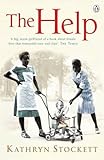
  • January: The Help by Kathryn Stockett – I loved it. I saw the film before I read the book ‘“ Octavia Spencer won a Golden Globe award as best supporting actress for her performance as Minny – and even though I knew the story I still found the book full of tension and completely absorbing. It’s set in Jackson, Mississippi in 1962, where black maids raise white children, but aren’t trusted not to steal the silver. 5/5


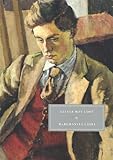
  • February: Little Boy Lost by Marghanita Laski – Once I started reading I didn’t want to put it down; I just had to know what happened. It’s the story of Hilary Wainwright, who is searching for his son, lost five years earlier in the Second World War. 5/5


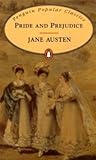
  • March: Pride and Prejudice by Jane Austen – I’ve read this many times before, but each time I still think it’s wonderful. It’s a novel based on character, plot and is a study of society in the late 18th/early 19th centuries, but above all it is a love story. 5/5


  • April: The Village by Marghanita Laski – this chronicles life in an English village immediately after the end of the Second World War. It’s a novel exploring the issues of class and social mobility, family relationships, parental control and the position of women. 5/5


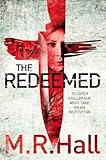
  • May: The Redeemed by M R Hall – the third in the series about Jenny Cooper, a Coroner investigating suspicious deaths. She finds herself one of the suspects in this book as well as delving into supernatural and the fight between good and evil. 4.5/5


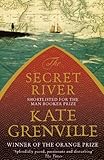
  • June: The Secret River by Kate Grenville – this book completely captivated me and I could hardly wait to get back to it each time I had to put it down. It’s historical fiction, straight-forward story-telling following William Thornhill from his childhood in the slums of London to his new life in Australia in the early 19th century. Dramatic, vivid and thought-provoking. 5/5


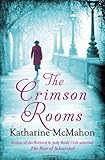
  • July: The Crimson Rooms by Katharine McMahon – historical crime fiction set in London in 1924, with Britain still coming to terms with the aftermath of the First World War.  I was fascinated by the account of early women lawyers, represented by Evelyn, the central character. It clearly shows the prejudice these women had to overcome just to qualify as lawyers, never mind the difficulties of persuading law firms to employ them and clients to accept them. Beautifully written and full of imagery. 5/5


  • August: The Girl on the Stairs by Louise Welsh – full of suspense and increasing tension a dark, psychological thriller.  I really enjoyed this book. Are Jane’s fears justified or is she delusional? The uncertainties and ambiguities kept me guessing to the end. 4.5/5


  • September: The Sixth Lamentation by William Brodrick –  this is historical fiction and it’s also a mystery. It looks back  to the Second World War in occupied France, telling a dramatic tale of love and betrayal, full of suspense, and interwoven stories. 4.5/5


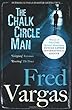
  • October: The Chalk Circle Man by Fred Vargas – This is a very cleverly constructed and quirky mystery, peopled with eccentric characters, and set in Paris, where Commissaire Adamsburg is faced with solving three murders. 4.5/5


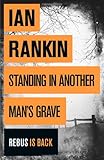
  • November: Standing in Another Man’s Grave by Ian Rankin – the latest of his Rebus books. Rebus, now retired, is working in a Cold Case Unit.  I liked it ‘“ I liked it a lot. It was like meeting up again with an old acquaintance. Rebus is older and fatter but he hasn’t really changed. I was engrossed in the book and liked the way Rankin included characters from earlier books, such as Big Ger Caffety and in particular Malcolm Fox. 4/5


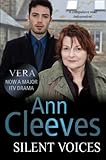
  • December: Silent Voices by Ann Cleeves – the fourth in her DI Vera Stanhope series. Vera is a truly eccentric individual, intelligent, single minded and dedicated to her job, single and with no family responsibilities. This is an excellent book, one that kept me turning the pages and exercising my brain as I tried to unravel the mystery of the death of a woman found in the sauna room of Vera’s local gym. 5/5

The Day Gone By: an Autobiography by Richard Adams

This book has been sat waiting patiently for me to read it for some years now. I can’t remember when I bought it, but I bought it because I loved the other books by Richard Adams that I’d read – Watership Down, the story he originally told to his children to while a way a long car journey, Shardik, The Plague Dogs, and The Girl in a Swing.
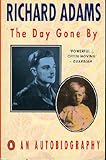
The Day Gone By is his memoir of his early life from his 1920s childhood at home with his parents in Newbury, Berkshire, to his time at boarding school, then life at university in Oxford and his service in World War Two, up to his return home in 1946 and his first meeting with the girl who became his wife.

He was born in 1920, the youngest child of George and Lilian Adams. The early chapters are about his earliest memories, full of wonder at the natural world around him. It was his father, a doctor, who taught him to recognise and love birds and the countryside. These chapters convey vividly his family’s idyllic post-Victorian pastoral lifestyle. His talent for storytelling came out when he went away to pep school at Horris Hill at the age of 8:

To Horris Hill’s lack of electric light I owe more than I can tell. Indeed, it may very well have been the greatest blessing of my life, for it was this that made me a dormitory story-teller. The shadowy, candle-lit dormitories of winter; or those same dormitories in the fading twilight after sunset; these were the settings for a story-teller such as no electrically lit room could ever provide. (page 138)

At first the stories he told were from those he’d read, but when he had no more to tell he was forced to make them up. During the day he began thinking about what he was going to tell the other boys at night.

The Day Gone By is a detailed account of his early life throwing light on the society in which he lived, the class structure and attitudes and above all the changes that were brought about by the Second World War. His experiences during the war are equally as detailed, conveying the effect it had on his life:

To anyone at all who lived through it, in whatever capacity, the Second World War was an enormous, shattering experience. It was – and I say this in all seriousness – difficult to believe it was really over; one could not remember what things had been like before. Anyway, that no longer mattered much: they weren’t ever going to be the same again. (page 379)

His style of writing changed in the section on his wartime experiences, almost as though he was using the language he spoke at the time. I liked his reflections on life; his opinions on the terrible suffering and cruelties of the war years are especially moving.

The Day Gone By: an Autobiography by Richard Adams. Penguin Books. 1991. 399 pages.

This is the last book completing the What’s In a Name? 5 Challenge – a book with something you’d find on a calendar in the title.

Agatha Christie Reading Challenge

My progress in 2012:

The Agatha Christie Reading Challenge is run by Kerrie at Mysteries in Paradise. I don’t think of it as a Challenge – it’s really a reading project, as it is quite simply to read Agatha Christie’s books. I’m not reading them in order of publication but as I come across them.

The full list of the 45 novels that I’ve read is on my Agatha Christie Reading Challenge page.

My favourite this year is One, Two, Buckle My Shoe, but with the exception of Postern of Fate I thought they all made fascinating reading.

This year I’ve read 11 books, which I’ve listed below in the order of publication:

  1. 1923 The Murder on the Links – this is the third book she wrote and the second featuring Hercule Poirot. Agatha Christie had the idea for the book after reading newspaper reports of a murder in France, in which masked men had broken into a house, killed the owner and left his wife bound and gagged. From these facts she then invented her plot, setting the book in the fictional French town of Merlinville.
  2. 1933 Lord Edgware Dies – this is the eighth Poirot book and is narrated by Captain Hastings. Poirot is at his best, relying on his knowledge of psychology, the ‘˜employment of the little grey cells‘˜, which gives him such mental pleasure.
  3. 1936 Murder in Mesopotamia (I haven’t written a post on this book). In 1936 Agatha Christie was with her husband Max Malloran at his archaeological dig in the Middle East and this book is the first she wrote set in that part of the world – in this case in that part of Iraq formerly known as Mesopotamia. The murder victim is the wife of the archaeologist!
  4. 1940 One, Two, Buckle My Shoewritten in 1939, this book reflects the economic and political conditions of the time, with a definite pre-war atmosphere of a world on the brink of war.  Hercule Poirot and Inspector Japp investigate the apparent suicide of Mr Morley, Poirot’s Harley Street dentist.  Each chapter is entitled after a line of the nursery rhyme and the first line contains an important clue.
  5. 1947 The Labours of Hercules. This is a collection of 12 short stories featuring Hercule Poirot, first published in 1947. Poirot is thinking of retiring, but before he does he wants to solve 12 more cases and not just any cases. These have to correspond to the Twelve Labours of Hercules, specially selected problems that personally appeal to him.
  6. 1953 After the Funeral, another Poirot book, full of red herrings, complicated family relationships and one where the motive for the crime is skilfully concealed.
  7. 1955 Hickory Dickory Dock brings the first appearance of Miss Lemon, Poirot’s secretary, in a full length novel. Set in a crowded London house, owned by Mrs Nicolstis, a Greek, with a mixed group of young people from a variety of backgrounds and cultures, where one of the students commits suicide ‘“ or is it murder?
  8. 1965 At Bertram’s Hotel, where Miss Marple stays for a week as a gift from her nephew and his wife. There’s a long build up to any crime being committed and It’s only towards the end of the book that a murder occurs. Miss Marple’s presence is vital to solving the mystery.
  9. 1967 Endless Night this is a psychological study with a suffocating air of menace throughout the book, and more than one twist at the end.
  10. 1973 Postern of Fate the fourth of the Tommy and Tuppence Beresford mysteries. It begins with the ageing couple, now retired and living in a new home. They investigate the fate of Mary Jordan who had lived there many years earlier. Not one of Agatha Christie’s better books.
  11. 1976 (but written in the 1940s) Sleeping Murder Agatha Christie had written this book during the Second World War. Miss Marple’s last case in which she investigates a murder that had happened 18 years earlier.

I have been trying to fill in the gaps and still have some of her earlier books to find (I haven’t listed her short stories):

  1. 1925 – The Secret of Chimneys
  2. 1927 – The Big Four
  3. 1930 – The Murder at the Vicarage
  4. 1931 – The Sittaford Mystery
  5. 1935 – Three Act Tragedy
  6. 1936 – Cards on the Table
  7. 1938 – Appointment with Death
  8. 1939 – Ten Little Niggers
  9. 1940 – Sad Cypress
  10. 1941 – N or M?*
  11. 1942 – Five Little Pigs
  12. 1942 – The Moving Finger*
  13. 1944 – Towards Zero
  14. 1944 – Death Comes as the End
  15. 1945 – Sparkling Cyanide
  16. 1950 – A Murder is Announced*
  17. 1952 – Mrs McGinty’s Dead
  18. 1952 – They Do It With Mirrors*
  19. 1954 – Destination Unknown
  20. 1958 – Ordeal by Innocence
  21. 1959 – Cat Among the Pigeons*
  22. 1966 – Third Girl*
  23. 1971 – Nemesis*

* books I own