In a Word: Murder: An Anthology

Maxine Clarke was one of my favourite book bloggers, writing as Petrona. She died last December and there is a blog Petrona Remembered which her friends in the crime fiction community have created in honour of both her memory and in an attempt to keep alive the kind of community spirit she engendered.

Margot Kinberg (another of my favourite book bloggers) has put together an anthology with all proceeds going to the Princess Alice Hospice:

In a Word: Murder


with contributions from: Martin Edwards (Author), Pamela Griffiths (Author), Paula K. Randall (Author), Jane Risdon (Author), Elizabeth S. Craig (Author), Sarah Ward (Author), Margot Kinberg (Editor) and Lesley Fletcher (Illustrator).

Read more about it at Margot’s blog.

Buy from:
Amazon.co.uk
Amazon.com

R.I.P.VIII wrap-up

We’re into November now and Carl’s R.I.P. book challenge is over. This year I completed the course. I did Peril the First, to read four books of mysteries, detective stories, horror stories, dark fantasies, and everything in between. I read 6!

  1. Waiting for Mr Right and other Sinister Stories by Andrew Taylor
  2. The Death Maze by Ariana Franklin
  3. Relics of the Dead by Ariana Franklin
  4. Not the End of the World by Christopher Brookmyre
  5. The Shining by Stephen King
  6. Ten Little Niggers/And Then There Were None by Agatha Christie

Well, some of them were very good and some were just OK, and some were scarier than others. Three of the six were books from my to-be-read shelves, books I’d been meaning to read for ages.

The scariest of all was The Shining!

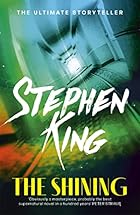
The Shining by Stephen King

But I don’t know if I’m up to reading its sequel, Dr Sleep! It sounds even more scary, because according to the description it’s about quasi-immortals, living off the ‘steam’ that children with the ‘shining’ produce when they are slowly tortured to death.  That is most definitely not my cup of tea, but I have reserved a copy from the library …. just to have a look. The cover is enough to give me nightmares – that demonic looking cat has a resemblance to our cat! Oh no!

Books Read in October

October was a good reading month for me. I read 11 books, which were a mixed bag of different genres, but all fiction this month, with two books from my to-be-read shelves. I’ve already written about some of the books (the links are to my posts):

1.The Shining by Stephen King (Kindle)

2.Ten Little Niggers by Agatha Christie

3. Over My Dead Body by Hazel McHaffie

4. The Year of Miracle and Grief by Leonid Borodin

5. The Idea of Perfection by Kate Grenville (library book)

6. A Murder is Announced by Agatha Christie (a book from my to-be-read shelves)

When I started this blog I wanted to write something about each book I read. I’ve never managed to do that and now I’ve decided that there are some books I don’t want to write about at all and for some I just want to write a few words. That’s not because I didn’t enjoy the books but simply because sometimes I just want to read and then go on to another book.

These are the books without posts (with links to Amazon UK):

6.Once Upon a Castle by Alan S Blood (Kindle, LibraryThing Early Reviewers) – a story about children evacuated to Northumberland during World War II, this had so much potential and it just wasn’t achieved. It is basically a series of short stories and I thought there were too many episodes packed into it. It needs more detail and development to be convincing. It’s unevenly paced, as though the author didn’t know how to finish it and rushed the ending. The supernatural elements come across as confusing rather than mysterious or spooky.

5. The Shooting Party by Isabel Colegate – I liked this novel, which chronicles the events of one day at a shooting party on an Oxfordshire country estate. There is a great sense of foreboding right from the start with the statement: ‘It was an error of judgment which resulted in a death. It took place in the autumn before the outbreak of what used to be known as the Great War.’ Although I could see how this was foreshadowing the slaughter of the First World War, for me it was the knowledge that a death was going to take place, right from the opening paragraphs, that was uppermost. I kept wondering who was going to die, what was the error of judgment, who was going to do the killing. I was surprised.

I did think it was rather too slow, too drawn out in parts but that maybe because I’m used to much faster paced books. I also had to keep reminding myself of the characters – their relationships to each other and at times I got confused and had to back track.

But its main attraction for me was the focus on a society that was soon to be destroyed by the devastation wrought by the First World War. Isabel Colegate writes beautifully depicting the class structure of the times, the rich aristocrats and their servants, ‘the stranglehold of the rich on the life-blood of the working man‘, ideas about manliness, the realization that civilisation as they knew it was coming to an end, contrasting it to a vision of England that had not existed even then for many years:

Doesn’t England mean a village green, and smoke rising from cottage chimneys, and the rooks cawing in the elms, and the squire and the vicar and the schoolmaster and the jolly villagers and their rosy-cheeked children? (page 100)

7. The Great Gatsby by F Scott Fitzgerald (a re-read). I really like this book – a portrait of the Jazz Age in all of its decadence and excess.

8. Dying Fall by Elly Griffiths (library book) – This is the fifth of her Ruth Galloway books. Ruth travels from her home in Norfolk up to the north of England €“ Lancashire, to be precise Blackpool, Lytham, Pendle, Preston and Fleetwood €“ because Dan Golding a friend from university has died in a house fire. He had written to her just before his death with news of an amazing find. It turns out that Dan was murdered and Ruth and Inspector Harry Nelson are instrumental in discovering the truth. It’s yet another book I’ve read about the whereabouts of King Arthur’s Bones €“ this time it seems he’s the Raven King. A satisfying if undemanding read.

11. Mrs Harris goes to Moscow by Paul Gallico (a book from my to-be-read shelves). This is a lovely little book. Mrs Harris is a London char lady who wins a trip to Moscow, where she wants to find her employer’s long-lost love. Mayhem ensues when she is thought to be Lady Char (the Russians not understanding what a ‘char lady’ is had converted it to ‘Lady Char’) and also a spy.

I sometimes borrow books and after reading the first few pages return them without reading any more, with no qualms. But it is very rare that I return a book unfinished after reading just over a quarter of it. That is just what I did with The Assassin’s Prayer by Ariana Franklin. I thought it was repeating much the same sort of scenarios (albeit in different locations) than her earlier books and I got fed up – so back it went.

The Idea of Perfection by Kate Grenville

Last week I was thinking about taking Kate Grenville’s book, The Idea of Perfection back to the library without finishing it. But I gave it another go and this time it interested me enough to finish it. I thought her book The Secret River was brilliant, one of the best books I read last year and I also loved Sarah Thornhill, but I didn’t think The Idea of Perfection was as good as either of these, which surprised me as it won the 2001 Orange Prize for Fiction. That’s not to say I didn’t like it because I did, just not as much as the other two books.

I think the reason is that for the most part it lacked the drama of the other books and I found the beginning very slow. The title indicates the theme of the book with the characters all falling short of the impossible aim of perfection. Set in Karakarook, in New South Wales the two main characters are Douglas Cheeseman, an engineer who has come to pull down a quaint old bent bridge before it falls down and Harley Savage, who has come to advise the residents how to promote their inheritance. They both know they are far from perfect. On the other hand there is Felicity Porcelline, the local bank manager’s wife who thinks she is perfect and everything she does is aimed at perfection, which she doesn’t achieve either – just the opposite, in fact.

It’s quite a touching tale as Douglas and Harley, both middle aged and with failed marriages behind them, are shy awkward characters and although they are attracted to each other for most of the novel they find it almost impossible to express their feelings. They are both outsiders, neither fitting easily either into their own families or within society. Underlying their relationship is the conflict about the dilapidated bridge – should it be restored or replaced with a modern bridge? And just what should the proposed Pioneer Heritage Museum contain? – heirlooms, jewellery, silver teapots and lace christening robes, or the things Harley thinks are right – the really old shabby things that show how people used to live, the old bush-quilts made from old clothes, for example.

It’s the setting that really stands out – the dusty little country town in a valley in New South Wales, the hillsides, the river and the ‘huge pale sky, bleached with the heat.‘ Kate Grenville paints a picture of the town and its surrounding countryside with such detail that you can feel the heat and dust and see the buildings, the houses clinging to the hillside, tilting, patched and stained with rusting roofs and the dirt road leading out of Karakarook.

The strange thing is that after I finished reading it this book has grown on me as it were. And now I’ve written about I think I appreciate it more than I did whilst reading it. It’s precise writing, full of detail about the people and the places within its pages and also full of thoughts about love, loneliness, relationships and the impossibility of perfection.

First Chapter First Paragraph: Julius

First chapterEvery Tuesday Diane at Bibliophile by the Sea hosts First Chapter First Paragraph Tuesday Intros, where you can share the first paragraph or (a few) of a book you are reading or thinking about reading soon.

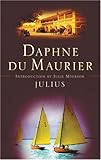
One of the books I’m currently reading is Julius by Daphne du Maurier. The first chapter is called Childhood (1860-1872). It begins:

 His first instinct was to stretch out his hands to the sky. The white clouds seemed so near to him, surely they were easy to hold and to caress, strange-moving, things belonging to the wide blue space of heaven.

They floated just above his head, they almost brushed his eyelids as they passed, and he only had to grasp the long curling fringe of them with his fingers and they would belong to him instead, becoming part of him for ever. Something in him whispered that he must clutch at the clouds and bring them down from the sky. So he held out his hands to them and they did not come. He cried out to them and they did not come. They passed away from him as though they had never been, indifferent and aloof; like wreaths of white smoke they were carried away by the wind, born of nothing, dissolving into nothing, a momentary breath that vanished in the air.

What do you think? Would you keep reading?

I did and I’m finding it quite captivating. The ‘he’ in these first two paragraphs is Julius and right from his birth you can see him reaching out for things beyond his grasp.

Reading Challenges Update

This year I’ve been taking part in several reading challenges and as there are just over 10 weeks of the year left I thought it was time to see how I’ve been doing. I’m seriously thinking about making this blog a Challenge Free Zone next year! I always like the idea of taking part and then later in the year (like now) wonder why, because I do like to read spontaneously and not to a plan!

Actually, I’m doing OK with 5 challenges completed so far. The ones that I’m struggling with are the Mount TBR Reading Challenge and the This Isn’t Fiction Challenge, but that doesn’t surprise me at all.

My Progress:

The Agatha Christie Reading Challenge – ongoing. I don’t really count this as a challenge because it’s just reading Agatha Christie’s books. This year I’ve read 7 of her books so far. I’ll be carrying on with this next year.

Tea and Books Challenge – completed. This is a challenge to read books of 650 pages and over. My target was to read 4 books, and so far I’ve read 5 and hope to finish 6 by the end of the year. I may do this again next year.

What’s in a Name 6 – completed. I do like this challenge, which is to read books in set categories relating solely to the title – it reminds me of books I’ve owned for a while and I like making the list. Next year? It depends on the categories and if Beth carries on with it.

Historical Fiction Challenge 2013 – completed. My target was to read 15 books and I’ve got to 25 so far – there will be more by the end of the year.

Mount TBR Reading Challenge 2013 – no where nearly completed. I’m attempting Mount Ararat, that is, to read 48 books from my own bookshelves. So far I’ve read 27. This will have to be done next year too!

This Isn’t Fiction Reading Challenge – ie read non-fiction. I’m not doing too well here either with just 9 books read, when my target is 20 or more books. I think I set my sights too high!

Once Upon a Time VII – completed. I chose Quest the First: To read at least 5 books that fit somewhere within the Once Upon a Time categories, which I did

R.I.P.Challenge VIII Challenge – completed. This ends on 31 October and I’ve already met my target for Peril the First: which is to read four books, any length, that you feel fit (the very broad definitions) of R.I.P. literature. I’ve read 6 books.