Come, Tell Me How You Live by Agatha Christie Mallowan

Agatha Christie had visited the Middle East in 1929 travelling on the Orient Express to Istanbul and then on to Damascus and Baghdad. She visited the excavations at Ur and returned there the following spring where she met archaeologist Max Mallowan – by the end of the summer they had decided to marry, which they did on 11 September 1930. 

Come Tell Me How You Live: an archaeological memoir is her answer to her friends’ questions about what life was like when she accompanied Max on his excavations in Syria and Iraq in the 1930s.

She began writing it before the Second World War and then laid it aside. After four years of the war she picked it up again, using her notes and diaries to complete this memoir, writing about her life with  Max Mallowan and his team excavating the ancient sites at Chagar Bazar, Tell Brak and other sites in the Habur and Jaghjagha region in what was then north western Syria. This map shows the area they were working in:
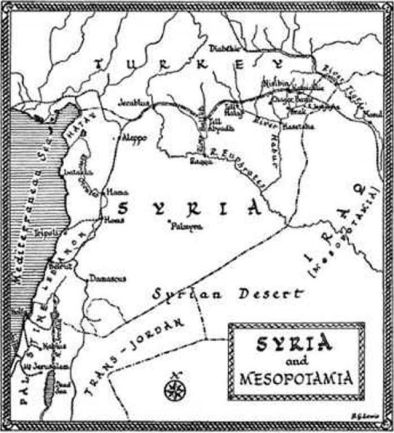
Syria 1930s

She wrote in the Epilogue  (written in 1944) that in remembering and recording that time it had been

… not a task, but a labour of love. Not an escape to something that was, but the bringing into the hard work and sorrow of today of something imperishable that one not only had but still has!

For I love that fertile country and its simple people, who know how to laugh and how to enjoy life, who are idle and gay, and who have dignity, good manners, and a great sense of humour, and to whom death is not terrible.

Inshallah, I shall go there again, and the things that I love shall not have perished from this earth.

With regard to her statement about death earlier in the book Agatha Christie had explained the difference between the Western and Oriental attitudes to life and death:

Accustomed as we are to our Western ideas of the importance of life, it is difficult to adjust our thoughts to a different scale of values. And yet to the Oriental mind it is simple enough. Death is bound to come – it is as inevitable as birth; whether it comes early or late is entirely at the will of Allah. And that belief, that acquiescence, does away with what has become the curse of our modern day world – anxiety. (page 96)

The emphasis in the book is on the everyday life on a dig and Agatha took an active part, helping to catalogue, label and clean the items they found as well as taking photographs and developing them. She also found time to spend on writing her books. So, although she gives a detailed account of how they worked, how they employed workmen for the excavations and servants who looked after Max and his team of archaeologists, there is not much about what they found.

Although she described the local people in her Epilogue as people, who know how to laugh and how to enjoy life, who are idle and gay, and who have dignity, good manners, and a great sense of humour, she also recorded their disputes:

Quarrelling is, in any case, almost continuous. All our workmen have hot tempers, and all carry with them the means of expressing themselves – large knives, bludgeons, and a kind of mace or knobkerry. Heads are cut open, and furious figures are entangled with each other in fierce struggles … page 86

And she also recorded this chilling statement:

We come to the question of religions generally – a very vexed question in this particular part of the world, for Syria is full of fiercely fanatical sects of all kinds, all willing to cut each other’s throats for the good cause! (page 166)

How sad and horrified she would be if she could see Syria today, but in the light of the extract above I don’t think she would have been too surprised! And sadly the places she loved are no longer the same. Here is her description of the shrine Sheikh ‘Ada near Mosul

There  can be, I think, no spot in the world so beautiful  or so peaceful. You wind far up into the hills through oak trees and pomegranites (sic), following a mountain stream. The air is fresh and clear and pure. …

And then suddenly, you come to the white spires of the Shrine. All is calm and gentle and peaceful there. Gentle-faced custodians bring you refreshments and you sit in perfect peace, sipping tea. (page 109)

Compare that with the description in The Guardian last August of the area as ‘hell on earth‘.

This book is written with love and humour – for example Agatha’s description of buying clothes for her visit to Syria because her last year’s summer clothes  are Shrunk, Faded and Peculiar – and too tight everywhere.  In the Foreword she stated that it is a book full of everyday doings and happenings with ‘no beautiful descriptions of scenery, no treating of economic problems, no racial reflections, no history.‘ I think she was under estimating her writing, because this little book has all that and more. I loved it.
Meme: Book Title Acrostic

Yet again I’ve fallen behind with writing about the books I’ve read. So far this month I’ve read 6 books and have written about just two of them. But although I need to catch up, tonight I fancy doing this meme I spotted on Jessica’s blog, The Bookworm Chronicles. It’s to make an acrostic of my name using the book titles  of books* I’ve read so far this year.

Margaret in bk titles

M ‘“ (The) Murder Room by P D James
A‘“ An Autobiography by Anthony Trollope
R ‘“(The) Raven’s Head by Kate Maitland
G ‘“ Gaudy Night by Dorothy L Sayers
A‘“ A Question of Identity by Susan Hill
R‘“ (The) Remorseful Day by Colin Dexter
E‘“ Elizabeth is Missing by Emma Healey
TTurn of the Tide by Margaret Skea

*The links are to my posts on the books*

Just a fun meme that entertained me. Please let me know if you give it a go too.

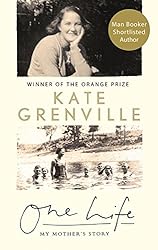
One Life: My Mother’s Story by Kate Grenville

One Life: My Mother’s Story

Australian author, Kate Grenville has written a beautiful biography of her mother Nance Russell. A book that casts light not only on Nance’s life but also on life in Australia for most of the 20th century. Nance was born in 1912 and died in 2002, so she lived through two World Wars, an economic depression and a period of great social change. Nance wasn’t famous, the daughter of a rural working-class couple who became pub-keepers, but she was a remarkable woman.

Kate’s mother had wanted to write her own story and had left fragments of stories about her ancestors, stories her mother had told her, about her childhood, but most about her adult life up to her mid-forties. (Kate Grenville has used some of the stories of her ancestors in her own novels – such as The Secret River, a wonderful historical novel).

So this biography reads like a novel, but is based on Nance Russell’s memories, making it much more than a factual account of a person’s life. It’s is a vivid portrait of a real woman, a woman of great strength and determination, who had had a difficult childhood, who persevered, went to University, became a pharmacist, opened her own pharmacy, brought up her children, and helped build the family home. She faced sex discrimination and had to sell her pharmacy in order to look after her children at home.

Nance had wanted to be a teacher, but when she said this to her mother she ‘exploded. Over her dead body Nance was going to be a teacher!‘  But her parents thought that pharmacy was ‘good for a girl‘. It was 40  years later, after her own children were grown up, that Nance took an arts degree, then a teaching diploma and a diploma in teaching English as a foreign language. ‘She taught French in schools, taught English to newly arrived migrant children, and ran her own business teaching English to the wives of Japanese business men.

My bare account of Nance’s life doesn’t do justice to this book, in which Kate Grenville brings to life both the good times and the bad times, writing about her mother’s heartache, worries, joys and sorrows, of the hard times during the economic depression, all of it as a whole making a rich and fulfilled life. Very near to the end of the book Kate Grenville writes:

One of her last trips [to Europe] was to Florence, where she stood in front of the frescoes that Dante had seen. A line came into her mind from somewhere in all her reading: Suffering pierces the shield of habit. It was a thought that made sense of the unhappiness she’d known, and also the happiness. She knew that ultimately it didn’t matter what happened to you. In the light of eternity, in the light of all those dead writers in whose work she’d recognised the great truths, only one thing mattered. What other people did was up to them. Your job was to live – as richly and honestly as you could – your one life. (page 246)

Reading Challenges: Non Fiction Reading Challenge 2015 and What’s in a Name? 2015 in the category of a book with a familial relation in the title.

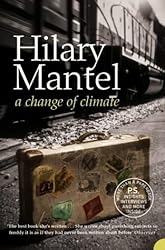
A Change of Climate by Hilary Mantel

A Change of Climate is one of Hilary Mantel’s early books, first published in 1994 and  described on the back cover as ‘˜a literary family saga’ and ‘˜a first rate thriller’.

I quoted from the beginning of this book in this post. I noted that at the end of the book there is an About the Author section, which I’d just glanced over. In answer to one of the interviewer’s questions about the theme of the book, Hilary Mantel replied that there is a central secret, an enormous destructive secret. I didn’t want to spoil the book for myself so I didn’t read any more of her answers. And I don’t want to spoil it for anyone else so I’m not saying what that secret is in this post.

The ‘enormous destructive secret‘ Hilary Mantel referred to is revealed just over halfway into the book. But the book abounds in secrets and it’s also about family, trust, disillusionment and tragedy, about bereavement and loss of faith, as one character observes, ‘faith is something people chase after, simply to give life meaning‘.

Hilary Mantel writes a compelling story, subtly mixing the past and the present, moving seamlessly between the Eldred family’s current life (in the 1980s) in Norfolk, with their earlier life in Africa in the 1950s. I like her writing very much, never drawing attention to its style and drawing me in effortlessly into both time frames and places.

It’s a family saga (most definitely not an Aga Saga) about Ralph and Anna Eldred, their four children and Ralph’s sister Emma. Ralph and Anna devote their lives to charity, filling their house with ‘Visitors’, described as either ‘Good Souls’ or ‘ Sad Cases’. Just after they were married Ralph and Anna went to South Africa as missionaries and under the system of apartheid there they ran up against the authorities, then moved to Beuchuanaland (Botswana) where a terrible and horrific event occurred and they returned to England.  However, their memories of these traumatic events refused to remain buried, eventually bringing their lives and those of their children into terrible turmoil.

There are many issues raised in this book – chief among them the struggle between good and evil. Ralph thinks:

If we are not to be mere animals, or babies, we must always choose, and choose to do good. In choosing evil we collude with the principal of decay, we become mere vehicles of chaos, we become subject to the laws of a universe which tends back towards dissolution, the universe the devil owns. In choosing to do good we show we have free will, that we are God-designed creatures who stand against all such laws.

So I will be good, Ralph thought. That is all I have to do. (page 235)

But he discovered that it’s not that simple, as the rest of the book goes on to relate. Ralph and Anna can’t escape their past, Anna in particular cannot come to terms with what happened. The book explores questions about forgiveness and tragedy, as well as how to cope with grief.

Hilary Mantel states in the About the Author section that she found it the most difficult of her books to write – the secret just resisted being told:

I found that I was going round and round the point, yet I couldn’t put it on the page. I remember really struggling with it; it was like a wild animal that had to be civilised somehow, and in the end I just wrestled it on to the page by saying to myself, ‘Look, you’ve done this before and you can do it again’. Writing this book stands out as one of the most difficult times of my writing life.

A great book on all counts, characters and locations beautifully described and a well constructed and convincing plot, powerful and challenging on several levels.

FIVE OF THE BEST: JULY 2011- 2015

This was originally Cleo’s idea (Cleopatra Loves Books). It’s to look back over your reviews of the past five years and pick out your favourite for each month from 2011 ‘“ 2015. I like it so much it inspired me to do the same .

I really enjoy looking back over the books I’ve loved reading. These are my favourite books for each July from 2011 to 2015 (click on the covers to see my original reviews).

2011

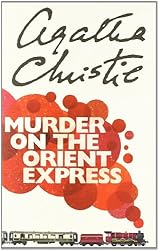
Murder on the Orient Express by Agatha Christie. This is one of Agatha Christie’s most well known books, not least because of the films with Albert Finney and David Suchet as Poirot.

Poirot is on the Orient Express, on a three-days journey across Europe. But after midnight the train comes to a halt, stuck in a snowdrift. In the morning the millionaire Simon Ratchett is found dead in his compartment his body stabbed a dozen times and his door locked from the inside.

I liked this book enormously. I liked the characterisation and all the, now so non-pc, comments about nationalities, highlighting class and racial prejudice. I liked the problem-solving and ingenuity of the plot.

2012

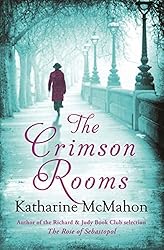
The Crimson Rooms by Katherine MacMahon – set in London in 1924, with Britain still coming to terms with the aftermath of the First World War. Evelyn Gifford, one of the few pioneer female lawyers, is involved in defending several cases.

It’s beautifully written and I was fascinated by this account of early women lawyers. It clearly shows the prejudice these women had to overcome just to qualify as lawyers, never mind the difficulties of persuading law firms to employ them and clients to accept them. It’s also a novel about the way people’s lives were affected by the War, how men were unable to resume their old lives, some damaged by shell-shock and the horrors they had taken part in, or witnessed during the war.

2013

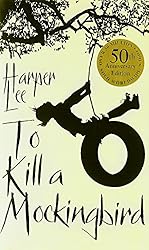
To Kill a Mockingbird by Harper Lee – this is set in the Deep South of  America in the 1930s, and narrated by Scout (Jean Louise Finch) as she looks back as an adult to the Depression, the years when, with her older brother, Jem, and their friend, Dill, she witnessed the trial of Tom Robinson, a black man accused of raping a white girl. Scout’s father, Atticus, a lawyer defends Tom. It’s also the story of Boo Radley, their neighbour, a man who is never seen, who is said to only come out at night.

I ‘d wondered if this book that all the world seems to love would live up to the hype for me. It did! It’s a wonderful book! Now two years later I’m wondering whether or not to read Go Set a Watchman … what if it spoils my enjoyment of To Kill a Mockingbird?

2014

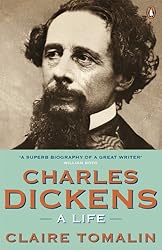
Charles Dickens: a Life by Claire Tomalin was my five star book in July last year. I fully intended to write a post about it, but somehow never did. I thoroughly enjoyed this immensely detailed biography, complimented with maps of Gads Hill and Rochester and Dickens’ London, and a Cast List, copious notes,  a bibliography and an index – all essential reference material.

This biography brings Dickens, his books, his work for the poor, downtrodden and ill-treated, and his world to life. It’s a ‘warts and all’ biography; nothing is left out. And best of all it made me want to read more of Dickens’ own books.

2015

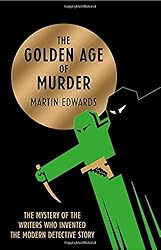
Another non-fiction book takes the top spot in July this year – The Golden Age of Murder by Martin Edwards. This is the story of the writers who formed the Detection Club between the two World Wars. Edwards sets the authors and their works in context ‘“ that period when Britain was recovering from the horrors of the First World War, living through an age of austerity as unemployment grew, the cost of living soared leading to the General Strike whilst the rich partied and saw the beginnings of the end of the British Empire.

It is quite simply a tour de force, comprehensive, and crammed full of fascinating information about the period and the authors. Martin Edwards’ love of Golden Age fiction shines throughout the book, (skilfully writing about books without giving away any spoilers).

New-To-Me Books August 2015

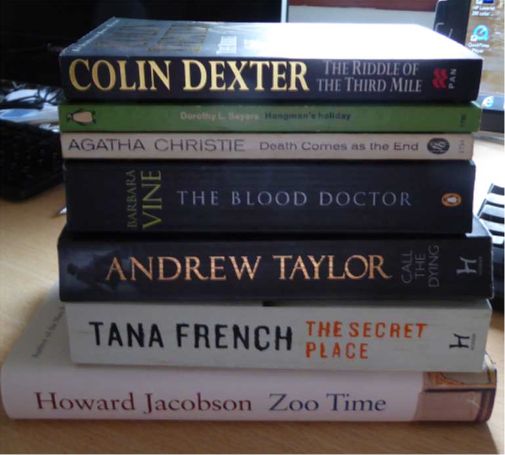
Another visit to Barter Books in Alnwick resulted in another pile of books to add to my TBR shelves.

From top to bottom they are:

  • The Riddle of the Third Mile by Colin Dexter – to fill in my gaps in reading his Inspector Morse books. This is the 6th in the series – Inspector Morse isn’t sure what to make of the truncated body found dumped in the Oxford Canal. He suspects it may be all that’s left of an elderly Oxford don last seen boarding a London train days before.
  • Hangman’s Holiday and Other Stories by Dorothy L Sayers – the ninth in her Lord Peter Wimsey series, this includes  four Wimsey stories, six stories featuring Montague Egg (travelling salesman for Plummet & Rose, Wine & Spirits), and two more separate stories.
  • Death Comes as the End by Agatha Christie – this is one of the last few books of hers I have yet to read. It’s historical crime fiction set in Egypt 4,000 years ago, written drawing on her experience of several  expeditions to the Middle East with her husband, Max Malloran, an eminent archaeologist.
  • The Blood Doctor by Barbara Vine (Ruth Rendell) – one of her psychological thrillers, described on the back cover as ‘a chilling tale of ambition, obsession and bad blood.‘ I still have a lot of Barbara Vine/Ruth Rendell books to read.
  • Call the Dying by Andrew Taylor – I’m jumping into a series with this book as this is the 7th in the Lydmouth mysteries and I haven’t read any of the others. They are all are set in and around a fictional town on the Anglo-Welsh borders in the years after World War II.
  • The Secret Place by Tana French – the 5th in the Dublin Murder Mystery series. I read the first,  In the Woods a few years ago and liked its psychological elements and the twists and turns.  In this book Detective Stephen Moran investigates the murder of handsome, popular Chris Harper when sixteen-year-old Holly Mackey brings him a photo of Chris with the caption, I KNOW WHO KILLED HIM.
  • Zoo Time by Howard Jacobson – a complete change from crime fiction – a book I bought in Tescos for £1. It’s described on the book cover as  ‘a novel about love – love of women, love of literature, love of laughter. It shows our funniest writer at his brilliant best.‘ I felt like reading something different.

If you’ve read any of these books I’d love to know what you think about them.