My Tuesday Post: After the Fire

First chapterEvery Tuesday Diane at Bibliophile by the Sea hosts First Chapter First Paragraph Tuesday Intros, where you can share the first paragraph, or a few, of a book you are reading or thinking about reading soon.

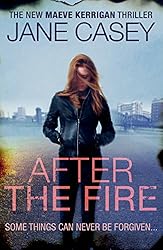
The book I’ve chosen this week is After the Fire by Jane Casey.  I read this in June and have not got round to writing about it yet.
It begins:

There were 224 residents of Murchison House on the Maudling Estate in north London, and on a cold grey late November day  not one of them was expecting to die. Some were hoping to die. some were waiting to die. but no one actually expected to die that day.

This is the sixth book in the Maeve Kerrigan series. It stands well on it’s own, although there are references to past events and storylines that appear in the earlier books.

The Maudling Estate and some of the minor characters featured in the 5th book, The Kill.

Blurb:
After a fire rips through a North London tower block, two bodies are found locked in an 11th floor flat. But it’s the third victim that ensures the presence of detective Maeve Kerrigan and the murder squad. It appears that controversial MP Geoff Armstrong, trapped by the fire, chose to jump to his death rather than wait for rescue. But what was such a right wing politician doing in the deprived, culturally diverse Maudling Estate?
As Maeve and her senior colleague, Derwent, pick through the wreckage, they uncover the secret world of the 11th floor, where everyone seems to have something to hide’¦

Would you read on? I did and thoroughly enjoyed this book.

Teaser Tuesday is a weekly bookish meme, hosted by MizB of A Daily Rhythm. Anyone can play along! Just do the following:

‘¢ Grab your current read
‘¢ Open to a random page
‘¢ Share two (2) ‘teaser’sentences from somewhere on that page

Here’s a teaser from 32% on my Kindle (rather more than 2 sentences!):

I felt the familiar rush, the moment a shape began to emerge from the darkness that surrounded the case. A pattern. A connection. A witness and a suspect.

A killer with a face and a name.

Maybe.
The Remorseful Day by Colin Dexter

Chief Inspector Morse is one of my favourite fictional detectives (maybe even the favourite). I first ‘met’ him years ago in the ITV series Inspector Morse and so, just as Joan Hickson is forever in my mind as Miss Marple and David Suchet is Poirot, John Thaw is Morse. The series was first broadcast in 1987, but I don’t intend to write about the books versus the TV adaptations – I’ve enjoyed both. This post is just about the last book in the series – The Remorseful Day.

I’ve delayed reading this for so long (I watched the TV version when it was first broadcast, which was 15 years ago!) because it’s the last of the Morse books and sadly the end of Morse too. So if you’ve not read any of the Morse books I suggest that you don’t start with this one.

Needless to say that I loved it. The plot is detailed, complex and as usual with Morse a puzzle type murder mystery with plenty of challenging clues. Sergeant Lewis is left to investigate the murder of nurse Yvonne Harrison that had remained unsolved for a year – Morse initially refused to work on the case, despite Chief Superintendent Strange’s wishes. Sergeant Lewis is concerned as this looks just the sort of puzzle Morse excels in solving … and Morse’s behaviour has been worrying Lewis recently.  Lewis can’t believe that Morse could have a personal reason to keep out of the investigation. And when Morse phones to say he is feeling unwell Lewis is most concerned – Morse seldom mentioned his health, what is wrong with him?

The plot is complex, but the real focus of the book is on Morse and how he copes with his illness and his drinking habits and it becomes obvious just how alone he is in the world and how devastating his situation is to Lewis. The novel also reveals more about Strange’s character and also about his understanding of Morse. I found it both a most satisfying book and a very sad one.

There are only 13 Morse books. The links are to my posts on the books – I read some before I began to write this blog and I’m hoping to re-read those in due course.

  1. Last Bus to Woodstock (1975)
  2. Last Seen Wearing (1976)
  3. The Silent World of Nicholas Quinn (1977)
  4. Service of All the Dead (1979)
  5. The Dead of Jericho (1981)
  6. The Riddle of the Third Mile (1983)
  7. The Secret of Annexe 3 (1986)
  8. The Wench is Dead (1989)
  9. The Jewel That Was Ours (1991)
  10. The Way Through the Woods (1992)
  11. The Daughters of Cain (1994)
  12. Death is Now My Neighbour (1996)
  13. The Remorseful Day (1999)

As The Remorseful Day has sat unread on my shelves for so long it obviously qualifies for the Mount TBR Challenge 2015. I also included it as one of My 10 Books of Summer, which brings my total to 5.

Austen in August

Roof Beam Reader is hosting, for the 4th year, the annual Austen in August event. This is a one-month event focused on all things Jane Austen, including her primary texts, any re-imaginings of her works, biographies, critical texts, etc.

The Goal: To read as many of Jane Austen’s works (finished or unfinished) as you want or are able to, during the month of August.  Biographies, audiobooks, spin-offs, and re-reads also count.

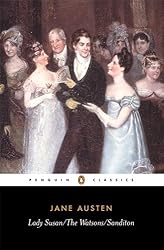
I haven’t taken part before but as I have just one book by Jane Austen left to read I thought it would give me a gentle push in the direction of Lady Susan, The Watsons and Sanditon.
These are three short works in one volume – Lady Susan is a finished novel and the other two are unfinished fragments.

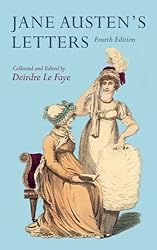
I may also make a start on reading Jane Austen’s Letters, edited by Deidre Le Faye, but I don’t think I’ll finish the book in August!

Books Read in July 2015

July has been great for reading and I’ve not done badly writing reviews either. I’d not been reading many of my TBR books up to July but I changed all that this month by reading 6 of them. And I added to my non-fiction reading with 2 more books. In total I read 11 books, one of which is a re-read and I loved even more than the first time I read it – The Shipping News.

They are – in the order I read them and with links to my posts:

  1. The Day of the Lie by William Brodrick (TBR)
  2. The Man with The Wooden Hat by Jane Gardam (TBR)
  3. Last Friends by Jane Gardam (TBR)
  4. The Golden Age of Murder by Martin Edwards (NF)
  5. The Outcast by Sadie Jones (TBR)
  6. Stephen Hawking: His Life and Work by Kitty Ferguson (NF, LB)
  7. Five Red Herrings by Dorothy L Sayers (LB)
  8. The Shipping News by Annie Proulx (a re-read)
  9. Zen There Was Murder by H R F Keating (TBR)
  10. The Remorseful Day by Colin Dexter (TBR)
  11. The Outcast by Elly Griffiths (LB)

I’m planning to write reviews for The Shipping News and The Remorseful Day.

As for The Outcast by Elly Griffiths. I did enjoy it but it’s written in the present tense, (as are all of her Ruth Galloway books) which kept intruding making me more conscious of the writing style rather than being totally absorbed in the story. I liked the mix of past and present, although in this book I felt the balance is tilted more in favour of the present and the archaeological element is played down. I liked the introduction to Ruth’s brother Simon and a new character, Frank is also a plus.

It’s so hard to decide which is my Book of the Month and choosing between fiction and non fiction makes it even harder, but it has to be Martin Edwards’ The Golden Age of Murder, which as I said in my post is a tour de force, comprehensive and crammed full of fascinating information about the period and the authors.

Martin Edwards’ love of Golden Age fiction shines throughout the book, (skilfully writing about books without giving away any spoilers) and his book has spurred me on to read more books from this period.

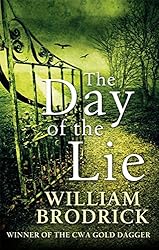
But I also want to highlight The Day of the Lie by William Brodrick, because although it is hard reading in parts, it’s a meaty, layered book, delving into the past, uncovering secrets and revealing crimes. and it’s so well researched, bringing the past to life.

The Man in the Wooden Hat and Last Friends by Jane Gardam

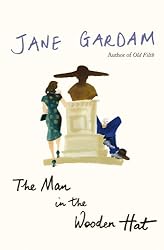
These are companion novels to Old Filth, which I read years ago. The Man in the Wooden Hat is written from the perspective of Old Filth’s wife, Betty.
Blurb:

Filth (Failed In London, Try Hong Kong) is a successful lawyer when he marries Elisabeth in Hong Kong soon after the War. Reserved, immaculate and courteous, Filth finds it hard to demonstrate his emotions. But Elisabeth is different – a free spirit. She was brought up in the Japanese Internment Camps, which killed both her parents but left her with a lust for survival and an affinity with the Far East. No wonder she is attracted to Filth’s hated rival at the Bar – the brash, forceful Veneering. Veneering has a Chinese wife and an adored son – and no difficulty whatsoever in demonstrating his emotions . . .

How Elisabeth turns into Betty and whether she remains loyal to stolid Filth or is swept up by caddish Veneering, makes for a page-turning plot in a perfect novel which is full of surprises and revelations, as well as the humour and eccentricities for which Jane Gardam’s writing is famous.

I suppose you could read this book without reading Old Filth first, but it certainly helps to know what happens in the first book from the husband’s point of view. Both books follow the lives of husband and wife over 50 years, but as The Man in the Wooden Hat is told from Betty’s point of view I got a totally different view of events, particularly of the couple’s relationship with Old Filth’s arch rival in Hong Kong, fellow lawyer Terry Veneering.

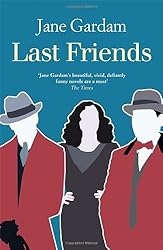
Last Friends revisits the same events telling Terry Veneering’s story from Dulcie Williams’ perspective. Dulcie is the widow of “Pastry Willy” Williams, a judge who was also in the foreign service with Old Filth and Veneering. She provides the back stories of these characters, and throws yet more light on the events told in the first two books.

Blurb:

Old Filth and The Man in the Wooden Hat told with bristling tenderness and black humour the stories of that Titan of the Hong Kong law courts, Old Filth QC, and his clever, misunderstood wife Betty. Last Friends, the final volume of this trilogy, picks up with Terence Veneering, Filth’s great rival in work and – though it was never spoken of – in love.

Veneering’s were not the usual beginnings of an establishment silk: the son of a Russian acrobat marooned in northeast England and a devoted local girl, he escapes the war to emerge in the Far East as a man of panache, success and fame. But, always, at the stuffy English Bar he is treated with suspicion: where did this blond, louche, brilliant Slav come from?

Veneering, Filth and their friends tell a tale of love, friendship, grace, the bittersweet experiences of a now-forgotten Empire and the disappointments and consolations of age.

The three books together form a memorable trilogy, of love and life, humour and heartbreak in colonial Hong Kong and the contrasting setting of the English countryside. Maybe Old Filth is the outstanding book, but maybe that is because I read it first and loved it so much, that the others don’t quite live up to it.

I’ve had both these books for a couple of years, so both qualify for the Mount TBR Reading Challenge 2015, and The Man in the Wooden Hat for the 10 Books of Summer Challenge and the Colour Coded Challenge (the dominant colour of the  cover is white) too.

The Golden Age of Murder by Martin Edwards

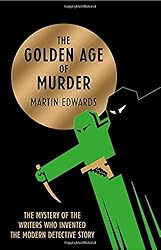
Although I read a lot of crime fiction my knowledge of the authors and their books written during the ‘Golden Age’ so far has been limited to Agatha Christie, Dorothy L Sayers, Margery Allingham, and Michael Innes so when I saw that Martin Edwards had written The Golden Age of Murder: The Mystery of the Writers Who Invented the Modern Detective Story I thought it would be the ideal book to find out more. And I was absolutely right and the works of a whole host of authors has been opened up to me.

This is the story of the writers who formed the Detection Club between the two World Wars. Edwards sets the authors and their works in context – that period when Britain was recovering from the horrors of the First World War, living through an age of austerity as unemployment grew, the cost of living soared leading to the General Strike whilst the rich partied and saw the beginnings of the end of the British Empire. But the writers and the works although well grounded in their own time and culture have a lasting appeal and influence on current story telling and film and television.

The Club grew out of the dinners Anthony Berkeley and his wife Peggy hosted at their home in the late 1920s, attended by people including Agatha Christie, Dorothy L Sayers, Douglas and Margaret Cole, Ronald Knox, Henry Wade, H C Bailey and John Rhode. Eventually the Club was formed, with Rules and a Constitution and a Committee. The members benefited in various ways, meeting fellow detective novelists, discussing ideas, supporting each other and even working together on collaborative writing projects – such as The Floating Admiral, in which a dozen writers each wrote one chapter. The main aim of the Club was to encourage and maintain a high standard of work in writing detective novels.

I was fascinated by the number of real crimes that influenced the writers, both current at the time and crimes from the past. Their interest as they discussed these cases, such as Dr Crippen’s poisoning of his wife, in turn inspired them not only to write but also to play the detective themselves. Indeed, Edwards shows that the image of the Golden Age as ‘cosy’ murder mysteries is false:

Their novels are often sneered at as ‘cosy’, and the claim that their characters were made from cardboard has become a lazy critical cliché. The very idea that detective fiction between the wars represented a ‘Golden Age’ seems like a misty-eyed nostalgia of an aged romantic hankering after a past that never existed.

The best detective novels of the Thirties

were exhilarating, innovative and unforgettable. They explored miscarriages of justice, forensic pathology and serial killings long before these topics became fashionable (and before the term’serial killer’ was invented). …

The climax of one of Berkeley’s novels was so shocking that when Alfred Hitchcock came to film it, even the legendary master of suspense, the man who would direct Psycho, lost his nerve. He substituted a final scene that was a feeble cop-out in comparison to Berkeley’s dark and horrific vision. (page 9)

There is no way I can do justice to this book in a short post; it is simply a tour de force, comprehensive, crammed full of fascinating information about the period and the authors.

Martin Edwards’ love of Golden Age fiction shines throughout the book, (skilfully writing about books without giving away any spoilers) and has spurred me on to read more books from this period.