Favourite Books: July 2007 – 2010

This month I’m  looking back at some of my favourite books I read in July in each of the years 2007 ‘“ 2010. Click on the titles to see my original reviews, some of my earlier posts are rather brief as I was finding my way on the blog.

I read some really excellent books during these months – here are some of my all-time favourite books. Looking back at these books makes me want to re-read each one. I was enthralled by them all:

2007

1340900Angle of Repose by Wallace Stegner, historical fiction, the winner of the Pullitzer Prize for fiction in 1972, telling the story of Lyman Ward, a wheelchair bound retired historian who is writing his grandparents’ life history and who also gradually reveals his own story.

It’s set in the early days of the opening up of America’s western frontier telling of Oliver Ward’s struggles with various mining and engineering construction jobs, contrasted with his wife, Susan’s efforts to support him against great difficulties. This is made more difficult when she compares her life with that of her New York society friend, Augusta.  It’s a long book, but completely enthralling. I could imagine what life was really like at that time and place.

2008
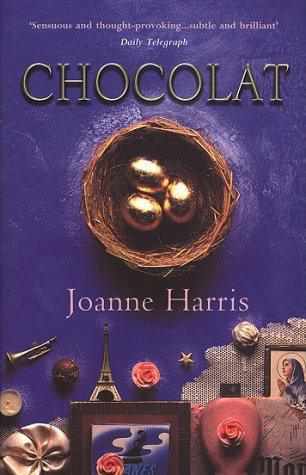
15107Chocolat by Joanne Harris – a fabulous book, this is a story about Vianne Rocher who arrives in Lansquenet-sous-Tannes on Shrove Tuesday. She takes over the old bakery and transforms it into La Celeste Praline Chocolaterie Artisanale ‘“ in other words the most enticing, the most delicious and sensuous Chocolaterie, selling not only all sorts and types of chocolate treats but delicious chocolate drinks.

There is so much more to this book than a simple story about a chocolaterie.  It covers an enormous range of topics ‘“ fear of the outsider, prejudice against ‘these people”“ immigrants, vagrants, and gypsies; bigotry; fear of death, old age and illness; and fear that the Church will lose its purity and that the community will be corrupted by liberal and heretic beliefs. It’s also about how so many lives intersect and interact and above all about the importance of love and understanding in everyone’s life.

2009

Company of Liars by [Maitland, Karen]Company of Liars: a novel of the plague by Karen Maitland – historical fiction set
in England in 1348 this tells the tale of a group of people fleeing across the country as the plague moves inland from the ports. The narrator is Camelot, a pedlar. The members of the group, a conjurer, a one-armed storyteller, a musician and his apprentice, a young couple on the run, a mid-wife and a strange child who can read the runes are all liars, with secrets that are gradually exposed as they journey on.

This is a memorable story, with a colourful cast of characters. It’s a long book (over 550 pages) and there are many other characters than the group of nine. Yet I had no difficulty keeping track of who was who and it was actually a quick read as I was keen to know what would happen next. It is full of suspense, menace and drama.

2010

5621474A Dark-Adapted Eye by Barbara Vine (Ruth Rendell). This is psychological crime fiction; you
know right from the beginning who the murderer is, but not why or how the murder was committed. It’s not even clear immediately who the victim is.  The narrator, Faith has spent her life avoiding thinking, talking or reading about at the events that led up to her aunt’s hanging for murder. Slowly, very slowly, with lots of hints and questions about how things could have turned out differently the family relationships and events that led up to the tragedy are revealed.

This is a book where you can see events and people so clearly through their thoughts and emotions as much as through their actions, but their secrets are so well concealed. And by the end just when you think you understand it all, Vine  throws everything into question yet again and the reader is left to decide just what did happen, just what was the truth. Fantastic.

First Chapter, First Paragraph: The Girl in the Cellar

First chapterEvery Tuesday Diane at Bibliophile by the Sea hosts First Chapter First Paragraph Tuesday Intros to share the first paragraph sometimes two, of a book that she’s reading or planning to read soon.

I didn’t read any of my books for the 20 Books of Summer Challenge in July, so I’ve got some catching up to do. One of the shorter books on my list is The Girl in the Cellar by Patricia Wentworth, in which Miss Silver helps Anne, who has lost her memory, but who thinks she has witnessed a murder.

It begins:

She looked into the dead unbroken dark and had neither memory nor thought. She was not conscious of where she was, or of how she had come there. She was not conscious of anything except the darkness. She did not know if time had passed. There seemed to be no sense that it went by, but it must have done, because the moment when she knew nothing but darkness had changed into a moment in which she knew that her feet were on stone, and that she must not move from where she stood.

Blurb:

A young woman regains consciousness and finds herself on some cellar steps. At the bottom of the steps there is the corpse of a dead girl. She cannot remember who she is, what has happened or why she is there. Terrified and confused she manages to find a way out and as she flees she runs into Miss Silver, who offers to help her.

A letter in her bag is the only clue to her identity. But by investigating what has happened to her will she find herself in danger? Can she trust the letter writer? And who is the girl in the cellar?

This is a Miss Silver Mystery (there are 32 in the series), first published in 1961, the year that Patricia Wentworth died. She was born in India in 1878 and wrote dozens of best-selling mysteries being recognised as one of the ‘mistresses of classic crime.’She died in 1961 and was as popular in the 1940s as Agatha Christie and Dorothy L Sayers. Miss Silver, a contemporary of Miss Marple ‘was her finest creation‘.

What do you think? Would you keep reading? I think this opening paragraph sets the scene well, with the sense of danger and mystery to make me want to know more.

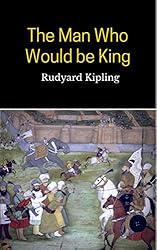
The Man Who Would Be King by Rudyard Kipling

For me the book chosen for the current Classics Club Spin is The Man Who Would Be King by Rudyard Kipling. It’s a novella, just 60 pages, which first appeared in The Phantom Rickshaw and other Eerie Tales, published in 1888.

Set in India and narrated by a journalist this is a story of two ruffianly-looking adventurers, wanderers and vagabonds, Daniel Dravot and Peachey Carnehan, who announce that they are off to Kafiristan in the mountains of Afghanistan to make themselves Kings. They tell the journalist that when they have got their kingdom ‘in going order’ they will let him know and that he can then come and help them govern it.

But some two years later, on a hot summer’s night, what was left of Carnehan crept into the journalist’s office,

He was bent into a circle, his head was sunk between his shoulders, and he moved his feet one over the other like a bear. I could hardly see whether he walked or crawled- this rag-wrapped, whining cripple who addressed me by name, crying that he was come back. (page 24)

And he had a sorry tale to tell.

I was a bit disappointed with it, mainly because for a novella it took such a long time to set the scene and the opening section was confusing, with references I didn’t understand. After the slow beginning the story picks up when it gets to relating what happened to Dravot and Carnehan. The Kipling Society website (where you can read the story, which is also free on Amazon) has some notes that helped me understand more – Masonic, Biblical and other references and details about the places and people mentioned.

The Kipling Society also gives details of the background to the story and some critical responses to it. Overall the responses are good – that it is a memorable, fantastic tale, some believing it to be a masterpiece, but Kingley Amis stated it was a ‘grossly overrated long tale‘. I was also interested that Edmund Wilson is quoted as stating that the story is “…surely a parable of what might happen to the English if they should forfeit their moral authority.”[Edmund Wilson ‘The Kipling that Nobody Read’, in Kipling’s Mind and Art ed. Andrew Rutherford, Oliver & Boyd, 1964.]

There was a film adaptation in 1975, starring Sean Connery as Dravot and Michael Caine as Carnehan with Christopher Plummer as Kipling, which according to some is much better than the story itself.

Rudyard Kipling was born in Bombay in 1865 and lived there until he was five when he was taken to live in England, returning to India in 1882, where he worked as a journalist. As well as short stories he also wrote poems, including If, and novels, and was awarded the Nobel Prize in Literature in 1907.

My copy is an e-book, which I’ve had for several years, so it counts towards my Mount TBR Reading Challenge.

Books Read in July 2016

At the beginning of July I was in the middle of reading two long non-fiction books, A History of Modern Britain by Andrew Marr  and John Le Carre: the Biography by Adam Sisman and inevitably this slowed down my reading as I took my time with those.

The fiction I read is a mixed bunch, one crime fiction No Man’s Nightingale by Ruth Rendell, a spy thriller, The Spy Who Came in from the Cold by John Le Carre, a book of short stories, Sandlands by Rosy Thornton and a novella, The Man Who Would Be King by Rudyard Kipling.

And I’m now in the middle of reading The Sunne in Splendour by Sharon Penman, a huge historical novel about Richard III. She paints a very different picture of him from the villain in Shakespeare’s play and in the Tudor historians’ depictions.

Three books are from my TBR books, the Andrew Marr, Rudyard Kipling and Sharon Penman books, and none are for the 20 Books of Summer challenge. Sometimes I just have to forget about reading plans and lists and enjoy reading books as I come across them – there is pleasure in that too.

My favourite for July

I’m amazed at this, because short stories are not usually high on my list of favourite books, but the book that gave me the most pleasure this month is Rosy Thornton’s collection of short stories, Sandlands, strong, atmospheric stories, bringing to life the world of the past, and tying them to the present; stories of family life, of the natural world, of folklore and the mystery and wonder of it all. I loved it!

(The links are to my  posts on the books – I’ll post a review of The Man Who Would be King in the next few days)

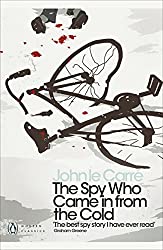
The Spy Who Came in from the Cold by John le Carré

I’ve recently read John le Carré’s biography by Adam Sisman and inevitably it made me want to read le Carré’s books. I decided to start with his third novel, The Spy Who Came in from the Cold, first published in 1963.

Blurb:

a gripping story of love and betrayal at the height of the Cold War. This Penguin Modern Classics edition includes an afterword by the author and an introduction by William Boyd, author of Any Human Heart.

Alex Leamas is tired. It’s the 1960s, he’s been out in the cold for years, spying in the shadow of the Berlin Wall for his British masters. He has seen too many good agents murdered for their troubles. Now Control wants to bring him in at last – but only after one final assignment. He must travel deep into the heart of Communist Germany and betray his country, a job that he will do with his usual cynical professionalism. But when George Smiley tries to help a young woman Leamas has befriended, Leamas’s mission may prove to be the worst thing he could ever have done. In le Carré’s breakthrough work of 1963, the spy story is reborn as a gritty and terrible tale of men who are caught up in politics beyond their imagining.

My view:

This is a dark, tense book and quite short, just 252 pages. It’s complicated and although the language le Carré uses is clear and straight forward at times I wasn’t sure just what was going on, what lay behind the scenes – just what was Leamas up to, amidst the various deceptions and subterfuges? George Smiley does appear briefly in the book, but is there throughout in that he is masterminding Leamas’ mission.

Back from Berlin where he had seen his last agent killed whilst trying to cross the Berlin Wall, Leamas is apparently no longer useful. He goes to seed whilst working out his contact in the Banking Section, transforming into a drunken wreck no longer of use to the Secret Services, left without any money or a job until he finds work as a helper in a library for Psychical Research. Here he meets Liz Gold, who then unwittingly gets drawn into Smiley’s plan.

The atmosphere throughout is of secrecy, manipulation, of human frailty and its duplicitous nature. As the German, Fiedler says for a secret agent:

… deception is first a matter of self-defence. He must protect himself not only from without, but also from within, and against the most natural of impulses; though he earns a fortune, his role may forbid him the use of a razor, though he  be erudite, it can befall him to mumble nothing but banalities; though he be an affectionate husband and father, he must under all circumstances withhold himself from those in whom he should naturally confide. (page 143)

By the end of the book Leamas is in despair as his mission seems to have failed. Liz can’t work out which side he is on and he says:

What do you think spies are: priests, saints, martyrs? They’re a squalid procession of vain fools, traitors too, yes; pansies, sadists and drunkards, people who play cowboys and Indians to brighten their rotten lives. (page 243)

I hate it; I hate it all; I’m tired. But it’s the world, it’s mankind that’s gone mad. We’re a tiny price to pay … but everywhere’s the same, people cheated and misled, whole lives thrown away, people shot and in prison, whole groups and classes of men, written off for nothing. (pages 244-5)

But then again did his mission fail? This is one of those books that I find so hard to write about without giving away too much of the plot – the introduction by William Boyd begins with this statement, ‘New readers are advised that this Introduction makes details of the plot explicit.‘ And indeed it does. I was glad I read it after reading the book, though, as it also gives an interpretation that I found helpful – in particular just what Boyd thought was meant by ‘coming in from the cold‘.

This fulfils the “Broken Object” category on the Silver Vintage Scavenger Hunt card.

My Week in Books: 27 July 2016

This Week in Books is a weekly round-up hosted by Lypsyy Lost & Found, about what I’ve been reading Now, Then & Next.

IMG_1384-0

A similar meme,  WWW Wednesday is run by Taking on a World of Words.


Now:
I’m reading The Sunne in Splendour, historical fiction about Richard III:

Blurb:

Richard, last-born son of the Duke of York, was seven months short of his nineteenth birthday when he bloodied himself at the battles of Barnet and Tewkesbury, earning his legendary reputation as a battle commander in the Wars of the Roses, and ending the Lancastrian line of succession.

But Richard was far more than a warrior schooled in combat. He was also a devoted brother, an ardent suitor, a patron of the arts, an indulgent father, a generous friend. Above all, he was a man of fierce loyalties, great courage and firm principles, who was ill at ease among the intrigues of Edward’s court. The very codes Richard lived by ultimately betrayed him.

But he was betrayed by history too. Leaving no heir, his reputation was at the mercy of his successor, and Henry Tudor had too much at stake to risk mercy. Thus was born the myth of King Richard III, the man who would stop at nothing to gain the throne.

Filled with the sights and sounds of battle, the customs and love of daily life, the rigours and dangers of Court politics and the touching concerns of very real men and women, The Sunne in Splendour is a richly coloured tapestry of medieval England.

Then: I’ve recently finished, The Spy Who Came In From The Cold, a spy thriller set in the Cold War period.

Blurb:

Alex Leamas is tired. It’s the 1960s, he’s been out in the cold for years, spying in the shadow of the Berlin Wall for his British masters. He has seen too many good agents murdered for their troubles. Now Control wants to bring him in at last – but only after one final assignment. He must travel deep into the heart of Communist Germany and betray his country, a job that he will do with his usual cynical professionalism. But when George Smiley tries to help a young woman Leamas has befriended, Leamas’s mission may prove to be the worst thing he could ever have done. In le Carré’s breakthrough work of 1963, the spy story is reborn as a gritty and terrible tale of men who are caught up in politics beyond their imagining.

Next: There are several books I want to read next, mainly the books on my 20 Books of Summer list, but I’ve not been doing very well with that this month and the book that’s really beckoning me right now is The Woman Who Walked Into The Sea by Mark Douglas-Hume. I reserved this at the library and after waiting weeks for it I collected it yesterday. It’s the second in his Sea Detective series. I loved the first one, The Sea Detective and hope this will be just as good.
Blurb:

Cal McGill is a unique investigator and oceanographer who uses his expertise to locate things – and sometimes people – lost or missing at sea.

His expertise could unravel the haunting mystery of why, twenty-six years ago on a remote Scottish beach, Megan Bates strode out into the cold ocean and let the waves wash her away.

Megan’s daughter, Violet Wells, was abandoned as a baby on the steps of a local hospital just hours before the mother she never knew took her own life.

As McGill is drawn into Violet’s search for the truth, he encounters a coastal community divided by obsession and grief, and united only by a conviction that its secrets should stay buried…

But I know that I’m not too good at predicting what I’ll read next, so it could be something else instead.