Favourite Books: August 2007 – 2010

I’ve been really enjoying looking back at some of my favourite books and this month I’m  looking back at some I read in August in each of the years 2007 ‘“ 2010. Click on the titles to see my original reviews.

Looking back at these books makes me want to re-read each one. I was enthralled by them all:

2007
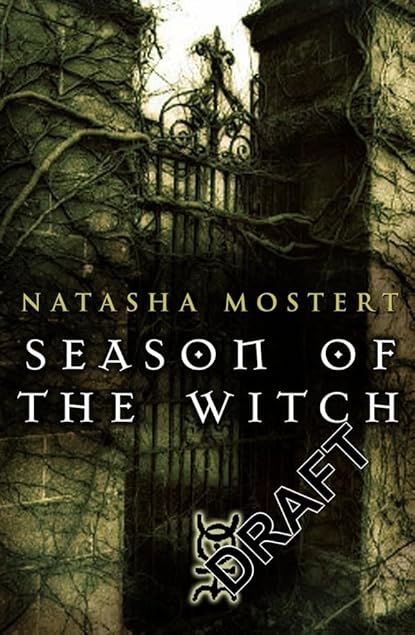
There is so much I loved in Season of the Witch by Natasha Mostert, a thrilling, spine tingling story of mystery, mysticism and magic, abounding with symbolism. It’s a modern day gothic epic, mixing computer technology with witchcraft, alchemy and the power of the human mind, in the search for enlightenment.

I raced through the book with that nervous tension anticipating danger that you feel watching a horror film build up, leaving me breathless as I read.

Gabriel Blackstone is a computer hacker by trade, and by inclination he is a remote viewer; someone whose unique gifts enable him to ‘˜slam rides’ through the thought processes of others. He is contacted by an ex-lover who begs him to use his gift to find Ronnie, her stepson, last seen months earlier in the company of two sisters, Minnaloushe and Morrighan Monk (wonderful names). The beautiful and mysterious sisters are descendants of Dr John Dee, a mathematical genius, alchemist and secret adviser to Queen Elizabeth I. Both of them bewitch Gabriel as he seeks to unravel the mystery behind Robbie’s disappearance.

2008

August 2008 found me reading a completely different genre – Pompeii by Robert Harris is historical fiction. The story begins in August AD 79 just two days before the eruption of Mount Vesuvius and builds up to a climax. Whilst most people are blissfully unaware of what is about to be unleashed upon them one man ‘“ the engineer Marius Attilius Primus realises the danger when the aqueduct Aqua Augusta fails to supply water to the people in the nine towns around the Bay of Naples. Then Vesuvius erupts destroying the town of Pompeii and killing its inhabitants as they tried to flee the pumice, ash and searing heat and flames.

The book brought history to life and I could feel the danger and fear as Vesuvius inevitably destroyed Pompeii. I particularly liked mixture of fictional and historical characters and the inclusion of Pliny, then the Admiral of the Fleet, as he watched and recorded the progress of the eruption and the account of his death.

2009

In August 2009 I read The Rebecca Notebook and Other Memories which gives a glimpse into the mind of Daphne Du Maurier. Rebecca has long been one of my favourite books, so I was fascinated to read the notes she made as she was writing the book. She began to write Rebecca in 1937 when she was thirty years old, living in Alexandria and feeling homesick for Cornwall. She jotted down chapter summaries in a notebook, setting the book in the mid 1920s ‘˜about a young wife and her slightly older husband, living in a beautiful house that had been in his family for generations.’

As she thought about it ideas sprang to her mind ‘“ a first wife ‘“ jealousy, something terrible would happen ‘“ a wreck at sea. She became immersed in the story, losing herself in the plot, as so many of us have done ever since.

I enjoyed the other short pieces in this book ‘“ her ‘˜memories’ of her family and her own life and beliefs. Some are about her family, some about her childhood and some about the house she loved, Menabilly.

2010

Finally in August 2010 I read Thirteen Hours by Deon Meyer, one of the best books I read that year. I was engrossed in it right from the start. It’s tense, taut and utterly enthralling. Moving at a fast pace the book follows the events during the thirteen hours from 05:36 when Rachel, a young American girl is running for her life up the steep slope of Lion’s Head in Capetown.

The body of another American girl is found outside the Lutheran church in Long Street and an hour or so later Alexandra Barnard, a former singing star and an alcoholic, wakes from a drunken stupor to find the dead body of her husband, a record producer, lying on the floor opposite her and his pistol lying next to her.

Meyer is a fantastic story teller and creates such wonderful characters. DI Benny Griessel is mentoring two inexperienced detectives who are investigating these crimes. I grew very fond of Benny, who is also an alcoholic and struggling to keep his marriage together.  The book also reflects the racial tension in the ‘˜new South Africa’ with its mix of white, coloured and black South Africans. There is a strong sense of location, not just from the cultural aspect but also geographical.

My Week in Books: 17 August 2016

This Week in Books is a weekly round-up hosted by Lypsyy Lost & Found, about what I’ve been reading Now, Then & Next.

IMG_1384-0

A similar meme,  WWW Wednesday is run by Taking on a World of Words.


Now:
 I am reading two amazing books right now – A Song of Fire and Ice Book 1 of A Game of Thrones by G R R Martin. I’ve now caught up with the TV series and I’m reading the first book. I am thoroughly enjoying it.Blurb:

Summers span decades. Winter can last a lifetime. And the struggle for the Iron Throne has begun. As Warden of the north, Lord Eddard Stark counts it a curse when King Robert bestows on him the office of the Hand. His honour weighs him down at court where a true man does what he will, not what he must ‘¦ and a dead enemy is a thing of beauty.

The old gods have no power in the south, Stark’s family is split and there is treachery at court. Worse, the vengeance-mad heir of the deposed Dragon King has grown to maturity in exile in the Free Cities. He claims the Iron Throne.

and I’ve also just started reading an uncorrected proof of The Plague Charmer by Karen Maitland, which is due to be published in October.Blurb:

1361. Porlock Weir, Exmoor. Thirteen years after the Great Pestilence, plague strikes England for the second time. Sara, a packhorse man’s wife, remembers the horror all too well and fears for safety of her children. Only a dark-haired stranger offers help, but at a price that no one will pay.

Fear gives way to hysteria in the village and, when the sickness spreads to her family, Sara finds herself locked away by neighbours she has trusted for years. And, as her husband – and then others – begin to die, the cost no longer seems so unthinkable.

The price that I ask, from one willing to pay… A human life.

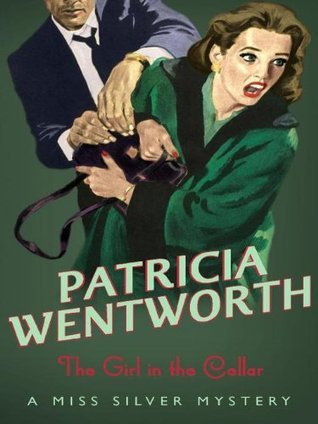
Then: I’ve recently finished The Girl in the Cellar by Patricia Wentworth, one of my 20 Books of Summer. A ‘damsel in distress’ murder mystery. It wasn’t brilliant – my review is in this post.

Next: It will be one of the books from my 20 Books of Summer list. I’m not sure which one – maybe The Girl on the Train by Paula Hawkins.Blurb:

Rachel catches the same commuter train every morning. She knows it will wait at the same signal each time, overlooking a row of back gardens. She’s even started to feel like she knows the people who live in one of the houses. ‘˜Jess and Jason’, she calls them. Their life ‘“ as she sees it ‘“ is perfect. If only Rachel could be that happy.

And then she sees something shocking. It’s only a minute until the train moves on, but it’s enough. Now everything’s changed. Now Rachel has a chance to become a part of the lives she’s only watched from afar.

Now they’ll see; she’s much more than just the girl on the train’¦

The Girl in the Cellar by Patricia Wentworth

I’m falling behind with reading for my 20 Books of Summer Challenge as I didn’t read any of them in July. I decided to read one of the shorter books to get back into the swing of the challenge and chose The Girl in the Cellar, a Miss Silver Mystery first published in 1961, by Patricia Wentworth (1878 – 1961). I wrote about the opening paragraph in this First Chapter, First Paragraph post.

It begins well as the main character finds herself in the dark in a cellar, not knowing who she is or how she got there. She is standing on the cellar steps and there is a dead girl lying at the bottom of the steps. She doesn’t recognise the dead girl either. She finds a bag beside her on the steps, which she doesn’t think is hers, but takes it with her as she escapes from the house and finds herself standing at the end of a road. She gets on a bus where she meets Miss Silver, who seeing how confused and frightened she is, takes her for a cup of tea and offers to help her. A letter in the handbag is addressed to Mrs James Fancourt and it seems that her name is Anne and she is to stay with her husband’s two aunts.

I think the opening of the book is the best part, setting up a scene of suspense and mystery. For most of the book Anne is suffering from amnesia but there is so much repetition of what little facts Anne knows that it became tedious reading, because it’s not just Anne who goes over and over what has happened but other characters too. I think the repetition lessened the sense of suspense, and overall, I thought the book was odd and not very convincing. There are too many coincidences, improbabilities, and loose ends.

This is the last of the Miss Silver Mysteries, published in the year Patricia Wentworth died. The first in the series was published in 1928. Miss Maud Silver is a retired governess who became a private investigator. She likes to help young lovers in distress – in The Girl on the Cellar, a ‘damsel in distress’ and she loves to knit and is a very sympathetic listener. I’ve only previously read one of the Miss Silver books, The Brading Collection, which is a much more convincing book.

As well as the 20 Books of Summer Challenge, this book qualifies for  Bev’s Vintage Mystery Cover Scavenger Hunt in the category, ‘Damsel in Distress’.

The Woman Who Walked into the Sea by Mark Douglas-Home

Earlier this year I read and loved The Sea Detective, the first Cal McGill book. Cal is an oceanographer using his skills in tracking human bodies and sea-borne objects. So I was really looking forward to reading the second book, The Woman Who Walked into the Sea. Maybe my expectations were too high because I was a bit disappointed – that’s not to say I didn’t like it because I did, but it lacked the pace and complexity of the first book and just didn’t grip my imagination in the same way. Cal is really a secondary character and there is very little sea detection in the story.

Set in an imaginary coastal village of Poltown in the north of Scotland, the story revolves around the main character,Violet who had been abandoned as a new-born baby. An anonymous letter to a social worker reveals that her mother, Megan Bates, had last been seen walking into the sea. Her body had never been found and it had been assumed after her bag and hat had drifted ashore that she had drowned herself. Cal helps Violet with details of the tides and currents which convinces Megan had not committed suicide. She is determined to discover what had happened.

I liked the mystery surrounding Megan and the local people, most of whom have problems/secrets and then there is the ‘local’ mafia and a controversial wind farm proposal. But the appeal of The Sea Detective for me was not just the detective elements but Cal himself and his expertise in the marine environment, the mystery of how the ocean currents and wind speeds affect where things get washed ashore and tracking back to find where they originated.  And I thought this second book was unevenly paced, the action slowed down by long descriptive passages so that the suspense that had been built up drained away and my attention drifted.

So, even though I liked this book, I don’t think it quite lived up to The Sea Detective. There is a third book, The Malice of Waves and I hope that the focus is more on Cal and his sea detective work.

Reading Challenges: Read Scotland 2016 ‘“ by a Scottish author and set in Scotland.

The Sunne in Splendour by Sharon Penman

Richard III (1452 – 1485), that controversial king – what was the truth about him? Did he murder his nephews, the ‘Princes in the Tower’, was he deformed, with a withered arm, a hunch back and a limp as Shakespeare portrayed him, was he a cold-blooded, evil villain? Or has he been maligned and been turned into a  monster who killed his brother’s sons in order to take the Crown?

I remembered merely the brief details about the Wars of the Roses, the conflict between the houses of York and Lancaster for the throne of England,  from my school history lessons and only became interested in Richard III years later when I read Alison Weir’s non-fictional The Princes in the Tower, which examined the available evidence and came to the conclusion that Richard III was responsible for their deaths. Some years later I read Josephine Tey’s novel The Daughter of Time, which also investigates his role in the death of his nephews and his own death at the Battle of Bosworth and concluded that Richard hadn’t murdered his nephews.

The discovery of his skeleton buried beneath a car park in Leicester in 2012 revealed that although ‘the curved spine on the skeleton does show he had Scoliosis, he did not have a withered arm or other details attributed to him in some characterisations’ (see the Incredible Discovery at the King Richard III Visitor Centre ).

But it wasn’t the discovery of his skeleton that nudged me into reading  The Sunne in Splendour, Sharon Penman’s detailed historical novel, first published in 1982. It was watching A Game of Thrones, which is based in part on the Wars of the Roses – Stark and Lannister/York and Lancaster etc.

1192920

The Sunne in Splendour is a fascinating novel about his life from his childhood to his death at Bosworth Field in 1485. Much has been written about Richard, from the time of his death onwards, that Sharon Penman points out has to be considered in the light of the writers’ bias, stating in her Author’s Note at the end of the book:
I once came upon the definition of history as ‘the process by which complex truths are transformed into simplified falsehoods’. That is particularly true in the case of Richard III, where the normal medieval proclivity for moralizing and partisanship was further complicated by deliberate distortion to suit Tudor political needs.’ (page 884)

She states that she had tried to be as accurate as possible, drawing upon facts that are not in dispute, relying on contemporary chroniclers, and when dealing with conflicting accounts ‘to choose the one most in accord with what we know of the people involved.’ 

I think this is one of the best historical novels that I’ve read. It is full of detail, but her research sits very lightly in this book, none of it feels like a history lesson, and it all brings Richard’s world to life. Penman portrays a very likeable Richard, from his childhood onwards he comes across as a kind, generous and brave man, a skilled leader on the battlefield, a loving husband to his wife, Anne, and devoted and loyal to his brother, Edward IV, who was by no means a saint. I particularly liked the way Penman showed his relationship with his family, especially with his brothers Edward and George, the Duke of Clarence.

I could easily visualise the battle scenes, that eventually brought the Wars of the Roses to an end and was fascinated by the view of Henry Tudor (Henry VII) – I’d like to know more about him. It’s his view of Richard that prevailed after his accession to the throne. During his life Richard he had a good reputation and was loved, particularly in the North of England. But he fell victim to treachery and intrigue.

One of the drawbacks of reading historical fiction is that if you have any knowledge of the period you know the eventual outcome. Penman’s skill is such that even though I knew Richard was killed at the battle of Bosworth Field I kept hoping he would survive and defeat Henry Tudor.

As for her solution to who killed the princes, that is one spoiler I’m not going to reveal – I was convinced though by her version of events. I think The Sunne in Splendour is a brilliant book, I was absolutely gripped by it and was sad when I came to the end. It’s a long book, nearly 900 pages and it took me a while to read it, but never once did I think it was too long, or needed editing. I loved it.

Reading Challenges: Mount TBR Reading Challenge – a book I’ve left too long unread as it’s been on my shelves for 5 years!

Six Degrees Of Separation: Year of Wonders to Blood Harvest

I found this meme on Debbie’s ExUrbanis blog. It is hosted by Books Are My Favourite and Best, and was inspired by Hungarian writer and poet Frigyes Karinthy. In his 1929 short story, ‘Chains’, Karinthy coined the phrase ‘˜six degrees of separation‘. The phrase was popularized by a 1990 play written by John Guare, which was later made into a film starring Stockard Channing.

On the first Saturday of every month, a book is chosen as a starting point and linked to six other books to form a chain. Readers and bloggers are invited to join in by creating their own ‘chain’ leading from the selected book, for example, books by the same authors, from the same era or genre, or books with similar themes or settings. Or, you may choose to link them in more personal or esoteric ways: books you read on the same holiday, books given to you by a particular friend, books that remind you of a particular time in your life, or books you read for an online challenge.

You make your own rules. A book doesn’t need to be connected to all the other books on the list, only to the ones next to them in the chain.

This is my first chain:

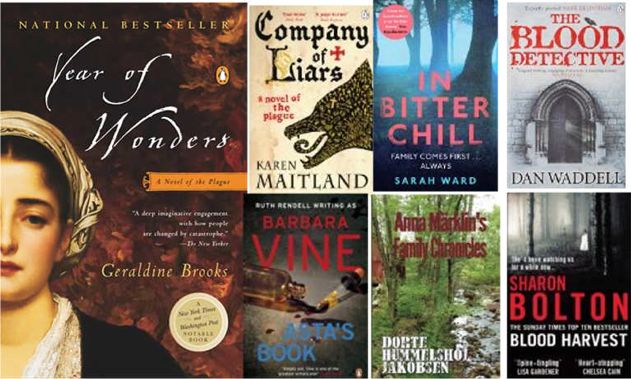
Year of Wonders chain

The chain this month begins with Year of Wonders by Geraldine Brooks, one of my favourite authors, although I haven’t read this book – yet. It’s set in a small village in Derbyshire, during the year of 1666 ravaged by the plague. The story was inspired by the true story of the villagers of Eyam, Derbyshire and their own historical account of the plague.

This leads on to the following books:

Company of Liars by Karen Maitland, also a novel of the plague, but set in 1348 as a group of people flee across England as the plague moves inland from the ports. The members of the group, a conjurer, a one-armed storyteller, a musician and his apprentice, a young couple on the run, a mid-wife and a strange child who can read the runes, are all liars with secrets that are gradually exposed as they journey on.

Secrets are also a major part of In Bitter Chill by Sarah Ward, in which two girls go missing: Rachel Jones returns, Sophie Jenkins is never found. Thirty years later, Yvonne, Sophie’s mother commits suicide, which prompts Rachel, to try to remember what had happened. She is a genealogist and her research into her own family history proves to be invaluable, as devastating family secrets are revealed. This also links back to Year of Wonders as it is set in Derbyshire.

In The Blood Detective genealogist Nigel Barnes helps DCI Grant Foster to track down a killer who has left cryptic clues carved into his victims’ bodies. Although this has some really gruesome scenes, which I normally avoid, this a fascinating fast-paced book linking the crimes of the past ‘the events of 1879 ‘ to a series of murders in the present.  It is set in London and the topography of London through the years also helps Barnes to solve the crimes.

Asta’s Book by Barbara Vine is also set in London. It begins in 1905 when Asta Westerby and her husband Rasmus come to East London from Denmark with their two little boys.  Asta keeps loneliness and isolation at bay by writing a diary. These diaries, published over seventy years later, reveal themselves to be more than a mere journal. For they seem to hold the key to an unsolved murder and to the mystery of a missing child. It falls to Asta’s granddaughter Ann to unearth the buried secrets of nearly a century before.

Denmark and family secrets are the links to this next book, Anna Marklin’s Family Chronicles, a psychological mystery by Dorte Hummelshoj Jakobsen, a Danish author.  Set in Denmark in the present day with flashbacks to Sweden during the early part of at the beginning of the twentieth century, Anna finds herself with beset with problems. Her father is seriously ill and strangely secretive about his family background.  Anna longs to know more and when she finds her grandmother’s journal she is enthralled. But digging into the past can reveal secrets that you might not want to know.

The final link in this chain is another psychological mystery, Blood Harvest by Sharon Bolton. I could have chosen any one of her books but this one stands out for me.  Evi, a psychiatrist has a new patient, Gillian, unemployed, divorced and alcoholic, who can’t accept that her daughter died in the fire that burnt down her home. Meanwhile, the new vicar in town is feeling unwelcome and hears voices in the church, but can’t find anyone there And a young boy keeps seeing a strange, solitary girl playing in the churchyard. Who is she and what is she trying to tell him? It’s a dark, scary book and one that I found disturbing, but thoroughly absorbing.

My chain goes from a seventeenth century English village devastated by plague to a twentieth century English village in six links, via books revealing murder, mayhem and mystery in their pages. Apart from Year of Wonders these are all books I’ve read and enjoyed, even The Blood Detective, a grisly tale.