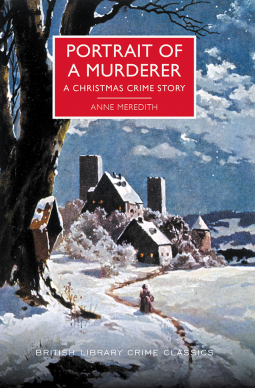
Portrait of a Murderer by Anne Meredith: A Christmas Crime Story (British Library Crime Classics)

Poisoned Pen Press|3 April 2018|240 pages|e-book |Review copy|4*

Portrait of a Murderer was first published in 1933. Anne Meredith is one of the pen names used by Lucy Beatrice Malleson (her other pen names are Anthony Gilbert and J Kilmeny Keith). This Poisoned Pen Press edition has an introduction by Martin Edwards. It is crime fiction where you know who the murderer is and the motive and how the victim was killed quite early on in the book.

On Christmas Eve 1931 Adrian Gray was violently murdered by one of his six adult children. The murderer had acted on impulse in a fit of rage. Adrian had not got on with any of his children and they all wanted him to lend them or rather give them money for one reason or another. From then on it is a character study of the family and of the murderer in particular, who works out a plan to put the blame on one of the other family members. The setting at Christmas seems to be purely because this family don’t get on and it was only at Christmas that they gathered together at the Gray family home.

It begins slowly and I was beginning to wonder if I wanted to finish the book, but I found I was thinking about it when I wasn’t reading and wondering whether the plan would work. As the suspense increased I realised that I was hooked and couldn’t wait to get back to the book to find out. Will the wrong person be convicted or will justice be done?It’s an excellent character study, told in the first person by the murderer and in the third person by the other characters.

I was also fascinated by the picture Meredith paints of the society and culture of the 1930s. It’s set in the Depression and the Grays had come down in the world, no longer the owners of a large landed property. This was accompanied by a steady deterioration in character as their point of view changed and they aspired to possessions and a place in society with authority, consumed by jealousy and criticism of others.They are an unlikeable set of characters and probably one of the reasons this book works so well is that each one is described with precision and insight, so that they come across as recognisable people and not as caricatures.

I also enjoyed reading about life in London in the 1930s, with descriptions of the River Thames, the traffic and the talk of electricity and speed, ‘the age’s God‘, and the desire for cars resulting in air pollution from the petrol fumes. The newly rich are financiers, such as Gray’s financial adviser and son-in-law, Eustace Moore. Although his appearance isn’t that of the traditional conception of a Jew, Meredith reveals the casual and nasty anti-semitism typical of the period in referring to his race. In addition she shows society’s attitude to women from the unmarried daughter expected to act as housekeeper and look after her father, to the scandal attached to divorce.

From a slow and unpromising start Portrait of a Murderer developed into a fascinating novel that I thoroughly enjoyed.

Many thanks to Poisoned Pen Press for a review copy via NetGalley.
Amazon UK link
Amazon US link

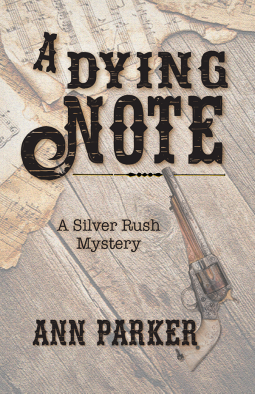
A Dying Note by Ann Parker

Poisoned Pen Press|3 April 2018|319 pages|e-book |Review copy|4*

The Fire Court by Andrew Taylor

Harper Collins UK|5 April 2018|448 p|e-book |Review copy|5*

The Tenderness of Wolves by Stef Penny

The Tenderness of Wolves

Quercus| 2006|450 p|2.5* rounded up to 3* on Goodreads

The Tenderness of Wolves was first published 2006 when it won the both the Costa First Novel Award and the Costa Book of the Year. It has been on my TBR shelves since May 2007 when I first heard about it and thought it sounded fantastic. And yet it has sat on my shelves ever since, mainly because it’s in such a small font. And then at the beginning of March I included it in my S and T post of TBRs and encouraged by the comments  began to read it.

Stef Penney is a screenwriter and the author of three novels: The Tenderness of Wolves, The Invisible Ones (2011), and Under a Pole Star (2016, winner of the 2017 Wilbur Smith Adventure Writing Prize). She has also written extensively for radio, including adaptations of Moby Dick, The Worst Journey in the World, and, mostly recently, a third instalment of Peter O’Donnell’s Modesty Blaise series.

It’s set in Canada in 1867 beginning in a small place called Dove River on the north shore of Georgian Bay, narrated in part by Mrs Ross in the first person present tense (*see at the end of the post) and also occasionally in the third person past tense. Mr and Mrs Ross were the first people to settle in Dove River – the name she gave to it. Other people came later and settled near the river mouth.

It begins dramatically as she describes the last time she saw the French-Canadian trapper, Laurent Jammet alive ‘he was in Scott’s store with a dead wolf over his shoulder‘. He was the Ross’s closest neighbour and the next time she saw him was in his cabin, lying dead on his bed, his throat cut and he had been scalped. Francis, the Ross’s adopted teenage son is missing and is immediately suspected of being the murderer. But Mrs Ross is convinced of his innocence. With no police force as such it is the Hudson Bay Company (the Company) employees and the local magistrate, Andrew Knox who lead the investigation. William Parker a half Indian tracker is also a suspect and is taken into custody. But Knox isn’t convinced Parker is guilty and releases him. Parker and Mrs Ross then set off to follow her son’s tracks into the wilderness.

That’s it in a nutshell, but it is much much more complicated than this. There’s a large cast of characters and at first I found it confusing, unsure of their identity and how they interacted. In fact some of them are just minor characters that don’t feature in the main plot, which is a problem when you’re trying to sort out who is important.

Following Mrs Ross and Parker are the Company employees, Donald Moody and Jacob, another half Indian. Then there is Thomas Sturrock, who says he had business with Jammet who had agreed to sell him something. He describes himself as a lawyer and an archaeologist by inclination and the object he is looking for is a bone tablet inscribed with strange markings that could be some sort of writing. Sturrock was also involved in the search for two young girls who years earlier had disappeared from their home presumed to have been abducted by Indians. Added into the mix are Susannah and Maria Knox, Andrew’s teenage daughters, a group of religious Norwegian settlers, and the employees of the Company, some of them very strange, in an isolated outpost deep in the wilderness.

This is one of the most difficult books to summarise in a coherent way and without giving away too many spoilers.

The plot moves very slowly, switching between locations and characters as very little progress is made in the search for the murderer. I found it frustrating. I never quite acclimatised myself to the use of the present tense which kept distracting me from the story. But when the pace picked up nearer to the end of the book I was keen to find out what happened – and by that time I had worked out who all the characters were. But I was left with a few questions – I really would have liked to know more about the relevance and meaning of the bone or ivory tablet, for example.

Overall, despite my criticism of this book, I did enjoy it and the descriptions of the landscape and climate set it in geographic context, but it just took so long to read particularly with so many sub-plots to hold in my head! I think some of the sub-plots that don’t contribute much to the story could easily have been developed into books in their own right. And the ending seemed so abrupt. I’m not sure I want to read any more of Stef Penney’s books.

* I want to analyse why I find the use of the present tense a problem as I hardly notice it in some books but in others such as this one I find it so irritating that it clouds my judgement. Perhaps it will help if I write my thoughts in a separate post … *


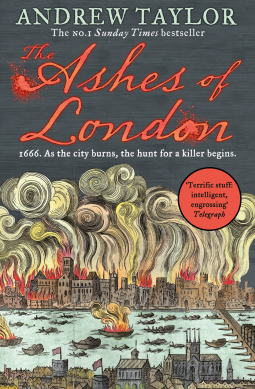
The Ashes of London by Andrew Taylor

Harper Collins UK|7 April 2016|497 p|e-book|Review copy|5*

The Good Liar by Catherine McKenzie

Lake Union Publishing| 3 April 2018|380p|e book|Review copy|4*

Description