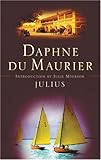
Julius by Daphne du Maurier

Daphne du Maurier’s Rebecca was one of the first adult books that I remember reading and it has remained a favourite ever since I first read it. It led me on to read more of her books and in my teens and twenties I read and re-read Jamaica Inn, Frenchman’s Creek, The Scapegoat, Mary Anne and The King’s General. They were the type of books that I loved.

Later on I discovered that she had written many more books and I’ve gradually been reading them, but, with perhaps the exception of My Cousin Rachel, they have not had the same magic quality that had kept me enthralled in the past. So I wasn’t quite sure what to expect when I began reading Julius, her third book written when she was twenty-six. It may lack that magic quality of her later books, but it is still compelling and disturbing reading, rich in detail and characterisation.

Julius (originally published in 1933 as The Progress of Julius) is the life story of a ruthless man, driven by his lust for power, and his dedication to getting ‘something for nothing’. It’s a chilling tale about a man whose love for his daughter brings about his ruin.

But that is jumping ahead in the story. It begins with his birth in Paris in 1860. Julius Levy grows up in a peasant family in a village on the banks of the Seine and caught up in the Franco-Prussian War, he escapes to Algeria, where he learns to swindle and manipulate. He moves on to London, all the time scheming and making money, getting richer, regardless of who he hurt, or indeed of whose death he caused as he built up his empire of cafés and married Rachel, the daughter of a diamond merchant.

It’s a dramatic story covering the years 1860 -1932, as the old century ended and the new one began:

Now came the close of the century and the death of the Queen followed by peace in South Africa, and these things also served as a milestone in the life of Julius Lévy. They marked the end of an era  showing him the path to greater prosperity than he had as yet achieved. It was the beginning of a new age – the age of progress and speed and efficiency that he had long foreseen and the dawn of mechanism in all things, electricity, motor-cars and soon flying-machines in the air. The spirit abroad was one he understood, the demon of restlessness unsatisfied stretching hungry fingers to the skies in a superhuman effort to conquer insatiable hunger, a spirit of rapacity and greed and excitement burning like a living flame. (page 195)

Julius is half-Jewish and the book veers on anti-Semitism, indeed in later years Daphne du Maurier considered excising those elements from the novel. But that would have meant the novel would have lacked depth as it is his Jewishness that lifts him from being a complete monster. As a mixed-up, lonely child he found in the temple that he was among his own people, and the music took hold of his heart, giving him peace. It is his tragedy that he lost that peace and struggled throughout the rest of his life trying to re-capture it.

His love for his daughter, Gabriel overwhelms him, but it is a possessive, suffocating love that leads him to extremes. His inability to love without the need to possess and control is shown early on in the book when forced to leave home and unable to take his cat he ties a stone around her neck and throws her in the Seine, rather than leave her to fend for herself or for someone else to take care of her. That made me shudder, but it is little compared to how he treated people.

I’ve read that Du Maurier based the character of Julius on that of her father, Gerald, that the possessiveness, the emotional demands and the sentiments Julius expresses were Gerald’s, and the words Gabriel speaks were her own thoughts. (Daphne du Maurier by Margaret Forster page 84)

At times melodramatic, this is a powerful novel, of a deprived, starving child who sold rats on the streets of Paris, and who dragged himself up from poverty and obscurity to become a man of  wealth and status and a cold-blooded sadist and murderer. I wrote about the beginning  of the book in an earlier post, describing how as a baby he was reaching for things beyond his grasp. The book ends as it began with Julius still reaching for the clouds:

He cried to them and they did not come. They passed away from him as though they had never been, indifferent and aloof, like wreaths of smoke they were carried away by the wind, born of nothing, dissolving into nothing, a momentary breath that vanished in the air. (page 308)

Gone With The Wind: Some Thoughts

Gone with the wind 001

Yesterday I finished reading Margaret Mitchell’s masterpiece, Gone With The Wind. I loved it. When I started it I decided that I wouldn’t take any notes as I read and neither would I mark any passages. I just wanted the pure reading experience, reading to get immersed in the story and Margaret Mitchell was a superb storyteller. There are parts full of description that enabled me to see the scenes and parts where I couldn’t turn the pages fast enough to discover what happened next, or how the characters would behave. It was a grand experience, and not just a reading experience but a learning experience too.

I saw the 1939 film many, many years ago and my memories of it are vague, not much beyond its setting, Clark Gable as Rhett Butler and Vivien Leigh as Scarlett O’Hara, and a few quotes: ‘Tomorrow is another day’ and Frankly, my dear I don’t give a damn’ – this is actually a misquote from the book – Rhett says ‘lightly but softly: ‘My dear, I don’t give a damn.’

 My knowledge of American history is quite limited, so I learnt a lot about the American Civil War and Reconstruction, about slavery (very different from Uncle Tom’s Cabin) and a lot about Georgia and Atlanta – I couldn’t even have placed them on a map before!!!

I liked the structure of the novel – straightforward chronological sequence told in the third person.

The characters are well-defined and are developed as the book progresses. Even the minor characters are distinct and I had no trouble identifying them. But the main characters are magnificent: Scarlett O’Hara, wilful, spirited, supremely self-centred and single-minded, a cheat and liar, but also charming, brave and fearless, as her character develops from a frivolous flirt to a much darker personality. She is obsessed by her infatuation for Ashley Wilkes, by her need for money and her desperate desire never to be hungry ever again. I swung between not liking her, admiring her courage, then thoroughly disliking the person she became and willing her to change – she didn’t of course.

Rhett Butler, black-hearted, flashy, a speculator, blockade runner and scallawag, who scandalises Atlanta, is the anti-hero who is gradually revealed as a hero, a tender-hearted, over-indulgent father, who really does love Scarlett, even though he can’t tell her. He’s a much more complicated character than Scarlett who understands human nature much better than Scarlett, seeing both the goodness and strength in Melanie Hamilton (Scarlett’s sister-in-law and Ashley’s wife).

There is so much to write about this book, (and I’m thinking of writing at least one more post about it) but for now I’m ending with these words from Margaret Mitchell when she was asked what Gone With The Wind was about:

… if the novel has a theme it is that of survival. What makes some people come through catastrophes and others, apparently just as able, strong and brave go under? It happens in every upheaval. Some people survive; others don’t. What qualities are in those who fight their way through triumphantly that are lacking in those that go under? I only know that survivors  used to call that quality ‘gumption’. So I wrote about people who had gumption and those who didn’t. (1936) (About the Author)

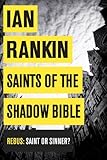
Saints of the Shadow Bible by Ian Rankin

I finished reading the latest Rebus book, Saints of the Shadow Bible a few days ago and have been wondering what to write about it that would do it justice. Ian Rankin is one of my favourite authors and his Rebus books never fail to impress me both with their ingenuity and the quality of their plots and characterisations – Saints of the Shadow Bible is no exception. In fact, I think it’s one of the best – a realistic and completely baffling mystery.

Rebus is now back on the force, the rules on retirement age having changed, but as a Detective Sergeant, not a DI and Siobhan Clarke is his boss. It begins with the discovery of a crashed car, on the face of it just a straight forward road traffic accident but it soon develops into a complex, multi-layered case, linking back to one of Rebus’s early cases on the force as a young Detective Constable. A case that with the changes in the double jeopardy law in Scotland can be reopened.

Rebus has always been an outsider, not one to play completely by the rules but his past gets put under scrutiny when Inspector Malcolm Fox investigates that case from the 1980s. There are suspicions that Rebus and his colleagues, who called themselves ‘The Saints of the Shadow Bible’ were involved in covering up a crime, allowing a murderer to go free.

The ‘Shadow Bible’ was a copy of Scots Criminal Law, a big black book

‘with a leather cover and brass screws. And we all spat on it and rubbed it in until it was dry. I thought it was a kind of oath, but it wasn’t – we were saying the rules could go to hell, because we knew we were better. We were the ones in the field …

The evidence was tainted, interviews hadn’t been conducted properly. How was Rebus involved, was he a Saint, and just how much did he know as a very junior member of the team?

The interaction between Rebus and Fox is one of the joys of this book as unlike Rebus, Fox does play by the rules. Ah, but does he? Beneath his controlled exterior Fox is just as much a loose cannon as Rebus, he’s not a team player either and it is fascinating to see how Rebus gets under his skin and reveals Fox’s true nature. For Rebus and Fox it’s the job that matters, but can they trust each other?

I wonder, though, just how much I would have enjoyed it if this was the first Rebus book I’d read. I have a feeling that I wouldn’t. There are characters who were in earlier books and references to previous cases which would have been lost on me otherwise. The first Rebus book I read was Set in Darkness (the 11th book) and whilst I had no difficulty in following who was who and their relationships I realised then that I had to read the books in order to fully understand the background and how the characters had evolved. I felt they were real people and I wanted to know more about them. I then went back to the beginning (Knots and Crosses) and read them in sequence, right up to the present day.

It’s all been an exhilarating and most enjoyable journey and I have a sneaking suspicion that this may indeed be the end – who knows? Only Ian Rankin and he isn’t telling, but he’s off on a year’s sabbatical in February and by then Rebus will almost be due a second retirement.

The Idea of Perfection by Kate Grenville

Last week I was thinking about taking Kate Grenville’s book, The Idea of Perfection back to the library without finishing it. But I gave it another go and this time it interested me enough to finish it. I thought her book The Secret River was brilliant, one of the best books I read last year and I also loved Sarah Thornhill, but I didn’t think The Idea of Perfection was as good as either of these, which surprised me as it won the 2001 Orange Prize for Fiction. That’s not to say I didn’t like it because I did, just not as much as the other two books.
I think the reason is that for the most part it lacked the drama of the other books and I found the beginning very slow. The title indicates the theme of the book with the characters all falling short of the impossible aim of perfection. Set in Karakarook, in New South Wales the two main characters are Douglas Cheeseman, an engineer who has come to pull down a quaint old bent bridge before it falls down and Harley Savage, who has come to advise the residents how to promote their inheritance. They both know they are far from perfect. On the other hand there is Felicity Porcelline, the local bank manager’s wife who thinks she is perfect and everything she does is aimed at perfection, which she doesn’t achieve either – just the opposite, in fact.

It’s quite a touching tale as Douglas and Harley, both middle aged and with failed marriages behind them, are shy awkward characters and although they are attracted to each other for most of the novel they find it almost impossible to express their feelings. They are both outsiders, neither fitting easily either into their own families or within society. Underlying their relationship is the conflict about the dilapidated bridge – should it be restored or replaced with a modern bridge? And just what should the proposed Pioneer Heritage Museum contain? – heirlooms, jewellery, silver teapots and lace christening robes, or the things Harley thinks are right – the really old shabby things that show how people used to live, the old bush-quilts made from old clothes, for example.

It’s the setting that really stands out – the dusty little country town in a valley in New South Wales, the hillsides, the river and the ‘huge pale sky, bleached with the heat.‘ Kate Grenville paints a picture of the town and its surrounding countryside with such detail that you can feel the heat and dust and see the buildings, the houses clinging to the hillside, tilting, patched and stained with rusting roofs and the dirt road leading out of Karakarook.

The strange thing is that after I finished reading it this book has grown on me as it were. And now I’ve written about I think I appreciate it more than I did whilst reading it. It’s precise writing, full of detail about the people and the places within its pages and also full of thoughts about love, loneliness, relationships and the impossibility of perfection.

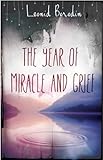
The Year of Miracle and Grief by Leonid Borodin

I received my copy of The Year of Miracle and Grief by Leonid Borodin, translated into English by Jennifer Bradshaw, for review from the publishers, Quartet Books. It’s a new edition due to be published in November, a beautiful little book – just 192 pages, and a pleasure to read.

Synopsis adapted from Quartet Books website:

Nearly thirty years after its first publication in English, in November Quartet Books will publish a brand new English edition of a classic fairytale, The Year of Miracle and Grief by Leonid Borodin. A twelve-year-old boy, the son of teachers, finds magic, mystery, romance, and sadness at beautiful Lake Baikal in Siberia. Deep in Siberia lies the second largest and deepest lake on earth, Lake Baikal. When a small boy arrives on its banks, he is amazed by the beauty of the lake and surrounding mountains. As this astonishment yields to inquisitiveness, he begins to explore the fairytale of the area.  

My view:

This book combines the elements of fantasy and reality, so much so that the narrator is convinced that he is not a spinner of yarns, but that he is relating what actually happened in his childhood. Writing 25 years later, he is now free to tell the tale. And it is a magical and grief stricken tale, a tale of love, forgiveness and suffering!

As he explores the area he is fascinated by Lake Baikal and Dead Man’s Crag, a high bare crag except for a pine tree on its peak, a pine tree with just four branches, two pointing up towards the sky and two larger ones pointing down along the trunk. Despite warnings not to climb the Crag he does just that and it is there that he meets a woman sitting on a throne of stone in a niche hollowed out of the rock. This is Sarma, a wrinkled old woman, so old it was impossible to imagine anyone older:

Her hermetically sealed lips were supported by a large jutting chin which came up to meet her nose, and her eyes were so deeply sunk into the network of wrinkles that the old woman seemed to be blind. She was wearing flowing sky-blue clothes, and this flowing blue enveloped her from head to foot; only her hands, encased in sky-blue gloves reaching to the elbow, contradicted the impression that the blue cocoon contained only a head. (pages 44-5)

She is a descendent of the Great Sibir (the origin of the name Siberia). She flooded Prince Baikolla’s valley, the Valley of the Young Moon, creating Lake Baikal, and guards the cave/underground castle where she holds the Prince and his daughter Ri captive, bewitched by a spell because the Prince had killed her son. But she allows the boy to enter the cave where he falls in love with Ri and begs Sarma to release her. What follows is a dramatic transformation in the boy’s life.

Borodin was a Christian and a Soviet dissident. He was born in 1938 in Irkutsk, near Lake Baikal and both his parents were teachers, like the boy in his book. He was imprisoned twice and wrote A Year of Miracle and Grief whilst in prison. It contains Christian elements focussing on the nature of forgiveness and suffering. He won the 2002 Solzhenitsyn Prize and died in 2011.

Other elements of this book are the landscape, the lake and the mountains and the miracle that takes place in experiencing the beauty of the world, the transformation of your thoughts, feelings and your entire being ‘into a sensation of total rapture in the presence of a miracle.’ (page 8).

A Murder is Announced by Agatha Christie

A Murder is Announced was first published in 1950. My copy is in a collection of four Miss Marple stories – A Miss Marple Quartet. I particularly like this cover, showing Joan Hickson as Miss Marple.

Synopsis from Amazon:

The villagers of Chipping Cleghorn, including Jane Marple, are agog with curiosity over an advertisement in the local gazette which reads: ‘A murder is announced and will take place on Friday October 29th, at Little Paddocks at 6.30 p.m.’ A childish practical joke? Or a hoax intended to scare poor Letitia Blacklock? Unable to resist the mysterious invitation, a crowd begins to gather at Little Paddocks at the appointed time when, without warning, the lights go out.

Of course it isn’t a practical joke and someone is murdered. But the mystery is to identify the victim – it’s not as straight forward as it first appears and there are plenty of red herrings. I vaguely remembered seeing the TV version (with Joan Hickson, perfect as Miss Marple) years ago and although I couldn’t remember who did it knew that I had to pay close attention to the detail of where people were sitting or standing in the room at the Little Paddocks when the lights went out. But even though I read it very carefully I was still baffled. It all hinges on family relationships and details of the characters’ identities which are so skilfully hidden that I was kept guessing until very near the end.

It’s not without flaws, some of the characters are a bit sketchy, and some of the novel borders on farce, with Miss Marple imitating a dead person’s voice whilst hiding in a broom cupboard and Mitzi, the highly strung and paranoid cook, a refugee from Germany, screaming like a siren and insisting that the police will take her away and torture her. Still, I wish her recipe for the chocolate cake ‘Delicious Death’ had been revealed.

What I really like about A Murder is Announced is the picture it paints of life in post-war Britain, showing how society was in the process of change. Miss Marple is her usual brilliant self, now seeming very old with ‘snow white hair and a pink crinkled face and very soft innocent blue eyes’, chattering and fluttering, but still as sharp and observant as ever. As she explains the world has changed since the war when everyone knew who everybody was. But now people come and settle in a village and all you know of them is what they say of themselves – you don’t know who they really are! And so, she compares them to the people she does know, people in her village of St Mary Mead, which helps to throw light on the mystery. It’s a layered mystery involving past illness, identities, and questions of inheritance.